Connect with us

Concrete

Waste Heat Recovery System is a key area for cement producers

Published

on

Shares

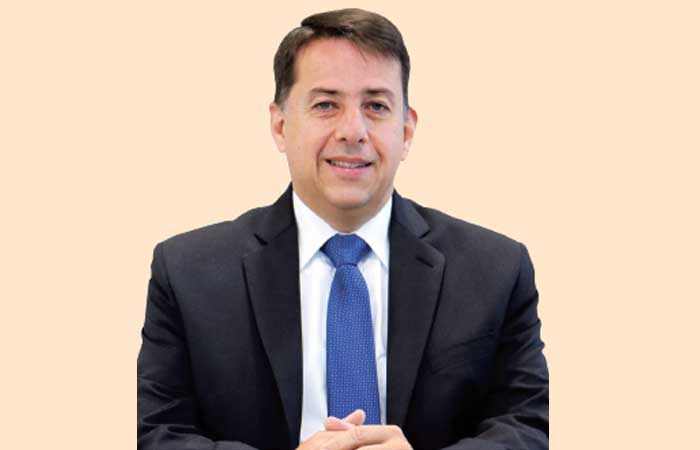
Guilherme Mendonca, Head Energy Business, Siemens, elaborates about co-creating innovative technology solutions for the cement industry.

What are the key features of your Waste Heat Recovery System that make it an eco-friendly solution for cement manufacturing?
Steam turbines are the heart of every power plant. In waste heat recovery (WHR), steam turbines act as an essential piece of the whole system. Our modular design concept ensures high flexibility, availability, and efficiency, playing a significant role in many industrial plants for waste heat recovery and cogeneration application. In India different technologies exist to convert thermal heat into power like Steam Rankine Cycle (SRC), Organic Rankine Cycle (ORC) and Supercritical Carbon Dioxide Cycle (sCO2). However, only SRC and ORC are fully commercialised with SRC being a more popular technology with decades of proven results. Through efficient use of our steam turbines our customers can extract high power output with the available waste heat, enabling them to reduce their carbon footprint. Siemens Energy WHR solutions are capable of meeting all these requirements which are specific to the Indian
cement industry.

How does your system help reduce carbon emissions during the cement production process?
Waste Heat Recovery System (WHRS) is a key area for cement producers to improve plant efficiency and reduce their carbon footprint by utilising the waste heat from the cement manufacturing process. Siemens Energy’ waste heat recovery system is highly efficient with Heat ReCycle Power Plants offsetting the emissions when compared to other technology that is typically used to generate equivalent power, like diesel generators and reciprocating engines or small coal fired power plants. This results in overall reduced emissions and reduction in dependability on fossil fuels.

What are the estimated energy savings that can be achieved by installing your system in a cement plant?
These plants are highly customised solutions and savings can vary depending upon various factors such as source of upstream power generation, plant configuration and degree of waste heat available. Given ideal conditions, waste heat recovery power plants can offset approximately 30 per cent of total electricity requirement of a typical cement plant in India. In 2012, the Rohrdorf cement works in Germany commissioned the first waste heat and gas power plant in Europe. The plant produced over 30 per cent of the site’s power while saving 12,000 tpa of fossil fuels and reducing CO2 emissions by 30,000tpa. We have come a long way since then in terms of technology adoption and benefits. In practical applications, plants that have implemented waste heat recovery systems have been proven to reduce carbon intensity by as much as 25kg/t of clinker produced.

How long does it take for the system to pay for itself through energy savings?
The pay-off is faster than conventional grid-connected power plants by up to 40 per cent in an ideal situation. This return-on-investment calculation considers 30 per cent electricity offset and variations in energy prices as well as carbon credits and cost of decarbonisation.

What is the expected lifespan of the system, and what maintenance is required to keep it functioning optimally?
Generally, the operating lifespan of steam-based WHRS is 20 years. Typically, it works for 8,000 operating hours per year. The availability and adoption of digital solutions such as remote diagnostic services that allow proactive, predictive maintenance and minimises forced outages.

Can your system be customised to meet the specific needs of different cement plants?
Yes. This is a fully customised solution taking into account all the cement plant constraints and available waste heat sources and quality of waste heat.

What are the major challenges of a WHRS when installed in a cement plant?
Some key challenges of installing WHRS are design limitations due to available technologies and constraints such as source of heat, space available and integration. With these being mostly brownfield projects, the integration with minimum downtime and minimum process disruption also add to the challenges. However, this can be planned and mitigated with efficient project management from Siemens Energy.

How do you envision your collaboration with the cement industry in the decade to come?
We envision a strong collaboration with the cement industry in the decade to come, which is primarily driven by a shared commitment to sustainability and reducing carbon emissions with WHRS at the centre. We see WHRS as a key technology that can help cement manufacturers achieve their sustainability goals while also providing energy savings and cost reductions. Looking to the future, our collaboration with the cement industry will continue to be focused on co-creating innovative technology solutions that are tailored to the specific needs of individual cement plants in India.

Kanika Mathur

Concrete

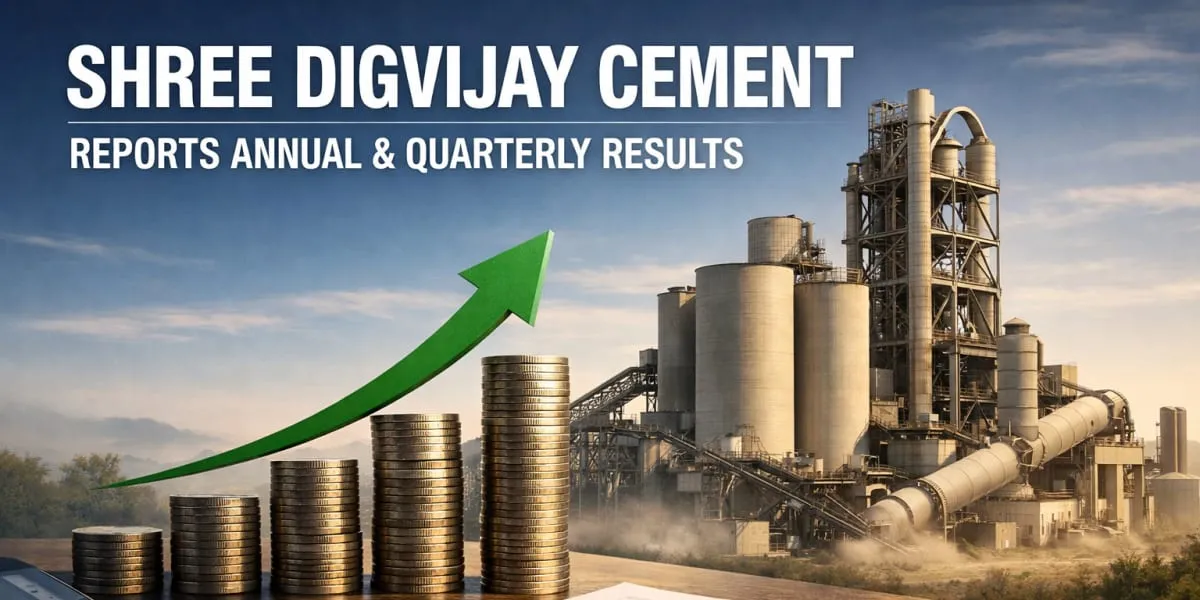
Shree Digvijay Cement Reports Annual And Quarterly Results

Annual revenue rises as EBITDA expands sequentially

Published

on

By

Shares


Shree Digvijay Cement Company Limited reported consolidated financial results for the quarter and year ended 31 March 2026, showing higher revenues and improved profitability. Revenue from operations for the quarter was Rs 2,084.7 mn, up from Rs 1,833.4 mn in the prior quarter, while revenue for the year was Rs 7,491.0 mn versus Rs 7,251.5 mn a year earlier. EBITDA for the quarter rose to Rs 251.0 mn from Rs 38.4 mn in the preceding quarter and reached Rs 746.1 mn for the year. Profit after tax for the year was Rs 250.0 mn.

Sales volume for the company s grinding and cement operations was zero point three six four mn t in the quarter and one point four zero three mn t for the year, while traded volumes were zero point zero three mn t in the quarter. EBITDA per tonne improved to Rs637 in the quarter and averaged Rs521 for the year. Under a brand usage, supply and distributorship agreement the company sold 29,928 t of Hi Bond cement, which generated Rs153.6 mn in revenue and Rs20.0 mn in EBITDA during the period.

The company said that it had commenced purchase and distribution of Hi Bond cement effective 19 March 2026 pursuant to the long term distributorship agreement, and that it had paid a refundable security deposit of Rs four bn under the same arrangement. Management indicated that the strategic integration with the Hi Bond network would support future growth and strengthen distribution capabilities. The board cited seasonally higher demand and improved pricing as factors behind the sequential improvement in realisations.

The board recommended a final dividend of Rs one per equity share subject to shareholder approval at the ensuing annual general meeting. The company reiterated focus on sustaining the positive momentum in revenue and margin metrics while integrating the new distributorship, and will continue to monitor market conditions and pricing trends to support further improvement in outcomes.

Continue Reading

Concrete

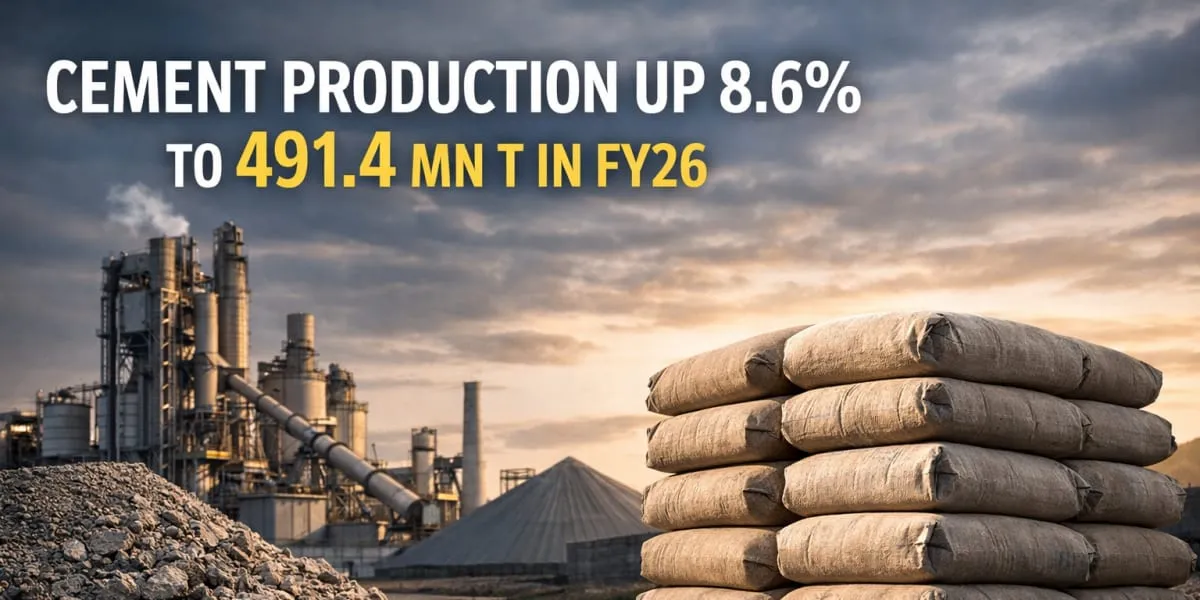
Cement Production Up Eight Point Six Per Cent To 491.4 mn t In FY26

Icra Sees Seven To Eight Per Cent Growth In FY27

Published

on

By

Shares


Icra reported that cement production volumes rose by eight point six per cent in the financial year 2026 to 491.4 million (mn) metric tonne (t). March output was 48.4 mn t, up four per cent year on year on a high base.

The agency projected that volumes are expected to grow by seven to eight per cent in the current financial year, supported by sustained demand from the housing and infrastructure sectors. Average cement prices were reported to have remained flat in March at Rs 340 per bag on a month on month basis, while prices for FY26 increased by two per cent to Rs 345 per bag year on year.

Among inputs, coal prices declined by 17 per cent year on year to USD 102 per t in April 2026 while petcoke prices rose sharply by 19 per cent month on month and 22 per cent year on year to around Rs 15,800 per t in April. Petcoke was higher by about five per cent year on year in FY26 and diesel prices were reported to have remained steady. Icra noted that coal, petcoke and diesel are expected to trend higher in FY27 and remain exposed to risks from the ongoing West Asia conflict.

The report emphasised that operating margins for Icra’s sample set of companies are estimated to moderate by 200 to 400 basis points (bps) in FY27 on account of a likely increase in input costs, with further downside risks should crude prices rise owing to geopolitical tensions. However, debt protection metrics are projected to remain comfortable and Icra maintained a stable outlook on the Indian cement sector.

Continue Reading

Concrete

UltraTech Cement FY26 PAT Crosses Rs 80 bn

Company reports record sales, profit and 200 MTPA capacity milestone

Published

on

By

Shares


UltraTech Cement reported record financial performance for Q4 and FY26, supported by strong volumes, higher profitability and improved cost efficiency. Consolidated net sales for Q4 FY26 rose 12 per cent year-on-year to Rs 254.67 billion, while PBIDT increased 20 per cent to Rs 56.88 billion. PAT, excluding exceptional items, grew 21 per cent to Rs 30.11 billion.

For FY26, consolidated net sales stood at Rs 873.84 billion, up 17 per cent from Rs 749.36 billion in FY25. PBIDT rose 32 per cent to Rs 175.98 billion, while PAT increased 36 per cent to Rs 83.05 billion, crossing the Rs 80 billion mark for the first time.

India grey cement volumes reached 42.41 million tonnes in Q4 FY26, up 9.3 per cent year-on-year, with capacity utilisation at 89 per cent. Full-year India grey cement volumes stood at 145 million tonnes. Energy costs declined 3 per cent, aided by a higher green power mix of 43 per cent in Q4.

The company’s domestic grey cement capacity has crossed 200 MTPA, reaching 200.1 MTPA, while global capacity stands at 205.5 MTPA. UltraTech also recommended a special dividend of Rs 2.40 billion per share value basis equivalent to Rs 240.

Continue Reading

Video Thumbnail
â–

    SIGN-UP FOR OUR GENERAL NEWSLETTER


    Trending News

    SUBSCRIBE TO THE NEWSLETTER


    Don't miss out on valuable insights and opportunities to connect with like minded professionals.


      This will close in 0 seconds