Concrete
Turning E-Waste into Green Concrete


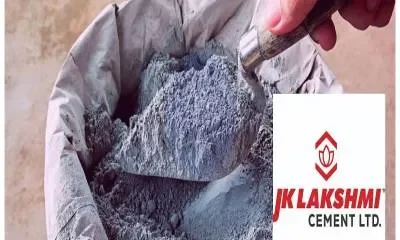
Creating green concrete with discarded printed circuit boards or e-waste is a new take on revolutionising recycling in the industry. JK Lakshmi Cement has taken this initiative at its Kalol Grinding Unit and the following is the case study of its successful execution.
Electrical and electronic waste (e-waste) is one of the fastest growing waste streams in the world due to its high rate of obsolescence. Market penetration in developing countries and replacement market in developed countries has resulted in the exponential increase of e-waste volume in the last two decades. Environmental pollution from e-waste is an important issue in this age of electronics. As a key component in almost all electronic equipment, large amounts of Waste Printed Circuit Boards (WPCBs) are generated. Printed Circuit Boards (PCBs) form about 3-6 per cent by weight of the total amount of electronic scrap. In this trial an attempt is made to use powdered non-metallic WPCB in concrete as a 10 per cent replacement of sand and conducted strength analysis at 7 days and 28 days. Results of these experiments show that there is an increase of 22 per cent in the compressive strength.
As per E-Waste Management Rules 2016 and as amended time to time published by Ministry of Environment Forest and Climate Change (MOEF&CC), e-waste means electrical and electronic equipment, whole or in part discarded as a waste by the consumer or bulk consumer as well as reject from manufacturing refurbishment and repair process. Disposal of e-waste is a particular problem faced in many regions across the globe. Most of the e-waste finds its way to the landfill. From this e-waste, a leachate is produced, which is harmful for the aquatic organisms. Acids and sludge obtained from melting computer chips, when disposed on the ground causes a decrease in pH of soil. Burning of e-wastes can emit toxic fumes and gases, thereby polluting the surrounding air. E-waste, when disposed of in sanitary landfills, which are not engineered properly, can be very hazardous because mercury will leach when certain electronic devices, such as circuit breakers are destroyed. PCBs are the electronic boards that are used in a majority of electronic devices including phones, laptops, household appliances and pieces of medical equipment. PCBs are an integral part of any electronic equipment. The growth of e-waste as end-of-life electronic equipment at an exponential rate is producing large quantities of discarded WPCBs. In India, current recycling and processing of WPCBs is managed almost entirely by the informal sector or the unskilled labour (95 per cent)1.
The crude recycling activities cause irreversible health and environmental hazards and the loss of valuable materials due to the poor recovery of base and precious metals. With the disclosures of the recycling being done by unskilled labour, alternative recycling strategies are being sought with the aim of higher recovery of materials in an environment friendly manner.
Need of the Project
The basic requirement of the project is to reduce the natural source of fine aggregate which is used in the concrete products; we know that today the problems faced in the depletion of the fine aggregate cause an admonishing situation in the riverbed areas. So, the research project is paramount to reuse or to utilise the printed circuit board that is all the electronic waste in the crushed powder form as a replacement material for the fine aggregate. In recent years throughout the world there has been increasing concern about the growing volume of end-of-life electronics, especially the WPCBs and the fact that much of its non-metallic portion is consigned to landfill. A large number of non-metallic portions in WPCBs are disposed of by combustion and in landfills as the main method for treating nonmetals from WPCBs, but it may cause secondary pollution and damages the environment. With improper technology for its reuse, recycling and dumping can cause serious threats to human health and the environment. In the present scenario, the major issue of e-waste management is how to manage PCBs waste. No construction activity can be imagined without using concrete. Concrete is the most widely used building material in the construction industry. The main reason behind its popularity is its high strength and durability. Today, the world is advancing too fast, and our environment is changing progressively. Attention is being focused on the environment and safeguarding of natural resources and recycling of wastes materials. One of the new waste materials used in the concrete industry is WPCBs. For solving the disposal of large amount of PCB waste material, reuse of WPCB in concrete industry is considered as the most feasible application.

Lab Test of Concrete Made from E-Waste
In M25 grade of concrete, the cement serves the purpose of binding all the other components together, the coarse and fine aggregate are the load bearing component while coarse and fine sand work as filler material. In this study, a 10 per cent replacement of fine sand is made with powdered non-metallic WPCBs (Waste Printed Circuit Boards) of size less than 1.18 mm. The sample composition taken for this study is as per Table1.
Once this mixture is formed the slump test for the concrete is conducted, as per Indian Standard IS 456:2000 (Reaffirmed in 2021), for which the standard range is 100-180 mm. After this, cubes having of dimension 150mm x 150mm x 150mm are filled with the concrete mixture and left to set. For the above-mentioned quantity, six such concrete cubes are filled, of which three are set for testing at an interval of 7 days and the other three are set aside for compressive strength testing at 28 days. These cubes are then tested for compressive strength using a compression testing machine (CTM) with an acting load of 2000KN.
Findings
For the trial mixture mentioned in Table 1. The slump value obtained was 110mm.The minimum compressive strength for a standard M25 concrete block at 7 days must be 16.25 N/mm2 and at 28 days must be 25N/mm2. The CTM values obtained for this trial mixture are mentioned in Table 2. Thus, it can be said that replacing 10 per cent river sand by crushed WPCB, not only retains the standard strength but also gains 22 per cent strength over regular M25 grade of concrete. Also, by using powdered non-metallic PCBs replacing the fine sand, we can save Rs 350 on every tonne of sand replaced. Also, a study conducted for testing, the reactivity of the material shows that it is non-reactive towards diluted as well as concentrated acid. Thus, it can be concluded that over a period of time the material will not leach any toxins.
Way Forward
Some studies show that natural fine aggregate can be reduced to a certain limitation by using the crushed WPCB powder as a replacement with 15 per cent, 20 per cent and 25 per cent by weight. It is found that the strength of the concrete is improved, and powdered non-metallic WPCB can be partially used as fine aggregate replacement.
References: 1. https://www.researchgate.net/publication/272668735_Review_Current_Status_of_Recycling_of_Waste_Printed_Circuit_Boards_in_India
About the author
Sanjeev Shroff is presently heading the Kalol unit of JK Lakshmi Cement Limited. He has a rich and diverse experience across various functions of the cement industry having worked in India and Africa. He is a Mechanical Engineer with a post Graduate Diploma.
Acknowledgment: The primary research work was done by Stuti Banerjee and Vishal Poriya under the guidance of Sanjeev Shroff.








Concrete
Ultra Concrete Age
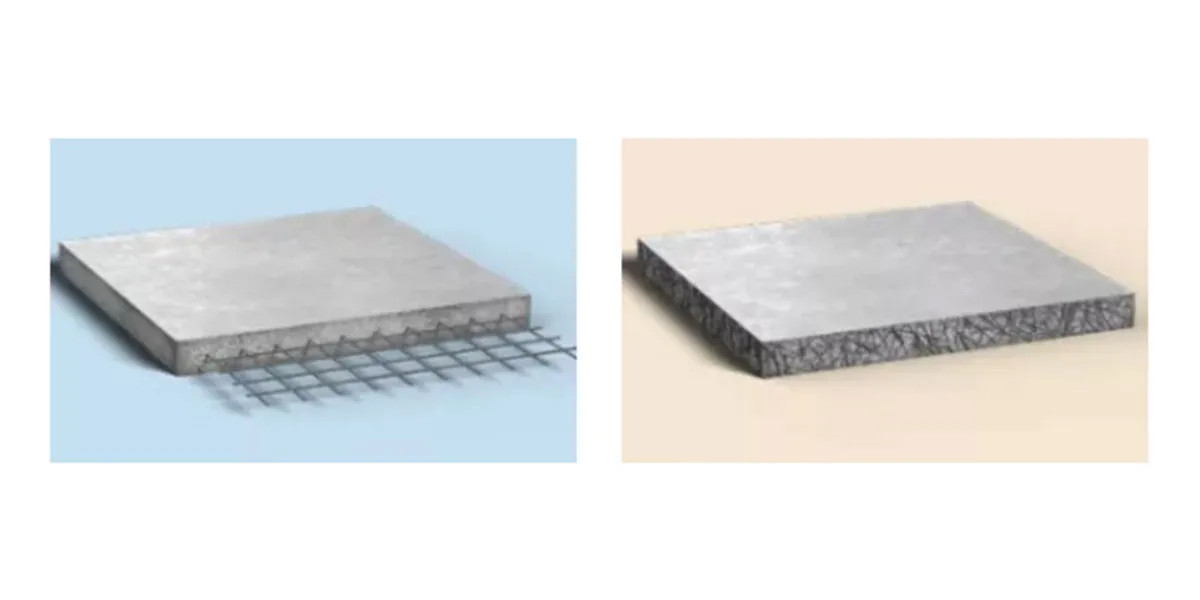
Prof. A. S. Khanna (Retd., IIT Bombay) on how Ultra-high performance concrete (UHPC) improves strength, durability and lifecycle performance.
Concrete
NCB Signs MoU With Cement Manufacturer To Boost Construction Skills
Partnership to deliver nationwide training and certification
Concrete
JSW Cement Commissions Nagaur Plant, Enters North India
New Rajasthan unit boosts capacity to 24.1 MTPA and expands reach


Ultra Concrete Age

NCB Signs MoU With Cement Manufacturer To Boost Construction Skills

JSW Cement Commissions Nagaur Plant, Enters North India

Cement Prices Likely To Rise As Petcoke Costs Increase

IIT Guwahati Develops Radiation-Resistant Cement Mortar
Ultra Concrete Age
NCB Signs MoU With Cement Manufacturer To Boost Construction Skills
JSW Cement Commissions Nagaur Plant, Enters North India
Cement Prices Likely To Rise As Petcoke Costs Increase