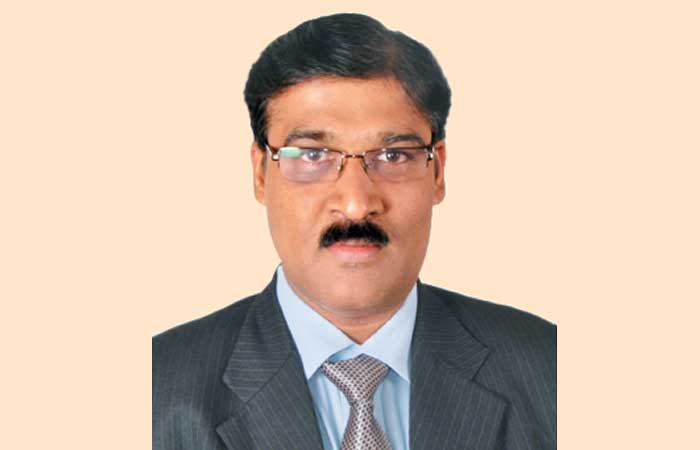
Manish Chordia, Regional Sales Manager – Cement, South Asia and Africa, ABB, discusses the correlation between digitalisation and efficiency, as the cement sector works towards reduction in carbon emissions.
Tell us about the impact that technology and digitalisation can create on sustainability of cement manufacturing.
The benefits of digitalisation-driven plant operations within the cement industry span not only provides improvement in the process, asset, plant, and enterprise-wide performance but can have an important positive impact on sustainability values. High levels of digitalisation result in higher efficiency gains, reducing energy consumption, while allowing for higher utilisation of alternative fuels and renewable energy sources. Such high levels of digitalisation are best achieved through a unified, cross-functional, and enterprise-wide approach to digital transformation, as those offered by ABB. This approach offers digital process/ asset and enterprise-level optimisation technologies, as well as effective training of plant personnel to be able to use these technologies, to provide targeted business benefits to cement customers.
What are the key pain points in a cement plant that your systems can address and improve?
The cement industry faces a range of challenges in its day-to-day operations around profitability/cost control, quality versus throughput, emissions and environmental sustainability. The cement industry is constantly looking for ways to reduce the cost of operations while maximising yield, improving quality, and reducing emissions all at the same time. ABB systems and solutions help look at old problems with a fresh perspective. It also helps in solving challenges around accuracy and explains the ability of the techniques, so that the machine’s recommendations can be trusted. Data cleansing, anomaly removal, analysing the correlation of parameters and result interpretation are all key elements here.
For instance, ABB’s system anomaly detection app learns your plant and equipment’s ‘normal’ states and uses adaptive setpoints to detect unusual patterns, anomalous behaviours. By triggering alerts, it reduces the effort to identify and rectify energy consumption deviations. Providing no more hassle of setting manual setpoints or alarms or notification overload. The same way the app can learn from your energy usage, production schedules and other factors to deliver accurate forecasts, it can allow for reduced peak demand charges on electricity bills.
How do your systems help achieve energy efficiency in cement plants, thus reducing their energy consumption?
ABB Ability Expert Optimizer is our advanced process control solution for the cement, mining and minerals industries. It takes data from the plant and then uses various technologies – most notably model predictive control – to build a model of whichever part of the plant is the focus. This model allows for the prediction of what is going to happen in the plant or specific areas of the plant based on the real-time data.
This model – effectively a digital twin of the plant or process – can be used to create setpoints that enable the plant to achieve its goals. Initially, this means stabilising the process but will move on to optimising plant performance according to various metrics, such as achieving higher production, lowering energy consumption, or stabilising product quality, depending on what the plant operator has decided and what the initial pain points of the plant are. When the targets have been set, ABB Ability Expert Optimizer is able to take the necessary actions required to meet them without the intervention of the operator.
In the latest releases of ABB Ability Expert Optimizer, ABB has also added the ability to monitor the operation of the plant remotely to ensure that the targets are being met – and to inform the plant whenever there is any variation. It helps to ensure that ABB Ability Expert Optimizer is not switched off by operators and continues to sustain the benefits realised during commissioning.
Tell us about the role of data in achieving optimisation through the manufacturing processes at the plant.
Data analytics has been there in the cement industry for quite some time. The industry is quite standardised with different product lines. The overall process is extremely complex – there are mines, conveyor belts moving raw materials, stockyards, kilns, grinding and so on. Various customers, especially the big players, have had solutions in place to provide data analytics. Now when you move to the next step of AI, we have solutions relating to assets and asset reliability. We collect various data like device temperatures, loading patterns, ambient temperatures and the happenings inside the cabinets to do AI-based analytics. Based on which, we alert the customer to the probability of failure of a particular part or electronic device. These are already implemented, however, a lot more in asset reliability and process are in the pipeline.
Another proven solution for information management systems, ABB Ability Knowledge Manager provides information consistency across multiple business levels. It can also be used to consolidate and centralise information from
multiple sites into one system, bringing into play a new level of regional and corporate performance indicators and allowing performance comparisons between operations.
What are the best practices that Indian cement manufacturers can adopt to achieve better productivity and efficiency in their operations?
Personally, I feel collaborative operations centre services, which were started a couple of years back, would gain a lot more relevance in the current environment. The customers will prefer to do commissioning remotely with minimal onsite workforce. The troubleshooting being remote, which was always one of our targets. Remote operations are more effective than onsite ones, as all experts are in one place. It saves a lot of time in case of disruptions or even a breakdown.
How have you contributed to the Net Zero mission for the Indian cement industry and how do you plan to do so in the future?
Our system can play a vital role in reaching environmental sustainability targets, and not just around reducing emissions, but also energy optimisation and management. This creates
immediate benefits for operating costs and margins, also enabling new business models for high-tech low-CO2 cements.