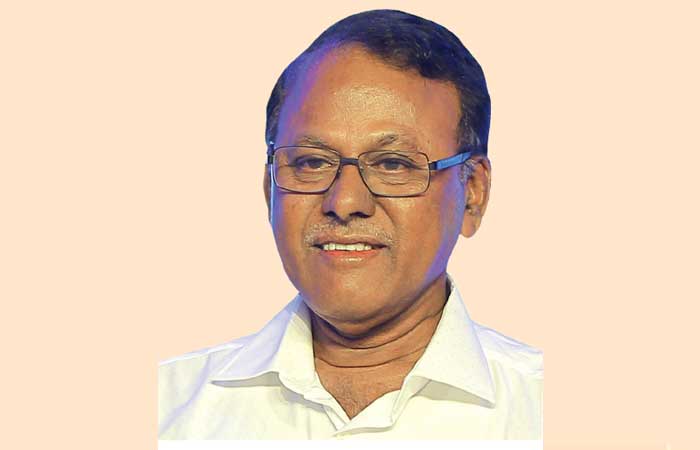
D L Kantham, Director – Technical, Penna Cement, discusses the use of alternative raw materials and fuels in making green cement, along with the use of technology and automation, to ensure that the industry moves towards Net Zero goals.
Tell us about the importance of going green for the Indian cement industry.
Globally cement production capacity stands at 4.2 billion tonnes per annum. Cement production, a source of anthropogenic CO2, accounts for 8 per cent of global emissions. Indian production capacity currently stands at about 550 million tonnes per annum with annual production of around 370 million tons per annum. Annual cement production is expected to reach about 480 million tons annually by 2028-29. Hence, the cement industry in India must ‘Go Green’ to be aligned with the Net Zero Target by 2050. This target is aligned with the Paris Agreement to limit global warming to 1.50C.
What are the key alternative raw materials used to manufacture green cement?
We use fly ash, slag and other pozzolanic materials as key alternative raw materials to manufacture greener cement.
What is the role of fuel in making cement green? How does the use of alternative fuels impact the productivity and efficiency of the manufacturing process?
Using alternative fuels like pharma wastes and municipal solid wastes, leads to reduced fossil fuel (coal) usage, thereby reducing carbon emission. Alternative fuel utilisation in the cement industry reduces production costs and reduces CO2 emissions in the atmosphere.
Tell us about the cement blends or products from your organisation that are lower in their carbon content.
Penna Power (Portland Pozzolana Cement) conforming to IS 1489:2015 (32-35 per cent fly ash blended), Penna Suraksha (Portland Slag Cement) conforming to IS 455:2015 (38-48 per cent GGBS Blended) and Concrete Guard, a premium blended product conforming to IS: 1489:2015 aimed to motivate and supply 100 per cent blended cement in retail markets satisfying the customer requirements in IHB market segments.
Tell us about your Net Zero goals. How much have you achieved so far?
Our Net Zero goal is to increase our blended cement production ratio to 75 per cent from the 40 per cent level in 2015. Currently, blended cement production constitutes about 55 per cent.
How do you incorporate sustainability in your cement manufacturing process
- Increasing Clinker to Cement Ratio (Higher use of PFA/GGBS in the mix).
- Alternative fuels like pet coke, pharma waste and municipal waste.
- Energy efficiency technologies, such as Waste Heat Recovery to reduce fossil fuel requirements and adaptation of better cement grinding systems (Roller Press), grinding aids, etc.
What is the role of automation and technology in making cement an eco-friendly product?
Automation leads to significant gains through optimal raw mix, better product output in quantity and quality through minimal human involvement and saves time in decision making on end product quality by quicker analysis of raw materials.
What are the major challenges in reducing the carbon content of cement manufacturing, and how can they be resolved?
Two key areas for reducing the carbon content from cement include:
Reduction in clinker to cement ratio through greater uptake of blended cement in all the key consumption segments – housing, government projects, precast cement products and ready-mix concrete. This involves developing new blended cement to suit the requirements in segments where OPC is still preferred for specific reasons, and to adapt to a higher percentage of alternative fuels in the process.
Following actions may be taken to improve greater uptake of blended cements, which leads to a reduction in the clinker cement ratio:
- We need to enhance market awareness and acceptability because users are reluctant to select blended cement over portland cement in some regions, though substantial progress has happened in India over the past two decades.
- Need to involve all the key stakeholders – cement manufacturers, government policymakers – national standards, consultants, key end users, and related allied products, e.g., chemical admixtures used in concrete production for exchange of experience on reducing clinker to cement ratio, promote training events with national standardisation bodies and accreditation institutes etc.
- Independent organisations to develop cement and concrete standards and codes that allow the widespread use of blended cements while ensuring product reliability and durability at final applications to promote the use of blended cement. For example, additional types of blended cement with a higher blending ratio for specific end applications.
- Government to promote blended cement in sourcing and public procurement policies and the private big project consultants.
- Industries and universities conduct R&D into processing techniques for potential cement blending materials that cannot be used due to quality constraints, for example, rice husk ash.
- Introducing a freight subsidy for transporting supplementary cementitious materials from surplus areas to cement clusters is desirable where SCM availability is limited.
- Deploying innovative technologies (including carbon capture, usage and storage (CCUS)). Government can stimulate investment and innovation in these areas through funding for R&D.
Broadly, CCUS prevents CO2 from being released into the atmosphere by capturing it and either using it or injecting it in geological formations for permanent storage. CCUS will be crucial to reduce cement sector CO2 emissions, particularly the process emissions released during limestone calcination. While the commercial deployment of CCUS is currently limited, several innovative efforts have been underway in recent years.
How do you measure the impact of your green cement on the environment and society, and what steps do you take to continuously improve its sustainability?
Resource and environmental protection agencies use specific indicators to track and enforce
changes. Today, one of the critical measurement techniques is footprint evaluation. The three common footprint indicators are carbon, ecological, water and soil footprint.
Green concrete produced from green cement has been proven to have enhanced the structure’s durability. This ensures a reduction in demand for natural resources (limestone in particular), thereby improving the sustainability, associated energy consumption, and a corresponding decrease in GHG (GreenHouse Gas) emissions.
Additional cement product profiles, for example, Composite Cement and LC3 Cement (Limestone Calcined Clay Cement), are being researched and developed to suit the market requirement, which will help us further improve on sustainability.
-Kanika Mathur

















 Concrete4 weeks ago
 Concrete2 weeks ago
 Concrete2 weeks ago
 Concrete4 weeks ago