Concrete
Pyroprocessing and Kiln Operation
Published
3 years agoon
By
admin
Dr SB Hegde, Professor, Jain University, Bangalore, talks about pyroprocessing and the role of preheater, rotary kiln and clinker cooler in the cement manufacturing process. In the concluding part of the two-part series, we will learn more about the various factors aiding pyroprocessing.
False Air in Pyro Processing
India is the second largest cement producer in the world in terms of cement capacity. Therefore, it is deciphered that the amount of energy being consumed in cement production process and its wastage attributed to non-availability of proper technology to plug the leakages.
There are several research papers/case studies discussing the effect of different factors on energy consumption in cement manufacturing and are well documented. There are some studies that discuss this issue with the help of mathematical models. However, all studies reveal the fact that the ‘false air’ may be one of the factors for higher energy consumption in cement plants. Further, based on the several studies in the field of operational audit, it can be concluded that production level can be improved and energy consumption reduced by reduction of ‘false air’.
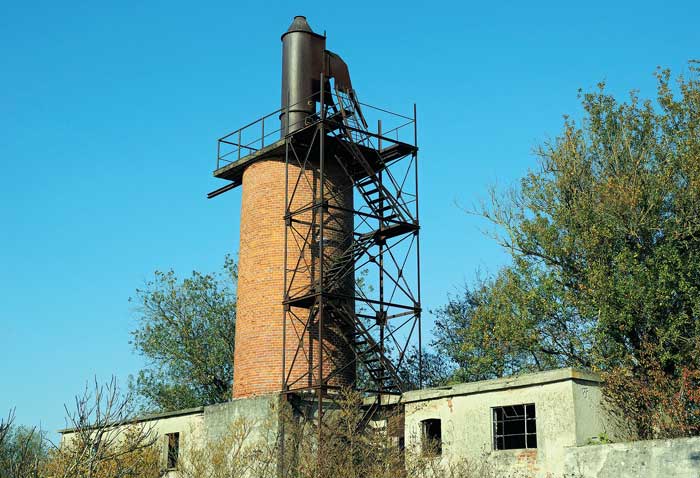
False air is any unwanted air entering into the process system. The exact amount of false air is difficult to measure. However, an indicator of false air can be increase of per cent of oxygen between two points (usable for gas streams containing less than 21 per cent of oxygen). Due to unwanted air, the power consumption increases and the system’s temperature decreases. Therefore, to maintain the same temperature fuel consumption has to be increased.
Impact of False Air in a Cement Plant
• Increase of power consumption
• Increase the fuel consumption
• Unstable operation
• Reduction in productivity
• Higher wear of fans
False Air Ingress Points
In cement plants, generally false air intrudes in the kiln section through the kiln outlet, inlet seal, TAD slide gate, inspection doors and flap box. Similarly, in mill section false air intrudes through rotary feeder at mill inlet, mill body, mill door, flaps, expansion joints, holes of ducts and tie rod entry point. In the power sector, as margin is very less, cost- effectiveness plays an important role. Generally false air intrudes in the CPP section through air pre-heater casing, boiler main door, fan casing, inspection doors, ESP main doors, ESP hopper doors, expansion bellows and ducts. Similarly, in the GPP section false air intrudes through main holes, hammering, bellows, rotary air locks, damper casing, expansion bellow, etc.

Checking of Heat balance
Heat balance on a kiln can offer extremely useful information on the thermal performance of the system. Heat balance shows where or how the fuel heat is consumed based on the simple principle of input = output.
Unnecessary energy losses can be easily detected, the principle of heat balance may be easily transferred to another system such as preheater, cooler and drying system. Various reasons or circumstances may cause a need for a heat balance measurement. The following situations may justify a heat balance:
- Performance test,
- Recoding of kiln performance before/after a modification,
- Unusually high heat consumption or abnormal kiln operational data,
- Kiln optimisation endeavours.
Although the specific heat consumption proper could also be determined by measuring nothing but fuel heat and clinker production, a complete heat balance does offer considerably more information and security.
The consistency of the measured data is proved much better, and the balance shows clearly where the heat is consumed. A heat balance is obviously a very efficient tool assessment of thermal efficiency. A heat balance does not only mean calculation of heat balance items.
Kiln Operation Problems Using Pet Coke
- The consequence of using pet coke is dusty conditions and a kiln inlet ring. Even though there is no CO (carbon monoxide) in the kiln inlet, the large amount of SO3 introduced by the pet coke may not be properly balanced by alkalis (Na2O and K2O) in the kiln feed. This will result in a high SO3 re-circulation and a reduction of the liquid phase surface tension and viscosity. This will produce poor clinker nodulation and a corresponding increase in the dust load in the kiln and rings near the kiln inlet.
- The possible solutions are:
- Ensure that the high SO3 input is balanced with the appropriate percentage of alkalis.
- Optimise the burnability of the raw meal in order to reduce the burning zone temperature.
- Optimise the flame shape to reduce the length of the burning zone.
- Increase the O2 at the kiln inlet even more to ensure enough oxygen is present to remove the increased amount of alkali sulphates from the kiln.
If chloride levels are high in the raw materials this can react preferentially with the alkalis in the bottom cyclones, reducing the percentage of alkalis available to remove SO3 from the kiln. In this case the only practical solution is to try and reduce the chloride input.
Pet coke sometimes needs more O2 at the kiln inlet than required. It is common in some plants to have to run with 6-8 per cent O2 at the kiln inlet to keep SO3 recirculation down to an acceptable level. Remember that just having a small excess of O2 in the kiln inlet (sufficient to ensure zero CO) may not be enough to control the high sulphur input from pet coke.
2K2O + 2SO2 + O2 = 2K2SO4
2CaO + 2SO2 +O2 = 2CaSO4
The molecular weight s is
2SO2 = 128
O2 = 32
Therefore, every 4 tonne of SO2 needs 1 tonne of O2 to be converted to SO4-2, no matter if there are sufficient alkalis or not. Calculate the percent of O2 required at the kiln inlet from the total input of SO2 from pet coke and the gas flow rate at the kiln inlet.
Burning softer (i.e., lower litre weight) is a good idea because it uses less fuel and lowers the sulphur input. Softer burning will reduce the sulphur volatilisation in the burning zone (ensuring oxidising conditions in the burning zone is critical since CaSO4 is more susceptible to thermal decomposition under slightly reducing conditions than alkali sulphates.).
Traditionally it is known that an excess SO3 content of some 300-700 gm per 100 kg clinker can be tolerated in the kiln system. Lower limit will be valid for hard to burn raw materials while the upper one refers to easy burnable raw meals. Apart from adjustment of the sulphur/alkali ratio it is possible by operational means to substantially reduce the sulphur evaporation in the burning zone. One can consume 1000 gm SO3 per 100 kg clinker by the following changes in burning operation.
- High Oxygen – levels in the kiln (around 5 per cent O2)
- High Flame Momentum
- Short residence time in the burning zone
- Improve chemical burnability
- Finer grinding of raw mix and pet coke
Significance of Liquid Content in Clinker
Liquid content of clinker is the fraction of the kiln feed that melts between the upper transition and burning zone. The liquid content has a critical role in clinker nodulisation and clinker phase development and properties. In the absence of liquid, the conversion of C2S and free lime to C3S would be almost impossible in the kiln.
Plant chemists and CCR operators are usually more concerned with the amount of liquid rather than with the rheological properties of the liquid. The latter is more important during clinkering reactions than the former.
Amount of liquid Content
The raw mix consists of only 4 oxides, i.e., CaO, SiO2, Al2O3 and Fe2O3, it would start melting at 1,338 degree C, the so-called eutectic temperature for the system C-S-A-F.
Industrial raw mixes contain impurities such as MgO, Na2O, K2O and SO3. At certain concentrations, these impurities reduce the eutectic temperature of the system to 1,280 degree C, thus promoting clinker formation. These oxides act as fluxes in the kiln, forming liquid as far up in the calcining zone.
Liquid percentage at 1,450 C=3XA+2.25XF+MgO+K2O+Na2O+SO3 (MgO<2).
For most commercial clinkers, the amount of liquid content is in the range of 26-29.5 per cent. Higher values can be damaging to most refractory bricks in the absence of stable coating. As the brick is infiltrated and saturated with liquid, its elastic modulus increases and so does its tendency to spall off.
The tendency to coating formation or the coataibility of clinker increases with the amount of liquid. However, more coating does not necessarily mean better coating. Coating refractoriness, texture and stability are by far more important than the amount of coating deposited on the lining.
Significance of liquid content
The most important clinker phase is C3S (alite) which requires the presence of liquid for its formation. In the absence of liquid, alite formation is extremely slow and it would render clinkering impossible. This fact also explains why alite is formed essentially in the burning zone, where the amount of liquid is at a maximum.
To understand why alite formation requires
liquid content, one must first understand the alite formation mechanism:
- C2S and free CaO dissolves in the clinker melt.
- Calcium ions migrate towards C2S through chemical diffusion
- C3S is formed and crystallised out of the liquid.
Without liquid phase the diffusion of Ca ions towards C2S would be extremely slow, and that of C2S almost impossible at clinkering temperature. It is important to mention that Na2O and K2O decrease the mobility of Ca ions, whereas MgO and sulphates considerably increase it. That is why addition of gypsum in the raw mix promotes alite formation.
Properties of liquid phase Viscosity
Temperature has the most pronounced effect on liquid phase viscosity. Low viscosity liquid infiltrates the refractory lining faster, leading to its premature failure. MgO, alkali sulphates, fluorides and chlorides also reduce liquid phase viscosity.
Free alkali and phosphorous increase liquid phase viscosity, but this effect is offset by MgO and SO3. Only clinkers with S/A ratio lower than 0.83, low in MgO, would experience the negative effects of high liquid viscosity.
The liquid content viscosity increases linearly with A/F ratio. For a given burning temperature, high C3A clinkers tend to nodulise better than low C3A clinkers. Moreover, the liquid phase is considerably less damaging to the refractory lining when the liquid is viscous.
Another important property of the liquid phase is its surface tension, or its ability to ‘wet’ the lining. The surface tension has a direct impact on clinker fineness, coating adherence to the lining and clinker quality.
High surface tension values would favour nodule formation and liquid penetration through pores of the nodules. The resulting clinker contains less dust (fraction below 5 or 10 mm) and lower free lime content. A liquid phase with high surface tension has less tendency to adhere to the brick surface, therefore, reducing clinker coatibility or adherence to the lining.
Alkali, MgO and SO3 reduce liquid surface tension. So does temperature. Sulphur and potassium have the strongest effects, followed by sodium and magnesium. Therefore, MgO, SO3 and K2O to a certain concentration, are good coating promoters.
Unfortunately, the liquid properties that induce C3S formation are detrimental to the refractory lining and to clinker nodulisation.
Although the amount of liquid phase in the burning zones of the kiln is important to clinker formation and brick performance, the rheological properties of the melt are even more important. The rheological properties of the clinker melt control parameters such as clinker mineral formation, clinker coatability, clinker fineness, cement strength and refractory depth of infiltration.
It is then very important to keep fuel, raw material properties and flame temperature as steady as possible. Whenever introducing drastic changes in the raw material or fuel properties, the refractory lining must be changed accordingly to meet the differences in clinker coatability and burnability.
Material Balance of a Pyro Processing in Clinker Production
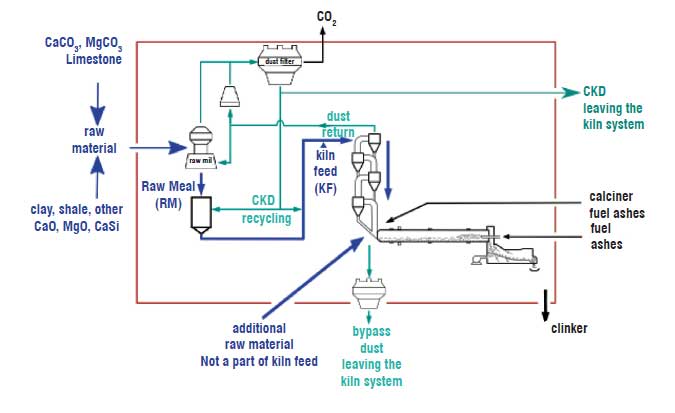
The following diagram illustrates an example of the mass flows in a cement plant and the mass balance of a kiln system from raw meal (RM) to clinker.
Figure 1: Schematic diagram of material and dust flows in a cement plant
The reporting of CO2 emissions from the calcination of raw materials depends on the principle choice of the method for determining the mass balance: from the input side (raw meal consumption).
Accordingly, we need to consider the reporting of the mass flows bypass dust, cement
kiln dust leaving the kiln system (and crossing the red boundary in the diagram) and additional raw materials), which are not part of the normal kiln feed, as follows:
Simple input method and detailed input method: The actual amount of raw meal consumed for clinker production can be determined by weighing the kiln feed and subtracting the dust return.
- Bypass dust leaving the kiln system is accounted for in the amount of raw meal consumed. Additional calculations may be required if the bypass dust is only partially calcined. This is implemented only in the detailed input method:
- CKD recycling remains within the mass balance and therefore does not need additional reporting.
- CKD leaving the kiln system (and crossing the red boundary in the diagram) needs to be quantified and requires additional reporting in the input methods.
- Additional raw materials (ARM), which are not part of the kiln feed are not accounted for by the amount of raw meal consumed. Thus, they require additional reporting in the input methods. However, the necessary calculations are only implemented in the detailed input method. The simple input method (A1) should therefore not be used if ARM is relevant for the complete reporting of the CO2 emissions.
Simple output method and detailed output method: The amount of clinker production can be determined from calculating the clinker mass balance or by direct weighing.
- Bypass dust leaving the kiln system requires separate reporting:
- CKD recycling remains within the mass balance. Thus, it does not need additional reporting.
- The mass flow of CKD leaving the kiln system (and crossing the red boundary in the diagram) needs to be accounted for additionally.
- Additional raw materials (ARM) do not need to be accounted for additionally in the output methods, which are based on the clinker production.
Conclusions
Pyro-processing in a cement plant comprises a preheater, rotary kiln and clinker cooler. Pyro-processing section is considered to be the heart of a cement plant as actual cement clinker production takes place in kilns.
The size of a cement plant is determined based on the pyro-processing section and the sizes of all other equipment are determined to match pyro-processing. Cyclones are basic units in a preheater system. Pressure drop and change of temperature of gas across each stage determines the efficiency of cyclones.
Introduction of Low Pressure drop (LP) cyclones has brought the pressure drop across each stage to around 50 mm WG from around 150 mm WG in conventional cyclones. This has resulted in more and more plants adopting 5 or 6 stages of preheater.
A typical 6 stage preheater with LP cyclones will have a preheater exhaust gas temperature of around 250°C and draught of around 500 mm WG. This in turn led to decrease in preheater fan
power consumption.
The reduced temperatures at preheater exhaust contribute to environmental improvement. Cyclone separators are used in preheaters on cement plants to separate the raw material for gases. Very tall preheater means more power is required to operate the plant.
It is always desired for a minimum preheater height to operate the plant economically. Due to the preheater arrangement and layout design, cyclones decide the height of the preheater. Pressure drop-in cyclones plays an important role in determining the cost of operation of a cyclone separator. High pressure drop means more power required to operate the cyclone.

ABOUT THE AUTHOR
Dr SB Hegde is currently a Professor at Jain University, Bangalore, Karnataka, and a Visiting Professor at Pennsylvania State University, United States of America. He has more than 30 years of experience in cement manufacturing both in India and abroad. He has occupied the ‘Leadership positions’ in reputed major cement companies both in India and overseas. He is also a recipient of ‘Global Visionary Award’ instituted by Gujarat Chambers of Commerce and Industry, Ahmedabad in 2020.

Concrete
Ambuja Sees Cement Demand Easing To Around Five Per Cent In FY27
Company Cites Housing, Infrastructure And Government Capex
Published
14 hours agoon
June 22, 2026By
admin
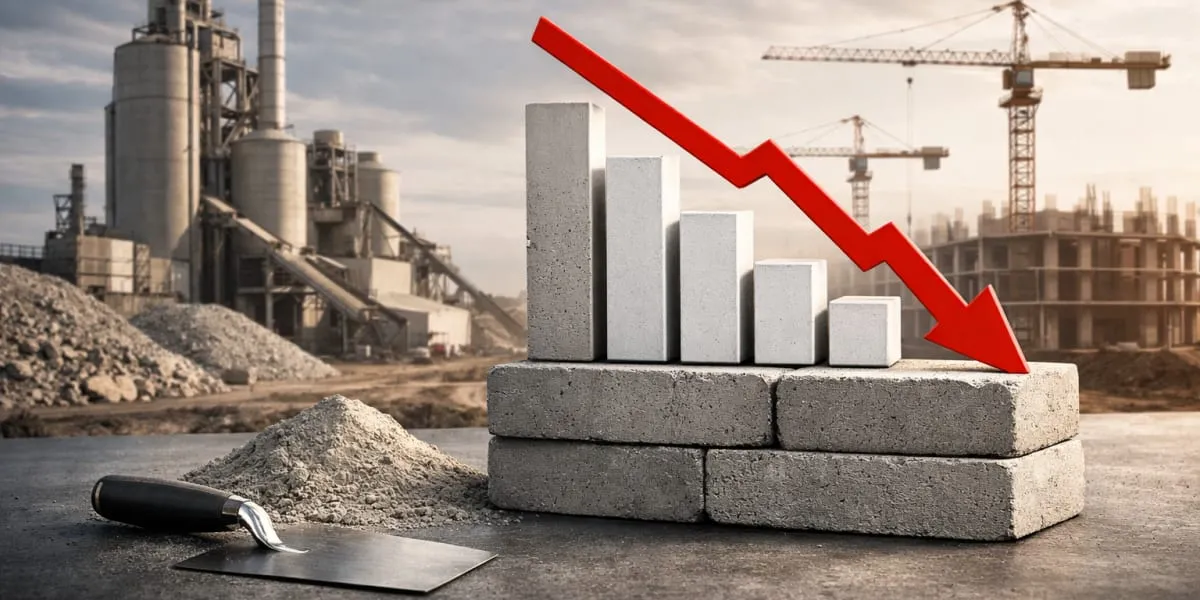
Ambuja Cements has said in its latest annual report that cement demand in India is likely to moderate to around five per cent in fiscal year twenty seven, marking a slowdown from the estimated six point five to seven point five per cent growth anticipated for fiscal year twenty six. The company described this as a transition to a more measured pace of expansion after several years of strong momentum in the sector.
It said that underlying demand drivers such as housing, infrastructure development, urbanisation and government capital expenditure remain intact and are expected to sustain cement consumption across regions. The report noted that global geopolitical uncertainties and weather risks, including forecasts of a below normal monsoon, could influence near term demand, while emphasising that the longer term infrastructure story for India continues to provide a solid foundation for the sector.
Industry observers have said that the sector may move towards mid single digit growth rates in fiscal year twenty seven after stronger performances in recent years. The company outlined a calibrated expansion strategy with capacity additions phased to match project pipelines, regional demand patterns and market absorption, seeking to avoid oversupply and pressure on pricing.
Ambuja has crossed the 100 million tonnes per annum capacity milestone (100 mn t per annum) following acquisitions and organic expansion, strengthening its position in the competitive market. The outlook in the report broadly aligns with other market assessments that placed demand at around five per cent in fiscal year twenty five, a recovery to six point five to seven point five per cent in fiscal year twenty six and an easing in fiscal year twenty seven as capacity increases. Executives remain focused on long term demand fundamentals driven by infrastructure and housing.
Gears, drives, and motors have evolved from essential mechanical components into strategic enablers of reliability, efficiency, and sustainability in modern cement plants. ICR explores how advanced motion technologies, predictive maintenance, digitalisation, and intelligent drive systems are helping cement manufacturers reduce downtime, optimise energy use, and build future-ready operations.
As the Indian cement industry prepares for another phase of capacity expansion, the focus is shifting from merely increasing production volumes to improving operational efficiency, reliability, and sustainability. According to industry estimates, India is expected to add nearly 160–170 million tonnes of cement capacity between FY26 and FY28, driven by infrastructure investments, urbanisation, and housing demand. In this environment, gears, drives, and motors have emerged as critical enablers of productivity, forming the backbone of every major process from raw material extraction and grinding to clinker production and cement dispatch.
Motors alone account for nearly 60 per cent to 70 per cent of industrial electricity consumption globally, according to the International Energy Agency (IEA), while rotating equipment failures remain among the leading causes of unplanned downtime across heavy industries. In cement plants, where equipment operates under high loads, extreme dust conditions, elevated temperatures, and continuous-duty cycles, the performance of gears, drives, and motors directly influences energy consumption, maintenance costs, plant availability, and overall profitability. As digitalisation and Industry
4.0 technologies gain momentum, these systems are evolving from passive mechanical components into intelligent assets capable of delivering real-time operational insights.
Why gears, drives, and motors are the backbone of cement plant operations
Every major process in a cement plant depends on the seamless operation of gears, drives, and motors. Raw mills, vertical roller mills, crushers, kiln drives, conveyor systems, fans, and clinker coolers all rely on rotating equipment to maintain continuous production. A failure in any one of these systems can disrupt entire process chains, highlighting their strategic importance.
Modern cement plants process thousands of tonnes of material daily, requiring equipment capable of transmitting enormous torque while maintaining precision and reliability. Kiln drives and grinding systems, in particular, operate under some of the highest mechanical loads found in industrial manufacturing. The ability of gears and motors to withstand these conditions directly impacts plant throughput and production stability.
Satish Maheshwari, Chief Manufacturing Officer, Shree Cement says, “Effective lubrication management remains one of the most critical factors in extending the lifespan of cement plant drive systems. Proper lubrication, supported by regular oil analysis, vibration diagnostics, and condition monitoring, helps minimise wear, prevent unexpected failures, and maintain the integrity of critical components such as gearboxes, motors, and drive assemblies. By identifying potential issues at an early stage, plants can move from reactive maintenance to a more proactive and reliability-focused approach.”
“Smart motors, intelligent drives, and next-generation gearboxes are set to redefine cement plant maintenance and performance. Equipped with embedded sensors, IoT connectivity, digital twins, and AI-driven diagnostics, these technologies enable real-time condition monitoring, predictive maintenance, and seamless digital integration. As the industry embraces Industry 4.0, smart drive systems will play a pivotal role in improving energy efficiency, reducing downtime, and optimising asset performance across the cement manufacturing value chain” he adds.
Industry studies suggest that rotating equipment accounts for a significant proportion of maintenance expenditure in process industries. Effective design, selection, and maintenance of gears, drives, and motors therefore have a direct influence on asset utilisation, operational efficiency, and total cost of ownership.
The cost of downtime: reliability challenges in rotating equipment
Unplanned downtime remains one of the most expensive challenges facing cement manufacturers. Industry estimates indicate that a major failure involving a critical gearbox, kiln drive, or grinding mill can result in production losses running into lakhs of rupees per hour, depending on plant capacity and operating conditions.
Sanjeev Arora, President – Motion Business & IEC LV Motors Division, ABB India says, “One of the most significant shifts taking place in industrial decision-making today is moving away from evaluating equipment based solely on upfront capital cost toward understanding total cost of ownership (TCO). In a typical motor system, the purchase price often represents only a small fraction of the total lifecycle cost however energy consumption, maintenance requirements, downtime and operating efficiency account for the vast majority of long-term operational expenses. For cement manufacturers operating in highly competitive markets, this distinction is critical.”
“A high efficiency motor paired with an appropriately configured variable speed drive may require a higher initial investment, but the long-term benefits are substantial. Reduced electricity consumption, lower maintenance needs, longer service intervals and improved process stability can deliver faster payback and stronger profitability over time” he adds.
Cement plants present a particularly challenging environment for rotating equipment. Dust ingress, thermal fluctuations, shock loads, vibration, shaft misalignment, and lubrication contamination contribute significantly to equipment degradation. Studies by SKF indicate that nearly 50 per cent of bearing failures are linked to lubrication issues and contamination, while improper alignment and vibration-related problems remain leading causes of gearbox and motor failures.
Energy-efficient motors and drives: unlocking operational savings
Energy is one of the largest operating expenses for cement manufacturers, often accounting for 25 per cent to 35 per cent of total production costs. Grinding operations alone can consume nearly 60 per cent to 70 per cent of a plant’s electrical energy, making energy-efficient motors and drives a strategic investment.
According to the International Energy Agency, high-efficiency motors combined with Variable Frequency Drives (VFDs) can reduce energy consumption by 20 per cent to 30 per cent in suitable applications. By matching motor speed and torque to actual process requirements, VFDs minimise unnecessary power consumption while reducing mechanical stress on equipment, improving both efficiency and reliability.
Advances in gearbox design and power transmission technologies
Modern gearbox technology has evolved significantly in response to the increasing demands of cement manufacturing. Advanced materials, case-hardened gears, optimised tooth profiles, improved surface finishing, and enhanced lubrication systems are helping reduce friction, wear, and thermal loading.
Girish Hanchate, Director – Industrial Market, India SKF India (Industrial) says, “Smart diagnostics are significantly improving the lifecycle of gears, motors, and other rotating equipment by enabling a shift from reactive maintenance to condition-based asset management. Hidden issues such as vibration anomalies, bearing defects, misalignment, and temperature fluctuations can quietly reduce plant throughput by 10 per cent to 20 per cent while increasing energy consumption long before a breakdown occurs. By leveraging advanced sensors, predictive analytics, machine learning, and real-time monitoring of vibration, temperature, and motor current, cement manufacturers can detect developing faults early, optimise maintenance schedules, and prevent costly secondary damage. This not only improves reliability but also supports energy efficiency and sustainability objectives.”
“The next major evolution in drive and bearing technology lies in the development of fully integrated smart mechanical ecosystems that combine high-performance bearings, advanced lubrication management, and digital intelligence. Sensor-enabled condition monitoring embedded directly within bearings and drive systems allows operators to capture critical operational data at the source, enabling predictive maintenance and real-time performance optimisation. Innovations such as SKF’s VA9A1 Spherical Roller Bearing series, engineered specifically for demanding cement applications such as crushers and kilns, demonstrate this trend. By increasing internal bearing space and optimising lubricant flow, these designs improve grease retention, reduce wear, minimise downtime, and create more resilient, energy-efficient rotating equipment systems for the future of cement manufacturing” he adds.
Manufacturers are increasingly focusing on compact, high-torque gearbox designs capable of delivering higher power density while maintaining service life. Innovations such as condition-monitored gear systems, improved sealing technologies, and modular gearbox architectures are simplifying maintenance while enhancing operational reliability.
Predictive maintenance, condition monitoring, and asset health management
The shift from reactive to predictive maintenance is transforming asset management across the cement industry. Technologies such as vibration monitoring, thermography, oil analysis, ultrasound testing, and motor current signature analysis are enabling operators to identify potential failures before they occur.
Research by Deloitte suggests that predictive maintenance can reduce breakdowns by up to 70 per cent and lower maintenance costs by 25 per cent. In cement plants, where shutdown windows are limited and equipment operates continuously, predictive maintenance offers a powerful tool for improving reliability and extending asset life.
Digitalisation, industry 4.0, and the rise of intelligent drive systems
Industry 4.0 technologies are redefining the role of gears, drives, and motors. Smart sensors embedded within motors, bearings, and gear systems can continuously monitor temperature, vibration, load, lubrication condition, and energy consumption.
Girish Hanchate says, “As the industry embraces automation, sustainability, and digital transformation, the importance of intelligent motion technologies will continue to grow. The convergence of advanced engineering, predictive maintenance, and Industry 4.0 solutions is creating a new generation of cement plants where reliability, efficiency, and sustainability work together to deliver long-term value. For cement manufacturers navigating increasing production demands and environmental expectations, investing in smarter gears, drives, and motors is no longer optional—it is a business imperative.”
Cloud-based monitoring platforms and Industrial Internet of Things (IIoT) architectures enable maintenance teams to access equipment health data remotely, improving visibility across geographically dispersed operations. Advanced analytics and
artificial intelligence are further enhancing fault detection capabilities, enabling more accurate maintenance planning.
The emergence of digital twins represents another significant development. By creating virtual replicas of physical assets, operators can simulate operating conditions, predict failures, optimise maintenance schedules, and improve lifecycle management decisions. These technologies are helping transform rotating equipment into intelligent assets that actively contribute to operational decision-making.
Building future-ready cement plants through smart motion technologies
The future of cement manufacturing will depend heavily on the ability to integrate mechanical reliability with digital intelligence. Smart motion technologies combine high-efficiency motors,
intelligent drives, condition monitoring systems, and automation platforms to create more responsive and efficient operations.
Sustainability goals are also accelerating investment in advanced motion technologies. Reduced energy consumption, improved equipment efficiency, and extended asset life contribute directly to lower carbon emissions and reduced resource consumption.
These benefits align closely with the industry’s decarbonisation objectives.
As capacity expansions continue across India, future-ready cement plants will increasingly prioritise reliability, flexibility, and data-driven decision-making. Organisations that successfully integrate smart motion technologies into their operations will be better positioned to reduce costs, improve productivity, and maintain a competitive advantage in a rapidly evolving market.
Conclusion
Gears, drives, and motors are no longer viewed solely as mechanical components; they have become strategic assets that influence every aspect of cement plant performance. Their reliability affects production continuity, their efficiency impacts operating costs, and their digital capabilities increasingly shape maintenance and operational strategies.
- –Kanika Mathur
Lubrication has evolved from a routine maintenance activity into a critical driver of reliability, energy efficiency, and sustainability in cement manufacturing. ICR explores how advanced lubricants, predictive maintenance, and Total Lubrication Management are helping cement plants reduce downtime, optimise performance, and achieve long-term operational excellence.
In the cement industry, discussions around operational excellence often focus on kiln efficiency, alternative fuels, digitalisation, and process optimisation. Yet one of the most influential factors affecting equipment reliability, energy consumption, maintenance costs, and sustainability often receives far less strategic attention: lubrication. From vertical roller mills and kiln drives to crushers, conveyors, clinker coolers, and large industrial gearboxes, every critical asset depends on effective lubrication to minimise friction, reduce wear, and ensure uninterrupted operation.
The importance of lubrication extends far beyond routine maintenance. According to tribology research, nearly 23 per cent of global energy consumption is associated with overcoming friction and replacing worn components. Researchers have estimated that implementing advanced tribological practices could reduce global energy consumption by as much as 8.7 per cent in the long term. For cement manufacturers operating in highly demanding environments characterised by abrasive dust, heavy loads, high temperatures, vibration, and continuous operations exceeding 8,000 hours annually, lubrication has evolved from a maintenance function into a strategic lever for reliability, sustainability, and profitability.
The significance of this opportunity becomes even clearer when viewed against the backdrop of the cement industry’s environmental challenges. According to the International Energy Agency (IEA), cement manufacturing accounts for approximately 7–8 per cent of global CO2 emissions and consumes nearly 5 per cent of industrial energy worldwide. While much attention is rightly directed toward alternative fuels, clinker factor reduction, and carbon capture technologies, maintenance practices such as lubrication remain one of the most practical and immediately deployable avenues for improving efficiency and reducing emissions.
Why lubrication is critical to cement plant reliability
Cement manufacturing relies on some of the most heavily loaded rotating equipment found in industrial production. Kiln support rollers, girth gears, vertical roller mills, crushers, conveyors, ID fans, and large gearboxes operate under extreme conditions where temperatures, loads, and contamination levels routinely challenge equipment integrity. Under such circumstances, lubricants serve not merely as friction-reducing agents but as essential protective barriers that prevent metal-to-metal contact, dissipate heat, minimise wear, and extend component life.
A modern integrated cement plant may contain thousands of lubrication points distributed across critical and auxiliary equipment. Even a minor lubrication-related issue can escalate rapidly when equipment operates continuously around the clock. Unlike batch manufacturing operations, cement plants often have limited opportunities for shutdowns, making asset reliability a key business priority. Effective lubrication directly contributes to machine availability, process stability, and production continuity.
Industry studies consistently demonstrate the relationship between lubrication and reliability. Research published by SKF indicates that approximately 36 per cent of premature bearing failures are caused by poor lubrication practices, while bearing damage accounts for nearly 50 per cent of rotating equipment failures globally. Similarly, studies by Machinery Lubrication have found that improper lubrication contributes to roughly 43 per cent of mechanical failures and more than half of bearing-related breakdowns. These statistics highlight a critical reality: lubrication is not simply a maintenance task but a reliability strategy.
The consequences of lubricant failure extend well beyond replacement parts. A failed bearing in a vertical roller mill, kiln drive, or critical conveyor system can trigger extended downtime, emergency maintenance costs, production losses, and supply chain disruptions. In large integrated cement plants, even a few hours of unplanned downtime can result in significant financial losses, making lubrication one of the most cost-effective reliability investments available.
Hidden cost of poor lubrication management
Many organisations continue to treat lubrication as a consumable expense rather than a strategic asset management function. This mindset often results in inconsistent lubrication schedules, incorrect lubricant selection, contamination issues, over-lubrication, under-lubrication, and inadequate monitoring practices. The resulting impact is often far greater than the actual cost of the lubricant itself.
Professor Procyon Mukhejee says “Lubricant purchasing often followed a conventional sourcing model: negotiate annual contracts, standardise product grades and optimise price. That logic is still relevant but no longer sufficient. In a cement plant, a lower-cost lubricant that reduces purchase spend may increase oil replacement frequency, raise wear rates or contribute to avoidable downtime. That trade-off is forcing procurement teams to think differently.”
According to industry research, up to 70 per cent of mechanical failures can be linked to contamination, improper lubricant selection, or inadequate lubrication practices. Noria Corporation estimates that world-class lubrication programmes can reduce maintenance costs by 20–40 per cent and extend equipment life by as much as 50 per cent. Conversely, reactive lubrication practices increase spare-part consumption, raise labour requirements, accelerate equipment wear, and elevate operational risk.
The hidden costs are particularly severe in cement plants because contaminants such as dust, moisture, and wear particles are ever-present. Even microscopic contaminants can damage bearing surfaces and gear teeth, leading to premature failure. Poor lubrication management also increases energy consumption because higher friction levels require greater power input to maintain production rates. As a result, the true cost of poor lubrication extends far beyond maintenance budgets and directly impacts overall plant profitability.
Lubricants and energy efficiency
Energy represents one of the largest operating expenses in cement manufacturing. Grinding operations alone account for approximately 60–70 per cent of total electrical energy consumption within a typical cement plant. Consequently, any improvement in equipment efficiency can generate substantial cost savings over time.
Lubricants contribute directly to energy efficiency by reducing friction between moving surfaces. Lower friction means less resistance, lower operating temperatures, and reduced power requirements. Advanced lubricant formulations are specifically designed to optimise film strength while minimising energy losses across gears, bearings, and hydraulic systems.
Dr SB Hegde, Global Cement Industry Expert says, “One of the most overlooked aspects of lubrication in cement plant operations is effective contamination control combined with disciplined greasing practices. Cement dust, which is often harder than bearing steel, can mix with lubricants and create an abrasive grinding paste that accelerates wear and is responsible for a significant share of bearing failures. Despite this, many plants still rely on manual, time-based greasing and outdated sealing systems, resulting in higher energy consumption, premature component wear, and frequent unplanned shutdowns. Automatic lubrication systems, coupled with robust dust exclusion measures, remain one of the most underutilised yet effective reliability solutions in the industry.”
“Smart lubrication practices can have a direct and measurable impact on both profitability and sustainability. The use of high-performance synthetic lubricants, combined with predictive oil condition monitoring, can typically deliver energy savings of 3–4 per cent, translating into substantial annual cost reductions for cement manufacturers. In one notable case, a large cement producer implemented wireless condition monitoring alongside advanced lubrication practices on critical assets and achieved a 57-times return on investment within six months. The initiative generated savings exceeding `8.4 crore and prevented a major bearing failure that could have caused more than 160 hours of downtime, highlighting the significant financial value of proactive lubrication management” he adds.
Research by ExxonMobil and other lubricant manufacturers has demonstrated that synthetic lubricants can reduce energy consumption in industrial gear systems by 2–6 per cent under appropriate operating conditions. While these savings may appear modest on an individual machine basis, the cumulative impact across multiple mills, fans, conveyors, and drive systems can be considerable. For large cement manufacturers operating energy-intensive facilities, even a 2 per cent reduction in power consumption can translate into significant annual cost savings.
Furthermore, reduced friction contributes to improved equipment performance and lower heat generation, enabling machinery to operate more consistently under demanding conditions. In an industry where energy efficiency and carbon reduction targets are becoming increasingly important, lubrication represents a practical pathway for achieving measurable improvements.
Advances in synthetic and high-performance lubricants
The lubricant industry has undergone significant transformation over the past decade. Traditional mineral oils are increasingly being supplemented or replaced by synthetic and semi-synthetic formulations engineered specifically for demanding industrial applications.
Modern synthetic lubricants provide superior oxidation resistance, thermal stability, viscosity retention, load-carrying capacity, and wear protection compared to conventional products. These characteristics are particularly valuable in cement applications where equipment is exposed to extreme temperatures, heavy loads, and continuous operation.
Many premium synthetic lubricants now deliver service lives two to five times longer than traditional mineral oils. This not only reduces lubricant consumption but also minimises maintenance interventions and associated downtime. For cement manufacturers, extended oil drain intervals can significantly improve equipment availability and reduce lifecycle costs.
Synthetic gear oils have gained widespread acceptance in applications such as kiln drives, vertical roller mills, and high-load gearboxes. Field studies have reported gearbox temperature reductions of up to 10°C following conversion from conventional lubricants to advanced synthetic alternatives. Lower operating temperatures contribute directly to improved component life, reduced oxidation, and enhanced overall reliability.
Predictive maintenance, oil analysis, and condition monitoring
The emergence of predictive maintenance has transformed lubrication from a reactive maintenance activity into a proactive asset management discipline. Rather than relying solely on time-based maintenance schedules, cement plants increasingly use oil analysis and condition monitoring technologies to assess equipment health continuously.
Oil analysis provides a wealth of information about both lubricant condition and machine health. Parameters such as viscosity, oxidation, contamination levels, moisture content, additive depletion, and wear particle concentrations can reveal developing problems long before equipment failure occurs. In many cases, lubrication-related abnormalities represent the earliest warning signs of impending mechanical issues.
Gaurav K Mathur says “Dust contamination remains the single biggest lubrication-related challenge affecting cement plant productivity today. Airborne silica and clinker dust penetrate bearings, gear housings, and lubrication systems, transforming lubricants from protective agents into abrasive mediums. These contaminants are often as hard as bearing steel and create a three-body abrasion mechanism that rapidly accelerates wear, especially under the high temperatures, shock loads, vibration, and continuous-duty operating conditions typical of cement plants. Poor sealing systems can increase wear rates by three to five times, leading to premature failures, rising maintenance costs, and reduced equipment life. Compounding the issue is a growing industry-wide shortage of experienced lubrication professionals, resulting in a loss of critical maintenance expertise and an increasing reliance on reactive rather than predictive maintenance.”
Reliability experts frequently describe oil analysis as a “blood test” for machinery because it provides valuable insights into internal equipment conditions without requiring disassembly. Studies suggest that every dollar invested in predictive maintenance can generate returns of five to ten dollars through avoided failures and reduced downtime.
Leading cement producers increasingly combine oil analysis with vibration monitoring, thermography, ultrasonic inspection, and digital condition monitoring platforms. This integrated approach enables maintenance teams to move from reactive maintenance to predictive asset management, reducing downtime while improving equipment lifespan and operational reliability.
Total lubrication management: a strategic approach to asset health
As reliability expectations continue to increase, many cement manufacturers are adopting Total Lubrication Management (TLM) programmes.
TLM extends beyond lubricant selection and incorporates every aspect of lubrication management, including storage, handling, contamination control, application methods, oil analysis, training, and continuous improvement.
Gaurav K Mathur, Director & Chief Executive, Global Technical Services says, “Smarter lubrication practices can significantly reduce both energy consumption and maintenance expenditure. The implementation of Total Lubrication Management (TLM), supported by careful lubricant selection, customised lubrication strategies, and robust contamination control, helps reduce friction across critical equipment and improve operational efficiency by up to 3 per cent. In energy-intensive cement plants, even marginal efficiency gains can translate into substantial cost savings. Improved lubrication practices also reduce wear, minimise overheating, extend equipment life, and lower the frequency of maintenance interventions, directly contributing to higher plant availability and lower total operating costs.”
“The most impactful innovation for the cement sector will not be a single lubricant product but the widespread adoption of Total Lubrication Management as a structured reliability framework. TLM integrates contamination control, oil analysis, condition-based maintenance, online filtration, lubricant regeneration, digital tracking, and condition monitoring into a unified system. This approach transforms lubrication from a routine maintenance activity into a strategic asset management function. The result is improved equipment reliability, reduced lubricant consumption, lower waste generation, enhanced energy efficiency, and a smaller carbon footprint. In an industry characterised by harsh operating environments and growing sustainability expectations, TLM offers a practical pathway to achieving higher reliability, improved profitability, and long-term operational sustainability” he adds.
One of the primary objectives of TLM is contamination control. Dust, moisture, and wear particles are widely recognised as the leading causes of lubricant degradation and equipment failure. Given the inherently dusty environment of cement plants, effective contamination control becomes essential for maintaining lubricant quality and equipment health. Another important component of TLM is lubricant consolidation. Many plants operate with dozens of lubricant grades, increasing inventory complexity and the risk of cross-contamination. Best-in-class lubrication programmes often reduce lubricant inventories by more than 30 per cent while simultaneously improving operational reliability.
Training also plays a critical role. Industry surveys suggest that fewer than half of lubrication technicians receive formal lubrication training. Yet organisations that invest in lubrication education consistently report lower failure rates, improved maintenance performance, and better asset utilisation. One widely cited industrial case study documented a reduction in bearing failures from nearly 400 per month to just 12 after implementing comprehensive lubrication excellence initiatives.
Supporting sustainability
Sustainability has become a central priority across the cement industry. While alternative fuels and carbon capture technologies often dominate discussions, lubrication also contributes significantly to environmental performance.
Longer-lasting lubricants reduce waste oil generation and disposal requirements. Large integrated cement plants may consume tens of thousands of litres of lubricants annually, making lubricant lifecycle management an important sustainability consideration. Extending drain intervals by even 50 per cent can substantially reduce lubricant consumption and associated environmental impacts. Improved lubrication also extends equipment life, reducing demand for replacement components and lowering the environmental footprint associated with manufacturing, transportation, and installation activities. By reducing friction and wear, lubricants enable machinery to operate more efficiently while consuming less energy.
Tribology researchers Holmberg and Erdemir estimate that advanced friction-reduction technologies could potentially reduce global carbon emissions by up to 1,460 million tonnes annually. Although this figure spans multiple industrial sectors, it
highlights the enormous sustainability potential of improved lubrication practices. For cement manufacturers pursuing net-zero ambitions, lubrication represents one of the most accessible and cost-effective tools available.
Digitalisation, automation, and smart monitoring
The future of lubrication management is increasingly digital. Smart sensors, Industrial IoT platforms, automated lubrication systems, and artificial intelligence are changing how maintenance teams manage equipment health.
Modern lubrication monitoring systems can continuously track temperature, viscosity, moisture levels, contamination levels, and lubricant condition in real time. This enables maintenance personnel to identify emerging issues before they affect production, allowing interventions to be planned rather than forced by equipment failures.
“The future of lubrication management will be defined by the integration of smart, data-driven, and automated systems powered by IoT sensors, artificial intelligence, and real-time oil condition monitoring. These technologies are enabling a shift from traditional schedule-based lubrication to predictive and prescriptive maintenance, where lubricant quantity, frequency, and selection are optimised based on actual equipment condition. The result will be near-zero unplanned downtime, lower lubricant consumption, higher equipment reliability, and improved Overall Equipment Effectiveness (OEE). As India continues to add significant cement manufacturing capacity, early adopters of intelligent lubrication technologies will gain a competitive advantage through lower operating costs, greater reliability, and stronger sustainability performance” says Dr Hegde.
Automated lubrication systems are also becoming more prevalent throughout the cement industry. By delivering precise lubricant quantities at predetermined intervals, these systems eliminate many of the inconsistencies associated with manual lubrication practices. The result is improved equipment protection, lower lubricant consumption, and enhanced reliability.
Market analysts forecast the global predictive maintenance market to exceed $50 billion by 2030, reflecting the growing importance of data-driven maintenance strategies. As digital technologies continue to mature, lubrication will become an increasingly integrated component of broader asset performance management systems.
Conclusion
As cement manufacturers pursue greater productivity, higher sustainability standards, and improved operational resilience, lubrication must be recognised as a strategic business function rather than a routine maintenance activity. The evidence is overwhelming: effective lubrication improves reliability, reduces energy consumption, extends equipment life, lowers maintenance costs, and supports sustainability objectives simultaneously.
The next frontier of cement plant optimisation will not be driven solely by larger kilns, more efficient mills, or alternative fuels. It will also be shaped by how effectively operators manage the health of their critical assets. Through advanced lubricants, predictive maintenance, oil analysis, contamination control, and Total Lubrication Management programmes, cement manufacturers can unlock substantial gains in operational performance while supporting long-term environmental and business goals.
In an increasingly competitive industry, lubrication is no longer merely about reducing friction. It is about enabling reliability, protecting profitability, and creating a foundation for sustainable growth. The plants that recognise this shift and invest in lubrication excellence today will be best positioned to meet the performance demands of tomorrow.
Trending News
-
Concrete4 weeks agoDalmia Bharat Acquires Jaiprakash Associates Cement Assets for ₹2,850 Crore
-
Concrete4 weeks agoVenus Pipes Commences Fittings Plant And Expands Seamless Capacity
-

Concrete4 weeks agoCovestro Showcases AI Material Solutions at COMPUTEX
-
Concrete3 weeks agoJK Lakshmi Advances LC3 Cement Expansion