Connect with us

Concrete

Many industries have limited options to decarbonise

Published

on

Shares

In the light of the recent announcement by NTPC of using Carbon Clean’s CDRMax™ carbon capture technology, Prateek Bumb, Co-Founder & CTO, Carbon Clean Solutions Limited, discusses their technology and its impact on industrial decarbonisation.

Tell us about the design and carbon capture power of the NTPC Power Plant by Carbon Clean.
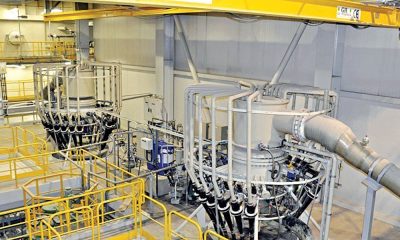
The carbon capture plant is designed to capture 20 tonnes of carbon dioxide (CO2) per day, from the flue gas of Unit-13 of the Vindhyachal Super Thermal Power Station. The CO2 will eventually be combined with hydrogen to produce 10 tonnes per day of methanol through a catalytic hydrogenation process.
Carbon Clean’s CDRMax™ carbon capture technology is being used for this demonstration project, which is the first step toward decarbonising the power plant. The objectives of the project are to review the economics, design optimisation and waste heat utilisation, in order to further reduce the overall cost of carbon capture and utilisation. Evidence suggests that it will be both feasible and cost-effective, by using our carbon capture technology – CDRMaxTM.

What is the key technology backing the power plant?
Carbon Clean’s CDRMax™ carbon capture technology can be used with point source gases that contain CO2 concentrations between 3 per cent and 25 per cent by volume and produces CO2 with purities greater than 99 per cent, which can then be sold, reused or sequestered.
The CDRMax™ process uses Carbon Clean’s proprietary solvent, process equipment design, and advanced heat integration to significantly reduce both capital and operating costs. Due to an extremely low rate of corrosion, smaller equipment, and other improvements, CDRMax™ has been proven to provide a 20 per cent CapEx reduction compared to other available solutions. Thanks to lower heat and energy demand, CDRMax™ reduces OpEx by 30 per cent to 40 per cent compared to other available carbon capture solutions.

Tell us about the disposal of the captured carbon.
Carbon utilisation or storage at industrial plants is determined on a case-by-case basis. For example, the carbon captured at the St Fergus Gas plant will be transported and permanently stored offshore, as part of the Acorn Project. Meanwhile, in a project with Tuticorin Alkali Chemicals & Fertilizers Limited, India, the captured carbon is converted to soda ash and sold to Unilever, which uses it to manufacture cleaning products.

What impact is Carbon Clean planning to make on industrial decarbonisation?
Heavy industry accounts for around 30 per cent of global carbon emissions. Many industries – such as cement, steel, and refineries – have limited options to decarbonise. Point source carbon capture offers these industries a means of tackling their emissions and it is available now.
Carbon Clean is leading innovation in point source carbon capture and addressing the barriers to mass deployment, which have mainly been the cost and space requirements to install the technology.
Our latest fully modular carbon capture solution, CycloneCC, overcomes these barriers. CycloneCC has a footprint that is up to 50 per cent smaller than conventional carbon capture units and it will be deployable in less than eight weeks. It also has the potential to reduce CapEx and OpEx by up to 50 per cent and drive down the cost of carbon capture to $30/tonne on average, which would make the economic case for carbon capture undeniable.
This latest innovation, alongside Carbon Clean’s recent funding round, puts the company on track to deliver industrial decarbonisation on a gigatonne scale by the mid-2030s.

How do you picture your contribution to the Indian industrial economy›s goal to reach net zero by 2070?
Outside of the project with NTCP, Carbon Clean is working with Tata Steel and Tuticorin Alkali Chemicals & Fertilizers in India. We also have a joint venture with Veolia – Veolia Carbon Clean – that is committed to reducing industrial carbon dioxide emissions and helping India achieve its climate goals through the development of a series of carbon capture and compressed biogas (CBG) projects.
Looking forward, achieving net zero in India, will require a collaborative effort between hard-to-abate sectors, government and technology providers, such as Carbon Clean.

Kanika Mathur

Concrete

Siyaram Recycling Secures Rs 21.03 mn Order From Anurag Impex

Domestic Fixed Cost Contract To Be Executed Within Seven Days

Published

on

By

Shares


Siyaram Recycling Industries Limited (Siyaram Recycling) has informed the stock exchange that it has secured a purchase order for brass scrap honey from Anurag Impex. The company submitted the intimation on 10 April 2026 from Jamnagar and requested the filing be taken on record. The filing was made under the provisions of regulation 30 of the SEBI listing regulations and accompanying circular. The intimation referenced the SEBI circular dated 13 July 2023 and included an annexure detailing the terms.

The order carries a fixed cost value of Rs 21.03 million (mn) and is to be executed domestically within seven days. The contract was described as a fixed cost engagement and the customer was identified as Anurag Impex. The announcement specified that the order size contributes a short term consideration to the company. Owing to the brief execution window, logistics and dispatch were expected to be prioritised.

The filing clarified that neither the promoter group nor group companies have any interest in the purchaser and that the transaction does not constitute a related party transaction. Details were provided in an annexure and the document was signed by the managing director, Bhavesh Ramgopal Maheshwari. The company referenced compliance with SEBI disclosure requirements in its notification. The notice indicated that no related party approvals were required owing to the nature of the transaction.

The order is expected to provide a modest near term revenue inflow and to be processed within the stated execution window given the nature of the product and the fixed cost terms. Management indicated the contract will be executed in accordance with standard operational procedures and accounting recognition at completion. The development signals continuing demand in the secondary metals market for brass scrap.

Continue Reading

Concrete

Nuvoco FY26 Income Rises 10% as Expansion Advances

Cement major reports higher income, EBITDA and growth-led capacity plans

Published

on

By

Shares


Nuvoco Vistas reported cement sales volume of 20.4 million tonne in FY26, up 5 per cent year on year. Consolidated total income rose 10 per cent to Rs 113.62 billion, while EBITDA increased 35 per cent to Rs 18.81 billion, reflecting improved profitability and stronger execution across the business.

The company stated that execution at the Vadraj Cement facilities is progressing, with clinker and grinding units expected to be operationalised in phases from the third quarter of FY27. Its planned 4 million tonne per annum expansion in eastern India is also moving ahead in phases till FY28 and is expected to take total cement capacity to around 35 million tonne per annum.

The board has also approved a new bulk cement terminal at Viramgam, Sachana, Gujarat, with a dedicated railway siding and handling capacity of about 1.5 million tonne per annum. Targeted for commissioning by FY28, the terminal is expected to strengthen distribution and improve market reach across Gujarat.

Premium products remained a key growth driver, with premiumisation improving by 300 basis points year on year to 43 per cent in FY26. The company said its Nuvoco Concreto and Nuvoco Duraguard brands continued to gain traction, while the RMX and MBM businesses also recorded momentum across key product segments. 

Continue Reading

Concrete

BMC Cement Concretisation Cuts Pothole Repairs By 70 Per Cent

Project worth Rs 170 billion (Rs 170 bn) aims to concretise 1,900 km by 2027

Published

on

By

Shares


The Brihanmumbai Municipal Corporation’s cement concretisation project, valued at Rs 170 billion (Rs 170 bn), has reduced expenditure on pothole repairs by 70 per cent over three years. Spending on repairs fell from Rs 2.02 billion in 2023–24 to Rs 1.56 billion in 2024–25 and then to Rs 890 million (Rs 890 mn) in 2025–26. The current tender is expected to be about Rs 440 million, representing a further 50 per cent reduction.

The project is being executed in two phases, with Phase I covering 307 km from October 2023 and Phase II covering 370 km from October 2024. The Indian Institute of Technology is auditing Phase II and will now also audit Phase I to ensure quality and accountability. Mumbai’s total road network spans approximately 2,050 km, of which about 1,200 km had been converted to cement concrete before 2022.

Since 2022 an additional 677 km were taken up for concretisation and nearly 71 per cent of that work, amounting to 481 km, has been completed. Municipal officials indicated that 10–15 per cent of the remaining work is expected to be completed by May 2026 and another 10 per cent by December 2026. The entire programme is scheduled for completion by May 2027, by which time nearly 1,900 km of Mumbai’s roads are expected to be fully concretised.

The administration has also developed a real time dashboard that displays detailed information about contracts, contractors and progress and citizens can access the latest updates online. The dashboard includes contact details for the civic officials and contractors responsible for particular roads to enhance transparency and accountability. The commissioner directed that ongoing works be completed by 31 May ahead of the monsoon to safeguard completion targets and minimise disruption.

Continue Reading

Video Thumbnail

    SIGN-UP FOR OUR GENERAL NEWSLETTER


    Trending News

    SUBSCRIBE TO THE NEWSLETTER


    Don't miss out on valuable insights and opportunities to connect with like minded professionals.


      This will close in 0 seconds