

Concrete
Taking Stock of the PAT Thresholds


The Perform, Achieve and Trade (PAT) launched by the Bureau of Energy Efficiency incentivises energy efficiency and consumption, resulting in economic benefits in the long term.
The Indian cement industry is involved in production of several types of cement such as Ordinary Portland Cement (OPC), Portland Pozzolana Cement (PPC), Portland Blast Furnace Slag Cement (PBFS), Oil Well Cement, Rapid Hardening Portland Cement, Sulphate Resisting Portland Cement, White Cement, etc. The Perform, Achieve and Trade (PAT) launched by the Bureau of Energy Efficiency under the Ministry of Power, Government of India, offers an opportunity to the industry to improve its energy efficiency and reduce energy consumption resulting in long term economic benefits in terms of reduced fuel expenditure with trading.
The key goal of the PAT scheme under NMEEE, is to mandate specific energy efficiency improvements for the most energy intensive industries, and further incentivise them to achieve better energy efficiency improvements that are superior to their specified SEC improvement targets. To facilitate this, the scheme provides the option to industries that achieve superior savings to be rewarded with energy saving certificates for the excess savings, and to trade the additional certified energy savings certificates with other designated consumers who can utilise these certificates to comply with their reduction targets. The Energy Saving Certificates (ESCerts) thus issued will be tradable on special trading platforms to be created in the power exchanges.
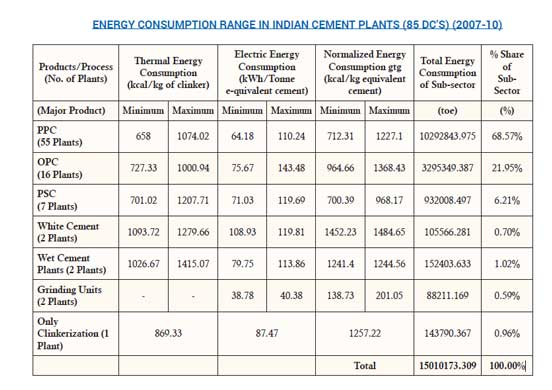
The Bureau of Energy Efficiency focused on development of normalisation factors so as to normalise the variation of operating parameters in the target year with respect to baseline operating parameters.
Let us look at the baseline energy consumption parameters taken for consideration before the normalisation thresholds were ascertained: It would be worthwhile to see how the industry has progressed against this baseline scenario for Thermal Energy Consumption and Electrical Energy Consumption as identified by the Bureau of Energy Efficiency.
The CII Energy Efficiency Audit conducted over several cement manufacturing units in 2018, provides us with the state of energy efficiency improvements achieved by the Indian industry stalwarts. While the names of the best individual performers have been kept undisclosed, we can at least see the top performing assets and the corresponding efficiencies they have achieved. The CII Report Energy Benchmarking (2019) has given the following data of the top best performing Cement Kilns in terms of Energy Consumption (CII Tables 4.1, 4.2, 4.3 and 4.3 – page 30).
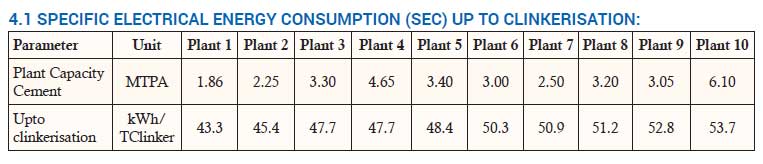
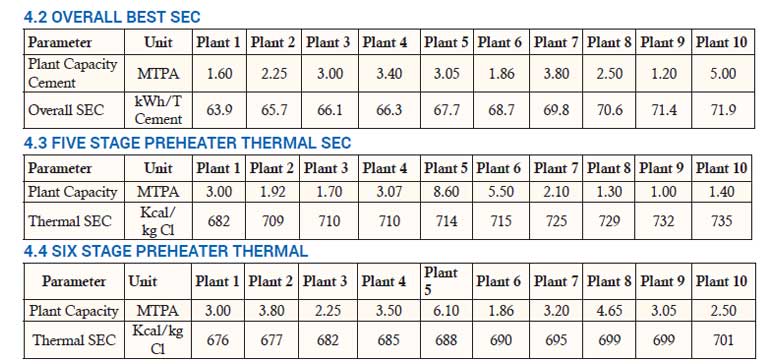
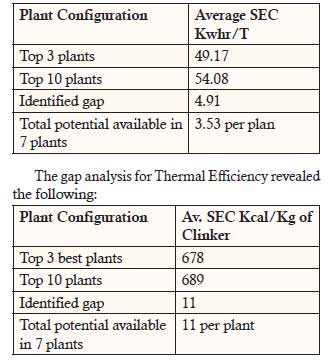
The data shows improvement in the energy efficiency, both in the electrical as well as in the thermal area. But this shows the top ten performers doing better than the benchmark values set in 2007- 10. However, we do not know what the average data for the industry is. CII has taken up many energy efficiency improvement projects for implementation with the industry and many of them have been implemented. The gap identified for Electrical efficiency is as follows:
Waste Heat Recovery (WHR) systems on the other hand has given major savings in energy and remains the major focus area for adoption to reduce the electrical energy and related emission. The economics of putting up a captive power generating unit versus putting up a WHR system shows unique advantages for cost reduction. The capital investment for waste heat recovery systems is high at Rs 8 Cr /MW going by the current costs, whereas the CPP units can come at Rs 4.5 cr/MW; however, the project IRR would be very different as the cost of generation would be as low as Rs 0.40 per unit for the former while Rs 4.5 per unit for the latter, which given the current trajectory of fossil fuel prices is already under severe stress of upward correction. It is only the initial cost that continues to act as a deterrent for putting up a WHR unit.
The Indian cement industry must act responsibly and move quickly to put in investments that could raise the WHR installed capacity to cross the minimum threshold of 25 per cent of electricity consumption. That will still be far from the 20 billion KWhr of total electricity consumption by the industry.
The other area of concern is the price trajectory of fossil fuels, which would continue to move northwards. The WHR systems are one simplest way of insulating the industry from the vagaries of future price increases.
Thus, waste heat recovery systems could be the natural hedge to fossil fuel price increases for a substantial portion of the electrical consumption. As matters stand, most WHR systems would be the highest IRR projects that the industry as an ensemble can think of today.










Concrete
Nuvoco Marks 10 Years, Targets 35 MMTPA Capacity by FY28
Nuvoco celebrates a decade of growth, targeting 35 MMTPA cement capacity by FY28.

Concrete
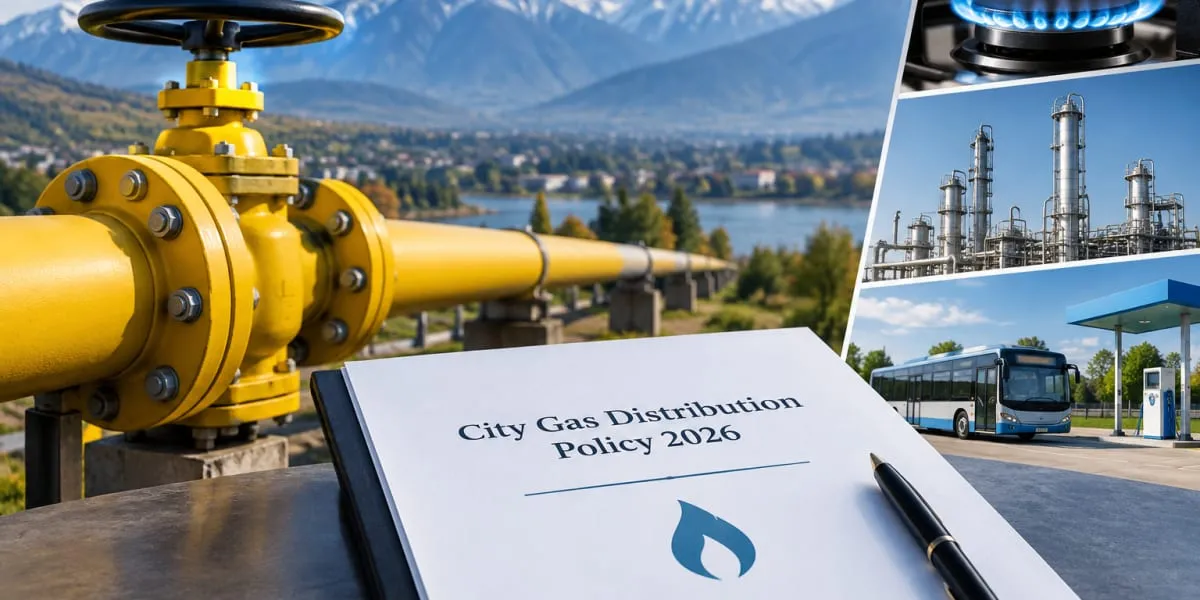
J&K Government Notifies City Gas Distribution Policy
Policy targets PNG and CNG expansion across all 20 districts
Concrete
JSW Cement Commissions 1 MTPA Grinding Unit at Nagaur
Nagaur unit lifts JSW Cement’s grinding capacity to 25.10 MTPA


Nuvoco Marks 10 Years, Targets 35 MMTPA Capacity by FY28

J&K Government Notifies City Gas Distribution Policy

JSW Cement Commissions 1 MTPA Grinding Unit at Nagaur

JSW Cement Commissions 1 MTPA Unit in Rajasthan

Wonder Cement appoints Mahesh Singh as VP Corporate Brand Communication
Nuvoco Marks 10 Years, Targets 35 MMTPA Capacity by FY28
J&K Government Notifies City Gas Distribution Policy
JSW Cement Commissions 1 MTPA Grinding Unit at Nagaur
JSW Cement Commissions 1 MTPA Unit in Rajasthan
Wonder Cement appoints Mahesh Singh as VP Corporate Brand Communication
-

 Concrete4 weeks ago
Telangana to Supply Subsidised Cement for Indiramma Houses
-

 Concrete2 weeks ago
Andhra Pradesh Clears Rs. 30 bn My Home Cement Plant
-

 Concrete2 weeks ago
JSW Cement Receives Rs. 2.3 bn GST Demand Notice
-

 Concrete4 weeks ago
Centre Defers Clearance for Limestone Mine Near Bustard Habitat