Connect with us

Concrete

Project size is key to shift to bulk supplies

Published

on

Shares

Anand Kumar Sharma, Logistics Head, JK Cement, brings to light the advantages of bulk distribution of cement and also focuses on the key changes that the industry is likely to witness such as innovations in types of cement and increasing role of e-commerce.

What is the volume of production in your cement plants and how much of it goes in bulk distribution?
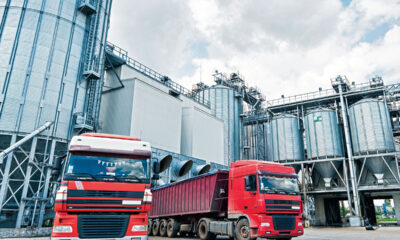
Volume of cement production in FY22 is close to 12 million tonnes out of which approximately 8 per cent was part of bulk distribution.

Which is the most suitable mode of transport for carrying large quantities of cement and why?

  • Railways is the most suitable mode of transport for carrying large quantities of cement on longer lead destinations.
  • Railways have lower freight costs compared to road transport, especially when shipping high volumes.
  • With the continuous increase of diesel rates in India, road freights consist of almost 40 per cent of fuel cost which makes it costlier than rail freights
  • Railways have standardised transit schedules, which aren’t hindered by traffic and weather.
  • Poor road infrastructure, vehicle movement restrictions on routes passing through villages and towns, add to delays and underutilisation of logistics assets, adding to cost increases which is not in case of railways.

Sea transport is the optimal mode of transportation and carries huge volumes of load. The transportation is economical compared to rail as well as road transport routes, which are comparatively congested but have very limited sources.

What are the various advantages attached to bulk distribution of cement?
The advantages attached to the bulk distribution of cement are as follows:

  • The loss on account of multiple handling and occasional bursting of bags is totally avoided.
  • Pilferage during transit and at the site is avoided
  • Dust emissions at railway yards, cement handling godowns, transportation by trucks and construction sites are now a major concern in cities. The resultant Suspended Particulate Matter (SPM) levels lead to crores of rupees being spent by the government towards health related issues. The use of bulk cement through modern bulk terminals and related equipment would significantly contribute to the reduction in pollution levels.
  • Plastic bags, which are currently the preferred mode of packing used in India, are not ideal as they are not environment friendly. Since these bags are non-biodegradable, it’s not a viable option therefore, bulk transportation avoids such pollution.
  • Moreover, a major advantage of transporting bulk cement is the easy availability in large volumes and consistent quality.
  • Transportation of cement in bulk has been able to reduce the project implementation time and cost optimisation.

How does distribution or transportation of cement in bulk impact the end user cost of the product?
There are two aspects of cost impact on the end user in relation to transportation of cement in bulk:
Institutional sales: In the institutional segment, there are some benefits of bulk supplies to our customers. However, it requires storage infrastructure hence there’s a cost factor. This cost would be set off by discounts/price negotiations on bulk supplies. In the case of bagged cement, apart from bag cost there would be handling cost, first at the time of delivery and other at the time of usage. So, this cost can be avoided by setting up bulk silos. However, project size is key to shift to bulk supplies.
Trade/IHB sales: With the current infrastructure (load size) it would be difficult to shift bag supplies to bulk. The IHB sector contributes 55 to 60 per cent of total cement demand and the lot size is also small. Average consumption quantity in this space is around 700 to 800 bags/site in a span of 4 to 5 months which is effectively one bulker load but the customer buys this quantity of cement in small lots – of 50 bags or less. So, it would not be feasible to shift a very big chunk of supplies to bulk.
Apart from this, the transportation cost of bulk supplies is much higher than bagged supplies for one very common reason – i.e. return load.

What are the major challenges or gaps faced by your organisation in the bulk distribution domain?
Major challenges faced by our organisation in the bulk distribution domain are as follows:

  • There is always a storage infrastructure challenge at bulk sites due to which silos are needed at customer sites, which leads to some cost implications. Moreover, it is feasible only in the case of long term projects/sites of at least two years of duration. Therefore, there is a need to explore infrastructure of movable silos to overcome this challenge but again this will involve a major cost impact.
  • Though over the period bulk demand for cement has increased but not to the extent where timely unloading of the fleets and vehicle rotation can be optimised. In bulk distribution vehicles often get detained at customer sites for multiple days due unforeseen circumstances like a vehicle breakdown at the site or rain etc.

Explain your organisation’s distribution model.

How can a curated logistics system help in achieving the sustainability goals for the industry?

  • The curated logistics system would help in the following ways to achieve the sustainability goals for the cement industry.
  • Clean energy resources – Companies have to explore EVs and CNG/LNG vehicles more and more to reduce the carbon footprint.
  • Shift of mode of transport to rail/sea would help in achieving sustainability goal.
  • Government has to increase the carrying capacity of the fleet thereby resulting in lower fuel to carry higher volume.
  • Eco-driving education and tracking of drivers is another significant way to reduce fuel consumption. It also minimises the risk of possible damages to the driver.
  • Using tyre pressure sensors helps fuel consumption by up to 12 per cent at lower speeds, as well as extending the tyre’s life.

What are the key changes the industry is likely to witness in the near future?
Key changes the industry is likely to witness in the near future are:
Increase in demand: Based on Kanvic’s Cement Demand Projection Model developed specifically for Indian Cement Review Vision 2030 shows that cement demand in India will increase by 116 per cent by 2030 to 660 million metric tons (MMT) at a CAGR of 6.6 per cent.
Paper bags for cement: Cement manufacturers will switch to sustainable solutions and replacing conventional plastic bags with high shelf life paper bags. The use of paper bags for cement packaging enhances the aesthetic appeal and provides ease of printability. Paper bags for cement packaging will ensure product protection from moisture.
Increase of Ready Mix Concrete (RMC): RMC allows speedy construction through programmed delivery at the site and also reduces the labour cost. RMC comes with consistency in quality through accurate and computerised control of sand aggregates and water as per mix designs. Production of
RMC helps in minimising cement wastage due to bulk handling.
Shrinking IHB sector: With rapid urbanisation and infrastructure developments in urban areas, it is predicted that the IHB sector will shrink and large builder/commercial infrastructure will increase
Increase of new types of cements: Limestone Calcined Clay Cement (LC3) a new environment-friendly additive for concrete that makes it easier to produce high-performance concrete at a lower cost. This cement has shown that it can reduce as much as 30 per cent CO2 emissions and 20 per cent energy consumption in cement production. Still, the performance of the concrete produced using this cement exceeds those using cement commercially available today in most aspects.
Cement in e-commerce: India’s e-commerce industry is expected to grow by 84 per cent by 2024. E-commerce platforms offer customers an array of cement brands to choose from at the best competitive price by removing middle men cost. There are a few players who have already forayed into the online procurement of cement via e-commerce platforms in the last one or two years

-Kanika Mathur

Concrete

UltraTech Cement FY26 PAT Crosses Rs 80 bn

Company reports record sales, profit and 200 MTPA capacity milestone

Published

on

By

Shares


UltraTech Cement reported record financial performance for Q4 and FY26, supported by strong volumes, higher profitability and improved cost efficiency. Consolidated net sales for Q4 FY26 rose 12 per cent year-on-year to Rs 254.67 billion, while PBIDT increased 20 per cent to Rs 56.88 billion. PAT, excluding exceptional items, grew 21 per cent to Rs 30.11 billion.

For FY26, consolidated net sales stood at Rs 873.84 billion, up 17 per cent from Rs 749.36 billion in FY25. PBIDT rose 32 per cent to Rs 175.98 billion, while PAT increased 36 per cent to Rs 83.05 billion, crossing the Rs 80 billion mark for the first time.

India grey cement volumes reached 42.41 million tonnes in Q4 FY26, up 9.3 per cent year-on-year, with capacity utilisation at 89 per cent. Full-year India grey cement volumes stood at 145 million tonnes. Energy costs declined 3 per cent, aided by a higher green power mix of 43 per cent in Q4.

The company’s domestic grey cement capacity has crossed 200 MTPA, reaching 200.1 MTPA, while global capacity stands at 205.5 MTPA. UltraTech also recommended a special dividend of Rs 2.40 billion per share value basis equivalent to Rs 240.

Continue Reading

Concrete

Towards Mega Batching

Optimised batching can drive overall efficiencies in large projects.

Published

on

By

Shares


India’s pace of infrastructure development is pushing the construction sector to work at a significantly higher scale than previously. Tight deadlines necessitate eliminating concreting delays, especially in large and mega projects, which, in turn, imply installing the right batching plant and ensuring batching is efficient. CW explores these steps as well as the gaps in India’s batching plant market.

Choose well

Large-scale infrastructure and building projects typically involve concrete consumption exceeding 30,000-50,000 cum per annum or demand continuous, high-volume pours within compressed timelines, according to Rahul R Wadhai, DGM – Quality, Tata Projects.

Considering the daily need for concrete, “large-scale concreting involves pouring more than 1,000–2,000 cum per day while mega projects involve more than 3,000 cum per day,” says Satish R Vachhani, Advanced Concrete & Construction Consultant…

To read the full article Click Here

Continue Reading

Concrete

Andhra Offers Discom Licences To Private Firms Outside Power Sector

Policy allows firms over 300 MW to seek distribution licences

Published

on

By

Shares


The Andhra Pradesh government will allow private firms that require more than 300 megawatt (MW) of power to apply for distribution licences, making the state the first to extend such licences beyond the power sector. The policy targets information technology, pharmaceuticals, steel and data centres and aims to reduce reliance on state utilities as demand rises for artificial intelligence infrastructure.

Approved applicants will be able to procure electricity directly from generators through power purchase agreements, a change officials said will create more competitive tariffs and reduce supply risk. Licence holders will use the Andhra Pradesh Transmission Company (APTRANSCO) network on payment of charges and will not need a separate distribution network initially.

Licences will be granted under the Electricity Act, 2003 framework, with the Central and State electricity regulators retaining authority over terms and approvals. The recent Electricity (Amendment) Bill, 2025 sought to lower entry barriers, enable network sharing and encourage competition, while the state commission will set floor and ceiling tariffs where multiple discoms operate.

Industry players and original equipment manufacturers welcomed the policy, saying competitive supply is vital for large data centre investments. Major projects and partnerships such as those involving Adani and Google, Brookfield and Reliance, and Meta and Sify Technologies are expected to benefit as capacity expands in the state.

Analysts noted India’s data centre capacity is forecast to reach 10 gigawatts (GW) by 2030 and cited International Energy Agency estimates that global data centre electricity consumption could approach 945 terawatt hours by the same year. A one GW data centre needs an equivalent power allocation and one point five times the water, which authorities equated to 150 billion litres (150 bn litres).

Advisers warned that distribution licences will require close regulation and monitoring to prevent misuse and to ensure tariffs and supply obligations are met. Officials said the policy aims to balance investor requirements with regulatory oversight and could serve as a model for other states.

Continue Reading

Video Thumbnail

    SIGN-UP FOR OUR GENERAL NEWSLETTER


    Trending News

    SUBSCRIBE TO THE NEWSLETTER


    Don't miss out on valuable insights and opportunities to connect with like minded professionals.


      This will close in 0 seconds