Concrete
Creating Pathways to Neutralise the Impact of Carbon Emission in India

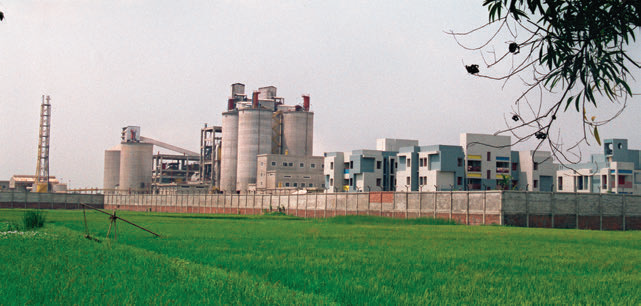
Indian cement companies are way ahead of their western counterparts in curbing carbon emissions. India’s contribution to decarbonisation is well received and applauded by the global community.
Indian cement companies are way ahead of their western counterparts in curbing carbon emissions. India’s contribution to decarbonisation is well received and applauded by the global community. However, much is yet to be achieved if we are to meet our net zero targets. We present an overview of how the industry is accelerating its endeavours at becoming carbon neutral, efficiently sustainable and environment positive.
India was the second largest producer of cement in the world accounting for over 7 per cent of the global installed capacity, as per a report published by the Statista Research Department, India, in 2020. The cement consumption in India stood at 340 million metric tonnes. Dominated by the private sector, the industry is instrumental in building the economy of the country at large, attracting global investments and interest in technological advancements and alternative methods.
As discussed at the Concreatech Conference 2018, a Cement Manufacturers Association Initiative (under the Ministry of Environment, Forest and Climate Change, Government of India), more than 10 million houses are to be constructed in urban India and about 3.7 million houses have been sanctioned for rural India; redevelopment of around 900 railway stations is on the anvil and, of course, 99 cities have been selected under the Smart Cities Mission for development of infrastructure. This would largely demand cement for their implementation.
Similarly, the Bharatmala Pariyojna by the government of India, aims at the construction of 83,677 km (51,994 mi) roads, including 34,800 km (21,600 mi) of additional highways and roads across the country, apart from an existing plan of building 48,877 km (30,371 mi) of new highways by the National Highway Authority of India. This plan is set to be implemented in two phases. Phase 1 from 2017 to 2022 and the Phase 2 by December 2024.
The housing and real estate sector of India accounted for approximately 55 per cent of the total cement consumption in the financial year 2020-2021. With initiatives like building ‘Smart Cities Mission,’ building road infrastructure and the massive development taking place in the country, the consumption of cement is only going to rise and is expected to go up to 550 million metric tonnes by 2025.
The Indian cement industry is also one of the leading employment providers of the country and employs about 20,000 people downstream for every million tonnes of cement produced, according to the Cement Manufacturers Association.
Energy efficiency
The process of cement making, from mining to packaging, is an energy intensive process that emits carbon dioxide and other Greenhouse Gases (GHG) in the environment at various stages. The rising demand of cement is a testament that this damaging impact will deepen on the environment. Constituting a total of 8 per cent of national emission, it is a resultant of electricity usage, combustion of fossil fuels and conversion process of limestone to lime. In 2020, the total emission was valued at 123 million metric tons of carbon dioxide (MtCO2). Average ‘specific thermal energy consumption’ and average ‘specific electrical energy consumption’ in the Indian cement industry is 3.1 GJ/tonne of clinker and 80 kWh/tonne of cement, respectively.
There are two major reasons to cut or reduce the emissions by the cement industry: to meet the global climate targets and to reduce air pollution which is a prime cause for health issues in the Indian population. This presents the industry with a unique challenge that is not widely understood beyond the sector. Major players in the cement industry in India are complying to standards for the environment and have pledged themselves within the Paris Agreement that aims to cut down on the GHG emissions and move towards a carbon zero environment.
This agreement is a legally binding international treaty on climate change under the United Nations. Its goal is to limit global warming to well below 2, preferably to 1.5 degree Celsius, compared to pre-industrial levels. In this landmark agreement, nations and global players of the cement industry come together for a common cause to undertake ambitious efforts to combat climate change and adapt to its effects.
Roadmap to greener pastures
The Global Cement & Concrete Association (GCCA) has laid a roadmap to achieve carbon-neutral concrete by 2050. This would require use of alternative sources of energy, innovation in technology, energy compliant equipment and activities towards the environment that help neutralize the carbon emitted by the cement manufacturing process. Decarbonisation refers to the process of reducing the carbon dioxide output from a particular process.
In 2019, the many companies and the World Business Council for Sustainable Development (WBCSD) launched the Indian Cement Sector SDG Roadmap. The Sustainable Development Goals (SDGs) represent a universal framework to collectively achieve prosperity goals for nations to achieve on the road to 2030. It also presents business opportunities and the council has advised to keep these goals as the core of company policies to open up bigger and better business opportunities with players from across the globe.
Convened by nine leading cement manufacturers in India, namely, ACC, Ambuja Cement, CRH, Dalmia Cement (Bharat) Limited, Heidelberg Cement, Shree Cement, Orient Cement, UltraTech Cement as well as Votorantim Cimentos, India launched a country level roadmap to explore the Sustainable Development Goals Agenda for 2030. Within this initiative, the companies work on multiple factors like interaction amongst one another about achieving SDGs, identifying key areas where the most transformative developments and installations can take place that aid the companies to achieve their goals, and means and methods to maximise the sustainable impact on the environment through various projects, policies and regulations.
The Intergovernmental Panel on Climate Change (IPCC) is the United Nations body for assessing the science related to climate change. According to IPCC, to limit global warming to 1.5-2°C, global CO2 emissions must fall by 55 per cent by 2030 compared to 1990 levels. Currently, cement emissions are down only about 20 per cent based on 1990 levels.
The challenge to achieve this is two fold. Cement manufacturing is an energy intensive process, which is mainly done through non-renewable resources. The other is the emission of carbon dioxide due the burning of limestone in the pyroprocessing method.
For every tonne of cement produced, one tonne of carbon dioxide is produced. two-thirds of this emissions comes from the limestone burning process, while the remaining is from the energy required for the process.
Cement industry in India has taken major steps to move forward in the direction of carbon-zero cement by adapting to alternative raw materials, alternative sources of energy and carbon capture technology to reduce the emission of carbon. Besides taking steps to reduce the emission, they have also created waste management facilities, green belts, water reserves and much more to lessen its impact on the environment.
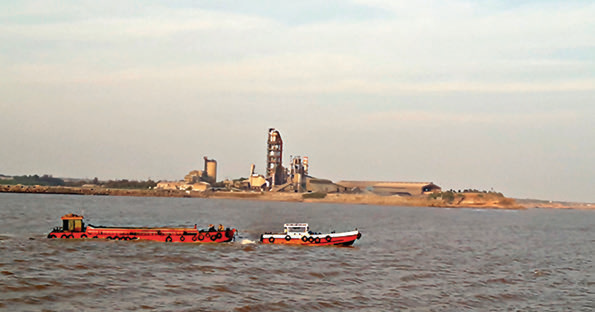
One of the most sought after paths towards reducing carbon emission is use of alternative
energy sources for heating the kiln in cement manufacturing. The Indian cement industry has moved towards consuming fly ash produced by India’s thermal power plants. It aso consumes 100 per cent of slag produced by India’s steel sector leading to lesser waste and lower emission levels, which is a win-win for all of the mentioned industries and mostly for the environment.
UltraTech Cement, India’s largest producer of grey cement, white cement and ready-mix concrete is driving sustainability across its value chain of operations. As published in their Sustainability Development Goals report, the company aims to reduce 22.2 per cent of carbon emissions for every ton of cementitious material it produces by March 31, 2030 from the levels of March 2017. A total
of 6 per cent reduction in CO2 emissions on the base year value of 2017 has been achieved till March 31, 2021.
“At JK Lakshmi Cement, we are working towards achieving a carbon neutral environment by use of alternative fuel, raw materials and energy sources, waste management and reuse. We have solar power plants that we use to power the kiln which saves energy consumptions and helps create a positive outcome in the manufacturing process,” says
Dr. Hitesh Sukhwal, Senior Manager (Head Environment), JK Lakshmi Cement.
“We have taken up a Thermal Substitution Rate target of 10 per cent by 2025 and are on the path to achieving that with alternative fuels and optimisation through waste reduction and recovery is on target to achieve the sustainability goals of the organisation,” he adds.
Carbon emission has become a matter of concern and a topic of discussion globally. Big scale manufacturers are understanding the consequences of this emission and are putting an effort towards reducing it. At various levels of the country’s government and global scale, associations are forming to achieve the sustainability goals.
Prashant Bangur, Joint Managing Director, Shree Cement, says “Five years ago, there were no norms for C02 and N2O emission through clinker. The new government, thankfully, has created norms, which put a limit on the carbon or sulphur that we can emit in the environment. The whole industry has to comply with these limits set by the government and monitor their emissions”.
At the COP26 Climate Summit at Glasgow, India has committed to achieve a net-zero emission by 2070. Leading cement manufacturers of India have become a part of GCCA India and have started working on achieving the goal by bringing down the carbon emissions from the industry by 45 per cent by 2030. This will be done by focusing on clinker substitution, using alternative fuels, heat and waste recovery and reuse, and use of newer and better technologies to support the pledge that the nation has taken towards the betterment of the environment.
Kanika Mathur

Concrete
Ultra Concrete Age
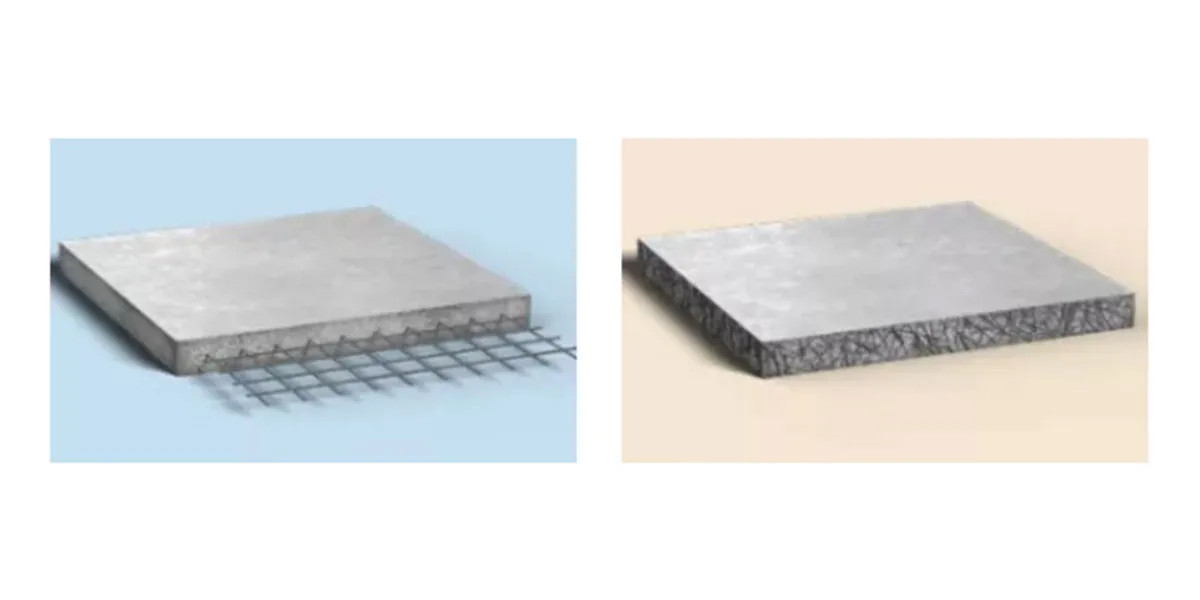
Prof. A. S. Khanna (Retd., IIT Bombay) on how Ultra-high performance concrete (UHPC) improves strength, durability and lifecycle performance.
Concrete
NCB Signs MoU With Cement Manufacturer To Boost Construction Skills
Partnership to deliver nationwide training and certification
Concrete
JSW Cement Commissions Nagaur Plant, Enters North India
New Rajasthan unit boosts capacity to 24.1 MTPA and expands reach


Ultra Concrete Age

NCB Signs MoU With Cement Manufacturer To Boost Construction Skills

JSW Cement Commissions Nagaur Plant, Enters North India

Cement Prices Likely To Rise As Petcoke Costs Increase

IIT Guwahati Develops Radiation-Resistant Cement Mortar
Ultra Concrete Age
NCB Signs MoU With Cement Manufacturer To Boost Construction Skills
JSW Cement Commissions Nagaur Plant, Enters North India
Cement Prices Likely To Rise As Petcoke Costs Increase