

Concrete
IT enables cost-effective clinkerisation at Samrat Cement plant

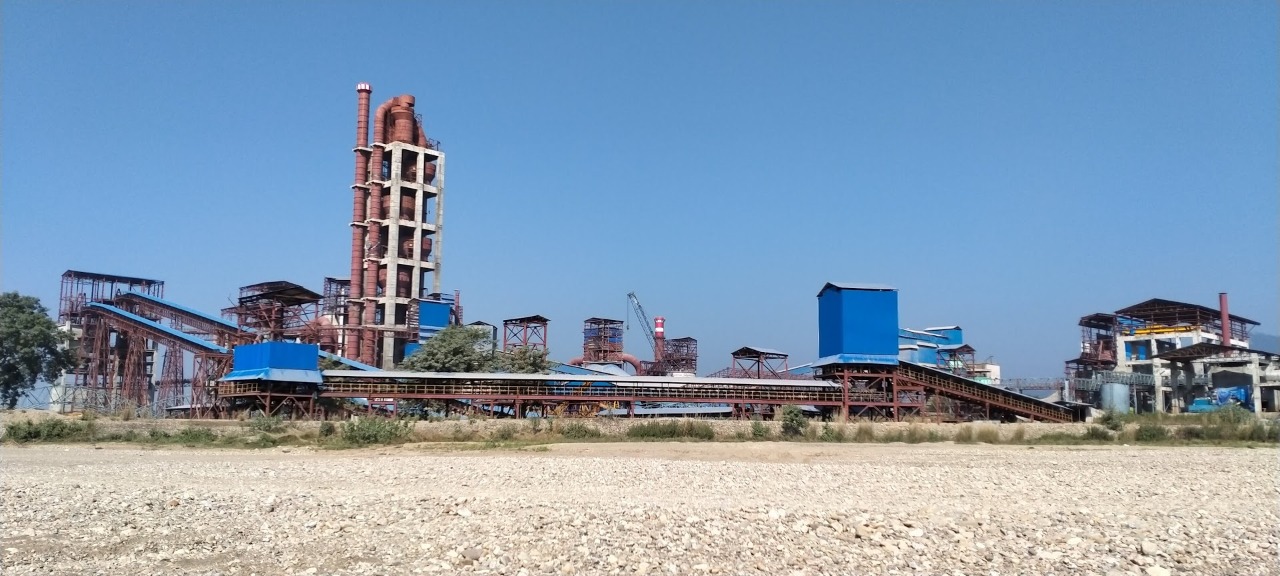
The cement Industry in Nepal mainly depends on clinker received from Indian cement plants, which is then put into the grinding process in Nepal before sending into the market. One of the biggest challenges for Nepal-based cement companies is the ever-increasing cement manufacturing cost due to surges in the cost of clinker and other raw materials. Availability of resources is another big challenge. Hence, having a clinkerisation plant locally is becoming a need for them to survive in this sector.
Samrat Cement was facing the same challenge. The company came into the cement sector in 2013-14 with their grinding and packing unit at Lamahi-District Dang in Nepal with a vision to build a brand with enhanced quality cement. After establishing itself as a strong brand in Nepal, the company?? vision was to own a clinkerisation plant to cope with cement demand and to survive with manufacturing costs.

Conceptualisation of Project
To meet its vision, Samrat cement awarded a 4000 TPD Clinkerisation Plant to KHD Humboldt Wedag Indiain 2018. The first land excavation started in November 2018, and the entire project was completed in December 2020 with the first production of clinker in January 2021. As added by Basudev Pandeya, Managing Director of Samrat Cement, clinkerisation plant was conceptualised on the following basis.
-
The cost of clinkerisation has to be lower down about 20 to 25 per cent from purchased clinker.
-
The project must be conceptualised in such a manner that the co-generation to be capable to cater the power requirement of the total clinkerisation plant excluding Raw Material grinding.
-
During the selection of clinkerisation plant technology suppliers were called and the best technology was selected.
The main performance parameters are as under:
-
Clinkerisation plant capacity between 3500-4500 TPD to get an optimum range of Co-generation and heat-saving benefits.
-
Raw Material Grinding: KHD Roller Press capacity 345 tph with a specific power of 11.75 Kwh/t Raw meal.
-
KHD High-efficiency cyclone 5 stage Pre-heater (First installation) with a Pressure drop of 300 mmwg at PH fan Inlet and lowest heat consumption.
-
Total Specific power consumption from crusher to Clinkerisation as 43-45 kwh/t.
-
Selection of Roller Press in Raw material grinding enables low heat requirement hence more co-generation possible.
-
Waste Heat recovery plant with hot air
Fast track project with a Target time of completion of 18-24 months

IT Solution to meet the challenges
Based on the above consideration, KHD deployed an energy-efficient grinding machine, Roller Press (RP 16-170/180, Roller surface- CHF), in a closed circuit with V-separator (VS 96/20) dynamic separator (SKS ??LC 3500).
The advantage of this system is that higher capacity requirements are met with lower power consumption.
For Pyro-processing Line, new generation Preheater consists of newly developed High-Efficiency series HE cyclones (PH- 90HE72), Pyro top, Low NOx PYROJET Kiln Burner, 3 station rotary kiln (4.2 m dia x 65 m long), IKN cooler with 90M2/effective cooler area.
The implementation also included other equipment — Limestone crusher-stacker- Reclaimer (Make- Tenova Takraf, 650 TPH), Coal Crusher-Stacker ??eclaimer (Make- Lepton, 150 TPH) & coal mill (VRM-make Pfeiffer, 35 TPH).

Cost-analysis and decision-making
Pandeya said, ??xecuting a 1.5 million tonne per annum cement project at a hilly area like Nepal was never an easy task and required many resources and committed teamwork, further we faced a challenge when it falls during pandemic duration for about 8-9 months hence completing this project within two years is really a success story.??He added further that it would not be possible without the professional skills of the Samrat Team and the professional and enriched experience of KHD Humboldt Wedag India.
Talking about the plant location, the clinkerisation unit of Samrat Cement is located at Satbaria nearby Lamahi Town on verge of the National highway connecting Butwal-Nepalgunj, which is most favourable for a clinkerisation unit because the raw materials are available within a short distance and transportation of product and materials to their destination becomes very easy via national highway.
Plants in Nepal usually require a DG set to run clinkerisation or a UPS of 5-6MW capacity. It is noteworthy that plants, where it is required to have DG sets to run on a continuous basis, will be about three times costlier as compared to the cost of Grid power/co-generated power.
Samrat Cements wanted to go for a better solution, so they finalised on KHD five-stage pre-heater mainly to ensure the co-generation up to 30 to 35 Kwh/t clinker is met. This means there was no need to have any UPS or DG set to continue for the clinkerisation plant.
Pandeya further explains that one side it may look that this decision is costlier in terms of specific heat consumption which is about 20 Kcal/kg as compared with six stage pre-heater technology but on the other hand, the KHD high-efficiency pre-heater solution has its advantage with specific power saving of three units in PH fan and co-generation of additional three units at Pre-heater.
Specific power consumption has about one-third of the cost than that generated by DG sets. (Grid Power costs about 8 to 10 NPR/unit whereas DG generated power costs about 24-27 NPR/unit) so a total of six units saving gives a clear-cut monetary term advantage of about double as it lost in extra heat in five-stage pre-heaters in comparison to 6 stage pre-heater. [Consideration 27 NPR/kwh cost of power with DG set, 15,000 NPR/T landed cost of South African coal, 710 kcal/kg.cl heat consumption, 5500 kcal/kg heat value]
Benefits of a 5 stage Pre-heater
Samrat Cements believed that having a five-stage pre-heater was a wise decision as many plant sites including Nepal do not have strong soil, which may not be suitable for a pre-heater height of more than 125 m. Hence, for higher capacity kiln lines, it may require going for twin string of preheater tower, which has an impact of 20 per cent in civil cost. Below are the advantages.
Planning and execution
Clinkerisation plant was sequenced to start with Limestone crusher along with stacker reclaimer unit and this dc was achieved one month before the kiln light-up. A raw mill that is equipped with roller press was started 15 days before kiln light-up as the roller press circuit does not require hot gas during start-up as compared to VRMs where it is mandatory. This is how the company saved on the cost of Hot air generator.
Around 5000 tonnes of raw meal were grounded with roller press operated in finish mode and kept ready in raw meal silo. Coal mill was started along with kiln light-up and clinker was achieved very fast within 72 hours from kiln start-up.
As per plant operating personnel, the roller press operation in raw material grinding is found to be very simple and trouble-free. Moreover, it is energy efficient.
So far, the total clinkerisation power best achieved is 42.4 kwh/t (Table1). However, the plant started just a few months ago and the company sees great potential to further optimise below 40kwh/t.
Roadmap
Samrat Cement, Nepal is towards a mission of achieving manufacturing cement with the lowest energy consumption and at an economic cost. Producing green cement, minimising carbon emission, energy efficiency, using alternative fuels, and saving water are some of the targets set by the company in near future. Below is a detailed roadmap.
-
Producing green cement with a minimum carbon footprint and saving water. Hence waste heat recovery and roller press technology were given priority.
-
Commissioning of waste heat recovery system, which will cover almost all power consumption of pyro-section excluding some intermediate departments.
-
Expected pay-back period is 2.5 to 3 years for WHRS when compared with DG power.
-
Waste heat recovery system is expected to get commissioned by October 2021.
-
Clinker grinding system where ball mill of 3.4 m x 10 m is getting upgraded with KHD roller press, which will increase the capacity of clinker grinding up to 225tph and specific power shall be 23-25 kwh in finish mode.
-
Samrat cement team added further that total specific power consumption after cement mill upgradation is anticipated as 63 Kwh/t of PPC (From crusher to cement grinding), which will be a benchmark to the cement industry.
-
Usage of alternative fuels in pyro process to consume solid waste produced by the community.
Conclusion
The company is optimistic about achieving specific power consumption for Clinkerisation below 40 kwh/t and total cement production below 60-62 Kwh/t with 700 kcal/kgcl heat consumption. After a successful implementation of this project, the company is hopeful to achieve milestones in near future too.
-
Waste Heat recovery system (WHRS) with 6 stage Pre-heater have a potential of cogeneration about 28 units/T clinker which needs a UPS to absorb power fluctuation/ switching from grid to DG sets. Hence an additional cost of UPS rating 6-7 MW is huge along with a cumbersome job to maintain UPS batteries. Whereas 5 stage preheaters have the potential for above as 32-35 kwh/t clinker. Hence total clinkerisation plant excluding either Raw Mill can be operated with its own generated power by WHRS.
-
Pre-heater exit Pressure is lowest among all the plants nearby countries as it found only 250 mmwg at fan inlet while operating without WHRS, which means after WHRS operation it may reach to 300-320 mmwg.
-
Pre-heater exit pressure is directly linked with Pre-heater fan power which is in the range of 3.5-3.9 Kwh/t.
4. Raw Mix Burnability is found to be easy burning and the combination of Limestone and Clay enriched with Silica and Alumina reacts well and lowers the Pre-heater temperature to 280-290 Deg.C in 5 Stage Pre-heater.














Meghalaya Cabinet Approves MCCL Closure, Writes Off Rs. 244.3 mn

Fornnax Wins AIRIA’s Special Export Award for Rubber Machinery in 2025-26

Cement Prices Likely to Rise Rs. 10-15 per Bag from Mid-October

Nuvoco Marks 10 Years, Targets 35 MMTPA Capacity by FY28

J&K Government Notifies City Gas Distribution Policy
Meghalaya Cabinet Approves MCCL Closure, Writes Off Rs. 244.3 mn
Fornnax Wins AIRIA’s Special Export Award for Rubber Machinery in 2025-26
Cement Prices Likely to Rise Rs. 10-15 per Bag from Mid-October
Nuvoco Marks 10 Years, Targets 35 MMTPA Capacity by FY28
J&K Government Notifies City Gas Distribution Policy
-

 Concrete3 weeks ago
JSW Cement Receives Rs. 2.3 bn GST Demand Notice
-

 Concrete3 weeks ago
Andhra Pradesh Clears Rs. 30 bn My Home Cement Plant
-
 Concrete4 weeks ago
Jammu Division Begins First Cement Rail Traffic to Anantnag
-

 Concrete3 weeks ago
Montra Electric, Wonder Cement Deploy 250-Vehicle EV Fleet