Concrete
Innovation in sustainability


Sustainable development is a way of organizing society so that it can exist for long. This means taking into account both the imperatives present and those of the future, such as the preservation of the environment and natural resources or social and economic equity.
The production of cement is not an environmentally friendly process. It requires very high temperatures (usually above 1,500?C) and the consumption of large amounts of non-renewable raw-materials. It is estimated that 5??% of all carbon dioxide generated by human activities is derived from cement fabrication. Also many important pollutants are usually generated, such as dioxins and heavy metals, among others. The clinker manufacturing process cannot be substituted as there is no practical alternative to replace limestone.
Engineers use to say that concrete is the second component mostly used by man, just after water. Cement, as a technological material, is very successful, as everyone knows. Many characteristics can be easily cited. First of all, it works very well at room temperature. It is simple to use, easy to shape, and within few hours, renders an ??rtificial??rock, having numberless applications. Cement is used to build simple houses, highways, bridges and more complex systems as dams or nuclear power plants. In fact, it is almost impossible to imagine the world without cement or concrete. Despite such popularity, cement industry faces many challenges due to environmental concerns.
Moreover, large amounts of non-renewable materials are consumed in the process. Many efforts have been made to minimize the impact of these issues. Governments,
industrial sector, researches and other organizations are dealing seriously to improve the sustainability of cement industry.
In the last one hundred years, world has changed enormously in terms of life standards and infrastructure, due in part to cement-based materials.
There is no signal that this trend will change in the forthcoming future.
Present situation
In the 2016 Paris agreement, it was agreed to keep the global temperature increase below 2?C. To achieve this, CO2 emissions will have to be reduced by 80??0% by 2050. As a result, the cement industry faces increasing pressure. The Swedish activist, Greta Thunberg, who has stimulated global concern about climate change, made clear the urgency for action now at the 2019 United Nations (UN) Climate Action Summit. Also one of Europe?? largest insurers has started to insure only companies whose energy consumption uses less than 30% generated from fossil fuels. The insurance company has informed clients that if they do not comply, they may no longer be eligible for cover within the next few years.
Progress so far
The cement industry is conducting significant research to reduce CO2 emissions. According to the International Energy Agency/Cement Sustainability Initiative Technology Roadmap 2018, reducing emissions by approximately 24% by 2050 would be needed to meet the 2?C target.
To keep global warming below 1.5?C, a CO2 reduction of 45% would be necessary. Conventional technical progress, such as thermal efficiency, fuel switching and the reduction of the clinker-to-cement ratio, will not suffice. The key technology required is carbon capture and storage (CCS); more recently, first steps in carbon capture and usage (CCU) have complemented CCS.

Greta Thunberg
Carbon reduction opportunities
-
Energy efficiency: The industry has already reached the numbers beyond which it is not possible to improve further.
-
Alternate fuels: Sufficient margins are there for improvement. Industry is attempting to go to higher substitution rate.
-
Clinker factor: There is scope for improving the Global average of 0.65 to 0.60 to meet the Paris goals.
-
Novel cement and innovative carbon capture technologies: Developments are underway to manufacture next-generation cements that have significant carbon reductions. Also known as green cement, they are produced by implementing a carbon-negative manufacturing process and using renewable electricity. Advanced carbon capture and storage methods also have the potential to decarbonize the cement industry. These emerging technologies can provide approximately 48% of cumulative CO2 emission savings by 2050.
While talking on sustainability in this anniversary issue we have covered a case study on Shenzhen city where the entire public transport runs on electricity. China?? huge investment in electric transport comes on the back of a wider drive to reduce smog. Air quality in big Chinese cities often reaches hazardous levels. In 2014, the country ??eclared war??on pollution, halting the construction of new power plants and investing heavily in renewable energy as well as green technology.
In Shenzhen, diesel buses accounted for 20% of the city?? transport emissions. By introducing electric buses, the city could reduce CO2 emissions by an estimated 48%, compared to diesel buses, and up to 100% of other local pollutants.
Other cities, such as New York and London, are also following the electric bus route. London plans to make all its single-decker buses emission-free by 2020, and all its double decker hybrid by 2019. New York plans to make its bus fleet all-electric by 2040. It?? not clear, however, whether other cities in China will achieve Shenzhen?? feat of electrifying its whole fleet. The government plans to withdraw subsidies by 2020, and without them, electric buses could be too expensive to introduce. Indeed, profits at BYD, China?? largest electric bus manufacturer, are expected to fall as a result of the scaling back of subsidies as well as increased competition in the sector.
Headache of renewable
We would like our readers to know the negative side of sustainable power generation in Germany. The growing mismatch between Germany?? renewables capacity and the strength of its electricity network is leading to curtailment, crazy pricing and challenges for neighboring nations. Although Germany is generating record amounts of clean energy in the north, its grid is too weak to transport all the power down to load centers in the south ??a longstanding challenge for the country that is only getting worse.
One of the most visible effects of this renewable energy saturation on the German grid is negative wholesale electricity prices, times when consumers are effectively being paid to use excess power. As favorable weather conditions pushed renewable energy up to almost 43 percent of the power supply mix in 2019, ??here was an increase in the number of hours with negative prices due to high generation from renewables,??according to Agora Energiewende, a German think tank.
The simplest option is to curtail renewable energy output. But the latest available figures show that curtailment of German wind has actually fallen in real terms.
Source: In house contribution





Concrete
Ultra Concrete Age
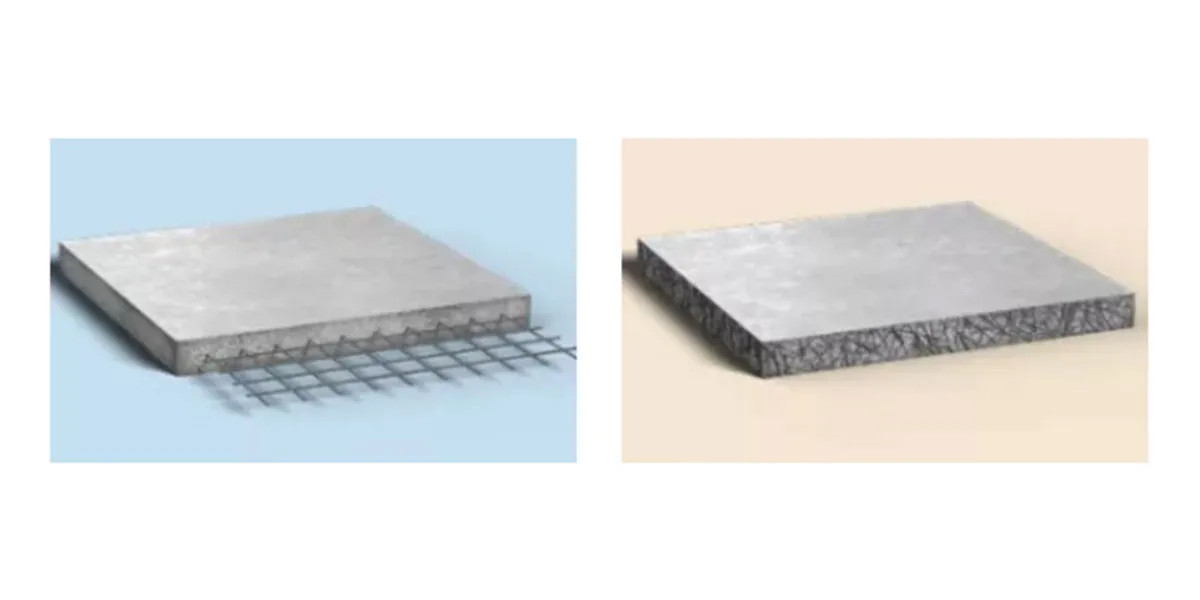
Prof. A. S. Khanna (Retd., IIT Bombay) on how Ultra-high performance concrete (UHPC) improves strength, durability and lifecycle performance.
Concrete
NCB Signs MoU With Cement Manufacturer To Boost Construction Skills
Partnership to deliver nationwide training and certification
Concrete
JSW Cement Commissions Nagaur Plant, Enters North India
New Rajasthan unit boosts capacity to 24.1 MTPA and expands reach


Ultra Concrete Age

NCB Signs MoU With Cement Manufacturer To Boost Construction Skills

JSW Cement Commissions Nagaur Plant, Enters North India

Cement Prices Likely To Rise As Petcoke Costs Increase

IIT Guwahati Develops Radiation-Resistant Cement Mortar
Ultra Concrete Age
NCB Signs MoU With Cement Manufacturer To Boost Construction Skills
JSW Cement Commissions Nagaur Plant, Enters North India
Cement Prices Likely To Rise As Petcoke Costs Increase