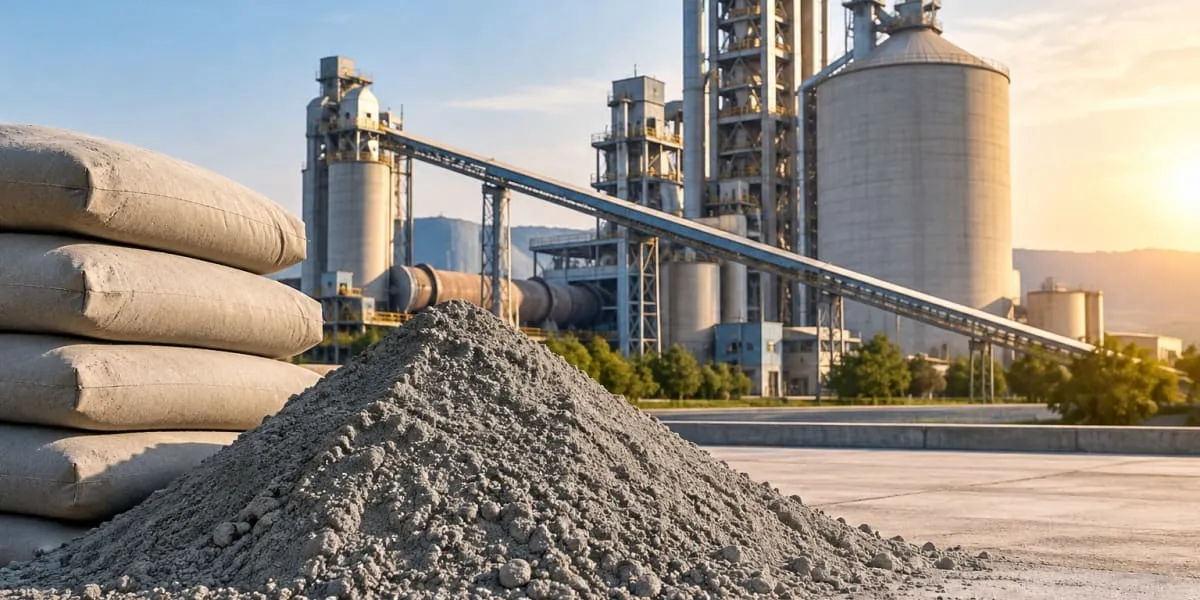
No wonder, India’s concrete industry is a vital part of our economy, directly and indirectly. India has a lot of potential for development in the infrastructure and construction sector and the concrete sector is expected to largely benefit from it.
The beauty of cement is that it is always converted into value added products, and standalone use of cement is very rare. The first major value addition of cement is concrete, which is a heterogeneous mixture of different components where cement plays role of a gum. Sand and stone chips are a few other important ingredients of concrete. Sand sources across globe are depleting fast and therefore engineering community had to find an alternative and it is manufactured sand.
Ready-mix concrete is just an extension of concrete. Globally, the ready-mix concrete market is anticipated to register a CAGR of 8 per cent during the period 2017-2023. The manufacturing of ready-mix concrete and delivering it through a transit mixer allows the integration of precise concrete in construction, thus making it strong, sturdy and long lasting.
Considering the global scenario, the Asia Pacific region is estimated to acquire the major share in the global market and is predicted to retain its dominance in the long run. It is due to the rising number of latest infrastructural projects especially in economies like Singapore, India, Thailand, and China. With the rapid urbanisation and industrialisation in these areas, the market is anticipated to flourish. Moreover, the ever-increasing population, favourable government policies, high availability of skilled workforce and cheap resources, and low labour and operational costs are contributing to the market growth.
The advent of new infrastructure construction projects is also estimated to generate an inflated demand for the ready-mix concrete market. In this region, China has accounted for the lion’s share, owing to the refurbishment and expansion of old structures like railway terminals, and airports, along with the implementation of novel infrastructural projects. India is also considered as a driving cause for the market owing to the development of smart cities.
The worldwide cement production is 4.1 billion metric tonnes (2018). Assuming 75 per cent of cement is used in concrete, we can imagine the quantum of concrete produced considering typically 300 kg of cement is consumed per cubic meter.
Concrete products are often the most sustainable and have the potential for a very long service life, but because concrete is used in large quantities, its use does have a global impact.
It is interesting to know, though ready-mix concrete was patented in the year 1903, it really took off somewhere around 1960s. It gained momentum with fast-track projects where investments done were the key issue and time to complete the projects was critical. There have been many advantages of using ready-mix concrete.
Quality of concrete produced at plant is much superior to what is produced at site. There is strict control over the testing of materials, process parameters and continuous monitoring of key practices during the manufacture. Speed in the construction practices followed in ready-mix concrete plant is followed continuously by having mechanised operations. The output obtained from a site mix concrete plant using an 8/12 mixer is 4 to 5 metric cubes per hour, which is 30-60 metric cubes per hour in a ready mix concrete plant. The other advantage, cement is saved and the dust caused is reduced as ready mix concrete makes use of bulk cement instead of bags of cement. There is saving of cement on account of use of cementious materials like fly ash and slag. The other major benefit is the engineer at site is able to concentrate on engineering jobs than paying attention to material procurement and material management. There is less dependency on human labour, which leads to less of errors.
The major disadvantage of ready mixed concrete is the traffic congestions during the movement of transit of concrete can result in setting of concrete. This will hence require addition of admixtures to delay the setting period. In our country, we have additional tax on ready-mix concrete which when produced manually at site is not levied. One of the major cost components in ready-mix concrete is the transport cost, which is close to 30-35 per cent of the realisation, which is quite significant. Today ready mix business faces many challenges. The major one is shortage of sand and aggregates. The other is fulfilment of environment regulations. The citizens becoming more aware of their rights sometimes lead to conflict of interest. All of sudden the concrete producer gets a closure notice.
Precast
Precast is corollary to ready-mix concrete (For more details on precast, read Devendra Kumar Pandey’s interview in this issue). It is difficult to imagine precast factory without using a batching plant to produce concrete. The list of products coming under precast is pretty long starting from normal covers, lamp poles, railway sleepers, ready to use fence, doors and window frames, decorative facades, stair case, water tanks, toilets etc. The number of metro railway projects undergoing are using many precast shapes in the job. Precast products are factory made shapes and then transported to the locations whereas cast in situ concrete shapes are cast at locations in one monolith piece.
Precast shapes are cast in small shapes and then bolted together. It is a technology used for producing large number of pieces repeatedly. Therefore it is often used for mass housing projects. Typically in mass housing, a factory is set up close to a site, and different sections of house are produced and then assembled at location. In case if cast shapes have to be transported to a distance then precast may not turn out to be a cost-effective option. This enhances the speed of construction. Same is the case of railway sleepers. The Department of Railways have set up sleeper factories at various locations where rail tracks are being laid. Sometime special equipment are required for erection of precast shapes at site and which may be little expensive. Joining different precast shapes is another vulnerable area in precast construction. In case if cast shapes have to be transported to a distance then precast may not turn out to be a cost effective option.
In short, concrete provides us immense opportunities and imagination to make effective use of the man-made material.
VIKAS DAMLE

















 Concrete1 month ago
 Concrete4 weeks ago
 Concrete1 month ago
 Concrete3 weeks ago