Connect with us

Economy & Market

“RMC business will see a growth of 7-10% in the next 5 years”

Published

on

Shares

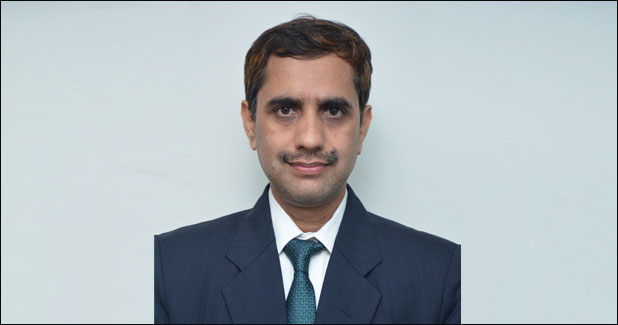
– Arun Shukla, Chief of RMX & Aggregates, Nuvoco Vistas Corporation
Nuvoco Corporation (formerly LaFarge India) was acquired by Nirma about 18 months back. Nuvoco has three business verticals – cement, ready mix concrete (RMC) and aggregates. In cement, the company has plants Chattisgarh, West Bengal and Chittorgarh. In RMC, the company has close to 70 plants across India. In aggregates, the company has two quarries – one near Mumbai in Badlapur and other one in Kotputli in Rajasthan. Considering the focus of government on infrastructure and housing, how do you view the business of concrete and aggregates in the next five years?
I am quite bullish about the market for concrete and aggregates. Cement consumption in India is close to 180 kg per person per year, which is very low. Out of that, 60 per cent is being used for concrete. If you compare this consumption with China, which is also a developing country, their growth rate is much faster than ours. China’s cement consumption is close to 2,000 kg per person per annum.
Given the push on infrastructure and housing for all, I see an immense potential of RMC going further. Our ambition is to partner with the vision of our country and do a lot of infrastructure development, and contribute towards giving housing to all people who are not having houses as of now. The next five years will be quite bullish for RMC business.
In typical construction sites, there are issues like scarcity of labours. In smaller towns, there are site mixes. But now, the pollution control agencies are so strict that they are not allowing you to have site mixes. So, RMC is bound to go to all those places where even site mix is practiced. I am quite sure that the RMC business, and I see a growth of 7-10 per cent in the next five years. Right now, RMC capacity is close to 45 million cum3, which is the relevant market size where we operate in.
It will double (to 100 million cm3) in the next 4-5 years. Traditionally RMC industry has been dominated by local and unorganised players. Do you see any change in the structure?
Factually this industry is quite fragmented. If you take the top five players, they are holding a market share of close to 35-40 per cent. And rest of the concrete requirement is being fulfilled by local players. That way this is quite fragmented. But there are a lot of regulations and structural changes (like RERA and GST) that have happened in the recent past. These changes will encourage the industry going forward. So there is going to be much more level-playing field. I think, GST will impact logistics. For supporting individual house builders, what sort of customer service offerings are available from Nuvoco concrete and what is its USP?
In this, we stand out from others. In our portfolio, we have a lot of value-added products that are going to address concerns that individual homebuilders have. We have a product called ‘Agile’, which is a self compacting concrete, a free flow concrete. So there you do not need much labour because I talked about the scarcity of labour at job site. We have other products like ‘Artiste’, wherein you can really have a different texture, different kind of patterns, and this is going to be a good alternative to tiles. Tiles have smaller life, but if you use Artiste, it will have a longer life.
We have a lot of other products as well. We have got light-weight concrete, which is called ‘X Light’. A typical concrete has a density of 2,400 kg per cm3, but our concrete has around 800 to 1,600 per kg.
We have solutions for hospitals too. In cancer hospitals there are radiations done. We have a solution wherein the radiation does not come out. This concrete is radiation proof. We have a solution wherein we can do concrete in running water as well. Then, we have a concrete solution for cold weather where the temperature is very low. We do produce from M35 to M95.
We have Insta-mix, which is a revolutionary product in the RMC industry, and we supply green concrete in bags. For eg: If any trucks cannot reach the construction site, then we have a solution of supplying wet concrete in bags. You just need to go and pour it on site, no need to add water. This has got retention of up to eight hours, while normal concrete has only retention period of four hours. This product is having very good acceptability in the market because this addresses the concerns of typically constricted bylanes of India where you have a small requirement of concrete. From LaFarge to Nuvoco – how did this brand transition take place?
We emphasised that we are going to retain all those key features for which Lafarge is known in the market. Our USP was to kind of differentiate ourselves in the market by way of providing different products and service to our customers. After this transition, we are much more focused in this area. Our endeavour is to exceed expectations of customers in terms of delivery of service and quality of product. All those products which we had before, are still being continued. That way our focus is on differentiating solution-centric organisation, getting ready for customers requirement, giving them the quality they want, fulfilling our commitment to the customer. We have demonstrated all these qualities with much more focus. That is how our customers do not feel any change. Our products are well accepted, our entire team is intact including me. I am there in this organisation since beginning. Where it really matters, nothing has changed. We have been in touch with our customers throughout the entire transitions. Wherever a change was taking place they were kept in the loop, right from the CEO down the line. They had access to everybody. The entire transition took place very smoothly.The market is shifting from natural sand to manufactured sand. How do you look at this picture.
We do have an opportunity to help in building this business. This is our vision and now we are going to be helpful in creating sustainable and smarter product. There is push on infrastructure and housing, and we will be part of the growth story. We are operating two crushers one near Mumbai and second close to the NCR region. But gradually now market is shifting from this natural sand to manufactured sand. But I think gradually things are going to change because this sand issue will be there to an extent going forward as well. So better to find some solution by which we come out with raw material which can replace sand. So like in Mumbai, there is no natural sand. Entire concrete is being made of crushed sand. But still in some of the markets, I think people have a mindset that natural sand and river sand is better than manufactured sand. Things are changing and I am sure things are going to change gradually. What is the role of cost in manufactured sand?
That depends because raw material cost is basically logistics intensive. If your logistics cost is high – be it natural sand or not – cost is going to be in that proportion. You can have a fixed rule that natural sand is costlier than crushed sand and vice versa. It all depends on the logistics.Can it be manufactured anywhere or it requires a special kind of raw material?
You need a rock for that. And manufacture sand is going to be sustainable solution for this scarcity of natural sand.What technological changes you foresee in construction strategies of infrastructure sector which may affect your sector?
Construction industry in India is still evolving. We have issues of skilled manpower. Updated technology and also the availability of routine product. I see a good scope of improvement in construction industry in India. We do have an expertise of supplying very high grade of concrete. Typically in India till now lower grades of concrete was being used. But now people have realised if they use this higher grade of concrete then they are going to get multiple benefit. I think the kind of knowhow which we are going to share with our customers with that they are going to reduce their overall cost and also fasten their construction, retaining the quality without compromising. This is what we are partnering with our customers. Also our strategy is to partner with our customer right at the beginning when they conceptualise their project, we suggest them that if they are going to use these products then that is going to bring down their overall cost and ease of execution. And we have got construction development and innovation centre to support our initiative. We keep on doing innovation in building material space as to what is the next step and what is the next package that is going to help all construction sites.Tell us about customer discovery.
We have a nice process of what we call customer discovery. We go and sit with customers and we understand them and what all issues they are facing and based on that, we try to go back to them with some solution. So there is a process like we go and discover customers requirement, then we work on various ideas to address those issues. These are steps of innovation that we follow. We have a very systematic approach of understanding customers requirements. Insta-mix was born out of one such need and that is why it was created in our laboratory in India.How do you manage smaller quantities?
If you ask ready mix plant to supply one third of cubic metre they are not going to supply because of cost factor. How will a 6-cm3 truck carry one-third of cubic metre. And if at all they are going to supply they are going to charge you heavily. We are the only company to supply wet concrete in bags. It is supplied in buckets but not bags. So we have a monopoly in that segment.What is your prime focus – retail or institutional business?
We are looking for opportunities in all segments. As there is a lot of push on infrastructure and housing, these businesses will offer us a lot of opportunity, which we do not want to miss. We are expanding ourselves to areas where we do not have any presence and we find a good opportunity. For instance, we have set up a plant in Lucknow very recently. We see a lot is happening in the northern part of India. We have plans to set up plants in other emerging markets as well. We want to grow in the retail segment too because the market is offering an opportunity and customers are looking for solutions. We have expertise and knowhow and we will go and reach out to them and supply them the solution they want.What is the market size for decorative concrete in India and how is it shaping up?
There is no structured data available as such. We are one of the biggest players of decorative concretes in India. This segment is growing, you only need to to make your customers aware of the solution and convert them from one solution to another. I will not limit this segment to a particular cubic metre as of now.That means you want to bring this from unorganised sector to organised sector?
Decorative concrete is a solution that his going to last for years to come. Our products are used in amusement parks, especially at entrance where you have a lot of footfalls. This can withstand that kind of pressure and wear and tear and still be there for decades to come.Have you associated with any infrastructure project that is approaching completion?
We are really proud to be associated with lot of good infrastructure projects. For instance, we were engaged in Delhi Metro. We have also partnered with some of the construction companies for Noida metro. We are executing Jaipur Metro job and we are one of the suppliers in concrete of Mumbai metro. Our contribution and presence is quite good. In fact, we are known to be an expert in metro projects. Our focus is going to be there on infrastructure jobs because this is the place where we can give a lot of additional value to the contractor and the agencies which are there. How do you handle safety and environment in RMC and what about conservation of concrete?
It very important and it is very close to our heart as well. health safety and environment is part of our value system. Our philosophy is that wherever we are operating, our environmental footprint should be the minimum. How we are going to conserve the scarce resources and how are you going to ensure that we do not disturb the ecology of the ambience? We shall offer a product which is kind of conserving some natural resources. For instance now you must have heard of green building concept. How we are going to reduce cement consumption in ready mix concrete? If you are going to reduce cement content in ready mix then you are going to help environment in many ways. One is to reduce carbon footprint. Second is also you are going to preserve limestone which is scarce and you do not have limestone reserve forever. If you are not going to conserve it today then how future generations are going to take benefit of that reserve. This is our philosophy. So we work on kind of designing a product wherein we can use alternative raw material to reduce limestone consumption without impacting quality product. Health and safety I think we have proper system wherein any person who is coming to our plant is properly trained, he is given safety induction, he has to go through a medical test and then he is deployed at job site. We do have a branch where each and every day our plant people are going through a checklist. Health and safety is a holistic approach for us. We are not only kind of trying to take responsibility of our people but all the stakeholders are involved in our business. All those truck drivers who are being deployed at our plant they mandatorily have to go through this training on defensive driving. We have got defensive driving training. They will go through that training. So suppose my plant is there and I fit it at one place and job site is 10 km is away. Then we prepare this with risk management and we communicate this to our rider. So all those hazards and all those risky areas or traffic areas, we tell them before that this is how they are going to negotiate on that track. We have got a very systematic approach. Any equipment where we do some preventive maintenance or breakdown maintenance we have got a system of permit so our people are going to take permit, we prepare this and we risk assessment of that job, we communicate that risk assessment to our team members, these are risk and this is how you are going to eliminate and these things you are going to deploy. Then only those guys go and work on it. So we have a very robust system of health and safety. Wherein we are not going to take even an iota of risk. For us doing business is alright but if you can save a person’s life and I think we have done it.
Also our customers have appreciated it and requested us to conduct workshops at their own sites. We do that also. For us it is important that it is not just we who are contentious but as many people we can inform and educate about this it is only everybody else who benefits out of it.

Continue Reading
Click to comment

Leave a Reply

Your email address will not be published. Required fields are marked *

Economy & Market

TSR Will Define Which Cement Companies Win India’s Net-Zero Race

Published

on

By

Shares

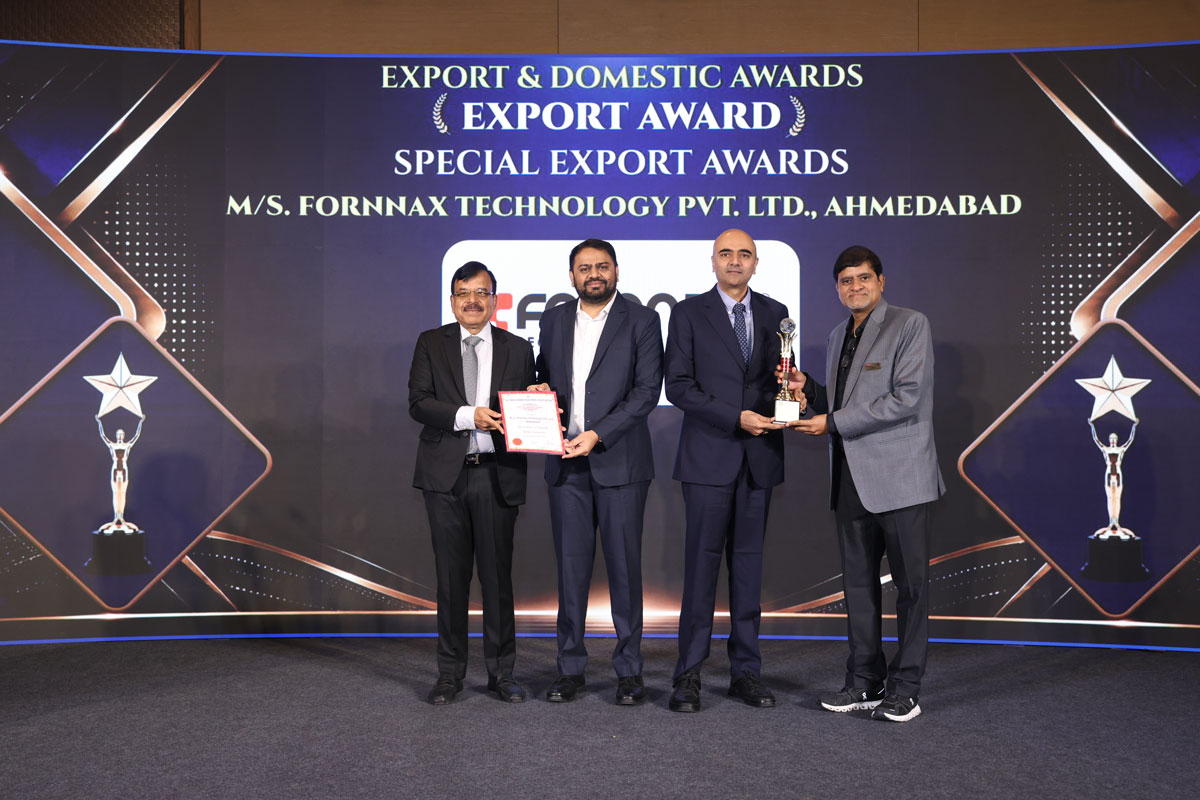
Jignesh Kundaria, Director and CEO, Fornnax Technology

India is simultaneously grappling with two crises: a mounting waste emergency and an urgent need to decarbonise its most carbon-intensive industries. The cement sector, the second-largest in the world and the backbone of the nation’s infrastructure ambitions, sits at the centre of both. It consumes enormous quantities of fossil fuel, and it has the technical capacity to consume something else entirely: the waste our cities cannot get rid of.

According to CPCB and NITI Aayog projections, India generates approximately 62.4 million tonnes of municipal solid waste annually, with that figure expected to reach 165 million tonnes by 2030. Much of this waste is energy-rich and non-recyclable. At the same time, cement kilns operate at material temperatures of approximately 1,450 degrees Celsius, with gas temperatures reaching 2,000 degrees. This high-temperature environment is ideal for co-processing, ensuring the complete thermal destruction of organic compounds without generating toxic residues. The physics are in our favour. The infrastructure is not.

Pre-processing is not the support act for co-processing. It is the main event. Get the particle size wrong, get the moisture wrong, get the calorific value wrong and your kiln thermal stability will suffer the consequences.

The Regulatory Push Is Real

The Solid Waste Management (SWM) Rules 2026 mandate that cement plants progressively replace solid fossil fuels with Refuse-Derived Fuel (RDF), starting at a 5 per cent baseline and scaling to 15 per cent within six years. NITI Aayog’s 2026 Roadmap for Cement Sector Decarbonisation targets 20 to 25 per cent Thermal Substitution Rate (TSR) by 2030. Beyond compliance, every tonne of coal replaced by RDF generates measurable carbon reductions which is monetisable under India’s emerging Carbon Credit Trading Scheme (CCTS). TSR is no longer a sustainability metric. It is a financial lever.

Yet our own field assessments across multiple Indian cement plants reveal a sobering reality: the primary barrier to scaling AFR adoption is not waste availability. It is the fragmented and under-engineered pre-processing ecosystem that sits between the waste and the kiln.

Why Indian Waste Is a Different Engineering Problem

Indian municipal solid waste is not the material that imported shredding equipment was designed for. Our waste streams frequently exceed 40 per cent to 50 per cent moisture content, particularly during monsoon cycles, saturated with abrasive inerts including sand, glass, and stone. Plants relying on imported OEM equipment face months of downtime awaiting proprietary spare parts. Machines built for segregated, low-moisture waste fail quickly and disrupt the entire pre-processing operation in Indian conditions.

The two most common failures we observe are what I call the biting teeth problem and the chewing teeth problem. Plants relying solely on a primary shredder reduce bulk waste to large fractions, but the output remains too coarse for stable kiln combustion. Others attempt to use a secondary shredder as a standalone unit without a primary stage to pre-size the feed, leading to catastrophic mechanical failure. When both stages are present but mismatched in throughput capacity, the system becomes a bottleneck. Achieving the 40 to 70 tonnes per hour required for meaningful coal displacement demands a precisely coordinated two-stage process.

Engineering a Made-in-India Answer

At Fornnax, our response to these challenges is grounded in one principle: Indian waste demands Indian engineering. Our systems are built around feedstock homogeneity, the holy grail of kiln stability. Consistent particle size and predictable calorific value are the foundation of stable kiln combustion. Without them, no TSR target is achievable at scale.

Our SR-MAX2500 Dual Shaft Primary Shredder (Hydraulic Drive) processes raw, baled, or loosely mixed MSW, C&I waste, bulky waste, and plastics, reducing them to approximately 150 mm fractions at throughputs of up to 40 tonnes per hour. The R-MAX 3300 Single Shaft Secondary Shredder (Hydraulic Drive), introduced in 2025, takes that primary output and produces RDF fractions in the 30 to 80 mm range at up to 30 tonnes per hour, specifically optimised for consistent kiln feeding. We have also introduced electric drive configurations under the SR-100 HD series, with capacities between 5 and 40 tonnes per hour, already operational at a leading Indian waste-processing facility.

Looking ahead, Fornnax is expanding its portfolio with the upcoming SR-MAX3600 Hydraulic Drive primary shredder at up to 70 tonnes per hour and the R-MAX2100 Hydraulic drive secondary shredder at up to 20 tonnes per hour, designed specifically for the large-scale throughput that higher TSR ambitions require.

The Investment Case Is Now

The 2070 Net-Zero target is not a distant goal for India’s cement sector. It starts today, with decisions being made on the plant floor.

The SWM Rules 2026 are already in effect, requiring cement plants to replace coal with RDF. Carbon credit markets are opening up, and coal prices are not going to get cheaper. Every tonne of coal a cement plant replaces with waste-derived fuel saves money on one side and generates carbon credit revenue on the other. Pre-processing infrastructure is no longer just a compliance requirement. It is a business investment with a measurable return.

The good news is that nothing is missing. The technology works. The waste is available in every Indian city. The government has provided the policy direction. The only thing standing between where the industry is today and where it needs to be is the commitment to build the right infrastructure.

The cement companies that move now will not just meet the regulations. They will be ahead of every competitor that waits.

About The Author

Jignesh Kundaria is the Director and CEO of Fornnax Technology. Over an experience spanning more than two decades in the recycling industry, he has established himself as one of India’s foremost voices on waste-to-fuel technology and alternative fuel infrastructure.

Continue Reading

Concrete

WCA Welcomes SiloConnect as associate corporate member

Published

on

By

Shares

The World Cement Association (WCA) has announced SiloConnect as its newest associate corporate member, expanding its network of technology providers supporting digitalisation in the cement industry. SiloConnect offers smart sensor technology that provides real-time visibility of cement inventory levels at customer silos, enabling producers to monitor stock remotely and plan deliveries more efficiently. The solution helps companies move from reactive to proactive logistics, improving delivery planning, operational efficiency and safety by reducing manual inspections. The technology is already used by major cement producers such as Holcim, Cemex and Heidelberg Materials and is deployed across more than 30 countries worldwide.

Continue Reading

Concrete

TotalEnergies and Holcim Launch Floating Solar Plant in Belgium

Published

on

By

Shares

TotalEnergies and Holcim have commissioned a floating solar power plant in Obourg, Belgium, built on a rehabilitated former chalk quarry that has been converted into a lake. The project has a generation capacity of 31 MW and produces around 30 GWh of renewable electricity annually, which will be used to power Holcim’s nearby industrial operations. The project is currently the largest floating solar installation in Europe dedicated entirely to industrial self-consumption. To ensure minimal impact on the surrounding landscape, more than 700 metres of horizontal directional drilling were used to connect the solar installation to the electrical substation. The project reflects ongoing collaboration between the two companies to support industrial decarbonisation through renewable energy solutions and innovative infrastructure development.

Continue Reading

Video Thumbnail
â–

    SIGN-UP FOR OUR GENERAL NEWSLETTER


    Trending News

    SUBSCRIBE TO THE NEWSLETTER


    Don't miss out on valuable insights and opportunities to connect with like minded professionals.


      This will close in 0 seconds