Economy & Market
Buzzi Unichem improves sales in Central Europe
Published
9 years agoon
By
admin
Central Europe provided good news to Buzzi Unicem in 2016, with improved sales volumes, but falling prices had a negative effect.
In Germany, cement deliveries increased by 3.4 per cent in 2016, as the construction sector in Europe’s largest economy grew well. The residential sector was particularly strong, supported by high demand.
Despite this, weak average prices more than offset the rise in sales volumes, resulting in a marginal decline in revenues to C572 million.
In Luxemburg and the Netherlands, solid export and domestic demand saw sales volumes grow 8.2 per cent in 2016, although average selling prices were slightly down. Net sales revenues were 3.9 per cent higher at C176 million.
You may like
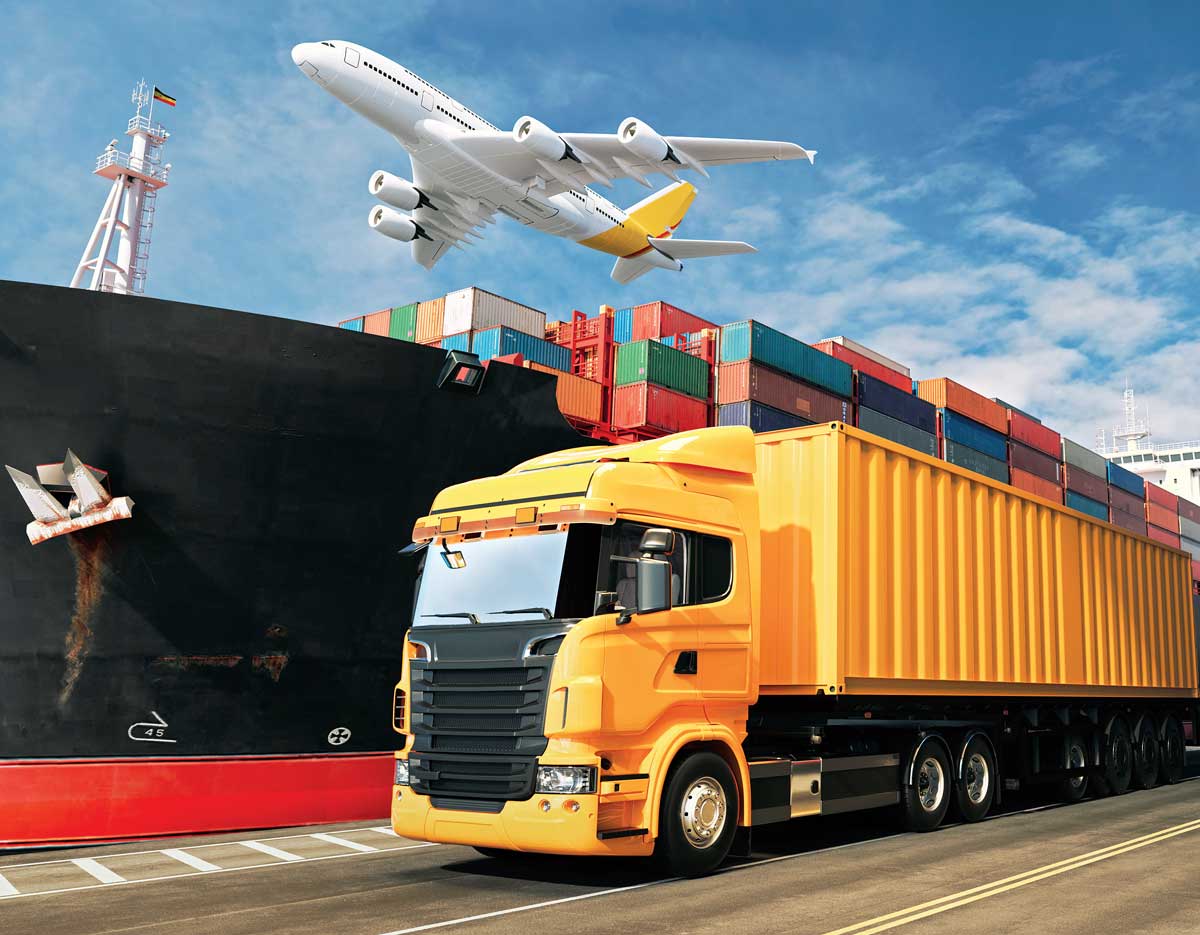
Logistics, from the factory exit point to the last mile connectivity, is a key driver of efficiency and cost optimisation in the cement industry. With digitalisation, multi-modal integration and sustainability, logistics is the differentiator that will give the manufacturer a competitive advantage. Let us explore how logistics has today become a deciding factor that players cannot afford to ignore.
India, the second-largest cement producer globally, has an installed capacity exceeding 600 million tonnes per annum, with demand driven by infrastructure, housing, and urbanisation (IBEF, 2024). However, logistics remains one of the most significant cost components, accounting for nearly 20 to 30 per cent of the total cement cost, primarily due to the bulk nature and low value-to-weight ratio of the product (Cement Manufacturers’ Association, 2023; McKinsey, 2022).
With over 70 per cent of cement transported via road, inefficiencies in logistics directly impact profitability, delivery timelines, and customer satisfaction (NITI Aayog, 2021). As supply chains grow more complex, end-to-end logistics is emerging as a critical lever for cost optimisation, operational efficiency, and competitive advantage.
Logistics: The game changer
Logistics plays a central role in the cement industry, where timely delivery and cost efficiency are key determinants of market competitiveness. Unlike many other industries, cement has a low shelf value relative to its transportation cost, making logistics optimisation critical. According to McKinsey (2022), logistics costs in cement can reach up to 30 per cent of total production costs, significantly higher than global manufacturing averages. This underscores the importance of efficient distribution networks in maintaining margins and ensuring consistent supply.
Moreover, logistics directly influences market reach and dealer satisfaction. Cement companies with optimised logistics networks can ensure faster delivery cycles, improved availability, and better service levels. A report by Deloitte (2023) highlights that companies focusing on logistics optimisation have seen improvements of up to 15 per cent to 20 per cent in delivery efficiency, reinforcing the role of logistics as a strategic differentiator rather than just an operational function.
Mapping the cement supply chain
The cement supply chain is complex and involves multiple stages, including raw material transportation, clinker movement, cement production, warehousing, and final distribution to dealers and project sites. Each stage requires careful coordination to minimise delays and costs. According to World Cement Association (2023), inefficiencies in supply chain coordination can lead to 5 per cent to 8 per cent losses in overall operational efficiency, highlighting the need for integrated logistics planning.
From plant despatch to last-mile delivery, the movement of cement involves various stakeholders such as transporters, distributors, and retailers. In India, the fragmented nature of the logistics ecosystem further complicates coordination. A study by PriceWater Cooper (PwC 2022) indicates that lack of integration across supply chain nodes can increase transit times by 10 per cent to 15 per cent, affecting project timelines and customer satisfaction.
Key challenges in end-to-end logistics
One of the biggest challenges in cement logistics is infrastructure limitation, particularly in rural and semi-urban areas where demand is rapidly growing. Despite improvements, India’s logistics infrastructure still faces bottlenecks such as poor road conditions, congestion, and limited rail connectivity. According to NITI Aayog (2021), logistics inefficiencies contribute to India’s overall logistics costs being around 13 per cent to 14 per cent of GDP, significantly higher than the global benchmark of 8 per cent to 9 per cent. For the cement industry, this translates into higher transportation costs and reduced competitiveness.
Professor Procyon Mukherjee says, “For decades, cement companies designed their networks around limestone availability. Plants were built near quarries, and finished cement was transported long distances to markets. This model, while logical from a production standpoint, created massive outbound logistics costs. Indian cement companies have begun to challenge this logic. The shift: decoupling clinker production from cement grinding.”
He adds, “Clinker plants remain near limestone reserves, but grinding units are increasingly located close to consumption centres. In many markets, logistics accounts for up to 30 per cent of total cost. The implication is stark: companies that redesign their end-to-end logistics, from inbound flows to last-mile delivery, can fundamentally alter their competitive position.”
Another critical challenge is demanding variability and lack of real-time visibility across the supply chain. Cement demand is highly seasonal and project-driven, making demand forecasting complex. Additionally, limited adoption of digital tools leads to poor tracking and coordination. According to McKinsey (2023), companies lacking digital logistics systems experience up to 20 per cent higher inefficiencies in fleet utilisation and delivery planning. These challenges highlight the need for greater integration, digitalisation, and infrastructure development to achieve efficient end-to-end logistics.
Multi-modal logistics
The integration of multiple transportation modes—road, rail, and coastal shipping—is becoming increasingly important for optimising cement logistics. While road transport dominates with over 70 per cent share, rail and coastal shipping offer cost-effective and environmentally sustainable alternatives for long-distance movement (NITI Aayog, 2021).
According to the Ministry of Ports, Shipping and Waterways (2023), coastal shipping can reduce logistics costs by up to 20 per cent to 25 per cent compared to road transport, while also lowering carbon emissions. The adoption of multi-modal logistics can help cement companies achieve better cost efficiency, reduce transit times, and improve supply chain resilience.
Anuradha Parakala, Co-founder, Chief Strategy and Product Officer, Fleetronix Systems, says, “Real-time visibility in logistics is no longer a competitive advantage. It has become a baseline requirement. The cost of not knowing what’s happening across the supply chain has simply become too high. Customers expect consistent and reliable deliveries, finance teams demand tighter cost control, and regulators require greater compliance and transparency. None of these expectations can be met without real-time insight into fleet movement and operations. What was once considered a differentiator is now essential, and companies that still operate without visibility are already falling behind in an increasingly performance-driven environment.
“At the same time, data-driven logistics is redefining how cement supply chains operate, shifting them from reactive systems to predictive, planning-led ecosystems. Fuel remains the single biggest cost lever in fleet logistics, and within that, driver behaviour offers the fastest and most impactful gains. It often delivers 12 per cent to 18 per cent fuel savings through better driving practices such as smoother acceleration, controlled speeds, and reduced idling. Beyond cost savings, data enables companies to move from guesswork to precision—anticipating disruptions, optimising routes, and planning with real numbers instead of buffers. The result is not just improved efficiency, but a stronger foundation of trust with customers, giving early adopters a clear and lasting competitive edge,” she adds.
Digitalisation of cement logistics
Digitalisation is transforming cement logistics by enabling real-time visibility, improved coordination, and data-driven decision-making. Technologies such as GPS tracking, IoT sensors, and advanced analytics allow companies to monitor shipments, optimise routes, and reduce delays. According to Gartner (2023), organisations that implement digital supply chain solutions can achieve up to 50 per cent improvement in supply chain visibility and 20 per cent reduction in operational costs. In the cement industry, where timely delivery is critical, such improvements can significantly enhance efficiency and customer satisfaction.
Dijam Panigrahi, Co-Founder and COO, GridRaster, says, the cement supply chain is uniquely complex. A single integrated plant may manage limestone quarrying, kiln operations, grinding, packing, and dispatch simultaneously, with finished product flowing through rail, road, and waterway networks to reach hundreds of regional depots and distribution points. Coordinating this network using spreadsheets, siloed ERP data, and phone calls is not merely inefficient; it is a structural liability in a competitive market where delivery reliability is a key differentiator. Digital twin technology offers a way out. A cement logistics digital twin is a continuously updated, three-dimensional virtual replica of the entire supply chain, from the truck loading bays at the plant to the inventory levels at district depots.”
Optimising fleet efficiency and last-mile delivery
Fleet efficiency is a critical factor in cement logistics, given the heavy reliance on road transport. Optimising fleet utilisation, reducing idle time, and improving route planning can lead to substantial cost savings. According to McKinsey (2022), optimised fleet management can reduce transportation costs by 10 per cent to 15 per cent, while improving delivery timelines. Technologies such as telematics, fuel monitoring systems, and driver behaviour analytics are increasingly being adopted to enhance fleet performance.
Pushpank Kaushik, CEO, Jassper Shipping, says, “Handling cement both in bulk and bagged form presents several operational challenges across the logistics chain. These include inadequate road infrastructure, port congestion during peak demand periods, and weather-related disruptions. At ports, limited mechanisation during high-volume periods can slow down cargo movement, increasing the risk of moisture exposure and product degradation. Jassper mitigates these challenges through its extensive operational expertise and global network. Managing a significant volume of vessel movements annually and working closely with experienced mariners and operators, we ensure precise coordination, efficient cargo handling, and smooth transitions across all logistics stages.”
Last-mile delivery, however, remains one of the most challenging aspects of cement logistics. Delivering cement to construction sites often involves navigating congested urban areas or remote rural locations, leading to delays and increased costs. A report by Deloitte (2023) highlights that last-mile logistics can account for up to 40 per cent of total delivery costs in certain scenarios. Addressing these challenges requires better route planning, localised distribution hubs, and increased use of technology to ensure timely and efficient delivery.
Sustainability in cement logistics
Sustainability is becoming a key focus area in cement logistics, driven by environmental regulations and corporate sustainability goals. Transportation is a major contributor to carbon emissions in the cement value chain. According to the International Energy Agency (IEA, 2023), logistics-related emissions account for a significant portion of the industry’s overall carbon footprint. Shifting towards rail and coastal shipping, improving fuel efficiency, and adopting alternative fuels can help reduce emissions. Additionally, optimising logistics operations not only lowers environmental impact but also reduces costs, creating a win-win scenario for the industry.
The future of cement logistics
The future lies in the adoption of automation, advanced analytics, and smart supply chain technologies. Autonomous vehicles, AI-driven planning systems, and blockchain-based tracking solutions are expected to redefine logistics operations. According to McKinsey (2023), companies that adopt advanced supply chain technologies can achieve up to 30 per cent improvement in efficiency and significant cost reductions. As the cement industry continues to evolve, the integration of these technologies will be crucial for building resilient, efficient, and future-ready logistics networks.
Conclusion
End-to-end logistics is no longer just an operational necessity but a strategic imperative for the cement industry. With rising costs, increasing demand, and evolving customer expectations, companies must focus on optimising their logistics networks to remain competitive. From multi-modal integration to digitalisation and sustainability, the future of cement logistics will be defined by innovation and efficiency.
- – Kanika Mathur
Ana Juraga, Content Writer, Cortec Corporation brings the spotlight on advanced sustainable technology vis-à-vis the traditional rust prevention methods in cement plants that often lead to hidden costs through labour, cleaning and hazardous waste.
The global cement industry operates in one of the most demanding industrial environments. The combination of highly alkaline dust, extreme temperature fluctuations, and often high humidity creates a constant threat of corrosion for critical infrastructure and mechanical assets. While the industry’s primary sustainability focus remains on carbon capture and alternative fuels, a significant operational challenge persists in the storage and transport of spare parts and equipment.
The maintenance of a strategic asset reserve, the essential inventory of spare gears, kiln components, electrical sensors and structural steel is a fundamental requirement for minimising unplanned downtime. Traditionally, the preservation of these assets has relied on legacy barrier methods such as heavy mineral oils and petroleum-based greases. However, as the industry moves toward more sophisticated maintenance protocols and stringent environmental standards, these traditional methods are being replaced by Vapor phase Corrosion Inhibitor (VpCI®) packaging technology.
Technical limitation of traditional barrier coatings
In a cement plant, traditional wet rust preventatives are a major liability. Because these oils and greases stay tacky, they effectively act as a magnet for fine, alkaline cement dust. Over time, this mixture turns into a thick, abrasive sludge. If you don’t scrub every last bit of that residue off before installation, you are essentially putting a grinding compound into your bearings and seals. This ‘cleanup tax’, the hours spent with pressure washers and hazardous solvents doesn’t just delay repairs; it creates a secondary stream of toxic waste that the plant is then forced to manage.
Mechanism of VpCI® packaging technology
The transition to VpCI® packaging represents a shift from physical barrier protection to molecular-level chemistry. VpCI (Vapor phase Corrosion Inhibitor) technology can be seen as a ‘dry’ alternative to the messy greases and oils that have dominated industrial maintenance for decades. Instead of coating a part by hand, you use packaging-like films, papers, or emitters that slowly release protective molecules into the air. Once a metal component is enclosed in a VpCI® package, the inhibitors are released into the headspace of the container. These molecules travel through the air to reach every exposed metal surface, including deep recesses, internal threads, and complex geometries that are often inaccessible to spray-on coatings. When the molecules contact the metal, they form an invisible, monomolecular protective layer. This layer creates a hydrophobic shield that prevents oxygen and moisture from reaching metals thereby stopping the electrochemical process of corrosion. The most significant technical advantage of VpCI® packaging in the cement industry is that it is a “dry” process. When the component is eventually removed the protective molecular layer simply dissipates into the air. The part is clean, dry, and ready for immediate welding, painting or assembly without any chemical cleaning or surface preparation.
Sustainability through source reduction and elimination
By adopting VpCI® films and papers, a facility eliminates the need for petroleum-based rust preventatives and the subsequent hazardous solvents required for their removal. This directly reduces the plant’s (VOC emissions and prevents the generation of solvent-contaminated runoff. In many jurisdictions, the reduction of hazardous waste at the point of origin is a key metric for industrial environmental compliance. Moving from a ‘wet’ preservation cycle to a ‘dry’ molecular cycle allows cement producers to streamline their environmental reporting while improving worker safety by removing hazardous chemicals from the workshop.
Circularity and the VpCI® plastic recycling service
A significant portion of industrial waste in cement plants comes from single-use plastics and packaging materials. Standard polyethylene (PE) films used for palletising and shipping are typically linear waste products that end up in landfills. To address this, the industry is increasingly adopting recyclable VpCI® films, such as the VpCI®-126 series. These films are engineered to be fully compatible with standard recycling streams. To close the loop further, Cortec® Corporation has implemented the VpCI® Plastic Recycling Service. This program allows manufacturers to collect used VpCI® film, which is then reprocessed and incorporated into the production of new protective packaging. By utilising high-quality Post-Consumer Recycled (PCR) content, the industry can maintain a circular economy for its logistics materials, significantly reducing the demand for virgin resins and fossil-fuel-based plastic production.
Indoor warehouse space is often limited, forcing many plants to store large-scale components, such as kiln tires or conveyor sections, in outdoor yards. Outdoor storage in a cement plant is particularly challenging due to UV degradation and the ‘greenhouse effect’ created by standard plastic wraps, which can trap moisture and accelerate rust.
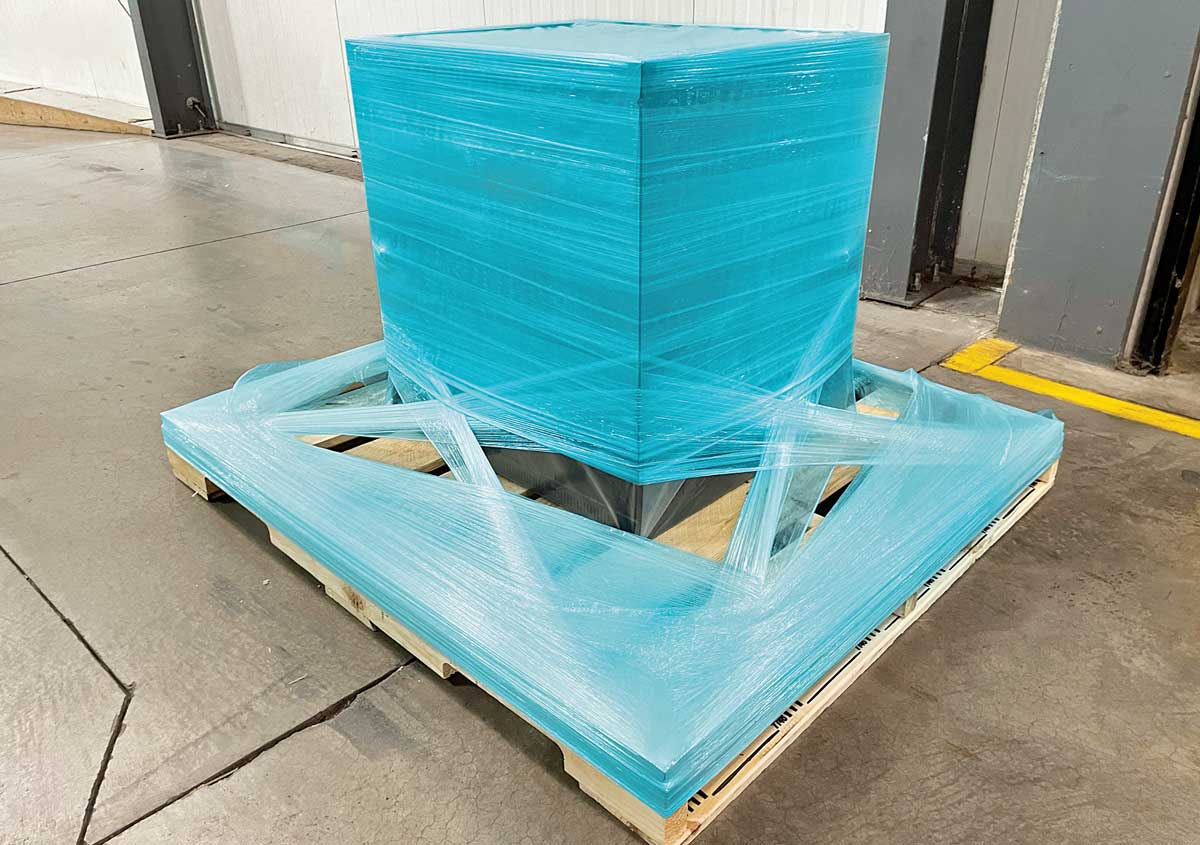
Advanced packaging solutions, such as MilCorr® VpCI® Shrink Film, are specifically designed for outdoor preservation and provide strong protection system with high ultraviolet (UV) light protection to maintain the integrity of the film itself as well as the parts packaged within. MilCorr® VpCI® Shrink Film, a heavy-duty mechanical barrier against wind and rain while incorporating UV stabilisers to prevent the plastic from becoming brittle. Internally, the VpCI® molecules protect metals, allowing components to remain in excellent condition.
Protecting electronics and control systems
The modern cement plant is increasingly reliant on sophisticated electronic controls and sensors. These components are highly sensitive to micro-corrosion, which is often exacerbated by the conductive nature of cement dust and high ambient humidity. A single failed circuit board in a control room can result in an entire line shutdown. VpCI® packaging technology extends to these sensitive systems through specialised emitters and anti-static (ESD) films.
EcoSonic® VpCI®-125 PCR HP Permanent ESD Films and Bags EcoSonic are high-performance anti-static, corrosion inhibiting film and bags for use in the protection of static sensitive multi-metal items such as electronics. They contain permanent anti-static properties to immediately reduce or eliminate static buildup as long as the films or bags are in use, independent of the presence of humidity. They also form a molecular corrosion inhibiting layer on metal substrates and do not interfere with the physical or chemical properties of electronic components. This film has been developed with a high amount of post-consumer recycled content for the purpose of efficient recovery, recycling, and reuse of resources to minimise the economy’s negative ecological footprint.
For active control cabinets, VpCI® emitters (such as the VpCI®-105 or 111 capsules) can be placed inside the enclosure to saturate the air with protective molecules. This provides an invisible layer of protection for contacts and connectors without affecting electrical resistance or interference. This ‘clean’ protection is vital in dusty environments where air-tight sealing of cabinets is rarely successful.
VpCI® packaging is also evolving to incorporate renewable resources. Products like EcoStretch™, the world’s first commercially available compostable stretch film provides an “end-of-life” solution for logistics waste. Furthermore, bio-based films derived from renewable resins reduce the carbon footprint of the packaging itself. For cement plants located in environmentally sensitive regions, using a compostable or bio-derived packaging material reduces the risk of long-term plastic pollution and aligns with corporate sustainability mandates to reduce fossil-fuel dependency.
VpCI® packaging proves that the ‘green’ solution can also be the cheapest. Although the film itself has a higher initial price, the total cost is much lower because you eliminate the labor, chemicals, and waste fees associated with traditional grease. Since parts are ready to install the moment they are unwrapped, you also slash the duration of expensive outages.
Conclusion
The shift toward VpCI® technology shows that the cement industry is becoming both more efficient and more responsible. By moving away from messy, labour-intensive grease, plants are finding a better way to operate. VpCI® is one of those rare solutions where the best way to protect your equipment is also the cleanest for the environment. By cutting out toxic chemicals and reducing plastic waste, producers can protect their critical spare parts while shrinking their ecological footprint. As the industry modernises, this ‘dry’ molecular protection will likely become the standard for any facility that values its machinery as much as its sustainability goals.
About the author:
Ana Juraga, Content Writer, Cortec Corporation has been a content writer at Cortec Corporation for 15 years. Besides dealing with media relations, she collaborates with Cortec’s engineers and chemists in creating informative technical content. She is passionate about educating engineering community about green corrosion-inhibiting technologies and numerous advances in this field.
This study explores how KPI-driven frameworks can optimise packing and logistics costs in the cement industry. It highlights cost structures and demonstrates how mathematical optimisation can reduce supply chain costs significantly.
The cement industry operates in a highly competitive and cost-sensitive environment where packing and logistics expenses form a substantial portion of total operational costs. This case study examines how Key Performance Indicators (KPIs) can be used to systematically optimise logistics and packing operations. The research emphasises that logistics activities – ranging from raw material handling to final distribution—are complex and require efficient coordination across transportation, warehousing, and inventory systems to maintain profitability and competitiveness.
A key finding of the study is the significant share of logistics costs in overall investment. Based on empirical data from eight cement projects in Indonesia, total logistics costs account for 14.60 per cent of total investment on average, with project-level variations ranging from 13.53 per cent to 22.56 per cent. Among the cost components, foreign logistics costs (6.62 per cent) and customs clearance costs (6.52 per cent) emerge as the largest contributors, together accounting for nearly 90 per cent of total logistics expenses. In contrast, domestic logistics (0.89 per cent), domestic manufacturing delivery (0.47 per cent), and insurance (0.11 per cent) contribute relatively smaller shares.
The study further highlights how geographical and infrastructural factors influence logistics costs. For instance, projects located in Java benefit from better port infrastructure and transportation networks, resulting in lower logistics costs (as low as 13.53 per cent), whereas regions like Kalimantan experience significantly higher costs (up to 22.56 per cent) due to limited infrastructure and reliance on transshipment. This regional disparity underscores the importance of location-based decision-making in logistics planning.
To address these inefficiencies, the research applies mathematical optimisation techniques, particularly Mixed Integer Linear Programming (MILP). The findings reveal that such models can achieve overall supply chain cost reductions of around 4 per cent, with production cost improvements of 3 per cent and distribution cost reductions of 7 per cent. Notably, the highest optimisation potential lies in the plant-to-packing distribution stage, with cost reductions reaching up to 44 per cent, making it a critical focus area for cost-saving initiatives.
The study also introduces a comprehensive KPI framework covering five major dimensions: cost efficiency, operational efficiency, service quality, inventory management, and sustainability. Key metrics include total logistics cost ratio (benchmark 14.60 per cent), on-time delivery performance (target >95 per cent), order fill rate (>98 per cent), vehicle capacity utilisation (>85 per cent), and inventory turnover ratio (>12 times/year). This framework enables organisations to monitor performance holistically and identify areas for continuous improvement.
In conclusion, the research demonstrates that KPI-based monitoring combined with advanced optimisation techniques can significantly improve cost efficiency and operational performance in the cement industry. By leveraging data-driven decision-making, companies can reduce inefficiencies, enhance delivery reliability, and optimise resource utilisation. The study ultimately provides a structured roadmap for implementing logistics optimisation strategies in a complex industrial environment.
This case study by Riddhish Pandey, was published in the Journal of Informatics Education and Research (Vol 5, Issue 3, 2025).