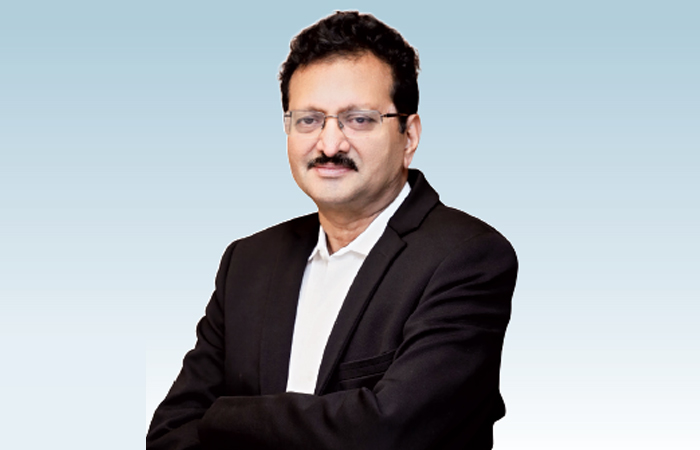
Cement companies need to focus more on Tier-II and Tier-III cities in India where the growth potential is highest, says Prakash PatilIndia’s growth story is poised to move into a new orbit with the emergence of new growth centres in the coming decades. These growth centres are the tier-I and tier-II cities dotted across the length and breadth of the country.These cities have witnessed strong pick-up in economic activities – be it industrial, service-oriented or incentive-based policies of the respective state governments to attract investments. The emergence of industrial hubs and services industry have created strong demand for residential, commercial and retail space in these cities. As a result, construction activity has increased due to which the demand for cement has seen impressive growth.The future growth centresSo which cities in India hold the potential to grow exponentially? In the north, cities such as Mohali, Chandigarh, Jaipur, Jodhpur, Ludhiana, Bhiwadi, Baddi, Pantnagar, Rudrapur, Indore, Bhopal, Lucknow, Kanpur, among others, are emerging as future growth centres, while in the west Ahmedabad, Surat, Vadodara, Pune, Nashik, Nagpur are fast emerging as metropolises in their own right. Coimbatore, Kochi, Visakhapatnam, Tiruvananthapuram, Vijaywada, Mysore, among others, are hotspots of the future. In the east, Jamshedpur, Ranchi, Patna, Bhubaneshwar are the cities to watch out for.A research report released in June 2012 by McKinsey Global Institute, observes: "There are 28 Indian middleweight cities in the group (of 440 emerging cities). The best known of them is Bangalore, home to more than eight million inhabitants and the centre of India’s information and technology industry. But the emerging 440 also includes less well-known cities such as Pune, a city in the state of Maharashtra with a strong automotive and pharmaceutical industry, and Kochi, a rapidly growing port city in the southern state of Kerala."Growth triggersEvery city has its own trigger for growth. Just as in the case of Bangalore – which from a sleepy town for the pensioners in the 1980s metamorphosed into a global city and earned the epithet of Silicon Valley of India – the trigger was the IT and ITeS sector, these future cities have their own triggers to drive growth. Baddi in Himachal Pradesh, for example, has emerged as a manufacturing hub for all kinds of fast moving consumer goods, including toothpastes, soaps, biscuits, cosmetics, etc. Pune has had double triggers, first as a manufacturing hub for automobile and pharmaceutical industry and now as an IT and ITeS hub. Likewise, the trigger for Mysore’s growth have been educational institutions and IT industry.Of course, there are other growth triggers too. The increasing economic activity in these cities has had a cascading and positive impact on the income levels and consumption demand in these cities. The increase in employment levels of the inhabitants of these cities and the surrounding areas created demand not only for consumer goods but also for residential and commercial properties in these cities. Hence, local developers with innate knowledge of the preferences of the local populace stepped in to meet the growing demand for residential houses and commercial properties. The demand from end-users created a booming property market, which attracted the investors who stepped in to cash in on the boom. As a result, the demand for cement has grown manifold in these cities and is tipped to grow exponentially going forward. This augurs well for the cement companies as a booming property market leads to increasing demand for cement."Riding on the economic boom, small towns of India are rapidly turning into mini-metros. Many malls are being developed in these places and big brands are opening up stores there to cater to the rising aspirations of customers living in tier II and III cities," says Sanjay Prabhu, Mall Mechanic and Chief Managing Officer, Beyond Squarefeet Advisory at a seminar held in Mumbai.Also, with IT and ITeS sectors registering fast growth, their need for office space has led to the real estate prices in tier I cities sky-rocketing and directly affecting margins of these companies. Hence, these companies as well as other industries have been moving to tier-II and tier-III cities. As factories and offices moved to these cities, so did the developers.The factors that led to the growth of the real estate sector in tier I cities are now leading the growth in tier-II and tier-III cities as well. Increase in job opportunities followed by increase in disposable incomes and educationally and vocationally qualified skilled labour, availability of banking and financial services, etc. have positively impacted the demand for real estate in these cities. Residents of these cities buy residential or commercial property for self-use or for renting it out to earn extra income.While the demand for real estate in tier-II cities such as Pune, Hyderabad and Ahmedabad is quite high but other cities such as Surat, Nagpur, Jaipur, Kochi, etc. are not far behind. Proximity of metro cities such as Mumbai, Delhi, Bangalore, etc. provides the demand push to other satellite cities as well. Pune is the best example of the rub-off effect of Mumbai. The state governments are also playing an important role in promoting tier-II and tier-III cities in the state as investment destinations.The growth of these cities augurs well for cement companies for the obvious reason that such growth will see infrastructure spending in these cities taking a quantum jump. The infrastructure has to keep pace with the growth in the industrial and commercial activities, so the government and local bodies will have to take increase their infrastructure spending manifold to make sure that the growth is not hampered due to lack of infrastructure.Speaking about the state of real estate in Pune, Lalit Kumar Jain, Chairman and Managing Director, Kumar Urban Developments and President CREDAI– National, says "Property prices in Pune have increased significantly as compared to the prices in the previous decade. We do not foresee a change in this trend. Demand for properties, both residential and commercial, is rising by the day. The infrastructure in the city is also improving by the day. Good infrastructure plays a major role in raising the property prices in a city. However, the government’s efforts to make home loans more affordable and easily obtainable will go a long way in helping people cope up with rising property prices. Also, developers are doing their bit to make homes affordable. They offer various schemes and discounts to entice people to buy homes….Significant chunk of the population in Pune is middle-class. With increasing disposable incomes, the middle class segment is always on the lookout for good investment options, and in today’s world, there is no better investment avenue than the real estate sector."In the case of Bhubaneshwar, it has the advantage of being a state capital. That apart, sectors such as IT and education have picked up pace and are likely to prove growth triggers for the city going forward. "Bhubaneswar has its own charming character and advantage. Besides the IT growth, industrial growth, educational hub, etc. are adding to the pace. The future prospect of real estate in Bhubaneswar looks to be good," says Tapan Kumar Mohanty, managing director, Z Estates.However, Mohanty says that presently Bhubaneshwar’s growth has slowed down due to various factors. "Though the realty business has slowed down a bit from the previous years, but still the overall real estate market is okay. The growth would be around 20 per cent…. Property prices will have an upward movement, but not at the kind of jump it used to have in the last few years. Henceforth the price movement might have a slow growth…. The budget homes and mid-segment are always more in demand, though our company focuses more on high-end and mid-segment," says Mohanty.Another trigger for growth of tier-II and tier-III cities is foreign direct investment. Pune has witnessed real estate boom on account of FDI. "The real estate sector in Pune has gained momentum ever since the government encouraged Foreign Direct Investment in the infrastructure sector apart from the real estate segment. Foreign investors invest in the city expecting high returns on their investment. Investments by multinational companies have contributed immensely to the growth of the property market in Pune. Increase in disposable income is another factor that has contributed to the growth in the property market in Pune. Also, favourable government policies play an important role in the growth of real estate sector in the city," avers Jain.The advantagesTier-II and tier-III cities offer several advantages in terms of real estate development. First and foremost, land in these cities is available aplenty and at comparatively cheaper price than metros such as Mumbai, Delhi, Bangalore, etc. This makes construction of affordable housing for the blue and white-collar workers a feasible and commercially viable proposition. No wonder, not only the local developers, even larger real estate players from beyond the region’s borders may be attracted to these cities in order to leverage the potential of tier-II / tier-III cities that have sufficient market drivers or are witnessing considerable investor activity to leverage the potential from beyond a region’s borders. Also, unlike tier-I cities, the tier-II and tier-III cities remain relatively immune from the adverse impact of globalization. Hence, although the slowdown has gripped the realty sector’s growth in tier-I cities, the focus of the realty companies has now shifted to tier-II and tier-III cities.Since the demand for real estate is mostly from the actual users and only marginal demand is speculative in nature, there is not much of fluctuation in property prices which remain stable for considerable time. This is good for the property buyers as well as the developers, who therefore remain relatively immune from the risks of highly volatile market fluctuations.The future is rosyThe fact remains that many of the metro cities are on the verge of saturation due to which the tier-II and tier-III cities are next in line to become the future growth centres. The sheer pressure of population growth will see the juggernaut of growth moving towards these cities. Hence, these cities are slowly moving up the ladder to become mini-metros or major metros in times to come. "We expect the real estate business to be booming in Pune in the near future. Once the economy recovers, which it will shortly, more and more people will start investing in real estate. Also, demand for real estate in Pune will be high due to high income levels of the people and the city’s proximity to Mumbai. So, the future does look rosy," says Jain. When the tier-II and tier-III cities start booming, the cement industry will benefit the most. Asked about the future of the markets for the cement industry in Tier-II and Tier-III cities, Maurizio Caneppele, Managing Director, Zuari Cement, said "The Tier-I/metro cities are still top demand generators; however, the infrastructure push along with local spend at the Tier II and Tier-III cities makes these markets more and more lucrative for future consumption and growth." So, cement companies should take a cue and focus more on these cities to fast-pace their growth."Significant chunk of the population in Pune is middle-class. With increasing disposable incomes, the middle class segment is always on the lookout for good investment options, and in today’s world, there is no better investment avenue than the real estate sector.""Future prospects of Bhubaneshwar look good"IT sector, industrial growth and educational hub are adding to the pace of Bhubaneshwar’s growth, says Tapan Kumar Mohanty, managing director, Z Estates, BhubaneshwarHow is the realty business doing in your city? How much has your business picked up this fiscal (FY2012-13) over the last fiscal (FY2011-12)?
Though the realty business has slowed down a bit from the previous years, but still the overall real estate market is okay. The growth would be around 20 per cent….Property prices will have an upward movement, but not at the kind of jump it used to have in the last few years. Henceforth the price movement might have a slow growth….The budget homes and mid-segment are always more in demand, though our company focuses more on high-end and mid-segment.What are the likely triggers of growth for the real estate sector in your city and what are the prospects of real estate business in your city in future?
Likely triggers are many. First of all, Bhubaneswar being the state capital has its own charming character and advantage. Besides IT and industrial growth, educational hub, etc. are adding to the pace. The future prospect of real estate in Bhubaneswar looks to be good.What kind of cement do you use the most? Is the cement easily available at reasonable price in the market?
Though the brands we use vary frequently depending on various reasons, few of these brands are Ambuja, Ultratech, ACC, Rassi Gold, Zuari, Ramco, Lafarge, Konark, JP, etc.Reasonable price has no definition. In off-season, yes, we can say the prices are good. But during season there is no logic, no justification, no reasonableness for the kind of price rise the companies indulge in.Why do you prefer to use particular cement brands in your projects?The reason why we use the brands is dependent on various reasons: may be availability, may be the best price we get at the time of lifting the material, may be the type of cement we need for particular job and its availability with some limited manufacturers, etc.What kind of problems/issues do you face in procurement of cement in your city? What do you expect from the cement companies/dealers to resolve these problems/issues?
Frankly speaking, none of the cement companies have any long term marketing policy based on certain vision, principles, ethics and/or relation building, rather all their marketing strategies are ad-hoc, opportunistic, cut-throat and unprincipled. This is one area where the reputed and well-established companies should break the traditional way of marketing and develop more organized, long-term based, brand loyalty, relationship building kind of marketing etc.