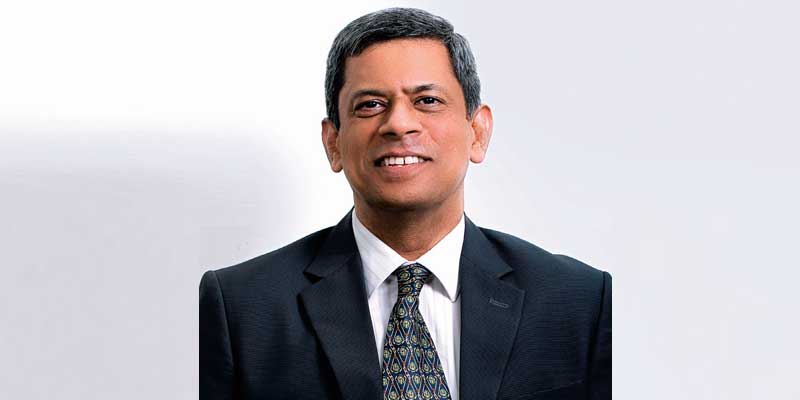
ICR engages Jayakumar Krishnaswamy, Managing Director, Nuvoco Vistas Corp, in a detailed conversation about the company’s Corporate Social Responsibility initiatives, its success stories and vision for the future.
What is your vision and mission for Nuvoco’s CSR programme?
Through our corporate social responsibility projects and sustainable development initiatives, we envision the creation of a self-reliant world – one in which local communities can positively engage and create tangible value. Our mission is to positively impact as many lives as possible through projects on health, education, livelihood and environment protection by partnering with relevant stakeholders to contribute to achieving UN Sustainable Development Goals.
What is the budget allocated by your organisation for CSR and community building activities? What will be the areas of focus for FY 2022-23?
Nuvoco has had a long-standing commitment to sustainable development through its core value of ‘Care’. The company’s CSR activities are based on five overarching themes namely:
- Sangrahit Bharat (Natural Resource Management & Clean Energy)
- Swasth Bharat (Health)
- Shikshit Bharat (Education)
- Saksham Bharat (Livelihood)
- Sanrachit Bharat (Infrastructure development)
The pandemic-induced disruptions over the past two years have led to major setbacks for primary and secondary education, this is especially true for children from disadvantaged backgrounds and socio-economically weaker sections of society, who didn’t have the same access to online education as their urban counterparts. Hence, for FY23, our focus will be on improving the health status of women and children, and promoting quality education infrastructure.
Which of your flagship CSR projects have been the most successful? What are its most notable achievements?
Below are some of Nuvoco’s most notable flagship CSR projects that we would like to highlight.
• Project Daksh: Last year, in association with Shahi Exports, Nuvoco provided training in industrial skills to more than 175 girls from rural areas of which nearly 150 girls have been successfully employed in various organisations. Nuvoco also provided basic training on bedside patient assistance to these young girls to increase their employability. These skills training programmes have helped girls from socio-economically disadvantaged backgrounds garner meaningful job opportunities and sustain their families in rural areas.
• Project Samriddhi: In the last year, Project Samriddhi has helped train more than 750 farmers in new and improved agriculture techniques and methods. We have trained farmers in West Bengal in SRI (System of Rice Intensification) – a method of paddy cultivation. Through this, they were able to enhance their paddy productivity by 25 to 30 per cent. We have also trained 100 women farmers in mushroom cultivation and this has helped them to earn an additional income of around 3000 to 4000 rupees per month. We also federated 450 women farmers to form a Sanchari Women Farmer Producer Company Limited; so far, they have collected a total share capital of 4.5 lacs for the registration of the company.
• Project TARA: This project aims to support the frail healthcare infrastructure in villages and improve healthcare services in rural areas in India surrounding Nuvoco’s plants and factories.
- Through project TARA, we have adopted 162 anganwadis near our Chittorgarh Cement Plant and are working to transform them into model recreational units.
- We also aim to achieve 100 per cent ANC (Ante-Natal Care) tests for pregnant women in our project villages. To achieve this, we have provided mobile Ante-Natal Care (ANC) check-up kits that are integrated with a mobile app to the government health workers in these rural areas. Government health workers like ANM (Auxiliary Nurse and Midwife), ASHA (Accredited Social Health Activist) and AWW (Anganwadi Worker) were trained to operate the kits and conduct compulsory ANC for pregnant women in our project villages. Through this initiative, we have been able to bring crucial ANC facilities to the doorstep of rural families in need.
- Furthermore, there is another initiative called the Girls Health Group wherein we seek to address health issues faced by adolescent girls in rural areas. Our team decided to form these groups across rural areas so that girls from every village can become members and discuss issues related to their health with their peers and seek solutions for them. For instance, the non-availability of sanitary napkins in villages was a major problem for young girls and women. In order to tackle this issue, we started sanitary pad banks in villages through our GHGs. Today, we are proud to highlight that almost every girl in our project village has access to sanitary napkins, thereby improving their menstrual hygiene and limiting the occurrence of infections.
How many women from Aakriti, an initiative under Saksham Bharat, have been empowered since its inception?
Project Aakriti is one of our most successful and unique initiatives that has helped to accelerate progress toward the economic empowerment of rural women. This project started in 2014 as a single Stitching Training Centre, today, it has graduated to a ‘Production Centre’ with a turnover of more than 20 lakhs per annum, supporting the livelihood of more than 400 women across locations (Mejia, Sonadih and Arasmeta). All the women trained under project Aakriti have benefitted immensely from the skills imparted and most of them are now self-employed or have jobs. Due to its extraordinary success, the project was the winner of the FICCI CSR Award 2017-18 for Women Empowerment.
What efforts have been taken by your organisation in the education sector? What has its impact been on the children?
We have installed state-of-the-art smart classes in 40 government schools across five states. These smart classes have audio-visual course content in local languages from class 1 to class 12, making it easier for students in higher secondary classes to grasp complex science and mathematical concepts. These smart classes proved to be a huge boon for both students and teachers during the lockdown as they could use the content for online classes and ensure that learning wasn’t interrupted. Overall, the project has ensured that the quality of education in government schools is improved and that there is a rise in digital-forward education practices in rural areas that often tend to get left behind when it comes to adopting tech-based education.
How did the pandemic impact your community-building activities?
The pandemic has had a significant impact on our community development projects and initiatives. Due to the devastating impact of Covid-19 across the country, we had to pivot and shift our focus to relief related activities such as setting up Covid Care centres in villages, conducting sanitization drives, spreading awareness on Covid-19 protocols and providing sanitisers and face masks to the villagers.
In which areas are you planning to expand your CSR and community building activities? What results are you expecting from the same?
In the past few years, we have streamlined our CSR activities so that there is an increased focus on achieving Global Sustainable Goals. Last year, we added the theme of Sangrahit Bharat through which we will be focusing on natural resource management and promoting clean energy initiatives in villages. Apart from our other themes of health, education and livelihood, this theme will focus on promoting the sustainable use of natural resources, especially groundwater – an increasingly scarce resource across the country. We will work towards improving groundwater availability through recharging, rainwater harvesting and reducing the rampant use of underground water. This will involve activities such as constructing recharging pits, anicuts on small water streams and rainwater harvesting structures in local buildings.
We will also focus on promoting clean energy initiatives in villages by installing solar street lights, promoting the use of solar pumps, and installing small solar plants in community buildings like panchayat offices, primary health centres in villages, government school buildings, etc.
What are the biggest challenges you face while building and empowering communities around your plants?
One of the biggest challenges that we face while building and empowering communities around our plants is the matter of creating ownership of projects among stakeholders. Community members often feel that it is our responsibility to continue to run all the projects for an indefinite period rather than for a fixed period with a particular objective.
Also, since most of the villages we work with are situated in remote rural areas that lack basic infrastructure facilities, we often face resistance when it comes to implementing health, education and livelihood-based programmes. Hence, a lot of knowledge sharing, and awareness creation activities are conducted to convince communities to accept the facilities.
Tell us about the awards and accolades
- won by your organisation for CSR and community building.
- 2015-16 – BT CSR Award by Bureaucracy Today for innovative CSR projects
- 2016-17 – FICCI CSR Award (Jury Recommendation) for Women empowerment
- 2017-18 – FICCI CSR Award for Women Empowerment
- 2017-18 – NGO Box CSR Award for Women Empowerment
- 2018-19 – FICCI CSR Award (Jury Recommendation) for Education.
–Kanika Mathur