Concrete
Harnessing 100% renewable power by 2030

At Dalmia Cement (Bharat), the Group is committed to the tenet of ??eople. Planet. Performance.??Significantly, India is aiming to emerge as a $5 trillion economy by 2025. Consequently, the country is likely to add nearly 70 per cent of its existing GDP in just five years. This prospect places a premium not just on our ability to grow economically but do so with a disproportionately lower impact on the ecological balance.
India is among the few nations with a below 2-degree compatible NDCs (Nationally Determined Contributions) under the Paris Climate Agreement. In this context, India?? cement industry has a major role to play in the sustainability of the heavy-industries segment. As India grows, there will be greater investment in infrastructure development ??already visible in the Union Budget 2021-22, which will, in turn, necessitate higher cement consumption. This makes it imperative for the cement industry to manufacture more cement with optimum utilisation of resources and energy.
Roadmap to sustainability
Accordingly, Dalmia Cement has laid down its long-term direction as well as medium-term and short-term targets. Additionally, the company has adopted the sustainable development goals in its own capacity for faster realisation of SDGs near its manufacturing locations. These sustainability initiatives have won global appreciation.
In September 2019, the UN Secretary-General acknowledged these initiatives, inviting Dalmia Cement to speak at its Climate Action Summit. Speaking at the 2020 Summit, Mahendra Singhi, MD & CEO ??Dalmia Cement (Bharat), emphasised that the time to act is now, given the unprecedented climate challenge. Here, he announced a slew of measures for taking the Company?? sustainability leadership to a higher orbit by creating new benchmarks in green cement manufacturing at the global level. Mr Singhi highlighted Dalmia Cement?? collaborations with stakeholders worldwide for realising its carbon negative roadmap with specific reference to the scalable deployment of deep decarbonisation technologies such as 100 per cent renewable electricity, energy efficiency improvements and Carbon Capture and Utilisation in his transition-approach speech.
Not surprisingly, these measures mean the company has to question every industry convention. Each decision now faces the filter, ??ill it be good for the Earth???before coming to ??ill it be good for the Group???Thanks to this, the ??reen??quotient of the cement the company manufactures has increased because new priorities, practices and investments have been merging.
Interestingly, Dalmia is the only cement company to declare its commitment to turn carbon negative by 2040. Backed by numerous initiatives towards this objective, it is ranked No.1 on business readiness for a low carbon transition (CDP Global Cement Sector Report, April 2018). Making its ??arbon Negative 2040??dream a reality requires a multi-stakeholder approach. This includes collaborative efforts of R&D organisations, innovators, technology disrupters and policymakers. On its part, the Company is willing to offer its plants while sharing investments and resources for promoting innovative technologies. Dalmia Cement has also partnered with the International Finance Corporation to promote sustainable business.
Among others, the vision of turning carbon negative by 2040 is being implemented by:
-
100 per cent substitution of conventional fuels to green fuels, natural gas and heat electrification
-
Switching to green power generation
-
Reducing clinker factor in incremental stages
-
Optimising the specific heat consumption of the clinker
-
Shifting to solar drying for relevant raw materials
-
Developing a new range of low carbon cement
-
Lowering process emissions through technological disruptions
A broad perspective of some measures is outlined below.
Alternative fuel resource: Dalmia Cement enhanced its standing as an ??ndustrial waste disposer??by repurposing waste via the use of alternative fuels such as plastic, wood, tannery, ETP sludge, waste paper, carbon black, fibre-reinforced polymer, footwear, spent wash, solid waste mix, refuse-derived fuel, dry waste mixed liquid, palm bunch, chocolate wrappers and as alternative raw materials ??fly ash, BF slag, red mud, etc.
Lower average carbon footprint: The Group-level carbon footprint of 536 kg of carbon dioxide per tonne of cement product in FY2020 compared favourably with about 546 kg of CO??per tonne of the same in 2019. Incidentally, the global average of carbon footprint in kilogram per tonne of cement is 900. Dalmia Cement?? targeted carbon footprint will be negative by 2040.
The Group undertook new ambitions and commitments to progress in this clean energy transition. As the future was being mapped, one thing became clear: to be a leader, the organisation needed to view climate change as a business opportunity rather than a risk.
To begin with, the focus was on material and resource efficiency. For this, the company produces high-blended cements with the best available technology by using various industrial waste products such as BF slag and fly ash. Today, the high-blended cements are sold as both premium and green products. In other words, these are technically superior and durable cements while being low carbon products. The Company is now the largest producer of slag cement in India (low carbon green cement).
EP 100 and RE 100 campaigns
Dalmia Cement?? energy productivity has doubled compared to 2005 levels. To further improve energy productivity, the company has joined the EP 100 initiative. Through this, it remains committed to doubling energy productivity by 2030. Globally, it?? the first company to join both the Energy Productivity (EP 100) and Renewable Energy (RE 100) campaigns by The Climate Group. EP 100 is an ambitious voluntary campaign by Dalmia Cement to double energy productivity (EP 100) by 2030.
RE 100 refers to the company?? fossil-free electricity initiative. The 22nd session of the Conference of Parties (COP-22) on November 11, 2016 at Marrakesh in Morocco witnessed a novel development when a core manufacturing sector company Dalmia Cement joined RE 100 ??an ambitious campaign of leading global conglomerates. The Company was the only one from the world?? cement sector committing to a long-term renewable energy transition.
One of the core components of the company?? ??reen to Greener??roadmap is its fossil-free electricity initiative. The need for the initiative arose due to two reasons: (a) preparing its operations for futuristic costs of energy-related externalities (b) tapping the savings opportunities of a clean energy transition.
Under the initiative, 40 MW green power generation potential through waste heat recovery from exit gases in its integrated cement plants have been identified. A 10 MW project is under implementation and another 9 MW one is under the final approval stage. In a significant thrust to renewable electricity generation, Dalmia Cement has commissioned 8 MW captive solar PV projects in its Eastern India operations. Another 12 MW solar PV project and varied rooftop solar PV projects are under diverse stages of implementation.
By harnessing such opportunities, the Group found it could safeguard growth plus play its part in delivering a zero-carbon future, faster. Globally ranked No.1 by CDP (formerly Carbon Disclosure Project), the Company has achieved the cement world?? lowest carbon footprint, which is 40% lower than the global average for any cement company. This has been achieved by focusing on material and resource efficiency, including the use of industrial waste such as slag and fly ash as alternative raw material to make high-blended premium cements and energy efficiency measures and by greater use of alternative and renewable sources of energy.
Moreover, profitability in terms of EBIDTA/tonne is one of the best among cement companies in India. This validates the organisation?? philosophy that a clean and green company has a profitable and sustainable future. The overriding purpose of this philosophy is to create business opportunities in reducing CO??emissions through a mutually-beneficial approach.
Apart from the focus on renewable energy as part of its sustainability mission, the Group is working to save another precious resource ??water. To insulate the Group from the physical risks of climate change, the challenge to become a water positive cement entity was announced in 2014. By 2018, being a five times water positive cement company was a reality. Motivated by the results, the Company has resolved to become 10 times water positive by 2025.

Alternative fuels and more
Coming to alternative fuels, Dalmia Cement is switching from fossil fuels to green ones, including biomass. The use of industrial and municipal wastes has been accelerated to replace fossil fuels in pyro processing, helping avoid fuel-related CO??emissions. At a group level, a 4 per cent thermal substitution rate (TSR) has been reached, compared to barely 0.5 per cent five years ago. Also, pockets of excellence have been developed in some plants where almost 18 per cent of TSR has been achieved.
This segment will offer more potential in India if prevailing policies turn more conducive for advancing the use of alternative fuels in cement kilns. Alternative fuels augment the Group?? profitability while simultaneously minimising GHG (greenhouse gas) emissions from cement operations. Furthermore, fuel feeding systems are being buttressed with investments to make more use of both solid and liquid alternative fuels.
An objective-oriented roadmap has been created to boost alternative fuel use in the Group to reach levels of 30 per cent (by 2023), 70 per cent (2030) and 100 per cent (2040). To reach these ambitious levels of alternative fuels usage, Dalmia Cement is embarking on the journey of growing selective energy crops (such as bamboo, which absorbs carbon dioxide) to use it in co-processing, apart from increasing the utilisation of waste-derived fuels.
Climate change remains a global threat that can no longer be ignored ??as is apparent from periodic climate mishaps occurring worldwide, which includes the recent glacier-burst flash flood tragedy in Uttarakhand. In January 2020, displaying its future-ready approach and in an endeavour to participate in building the future of industry and the economy via a focus on nature, people and planet, Dalmia Cement pledged support to HRH Prince Charles for the green initiative Terra Carta ??a sustainable roadmap to 2030 for businesses to move towards an ambitious and sustainable future. Terra Carta will harness the power of Nature combined with the transformative power, innovation and resources of the private sector.
Elaborating on this campaign, Singhi asserted that the future of industry and economy is well vested in the future of nature, people and planet. The COVID-19 outbreak has made it amply clear that the economy and industry form an integral bond with ecosystem services provided by Mother Nature. Since the buildings and construction sectors leave a heavy carbon trail, it is incumbent on the allied cement industry to contribute its mite in lowering CO??footprints.
Undoubtedly, the present generation owes it to their children to leave behind a better planet than they inherited. Dalmia Cement?? blended cements portfolio and sustained investments in low carbon technology are aimed at driving such sustainability initiatives and leaving our children a cleaner, greener planet.
ABOUT THE AUTHOR:
Ashwani Pahuja is the Chief Sustainability Officer at Dalmia Cement (Bharat). He is also the past Director General of National Council for Cement and Building Materials. His photo has appeared in the June 2020 issue.









Concrete
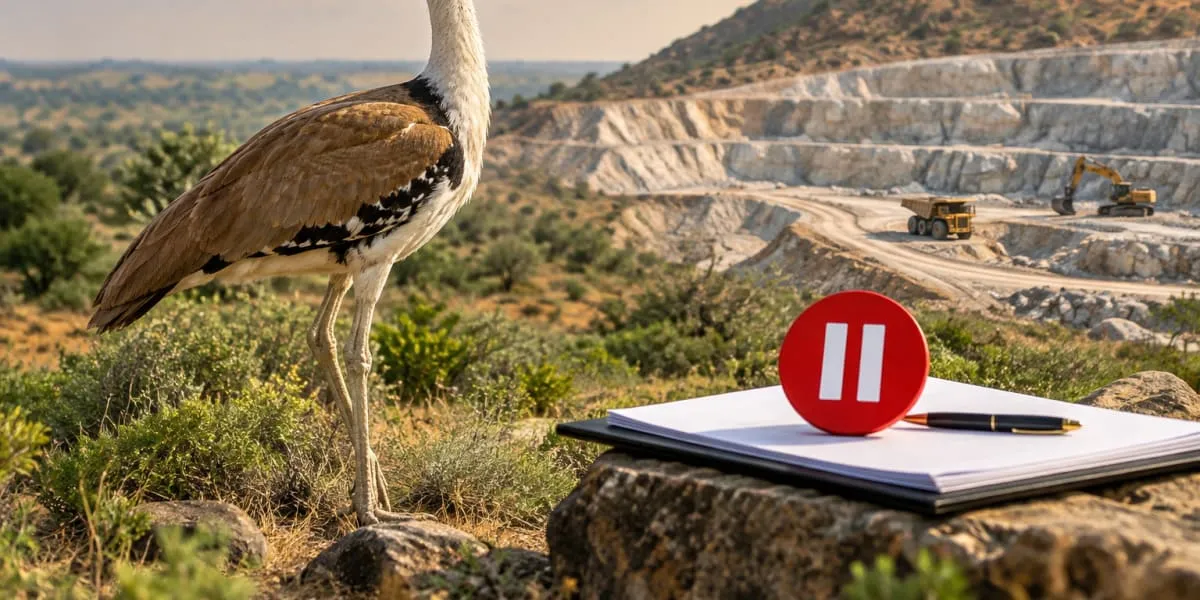
Centre Defers Clearance for Limestone Mine Near Bustard Habitat
Panel seeks revised mining plan and safeguards for pipelines and wildlife
Concrete
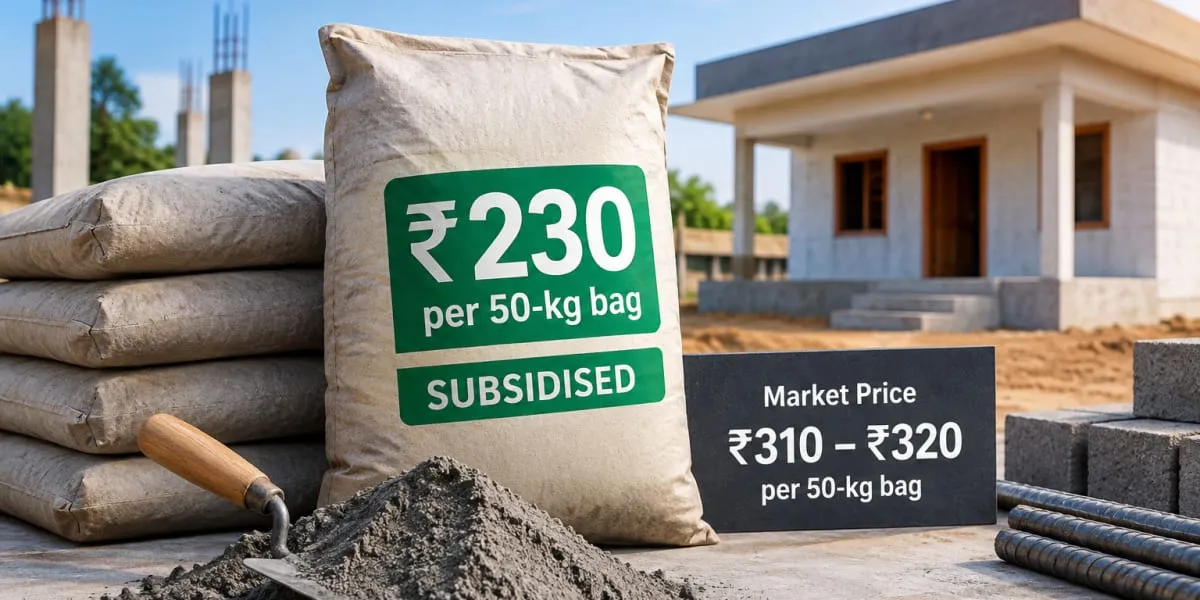
Telangana to Supply Subsidised Cement for Indiramma Houses
Poor families allotted Indiramma houses to receive cement at Rs. 230 per bag
Concrete
Cement Demand Strong As Prices Remain Stable
Volumes rise amid steady trade pricing and higher fuel costs



Centre Defers Clearance for Limestone Mine Near Bustard Habitat

Telangana to Supply Subsidised Cement for Indiramma Houses

Cement Demand Strong As Prices Remain Stable

Aditya Birla Group Launches Ultravolt Wires And Cables Business

Ramco Cements Mine Restoration Gets Global Biodiversity Certification
Centre Defers Clearance for Limestone Mine Near Bustard Habitat
Telangana to Supply Subsidised Cement for Indiramma Houses
Cement Demand Strong As Prices Remain Stable
Aditya Birla Group Launches Ultravolt Wires And Cables Business