Authored by Alice Walker and published in Oxmaint on 13 March 2026, this article examines key sources of air pollution in cement plants and explains how continuous emissions monitoring, pollution control equipment monitoring and digital maintenance systems can support regulatory compliance and reduce environmental impacts.
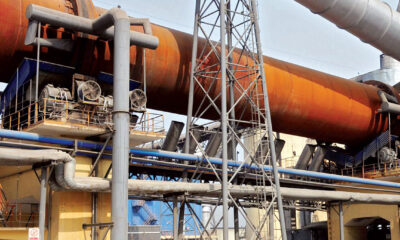
Cement manufacturing contributes approximately 7 per cent to 8 per cent of global carbon dioxide emissions, according to the Oxmaint article. The industry also releases nitrogen oxides (NOx), sulphur dioxide (SO2), particulate matter and heavy metals. The article identifies the rotary kiln as a major emissions source, where temperatures reach approximately 1,400°C and limestone calcination releases CO2. Fuel combustion adds NOx and SO2, while crushing, grinding, clinker cooling and material handling generate dust.
The article also highlights the scale of dust emissions, stating that a single production line can generate up to 300 tonnes of cement bypass dust daily. Fine alkaline particles, measuring 1–10 microns, can travel long distances and penetrate deep into the respiratory system. These emissions make comprehensive monitoring essential across the production process, rather than limiting controls to kiln-stack emissions alone.
Continuous monitoring and digital integration
Continuous Emissions Monitoring Systems (CEMS) provide real-time measurements of pollutants and help cement plants identify deviations before they result in regulatory violations. Oxmaint describes monitoring technologies including Fourier Transform Infrared Spectroscopy (FTIR), non-dispersive infrared (NDIR) analysis and chemiluminescence analysers. FTIR systems can measure 16 or more gases simultaneously, including CO2, NOx, SO2, hydrogen chloride and ammonia.
The article further highlights the benefits of integrating emissions data with maintenance management systems. This enables automated compliance reporting, predictive maintenance scheduling and alerts when equipment performance begins to deteriorate. Oxmaint reports that plants integrating CEMS with maintenance management can achieve 15 to 20 per cent reductions in monitoring-system downtime, although the article does not identify the plants or underlying studies supporting this figure.
Pollution-control equipment and operational performance
Effective monitoring extends beyond stack emissions to the equipment responsible for controlling pollution. The article identifies baghouse differential pressure, filter condition, compressed-air supply and pulse-valve performance as important indicators of filtration efficiency. For electrostatic precipitators (ESPs), voltage, current and rapping frequency help operators assess particle collection performance. Monitoring these parameters can support timely maintenance and help prevent emissions from exceeding permitted limits.
Oxmaint also highlights the importance of maintaining pollution-control equipment throughout its operating life. It cites a decline in baghouse collection efficiency from 99.998 per cent during early operation to 95.05 per cent by year 15 without proper maintenance intervention. The article lists target collection efficiencies of 99.9 per cent for baghouse filters and 99.5 per cent for ESPs, illustrating the importance of equipment condition, maintenance and performance verification in emissions control.
Conclusion
The article discusses multiple regulatory frameworks governing cement plant emissions, including the US Environmental Protection Agency’s NESHAP Subpart LLL, the European Union’s Industrial Emissions Directive and China’s ultra-low emission standards. It reports that China achieved reductions of 38.2 per cent in particulate matter, 19.1 per cent in SO2 and 31.6 per cent in NOx between 2020 and 2023. These examples underline the role of defined emission limits, continuous monitoring and compliance reporting in strengthening industrial air quality management.
The article concludes that integrating environmental monitoring with maintenance management can help cement manufacturers improve equipment reliability, strengthen regulatory compliance and reduce the risk of emissions exceedances.























 Concrete4 weeks ago

 Concrete4 weeks ago

 Concrete4 weeks ago
 Concrete4 weeks ago