Rohit Kochar, Promoter, Executive Chairperson and CEO, Bert Labs, challenges cement industry leaders to start investing in AI infrastructure as a strategic imperative.
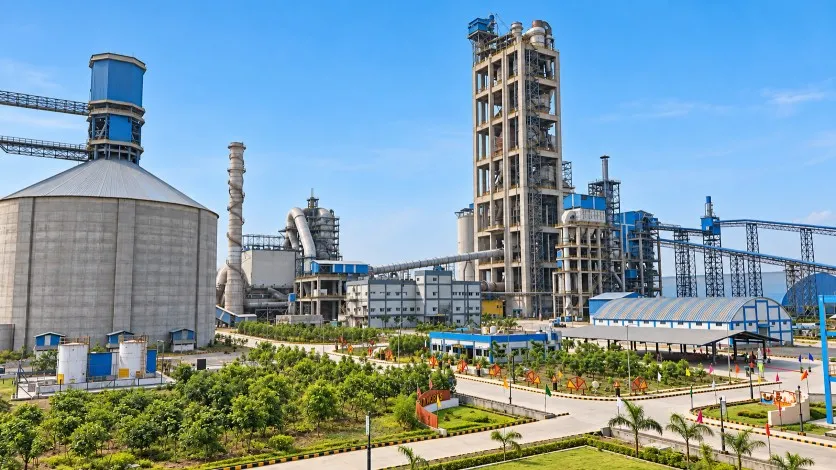
In a low-margin, volume-driven industry where a single day’s breakdown at an 11,000 TPD integrated plant can cost 2 to 3 crore in operating profit, Rohit Kochar, Promoter, Executive Chairperson and CEO, Bert Labs®, argues that the business case for Foundation AI infrastructure in cement is not a question of ‘if’, but of how quickly manufacturers are willing to act.
How can AI infrastructure be designed into greenfield cement plants to build efficiency, sustainability and decarbonisation into operations from the outset?
AI infrastructure should be designed into greenfield cement plants from the outset to embed efficiency, sustainability and decarbonisation into their operational architecture. For the energy intensive and relatively commoditised instead of low margin – if deemed fit cement industry, end to end efficiency is critical. At Bert Labs®, we address this through Inhouse grown Foundation AI infrastructure developed specifically for industrial applications.
Our infrastructure comprimes Bert Geininus™ and Bert Optimus® together form an AI-driven Digital Twin solution, integrating first-principles models, plant data, simulation, prediction, and optimisation for both plant design and operations., supported by design and operational digital twins. For a greenfield plant, information relating to capacity, whether it is a 10,000, 12,000 or 15,000 TPD facility, along with kiln lines, grinding units, utility sections and other components, can be incorporated into a design digital twin.
Powered by deep neural network algorithms developed by Bert Labs®, the Design Digital Twin can optimise plant architecture before construction begins. This can improve fuel and power consumption, heat efficiency, clinker production and the final cement product. By embedding optimisation at the design stage, companies can reduce later corrective interventions while improving productivity and responsiveness to customer requirements.
Granular data infrastructure is equally important. Many existing plants have decades of operating history, but valuable historical data is often overwritten or not retained. Data relating to machine performance, sensors, production, operating conditions, safety interlocks, process quality and product quality is essential for effective optimisation.
For greenfield plants, this infrastructure can be established through Bert Nova™ is a multi-tenant, microservices-integrated AI platform developed by Bert Labs®. A typical integrated cement plant has more than 10,000 variables across its unit operations, generating structured time series data. The platform enables this information to be captured and stored from at intervals ranging from split seconds to multiple years.
The infrastructure is supported by IoT Systems-on-Chip and the Bert Maximus devices platform, with devices communicating through the BERT Qrious wireless sensor network. BERT Titan acts as a base station, transmitting data to on-premise and cloud servers while enabling edge computing. This allows Foundation AI models to train in real time and enables AI based controls to operate close to the equipment being monitored. The wireless sensor network is designed to deliver 99.99 per cent reliability, with the objective of minimising data loss.
While conventional DCS systems remain important for plant monitoring and control, greenfield facilities can now build an integrated architecture combining IoT platforms, wireless sensor networks, edge computing and AI based enterprise software – “are future-ready and will yield benefits for years to come.”. The system can support distributed and federated computing across on-premise servers, cloud environments and multiple bringing all plants onto a single platform.
The larger objective is to build cement plants that remain relevant five or ten years into the future. By integrating AI, digital twins, IoT, edge computing and intelligent data infrastructure from day one, greenfield plants can become more real time, predictive and increasingly autonomous, embedding efficiency, sustainability and decarbonisation into their operations from the outset.
How can AI infrastructure help brownfield plants modernise legacy systems and improve process efficiency without requiring extensive replacement of existing assets?
One of the key strengths of the Bert Labs® Foundation AI Infrastructure and Bert platform solution is its ability to deliver up to 10 per cent fuel savings and up to 20 per cent power savings through annual year-on-year commitments. The foundation of this impact is a 360-degree view of data.
For brownfield plants, our approach begins by integrating IT and OT systems. IT infrastructure, including ERP, CRM, HRMS and other enterprise software platforms, is integrated with Bert Nova™, our multi-tenant AI distributed and federated computing enterprise software platform. Operational technology, including the DCS, energy management, production management and quality management systems, is integrated into the same platform.
Another important capability is bringing multiple facilities onto one common platform. A cement company may operate 15, 20, 30, 40 or even 100 plants, each with its own DCS and operational systems. Bert Nova™ can integrate these facilities, including those across different geographies, onto a common enterprise platform, which is particularly relevant as Indian cement companies expand globally.
This integration also enables greater centralisation of basic plant operations. Instead of each of 20 or 30 plants requiring large teams to independently manage operations, a significantly smaller central team can monitor multiple facilities through Bert Nova™ dashboards, covering safety, production, process management and product quality.
How can AI-driven optimisation reduce specific energy and raw material consumption while improving productivity and lowering the carbon intensity of cement production?
Our major focus in the cement sector is energy because it represents a significant cost and operational challenge. Through the Bert Labs® Foundation AI Infrastructure, we help cement manufacturers reduce specific energy consumption while improving productivity, optimising raw material use and lowering carbon emissions.
Our approach involves creating Foundation AI agents for the integrated cement plant. These models establish correlations across the entire process, from limestone particle size and moisture at the crusher to raw meal fineness, fuel characteristics, kiln feed and rotary kiln operations. Real time control of these variables can directly influence heat consumption and overall process efficiency. Cement plants may use seven, eight or more fuel sources, including waste streams from other businesses within diversified industrial groups, making intelligent optimisation particularly important.
An integrated cement plant can have approximately 10,000 independently measured parameters captured through digital and analogue sensors, alongside tens of thousands of dependent and latent variables that are not directly measured. Bert Labs® uses physics and chemical engineering-based simulations to model processes in grinding units and kilns. These models create soft sensors, which are integrated with physical sensors and deep neural networks to provide the Foundation AI with a more comprehensive understanding of plant operations.
Bert Labs® reports potential reductions of up to 20 per cent in power consumption and up to 10 per cent in fuel consumption on an annual and year on year basis. Reduced energy consumption directly lowers carbon dioxide and other greenhouse gas emissions, supporting progress towards net zero. According to the company, its work could help clients accelerate net zero targets, including a European client’s 2035 target and an Indian company’s 2040 target.
Improved heat efficiency also reduces the energy intensity of clinker production. Bert Labs® reports reducing specific heat consumption from 720 kilocalories per kg of clinker to 691 kilocalories per kg at one cement plant, and from 711 kilocalories per kg of clinker to 662 kilocalories per kg at another.
Raw material optimisation is enabled by integrating plant operations with supply chain and enterprise data through Bert Nova™. Information on incoming materials can be connected with the real time requirements of the raw mill, pyro section and cement mill, as well as changing customer requirements. This enables the system to optimise the raw mix, including limestone, gypsum and other materials, in real time.
How should cement manufacturers evaluate the business case for AI infrastructure in terms of energy savings, resource efficiency, emissions reduction and long-term progress towards net zero?
My first advice to cement industry leaders is to stop viewing innovation as a cost and learn to invest in it. Innovation should become the norm in the cement industry, which is a low margin and highly volume driven business. While India’s infrastructure and construction growth provides significant opportunities, industry consolidation will also continue, making innovation essential to maintaining competitiveness.
Cement companies should evaluate AI infrastructure through conventional metrics such as payback period, return on investment and internal rate of return, while also recognising its wider operational value. According to Bert Labs®, the payback period for its Foundation AI Infrastructure and Bert Platform Solution® can be as short as one month for a single integrated plant, with an internal rate of return running into several hundred per cent.
The scale of the opportunity becomes clear when energy consumption is considered. If the annual power and fuel cost of a pyro section, from the preheater to the cooler, is 60 crore and AI driven optimisation reduces this by approximately 23 crore to 24 crore annually on a year-on-year basis, the savings can become substantial across multiple lines. For a company operating nine or 20 lines, along with additional grinding units, energy expenditure can run into 700 crore, 800 crore or even 1,000 crore.
Resource efficiency is another important consideration. Industry leaders note that a cement plant that required around 500 people to operate 35 to 40 years ago may today operate with approximately 55 to 60 people. With automation and centralised
AI enabled operations, basic operations across
multiple plants could potentially be managed by much smaller teams, significantly reducing the human resources required.
Reduced human intervention can reduce bias and also improve productivity, operating margins and safety. An 11,000 TPD integrated cement plant can reportedly face an operating profit impact of 2 crore to 3 crore per day during a major breakdown. AI enabled monitoring and optimisation can help reduce such disruptions while lowering the management bandwidth required to address operational and workforce challenges.
Ultimately, cement manufacturers should not wait for innovation to become risk free. They can begin with smaller deployments, learn from the outcomes and continue investing in technologies that demonstrate value. The business case for AI infrastructure should therefore extend beyond immediate financial returns to include energy savings, resource efficiency, improved productivity, reduced operational risk, emissions reduction and a more sustainable future.

















 Concrete4 weeks ago
 Concrete4 weeks ago
 Concrete4 weeks ago
 Concrete3 weeks ago