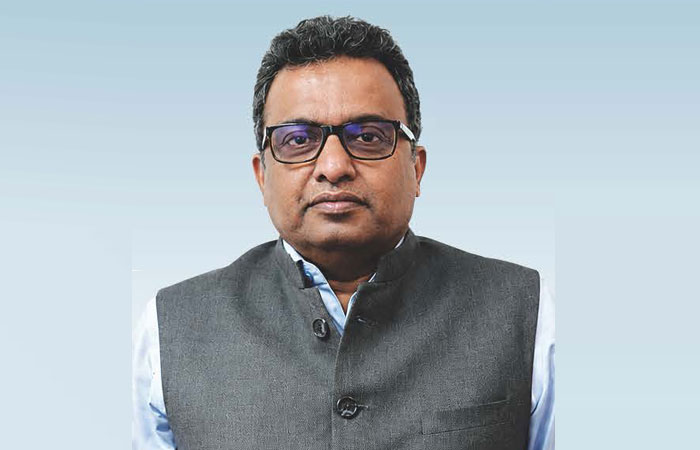
Shailesh Ambastha, Chief Logistics Officer, Shree Cement, delves into the importance of supply chain intelligence, encompassing multimodal optimisation, control tower visibility, EV fleet expansion and data-driven vehicle productivity.
The cement market faces the challenge of demand volatility and a vast geographic spread in India. It is vital for manufacturers to invest in logistics intelligence in order to grow profitably. In this interview, Shailesh Ambastha, Chief Logistics Officer, Shree Cement, discusses Shree Cement’s despatch-to-delivery network and its improvement through better planning systems, modal rebalancing toward rail, reduction of empty kilometres, and the measured introduction of electric vehicles into its transportation fleet.
How is your organisation redesigning its end-to-end logistics network to improve cost efficiency, reliability and customer service?
We are taking a more integrated view of logistics, with a clear focus on improving cost efficiency, service reliability and customer responsiveness. The objective is to ensure that each market is served from the most optimal supply point while reducing avoidable movement and improving the balance between road and rail.
A key part of this approach is strengthening visibility across the entire dispatch-to-delivery cycle. Better visibility allows us to identify bottlenecks earlier, improve planning and respond faster to changing market requirements. We are also looking at vehicle productivity, turnaround time and route performance to make the overall network more efficient.
For us, logistics is no longer only about moving cement from the plant to the customer. It is an important business enabler. A well-designed logistics network allows us to improve service levels, manage costs more effectively and build a supply chain that is agile enough to support business growth.
What are the biggest logistics bottlenecks currently affecting the cement industry, from plant dispatch to the final customer?
The cement industry operates in a particularly demanding logistics environment because of the volumes involved, the geographic spread of markets and the need to maintain reliable deliveries. Some of the key challenges include transport availability, driver shortages, loading and unloading delays, infrastructure constraints and high dependence on road movement across several corridors.
Another important challenge is the variability in market demand. Demand can change quickly across markets, which puts pressure on dispatch planning and the ability to reposition logistics
capacity at short notice. Delays at one point in the network can also have a cascading impact on subsequent deliveries. Addressing these challenges requires coordination across the entire ecosystem. Plants, transporters and sales teams need to work with a common view of requirements and priorities. Strong operating discipline, timely data and better visibility can help identify potential disruptions early and enable faster corrective action.
How are digital technologies such as AI, IoT, GPS tracking and predictive analytics transforming your logistics operations?
Digital technology is increasingly becoming an important enabler of logistics transformation. The biggest change is the visibility and quality of information available to logistics teams. GPS tracking, for instance, provides greater visibility of vehicle movement, while planning systems help teams make better-informed dispatch decisions.
Data-based insights can also help identify recurring delays, monitor turnaround time, understand route performance and forecast transport requirements more effectively. When these insights are brought together, logistics teams can move beyond simply responding to issues after they occur.
The larger opportunity is to make logistics more proactive and predictive. Instead of waiting for a delay to impact a delivery, better visibility allows teams to identify potential issues earlier and take corrective action. Over time, this can improve asset utilisation, service reliability and the overall efficiency of the logistics network.
What role are multimodal transportation, rail and coastal shipping playing in reducing dependence on road logistics?
Multimodal transportation will play an important role in creating a more balanced and resilient cement logistics network. Road transportation will continue to remain critical because of its flexibility and ability to provide last-mile connectivity. However, rail can offer significant advantages for longer distances and large-volume movement, particularly where the infrastructure and route economics are favourable.
The objective should not be to replace one mode with another, but to use the right mode for the right corridor. A more balanced modal mix can help companies optimise cost, improve reliability and reduce the environmental impact associated with transportation.
As the cement industry grows and markets become more geographically distributed, multimodal logistics will become increasingly important. Stronger integration between road, rail and other modes
can provide greater flexibility and help companies respond more effectively to changing demand and infrastructure conditions.
How are you balancing logistics costs, delivery timelines and carbon emissions while selecting the optimal transportation mix?
The key is to recognise that logistics decisions cannot be based on freight cost alone. The optimal transportation mix needs to consider cost, delivery commitments, customer experience, vehicle availability, route conditions and environmental impact together.
Our approach is to improve planning quality, increase the use of efficient modes such as rail wherever feasible, reduce empty running and improve vehicle productivity. These measures can help improve efficiency without compromising service reliability.
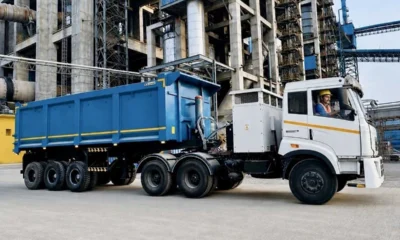
We are also already using EV trucks for transportation, and this initiative will be expanded further, including for cement transportation, wherever route conditions and supporting infrastructure allow. This is an important step in exploring cleaner mobility solutions while keeping operational practicality at the centre of our approach.
Ultimately, the objective is to create a logistics model where cost efficiency and sustainability complement each other rather than being treated as competing priorities.
What measures are being implemented to improve fleet utilisation, reduce empty kilometres and optimise last-mile delivery?
Fleet utilisation is a critical area because every improvement in vehicle productivity has a direct impact on logistics cost, service levels and transporter efficiency. Our focus is therefore on improving the way vehicles are planned, monitored and utilised across the network.
This includes better vehicle planning, improving turnaround time at plants, closely monitoring
trip performance and making greater use of return-load opportunities wherever feasible. Reducing idle time and empty kilometres is particularly important because it allows the same logistics capacity to generate greater productivity.
Control tower visibility is also an important enabler. By tracking delays, idle time, route performance and empty kilometres more closely, teams can identify operational gaps and take corrective action faster.
The objective is to move towards a more responsive logistics operation where decisions are based on actual network performance and where every vehicle movement is planned with greater efficiency.
What will an efficient and resilient end-to-end cement logistics ecosystem look like, and what investments will be required to achieve it?
An efficient and resilient cement logistics ecosystem will need to be integrated, visible, flexible and sustainable. It should provide seamless coordination between plants, warehouses, transporters, railheads, ports, sales teams and customers, with stronger planning and timely information flowing across the network.
Visibility will be particularly important. When different parts of the supply chain have access to the right information at the right time, it becomes easier to anticipate bottlenecks, manage capacity and respond to changes in demand.
Building this ecosystem will require continued investment in multimodal infrastructure, digital platforms, automation, logistics parks, vehicle tracking and greener transportation options. Technology will be an important enabler, but it will need to
work alongside physical infrastructure and strong operating processes.
The companies that build these capabilities early will be better positioned to manage volatility, improve service levels and achieve greater cost efficiency while building a more resilient supply chain.



















 Concrete4 weeks ago
 Concrete4 weeks ago
 Concrete4 weeks ago
 Concrete3 weeks ago