Connect with us

Concrete

More Oversight Makes Cement Plants Less Safe

Published

on

Shares

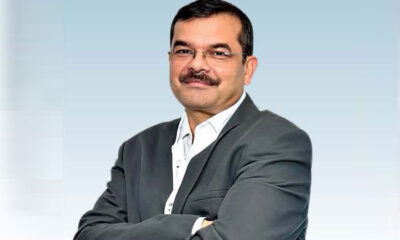
Dijam Panigrahi makes a counterintuitive but data-backed argument that routing every sensor alert through human approval does not make cement plants safer.

India’s cement industry has spent the last two years wiring kilns, mills and coolers with sensors and automated control systems, and the safety case for doing so is strong on paper. Contract workers still make up the majority of the industry’s workforce, and fatal accidents remain a recurring problem. The Indian National Cement Workers Federation has noted that around 83 per cent of workers in the sector hold precarious positions, a fact that resurfaced after an oxygen cylinder explosion killed three contract workers at a plant in Chhattisgarh.
Industry tallies compiled by IndustriALL found cement plants recorded at least seventeen accidents in one year with 21 workers killed, and ten accidents the following year with nine killed, most of them contract staff. Automated monitoring, in theory, closes that gap. A sensor never gets complacent and never skips a check because a shift is short staffed.
However, plants that respond by routing every anomaly reading to a person for approval are quietly building a system that fails the same way understaffing does. When operators receive dozens of flagged deviations a shift, most of them minor, they learn a simple lesson: the fastest way through the queue is to approve without reading closely. The safety benefit disappears, not because the technology failed, but because the humans supervising it adapted to the volume.

Why alerts get ignored
A study cited by manufacturing technology publisher Applied SmartFactory found more than 95 per cent of alarms in a semiconductor fab were low priority, and only about 4 per cent ever triggered an action, with just 100 out of 5,000 alarms accounting for 70 per cent of all alarm activity. The mechanism is the same whether the trigger is a vibration sensor or an AI model flagging a kiln temperature swing. Once the ratio of noise to signal crosses a threshold, workers stop treating the system as a decision aid and start treating it as a formality to clear.
The scale of AI deployment underway makes this more than a theoretical risk. Stanford’s 2026 AI Index Report found organisational adoption of AI has reached 88 per cent, even as documented AI incidents rose to 362 in 2025, up sharply from 233 the year before, according to analysis of the report. The Index also found only about a third of organisations have adopted a formal governance framework, with NIST’s AI Risk Management Framework cited by 33 per cent and ISO/IEC 42001 cited by 36 per cent.
Most manufacturers are deploying monitoring systems faster than they are building the judgment for when a flagged event actually needs a person’s attention. In India, plants run by JK Cement have begun pairing CCTV feeds with AI to define safe zones around heavy machinery, a promising direction that still depends on operators trusting and reading the alerts the system generates.

A three-tier model for cement plant
The fix is not less monitoring or more monitoring. It is classifying decisions by risk and by novelty, rather than treating human oversight as a single switch that is either on or off. A workable model sorts factory floor events into three tiers.
The first tier, proceed, covers deviations the plant has seen before that fall within known safe bounds, such as a kiln feed rate adjustment within an established range. These should run without a stop for approval, because routing them to a person only trains that person to click through.
The second tier, pause, covers events that are unusual but not yet dangerous, such as a vibration reading trending toward a limit or a fuel blend shifting outside its typical mix. These warrant a brief human check before the system proceeds, giving an operator the chance to apply judgment the model does not yet have.
The third tier, escalate, covers events that are both high risk and unfamiliar, such as a pressure reading combined with a temperature spike that has no close precedent in the plant’s history. These should stop the process entirely and require a decision from someone with the authority to shut down a line.

Who should set the threshold
Where these tiers get drawn matters as much as the framework itself. Threshold setting is frequently handed to the vendor supplying the monitoring software or to a plant’s IT department, both of which understand the technology but not the specific tolerances of a given kiln, mill or line. Operations staff, who know that a particular grinding unit runs hotter under monsoon humidity or that a calciner behaves differently after a refractory reline, are better positioned to calibrate what counts as routine on their own equipment.
Handing threshold ownership to operations does not remove IT or vendors from the process, but it puts the calibration decision closest to the people who live with its consequences on the floor.

Signals that oversight is actually working
A few concrete indicators reveal whether a monitoring setup is functioning as intended or simply providing the appearance of safety. The escalation rate over time is the first: a rate that stays flat or climbs slowly as operations mature is healthy, while one that spikes and then falls sharply often means operators have started overriding the system rather than engaging with it. Time to resolution is the second: escalations that take progressively longer to close suggest fatigue or confusion about ownership, not diligence. The third, and most telling, is how accurate the system’s own uncertainty estimates turn out to be, meaning whether events flagged as high risk actually correlated with real incidents, and whether events waved through stayed incident free. A system whose escalations do not track with actual outcomes trains operators toward the same complacency that unmonitored equipment produces.
None of this argues against automation in Indian cement manufacturing, where a labor structure built on contract work and a track record of serious accidents make better monitoring an urgent need. It argues for treating human oversight as a design problem with three distinct settings, rather than a single
dial turned up whenever a plant wants to look safer on paper.

About the author:
Dijam Panigrahi, Co-founder and COO, GridRaster, is a spatial computing platform for industrial enterprises and manufacturers.


Concrete

Cement Prices Likely to Rise Rs. 10-15 per Bag from Mid-October

Input costs and steady demand may drive cement price increases

Published

on

By

Shares


Cement manufacturers in India are likely to raise prices by Rs. 10-15 per bag from mid-October, as they seek to offset persistent increases in power and fuel costs. Emkay Research said its channel checks indicated a high probability of an increase from October 12, supported by the start of the busy construction season and favourable demand-supply conditions.

The sector had implemented similar rate adjustments of Rs. 10-15 per bag during the first quarter, but the increases were insufficient to cover higher operating costs. Prices also softened during July and August because of the monsoon, widening the gap between realisations and input expenses. Delayed plant expansion programmes have pushed clinker utilisation rates towards 79 per cent by FY28, helping to balance market fundamentals.

Emkay Research said steady volume offtake was supporting cement consumption, with non-trade demand driving activity across regional markets. Industry volumes are expected to grow by 7-8 per cent year on year during the first half of FY27, while demand momentum is projected to remain firm over the following 18 months. The outlook includes the busy construction season in the second half of FY27 and infrastructure activity linked to general elections in the first half of calendar year 2029.

The brokerage expects overall cement demand to record a compound annual growth rate of about 7 per cent between FY26 and FY28. However, elevated operating expenses are likely to continue weighing on profitability. Input costs have risen by Rs. 300-400 per t over the past six to seven months, with the full impact expected to become visible in second-quarter earnings and remain persistent through the second half of FY27.

Spot prices for petcoke and imported coal are approximately 20 per cent and 16 per cent above their second-quarter averages, at USD 175 per t and USD 150 per t, respectively. Packing costs have also increased, with polypropylene granule prices rising above Rs. 135 per kg. Emkay Research estimated that second-quarter earnings could decline by Rs. 200-250 per t sequentially because of higher fuel bills and negative operating leverage, and said the sector requires sustained price increases of about Rs. 10 per bag to offset cost inflation.

Continue Reading

Concrete

Nuvoco Marks 10 Years, Targets 35 MMTPA Capacity by FY28

Nuvoco celebrates a decade of growth, targeting 35 MMTPA cement capacity by FY28.

Published

on

By

Shares


Nuvoco Vistas Corporation Limited is celebrating a decade of operations under the theme ‘Dus Saal Bemisaal’, highlighting its expansion in India’s building materials sector. The company has grown from a single cement manufacturing facility into a diversified organisation operating across cement, ready-mix concrete (RMC) and modern building materials.
The company’s journey began in 2014 when its parent, Nirma Group, commissioned a 2 million metric tonnes per annum (MMTPA) greenfield cement plant at Nimbol, Rajasthan. A major milestone followed in October 2016 with the acquisition of Lafarge India, significantly expanding its manufacturing footprint.
Nuvoco strengthened its market presence through the acquisition of Emami Cement, now NU Vista Limited, in 2020, followed by its public listing in 2021. In April 2025, the company added Vadraj Cement to its portfolio, strengthening its presence in western India.
Nuvoco has an operating cement capacity of 27 MMTPA and 14 manufacturing units, including the Kutch and Sachana facilities in Gujarat, which are in advanced stages of completion. It also operates 58 ready-mix concrete plants across India and offers a range of modern building materials.
The company aims to increase its cement capacity to 35 MMTPA by FY2027-28, representing approximately 15-fold growth over the decade.
Reflecting on the milestone, Hiren Patel, Chairman, Nuvoco Vistas Corporation Limited, said, “From our beginnings at Nimbol to the organisation we are today, every milestone has added a new chapter to Nuvoco’s journey and strengthened our belief in building for the long term.”
The company continues to focus on capacity expansion, operational efficiency, innovation and sustainability while strengthening its position in India’s construction materials market.

Continue Reading

Concrete

J&K Government Notifies City Gas Distribution Policy

Policy targets PNG and CNG expansion across all 20 districts

Published

on

By

Shares


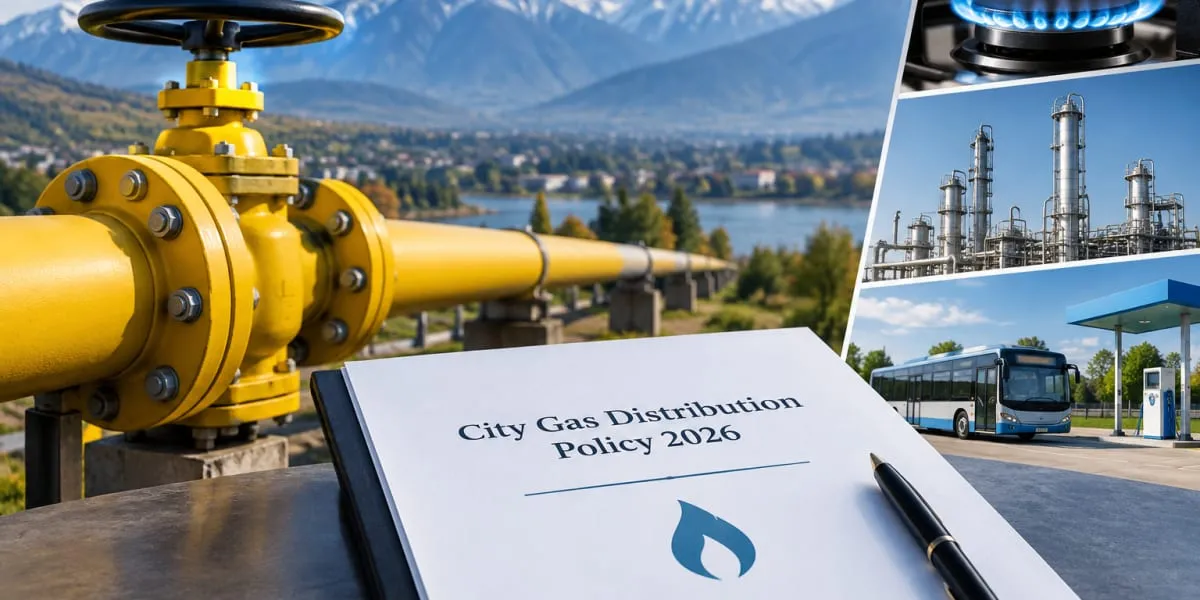
Jammu and Kashmir government has notified the City Gas Distribution (CGD) Policy, 2026, following its approval by the Council of Ministers headed by Chief Minister Omar Abdullah. The policy sets out a phased framework for expanding Piped Natural Gas (PNG) and Compressed Natural Gas (CNG) access for households, businesses, industries and the transport sector across the Union Territory.

CGD networks will be expanded in phases across all 20 districts, with the aim of bringing reliable natural gas closer to consumers and supporting a gradual shift from conventional fuels. The government said the policy is designed to improve energy access while creating an investor-friendly and time-bound environment for gas distribution projects.

The policy provides for single-window and time-bound clearances, streamlined procedures for setting up CNG stations and standardised norms for the Right of Way. These measures are intended to reduce procedural delays, simplify project implementation and facilitate investment in natural gas infrastructure.

It also prioritises gas connectivity for major industrial estates, including those in Kathua, Samba and Pulwama. Improved access to natural gas is expected to support industrial activity, enhance energy efficiency and help businesses manage fuel costs, while strengthening their competitiveness and encouraging investment in the clean-energy sector.

The policy is also expected to create opportunities for local employment, apprenticeships and skill development in the construction, operation and maintenance of gas distribution networks and related services. Abdullah described the measure as an important step towards cleaner growth, sustainable development and a modern energy ecosystem in Jammu and Kashmir, saying it would expand reliable energy access and support industry and investment.

Continue Reading

Video Thumbnail
▶

    SIGN-UP FOR OUR GENERAL NEWSLETTER

    Trending News

    SUBSCRIBE TO THE NEWSLETTER


    Don't miss out on valuable insights and opportunities to connect with like minded professionals.


      This will close in 0 seconds