A panel of industry leaders convened on April 15 to assess the cascading impact of West Asia’s geopolitical turmoil on one of India’s most energy-intensive sectors.
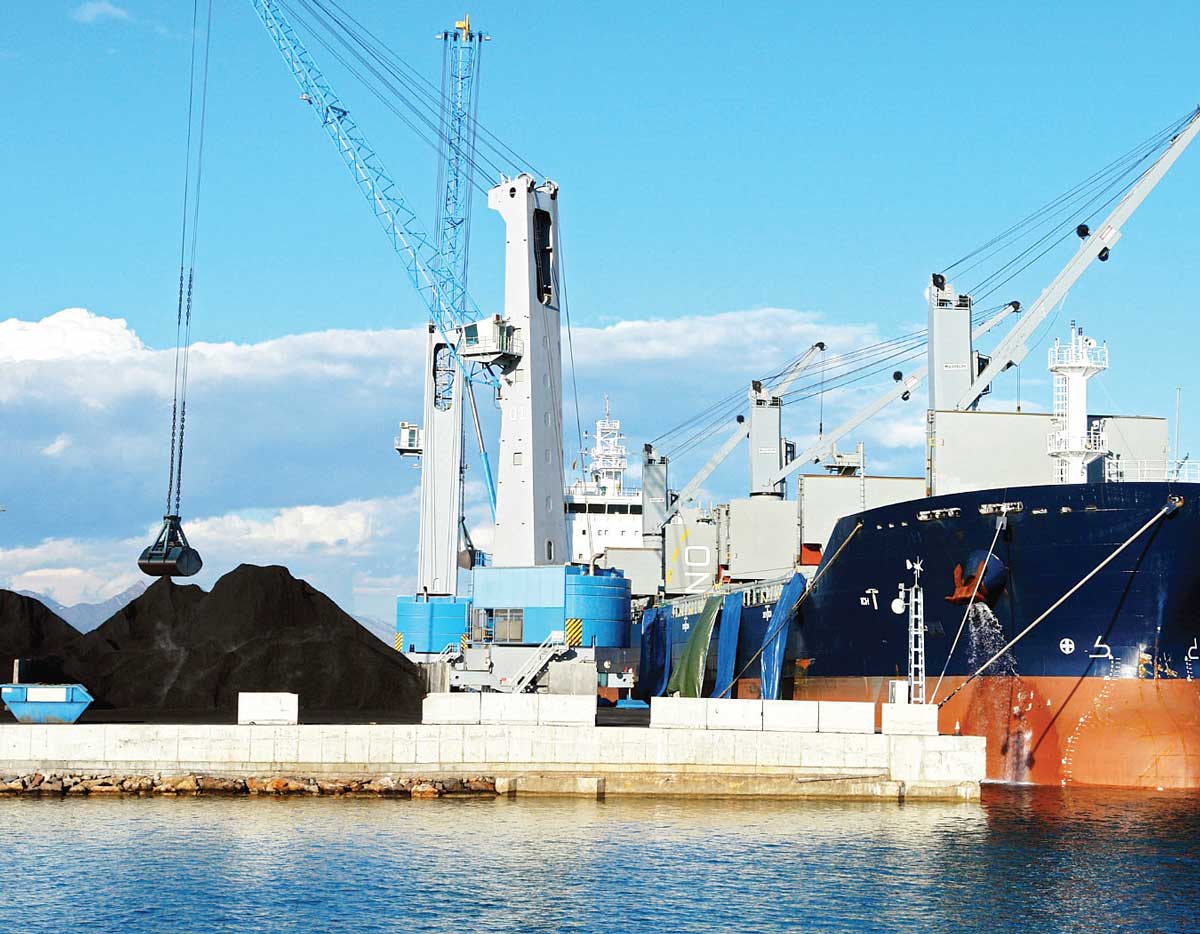
The ongoing conflict in West Asia has sent shockwaves far beyond the region’s borders, landing squarely on the balance sheets of Indian cement manufacturers. Rising petcoke and coal prices, disrupted shipping lanes, and constrained raw material imports are compounding operational pressures at a time when the sector is simultaneously chasing eight per cent demand growth.
These contradictions formed the backdrop of a timely webinar titled Gulf Crisis: Building Resilience in the Cement Industry, moderated by Sudeshna Banerjee, Managing Director, PS Digitech HR India. The speakers for the panel were Ashwani Pahuja, CMD, NextCem Consulting; Dr V Ramchandra, President, Indian Concrete Institute; Kaushal Sampat, Founder, Rubix Data Sciences; and Khushbu Lakhotia, Director, India Ratings and Research.
Setting the stakes
Banerjee opened the discussion by framing the financial dimensions of the crisis with precision. “According to recent analysis by India Ratings and Research, Indian cement companies are likely to face rising input costs in Q1 FY2027, driven largely by the ongoing Gulf crisis,” she noted, adding that the industry was already absorbing “a double-digit increase in coal prices, even sharper increase in petcoke prices due to supply disruption from the Middle East, and an estimated cost increase of approximately 175 to200 per tonne.”
She identified the central challenge: “How do companies protect margins while dealing with volatile fuel costs and intense competition?”
The operational reality
Dr Ramchandra outlined the breadth of disruption with clinical detail. He flagged an often-overlooked input vulnerability — polypropylene. “PP availability in the market has come down to about 50 per cent compared to the pre-war situation,” he said, explaining that the same material competes across end-uses. “It is required for food grain packaging also. Obviously, government prioritises food grain packaging, and that adds to the problems faced by the cement industry.”
Beyond packaging, he highlighted the compounding effect on core raw materials. “Cement industry requires materials like high-grade limestone import, petcoke import, gypsum import and most of these are loaded from ports in the Gulf. That is significantly hampered and has also increased the price shocks.”
He further noted that input variability was destabilising clinker manufacturing: “When the input materials vary, that frequently changes the raw meal and impacts quality variations, increasing the operation and maintenance cost.”
Energy transition as strategic response
On energy diversification, Dr Ramchandra pointed to structural levers the industry must accelerate. “This will push the industries to develop alternative or renewable energy sources like electric and solar, and also develop less energy-intensive manufacturing processes.” He highlighted waste heat recovery systems (WHRS) as a significant existing capability, explaining the thermodynamic logic: “While making clinker, we take the heat up to 1,450 degrees and then bring it back to normal temperature that heat is absorbed and used to heat the next batch of raw materials.”
He also advocated for a shift in product mix as a demand-side energy strategy: “The more we try to make low-clinker cements instead of OPC, if we make more of PPC, composite cement
and slag cement that will also help in lowering
energy consumption.”
Fuel switching and inventory strategy
Pahuja opened with an immediate-term assurance before pivoting to structural reform. On petcoke availability, he noted that approximately 30 per cent of the petcoke consumed by Indian cement plants is typically sourced from Gulf nations, particularly Saudi Arabia. “Today there are sources available from distant places like the USA or Venezuela. It is already being sourced from these countries — the productions will not be hampered and supply shortages perhaps will not be there,” he said.
However, Pahuja was unambiguous about the need for longer-term insulation. He advocated shifting from just-in-time procurement to a just-in-case inventory model: “They have to maintain minimum 90 days of inventory for materials subject to such volatilities, including petcoke, gypsum, as well as packing materials.” He further flagged the untapped potential of alternative fuel resources (AFR), pointing to India’s 70 million tonnes of annual municipal solid waste as an underutilised energy feedstock, arguing that prolonged fossil fuel cost escalation could finally make AFR pre-processing commercially viable for the industry.
On the question of whether the disruption signals a temporary setback or a structural inflection point, Pahuja was measured: “Such shocks have already been there. Industry has been moving or switching from petcoke to coal or imported coal depending on price fluctuations — they have got plenty of experience.” Yet he added that the crisis presented a clear opportunity for long-term process diversification if companies chose to act on it.
Financial resilience and industry outlook
Lakhotia brought a credit perspective to the panel, reinforcing the near-term margin risk while contextualising the sector’s underlying strength. Her firm’s analysis, cited extensively by the moderator, pointed to Q1 FY2027 as a particularly pressure-intensive quarter as existing fuel inventories are depleted and spot procurement at elevated prices becomes unavoidable.
The data governance gap
Sampat brought a sharp analytical lens to what he described as a pre-existing organisational vulnerability. “We are living in a VUCA world — volatile, uncertain, complex, and ambiguous — and that volatility is only increasing,” he said, anchoring the conversation in a broader pattern of successive global disruptions: COVID-19, the Russia-Ukraine conflict, and now the Gulf crisis.
Sampat argued that the sector’s exposure to supply shocks is amplified by fragmented data infrastructure. “Data is very siloed. Yes, you have your ERPs, your control towers, but still data is siloed.” He cited a telling statistic: “If you look at any master database of customers or suppliers and start a deduplication effort, your starting point is between 30 and 35 per cent duplicates. Because it’s all manual.” His prescription was unambiguous: “Before we talk about data-driven insights and predictive analytics, let’s get our data in order through master data management.”
On the question of real-time intelligence adoption, he observed that larger cement companies have migrated to more integrated workflows, while mid-sized players remain behind. Cash flow, he noted, was an acutely live concern: “Logistics cycles are becoming longer — and there is real pressure on cash flow.”
EBITDA under the microscope
Lakhotia delivered the sharpest financial prognosis of the panel. With power and fuel accounting for nearly 30 per cent of total cement costs and freight a further 25–27 per cent, she described the sector’s exposure as structural: “Fuel sits at the very heart of the cost structure of cement companies.”
On the EBITDA impact of the current spike, her projections were precise: “We could see a net impact of `120–150 per tonne on the EBITDA of cement companies this year.” She noted that most players carried one to three months of fuel inventory, the buffer for which was already being drawn down. “The impact of higher fuel prices will start reflecting in profitability only from Q1 FY27 onwards.”
On pricing power, Lakhotia offered a historical reference point: during the Russia-Ukraine fuel spike in FY23, when petcoke touched $200–300 per tonne, the industry managed only a 6–7 per cent price hike — partial pass-through at best. With approximately 75 million tonnes of new capacity announced for FY27, the highest in a decade, and utilisation likely settling near 70 per cent, she cautioned against optimism: “Price hikes have been announced in April, but their sustainability remains the key question.”
Multi-fuel combustion and the AI imperative
Pahuja made a compelling case for rethinking combustion system design from first principles. He advocated for multi-channel, multi-fuel burners capable of firing petcoke, coal, lignite, liquid fuels and alternative fuels simultaneously — a flexibility that he argued eliminates dependence on any single fuel source. On chloride bypass systems, he cited direct results: “Plants are now able to use 30 to 35 per cent AFR, simply by installing one chloride bypass system.”
He added that AI-enabled combustion control was no longer optional at this scale: “We have to take the help of AI so that we can control the combustion conditions and give optimum burning conditions to maintain quality and also minimise heat consumption — such systems have been proven to reduce heat consumption by as much as 5 to 10 per cent.”
On logistics, he expounded: only 20–25 per cent of cement currently moves by rail and under five per cent by waterway, with road transport absorbing the balance. He argued for a reversal — with rail at over 50 per cent, waterways at 20–25 per cent, and road limited to last-mile delivery. He also flagged EV adoption for mining equipment and transport fleets as an essential hedge against diesel cost volatility.
The tier II fault line
Lakhotia laid out the asymmetric exposure facing smaller players with clinical precision. “Tier II cement players are clearly more vulnerable in this cost cycle — typically single-region players with relatively modest brands, essentially price takers.” She noted that FY26 EBITDA per tonne for tier II companies was likely to remain meaningfully below the five to six-year average, with balance sheet headroom and liquidity cushions already reduced.
She identified blended cement as the most immediately accessible cost lever, alongside green power sourcing via group captive or lease models that limit upfront CAPEX. On logistics, she pointed to lead distance optimisation and tighter working capital discipline as near-term stabilisers.
Sampat added a financing dimension often overlooked in operational discussions: “Innovation in financing is as important as innovation in manufacturing.” He highlighted trade finance and supply chain finance as tools to relieve immediate cash flow pressure — especially relevant as companies source petcoke from newer, geographically distant suppliers requiring advance payments. “Cement companies are national assets — please take advantage of trade finance to bring down financing costs and control margins while navigating this crisis.”
Closing prescriptions
When asked for their single most important recommendation, each panellist was direct. Sampat called for “proactive stress testing — building models that factor in varying inputs rapidly to give sensitivity analysis, as of yesterday.” Lakhotia was equally unambiguous: “Reduce external energy dependence — this has been the single biggest, consistently the biggest driver of EBITDA volatility over the last decade.” Dr Ramchandra echoed the imperative for local ecosystem development and greater analytics adoption, while Pahuja closed with a historical perspective: “Out of 120 years of cement industry’s existence, for 100 years we manufactured cement without petcoke. We can definitely live without it — the industry has the capacity.”
Banerjee drew the session to a close having navigated four distinct expert registers — operational, analytical, financial and strategic, with precision and economy, ensuring each line of enquiry yielded actionable insight without losing the thread of the broader crisis narrative.