Ana Juraga, Content Writer, Cortec Corporation brings the spotlight on advanced sustainable technology vis-à-vis the traditional rust prevention methods in cement plants that often lead to hidden costs through labour, cleaning and hazardous waste.
The global cement industry operates in one of the most demanding industrial environments. The combination of highly alkaline dust, extreme temperature fluctuations, and often high humidity creates a constant threat of corrosion for critical infrastructure and mechanical assets. While the industry’s primary sustainability focus remains on carbon capture and alternative fuels, a significant operational challenge persists in the storage and transport of spare parts and equipment.
The maintenance of a strategic asset reserve, the essential inventory of spare gears, kiln components, electrical sensors and structural steel is a fundamental requirement for minimising unplanned downtime. Traditionally, the preservation of these assets has relied on legacy barrier methods such as heavy mineral oils and petroleum-based greases. However, as the industry moves toward more sophisticated maintenance protocols and stringent environmental standards, these traditional methods are being replaced by Vapor phase Corrosion Inhibitor (VpCI®) packaging technology.
Technical limitation of traditional barrier coatings
In a cement plant, traditional wet rust preventatives are a major liability. Because these oils and greases stay tacky, they effectively act as a magnet for fine, alkaline cement dust. Over time, this mixture turns into a thick, abrasive sludge. If you don’t scrub every last bit of that residue off before installation, you are essentially putting a grinding compound into your bearings and seals. This ‘cleanup tax’, the hours spent with pressure washers and hazardous solvents doesn’t just delay repairs; it creates a secondary stream of toxic waste that the plant is then forced to manage.
Mechanism of VpCI® packaging technology
The transition to VpCI® packaging represents a shift from physical barrier protection to molecular-level chemistry. VpCI (Vapor phase Corrosion Inhibitor) technology can be seen as a ‘dry’ alternative to the messy greases and oils that have dominated industrial maintenance for decades. Instead of coating a part by hand, you use packaging-like films, papers, or emitters that slowly release protective molecules into the air. Once a metal component is enclosed in a VpCI® package, the inhibitors are released into the headspace of the container. These molecules travel through the air to reach every exposed metal surface, including deep recesses, internal threads, and complex geometries that are often inaccessible to spray-on coatings. When the molecules contact the metal, they form an invisible, monomolecular protective layer. This layer creates a hydrophobic shield that prevents oxygen and moisture from reaching metals thereby stopping the electrochemical process of corrosion. The most significant technical advantage of VpCI® packaging in the cement industry is that it is a “dry” process. When the component is eventually removed the protective molecular layer simply dissipates into the air. The part is clean, dry, and ready for immediate welding, painting or assembly without any chemical cleaning or surface preparation.
Sustainability through source reduction and elimination
By adopting VpCI® films and papers, a facility eliminates the need for petroleum-based rust preventatives and the subsequent hazardous solvents required for their removal. This directly reduces the plant’s (VOC emissions and prevents the generation of solvent-contaminated runoff. In many jurisdictions, the reduction of hazardous waste at the point of origin is a key metric for industrial environmental compliance. Moving from a ‘wet’ preservation cycle to a ‘dry’ molecular cycle allows cement producers to streamline their environmental reporting while improving worker safety by removing hazardous chemicals from the workshop.
Circularity and the VpCI® plastic recycling service
A significant portion of industrial waste in cement plants comes from single-use plastics and packaging materials. Standard polyethylene (PE) films used for palletising and shipping are typically linear waste products that end up in landfills. To address this, the industry is increasingly adopting recyclable VpCI® films, such as the VpCI®-126 series. These films are engineered to be fully compatible with standard recycling streams. To close the loop further, Cortec® Corporation has implemented the VpCI® Plastic Recycling Service. This program allows manufacturers to collect used VpCI® film, which is then reprocessed and incorporated into the production of new protective packaging. By utilising high-quality Post-Consumer Recycled (PCR) content, the industry can maintain a circular economy for its logistics materials, significantly reducing the demand for virgin resins and fossil-fuel-based plastic production.
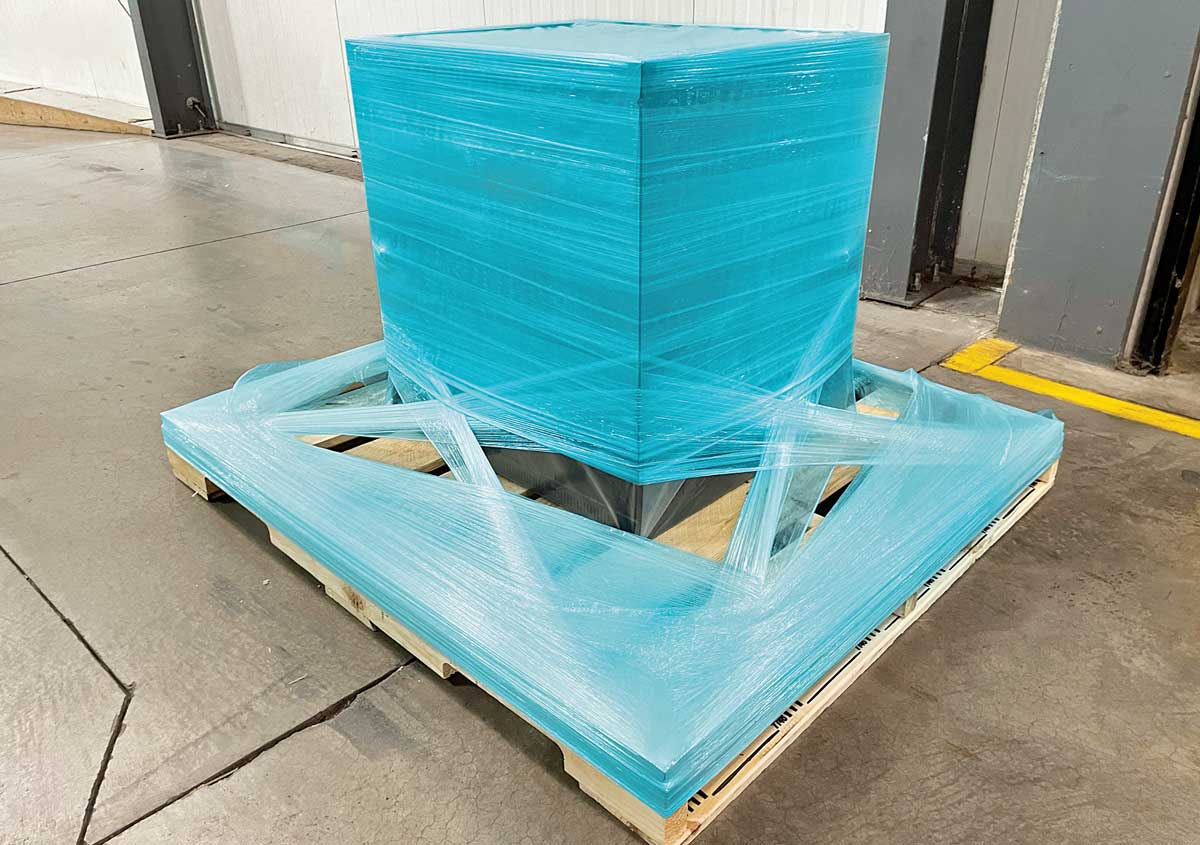
Indoor warehouse space is often limited, forcing many plants to store large-scale components, such as kiln tires or conveyor sections, in outdoor yards. Outdoor storage in a cement plant is particularly challenging due to UV degradation and the ‘greenhouse effect’ created by standard plastic wraps, which can trap moisture and accelerate rust.
Advanced packaging solutions, such as MilCorr® VpCI® Shrink Film, are specifically designed for outdoor preservation and provide strong protection system with high ultraviolet (UV) light protection to maintain the integrity of the film itself as well as the parts packaged within. MilCorr® VpCI® Shrink Film, a heavy-duty mechanical barrier against wind and rain while incorporating UV stabilisers to prevent the plastic from becoming brittle. Internally, the VpCI® molecules protect metals, allowing components to remain in excellent condition.
Protecting electronics and control systems
The modern cement plant is increasingly reliant on sophisticated electronic controls and sensors. These components are highly sensitive to micro-corrosion, which is often exacerbated by the conductive nature of cement dust and high ambient humidity. A single failed circuit board in a control room can result in an entire line shutdown. VpCI® packaging technology extends to these sensitive systems through specialised emitters and anti-static (ESD) films.
EcoSonic® VpCI®-125 PCR HP Permanent ESD Films and Bags EcoSonic are high-performance anti-static, corrosion inhibiting film and bags for use in the protection of static sensitive multi-metal items such as electronics. They contain permanent anti-static properties to immediately reduce or eliminate static buildup as long as the films or bags are in use, independent of the presence of humidity. They also form a molecular corrosion inhibiting layer on metal substrates and do not interfere with the physical or chemical properties of electronic components. This film has been developed with a high amount of post-consumer recycled content for the purpose of efficient recovery, recycling, and reuse of resources to minimise the economy’s negative ecological footprint.
For active control cabinets, VpCI® emitters (such as the VpCI®-105 or 111 capsules) can be placed inside the enclosure to saturate the air with protective molecules. This provides an invisible layer of protection for contacts and connectors without affecting electrical resistance or interference. This ‘clean’ protection is vital in dusty environments where air-tight sealing of cabinets is rarely successful.
VpCI® packaging is also evolving to incorporate renewable resources. Products like EcoStretch™, the world’s first commercially available compostable stretch film provides an “end-of-life” solution for logistics waste. Furthermore, bio-based films derived from renewable resins reduce the carbon footprint of the packaging itself. For cement plants located in environmentally sensitive regions, using a compostable or bio-derived packaging material reduces the risk of long-term plastic pollution and aligns with corporate sustainability mandates to reduce fossil-fuel dependency.
VpCI® packaging proves that the ‘green’ solution can also be the cheapest. Although the film itself has a higher initial price, the total cost is much lower because you eliminate the labor, chemicals, and waste fees associated with traditional grease. Since parts are ready to install the moment they are unwrapped, you also slash the duration of expensive outages.
Conclusion
The shift toward VpCI® technology shows that the cement industry is becoming both more efficient and more responsible. By moving away from messy, labour-intensive grease, plants are finding a better way to operate. VpCI® is one of those rare solutions where the best way to protect your equipment is also the cleanest for the environment. By cutting out toxic chemicals and reducing plastic waste, producers can protect their critical spare parts while shrinking their ecological footprint. As the industry modernises, this ‘dry’ molecular protection will likely become the standard for any facility that values its machinery as much as its sustainability goals.
About the author:
Ana Juraga, Content Writer, Cortec Corporation has been a content writer at Cortec Corporation for 15 years. Besides dealing with media relations, she collaborates with Cortec’s engineers and chemists in creating informative technical content. She is passionate about educating engineering community about green corrosion-inhibiting technologies and numerous advances in this field.
















 Concrete3 weeks ago
 Concrete3 weeks ago
 Concrete4 weeks ago
 Concrete3 weeks ago