Connect with us

Economy & Market

The Green Revolution

Published

on

Shares

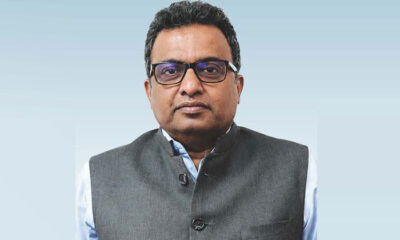
MM Rathi, Joint President – Power Management, Shree Cement, discusses the 3Cs – cut emissions, capture carbon and cement innovation – that are currently crucial for India’s cement sector to achieve Net Zero goals.

India’s cement industry is a backbone of growth which stand strong to lead the way towards net zero. From highways and housing to metros and mega cities, cement has powered India’s rise as the world’s second-largest producer with nearly 600 million tonnes annual capacity. Yet this progress comes with challenges: the sector contributes around 5 per cent of national greenhouse gas emissions, while also facing volatile fuel prices, raw material constraints, and rising demand from rapid urbanisation.
This dual role—driving development while battling emissions—makes cement central to India’s Net Zero journey. The industry cannot pause growth, nor can it ignore climate imperatives. As India pursues its net-zero 2070 pledge, cement must lead the way. The answer lies in the 3Cs Revolution—Cut Emissions, Cement Innovation, Capture Carbon. This framework turns challenges into opportunities, ensuring cement continues to build India’s future while aligning with global sustainability goals.

Cut: Reducing emissions, furnace by furnace
Cement production is both energy- and carbon-intensive, but India has steadily emerged as one of the most efficient producers worldwide. A big part of this progress comes from the widespread use of blended cements, which now account for more than 73 per cent of production. By lowering the clinker factor to around 0.65, the industry is able to avoid nearly seven million tonnes of CO2 emissions every year. Alongside this, producers are turning to alternative fuels and raw materials—ranging from biomass and municipal waste to refuse-derived fuels—to replace conventional fossil fuels in kilns.
Efficiency gains also extend to heat and power. With over 500 MW of waste heat recovery systems already installed, individual plants are now able to generate 15–18 MW of electricity directly from hot exhaust gases that would otherwise go to waste. On the renewable front, the sector is targeting about 10 per cent of its power needs from solar and wind by FY26, with a further 4–5 GW of capacity expected by 2030. To ensure that this renewable power is reliable, companies are signing round-the-clock supply contracts that integrate solar and wind with battery energy storage systems (BESS). Grid-scale batteries are also being explored to balance the variability of renewables and keep kiln operations running without interruption.
Even logistics is being reimagined, with a gradual shift away from diesel trucks toward railways, waterways, and CNG-powered fleets, reducing both emissions and supply chain congestion. Taken together, these measures are not only cutting emissions today but also laying the foundation for future breakthroughs such as green hydrogen-fueled kiln operations.

Cement: Innovations that bind
Innovation is transforming the way cement is produced and used, bringing efficiency, strength, and sustainability together. Modern high-efficiency plants now run kilns capable of producing up to 13,500 tonnes of clinker per day. With advanced coolers and pyro systems, they achieve energy use as low as 680 kilocalories per kilogram of heat and just 42 kilowatt-hours of power per tonne of clinker. By capturing waste heat, these plants are also able to generate 30–35 kilowatt-hours of electricity per tonne, bringing the net power requirement down to only 7–12 kilowatt-hours—a major step forward in energy efficiency.
Grinding technology has also taken a leap. Next-generation mills consume about 20 per cent less power while offering more flexible operations, allowing producers to fine-tune processes quickly and reduce energy costs. At the same time, the use of supplementary cementitious materials (SCMs) such as fly ash, slag and calcined clays is cutting clinker demand without compromising strength. New formulations like Limestone Calcined Clay Cement (LC3) go even further, reducing emissions by nearly 30 per cent while delivering stronger, more durable concrete.
Digitalisation is playing its part as well. Smart instrumentation, predictive maintenance, and automated monitoring systems are helping plants operate more smoothly, avoid costly breakdowns, and maintain consistent quality while saving energy. Together, these innovations not only reduce emissions but also enhance durability, efficiency, and cost-effectiveness, proving that sustainability and performance can go hand in hand.

Carbon: Building a better tomorrow
Even with major efficiency gains, most emissions from cement come from the chemical process of turning limestone into clinker—emissions that cannot be avoided without carbon capture. To address this, the industry is moving forward on several fronts. Carbon Capture, Utilisation and Storage (CCUS) pilots are underway, aiming to trap CO2 at the source and convert it into useful products such as construction materials and industrial chemicals.
At the same time, companies are embracing circular practices. Rainwater harvesting, wastewater recycling, and the use of alternative raw materials are becoming more common, especially as traditional sources like fly ash become scarcer. Policy and market signals are reinforcing this transition: efficiency mandates, green product labels and emerging carbon markets are pushing producers to accelerate the shift toward low-carbon cements.
Ultimately, large-scale carbon capture will be essential if the sector is to reach true net-zero
cement, turning today’s unavoidable emissions into tomorrow’s opportunities.

The Horizon: What’s next
By 2045, India’s cities are expected to welcome another 250 million residents, a wave of urbanisation that will push cement demand nearly 420 million tonnes by FY27 and keep rising in the decades ahead. The industry is already preparing for this future with a host of forward-looking measures. Trials of electrified kilns are underway to replace fossil fuel-based heating, while electric trucks are being deployed both in mining operations and logistics to reduce transport emissions. Inside the plants, AI-driven systems are optimising energy use and operations, and circular economy models are turning industrial by-products from other sectors into valuable raw materials for cement production. On the energy front, companies are moving toward 100 per cent renewable power, supported by advanced battery storage to ensure reliability around the clock.
This vision goes beyond incremental improvements. The 3Cs Revolution—Cut, Cement, Carbon is about building stronger, smarter, and more sustainable foundations for India’s growth. Once seen as a hard-to-abate emitter, the cement sector is now positioning itself as a cornerstone of India’s climate strategy. By cutting emissions, driving innovations and capturing carbon, it is laying the groundwork for a net-zero future.
India’s cement sector is already among the most energy-efficient in the world, proving that growth and responsibility can go hand in hand. By cutting emissions, embracing innovation, and advancing carbon capture, we are not just securing our net-zero future—we are positioning India as a global leader in sustainable cement.

ABOUT THE AUTHOR:
MM Rathi, Joint President – Power Management, Shree Cement, comes with extensive expertise in commissioning and managing over 1000 MW of thermal, solar, wind, and waste heat power plants.


Concrete

Wonder Cement appoints Mahesh Singh as VP Corporate Brand Communication 

Published

on

By

Shares

Singh brings 20+ years of brand and marketing experience, and will lead integrated corporate brand communication initiatives at Wonder Cement 

New Delhi

Wonder Cement, a leading cement manufacturer, has appointed Mahesh Singh as Vice President – Corporate Brand Communication. In his new role, he will oversee corporate brand strategy and communication, including digital and performance marketing, public relations, trade, events, exhibitions, sports and experiential marketing. 

Singh brings over two decades of experience across marketing and communications, with roles spanning the automotive industry, agencies and entrepreneurship. He spent more than a decade with Honda Motorcycle & Scooter India, working across integrated communication, media, digital, retail and consumer engagement. His stint also included helping build the company’s digital marketing capabilities. 

He moved to dentsu X India as Vice President – Strategy & Planning, working across categories such as automotive, auto components, electric vehicles, FMCG, consumer electronics, BFSI, apparel and brand consulting. His responsibilities included media and marketing strategy, product launches, content, performance marketing and consumer activations. 

Singh subsequently took an entrepreneurial route with Radiant Brands before joining Shriram Ltd (SPR Autotech) as Head – Marketing & Communications. There, his remit included brand and corporate strategy, communications, PR and ORM, retail identity, loyalty programmes and events. 

At Wonder Cement, Singh will be responsible for bringing together the company’s corporate brand communication initiatives across digital, performance marketing, PR, trade, sports and experiential platforms. The role will focus on creating an integrated approach to communication across consumers, trade partners and other key stakeholders. 

The appointment brings to Wonder Cement a marketer whose career has spanned the brand, agency and entrepreneurial sides of the communications ecosystem. 

Wonder Cement, part of the RK Group, is a cement manufacturer with roots in Rajasthan and a focus on quality, trust and transparency. The company has grown to six manufacturing plants, and a cement capacity of 21.5 MTPA. With more than 2,000 employees and a network of over 5,000 dealers, its operations span manufacturing, distribution and customer engagement, with a focus on consistent product quality and efficient execution. 

Continue Reading

Concrete

JSW Cement commissions additional 1 MTPA grinding unit at Nagaur

Published

on

By

Shares

With this commissioning, JSW Cement’s total cement grinding capacity has increased to 25.10 MTPA, 
Mumbai

JSW Cement, one of India’s leading green cement producers and part of the diversified JSW Group, today announced the successful commissioning of an additional 1.00 MTPA cement grinding unit at Nagaur, Rajasthan. The commissioning marks another significant milestone in the Company’s growth strategy.

With this commissioning, JSW Cement’s total cement grinding capacity has increased to 25.10 MTPA, while its total clinker manufacturing capacity, including clinker capacity at its joint venture, JSW Cement FZC, stands at 9.74 MTPA.

JSW Cement had commenced operations in North India in March 2026 with the Nagaur Integrated Plant, comprising a 3.30 MTPA clinkerisation unit and 2.50 MTPA cement grinding unit. With the commissioning of the additional 1.00 MTPA cement grinding unit, the plant’s total cement grinding capacity has increased to 3.50 MTPA, enhancing the company’s ability to cater to the growing cement demand across Rajasthan, Haryana, Punjab and the National Capital Region (NCR). The expansion has been funded through a strategic mix of equity and long-term debt.

During the quarter ended 30th September 2026, JSW Cement has also commissioned the Alternate Fuel Handling System and the Waste Heat Recovery system (WHRS) at the Nagaur Integrated Plant.

Nilesh Narwekar, CEO, JSW Cement, said: “The commissioning of additional 1.00 MTPA grinding capacity at Nagaur is a key strategic priority for us and will accelerate JSW Cement’s expansion into North India. We look forward to servicing the growing needs of the region and contributing to the economic growth of Rajasthan, Haryana, Punjab and the NCR area. I am delighted to share that the company has commissioned this grinding unit within the expected timeline, showcasing our project execution capabilities. Further, the Alternate Fuel Handling System and the Waste Heat Recovery system (WHRS) are expected to substantially reduce our production costs going forward.”

Continue Reading

Concrete

UltraTech becomes first Indian cement firm to cross 2 GW green energy

Published

on

By

Shares

UltraTech Cement has crossed 2 GW of captive green energy capacity, with renewables and waste heat recovery meeting 48 per cent of its power needs.

Mumbai

UltraTech Cement Limited has surpassed 2 GW of installed green energy capacity for captive use, becoming the first cement company in India to achieve the milestone. The Aditya Birla Group company commissioned 116.55 MW of wind capacity at its Inter-State Transmission System-connected wind-solar hybrid project in Barmer, Rajasthan, along with 10 MW of Waste Heat Recovery System capacity at Sarlanagar Cement Works in Karnataka.

With these additions, UltraTech’s cumulative installed green energy capacity has reached 2,024 MW. This includes 1,580 MW of renewable energy capacity and 444 MW of waste heat recovery capacity, together meeting around 48 per cent of the company’s current power requirements.

The company said the milestone reflects the progress of its long-term energy transition strategy. In FY27 so far, nearly one-third of UltraTech’s 76 manufacturing units in India have maintained green energy utilisation above 50 per cent of their electricity requirements, while five units have crossed 95 per cent.

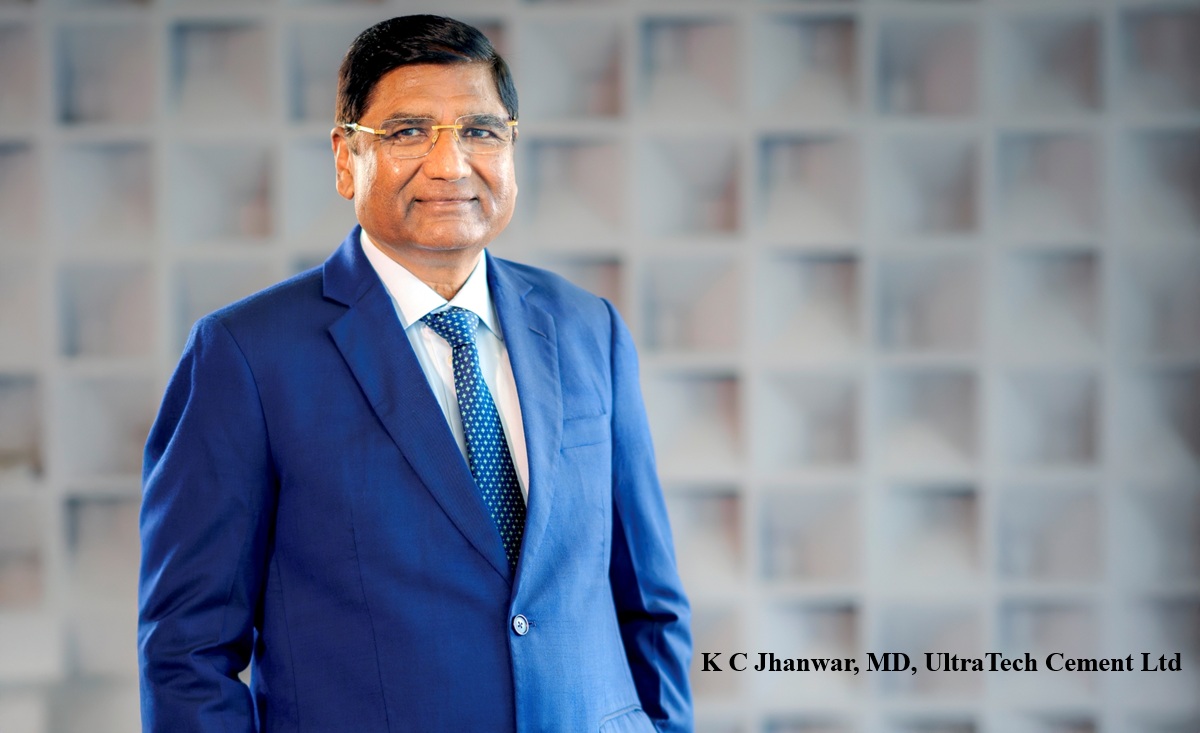
K C Jhanwar, Managing Director, UltraTech Cement Limited, said, “Crossing the 2 GW green energy milestone is the result of a strategy we have pursued consistently over the past decade. Cement is an energy-intensive, hard-to-abate sector, and showing that reliability and growth can go hand in hand with a rapid shift to green energy sets a benchmark for the industry. With nearly half of our power needs now met through green energy, we are significantly less exposed to fossil fuel supply constraints and power price volatility. As we scale up renewables, waste heat recovery and battery storage across our operations, we are building an energy foundation for stable, long-term growth.”

UltraTech commissioned 430 MW of green energy capacity in FY26 and continues to expand its renewable energy and waste heat recovery portfolio.

The company is also progressively integrating Battery Energy Storage Systems across its operations to improve renewable energy utilisation and supply reliability.

In 2025, UltraTech operationalised what it described as India’s first on-site hybrid round-the-clock renewable energy project at Sewagram Cement Works in Gujarat. The project combines solar, wind and battery storage.

As part of its decarbonisation strategy, UltraTech said it has not invested in new captive thermal power capacity for either greenfield projects or brownfield expansions at its integrated units for more than a decade.

The company said its expanding green energy portfolio is helping reduce dependence on conventional grid electricity and fossil fuel-based power, while lowering exposure to fluctuations in coal and electricity prices.

UltraTech aims to increase green energy’s share in its total power mix to 85 per cent by 2030. As a member of RE100, it has also committed to meeting 100 per cent of its electricity requirement through renewable sources by 2050.

UltraTech Cement, the cement flagship of the Aditya Birla Group, has a total grey cement capacity of 210.1 MTPA and white cement and putty capacity of 3.5 MTPA. The company is also a signatory to the GCCA Climate Ambition 2050 and has committed to the GCCA Net Zero Concrete roadmap.

Continue Reading

Video Thumbnail
▶

    SIGN-UP FOR OUR GENERAL NEWSLETTER

    Trending News