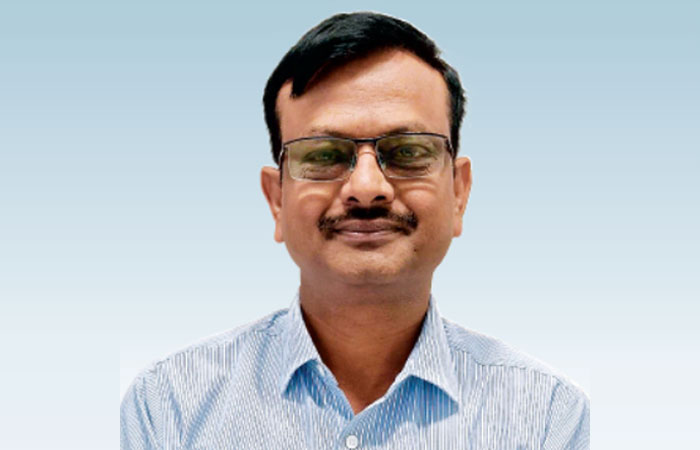
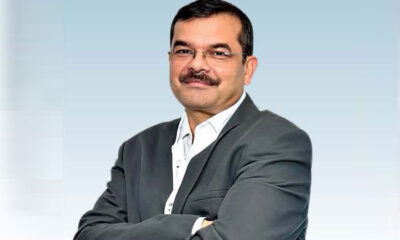
Pankaj Agarwal, National Mines Head, Shree Cement, describes the changes in mining through innovation, efficiency and ecological responsibility as well as community partnerships.
By integrating advanced technology, alternative raw materials and community partnerships, new benchmarks are being set for sustainable resource development. In this exclusive interview, Pankaj Agarwal, National Mines Head, Shree Cement, shares how the company is transforming mining practices with cutting-edge technology, sustainable resource management and community-driven initiatives. From fuel-efficient equipment to progressive land rehabilitation, Shree Cement is embedding sustainability at the core of its mining operations.
How is your organisation redefining mining practices to align with sustainability goals?
At Shree Cement, sustainability is integrated into every stage of mining. We manage operations in-house for better efficiency and control. Advanced mapping, reserve estimation, and daily planning minimise wastage, while high-capacity precision equipment reduces fuel use. At Nawalgarh, locating the crusher inside the quarry saves 3.84 lakh litres of diesel; high-pressure drills across sites save 7.91 lakh litres annually. Switching dumpers to tippers is expected to conserve 21 million litres over the mine’s life. Operator Independent Truck Dispatch System (OITDS) reduces idle time, saving 7.27 lakh litres annually. Together, these measures embed sustainability into operations.
What role does technology play in minimising the environmental footprint of mining?
Technology is central to our efforts to reduce environmental impact while maintaining high operational efficiency. We are leveraging Industry 4.0 technologies such as artificial intelligence, data analytics and automation to optimise every stage of mining. For instance, the use of DATAMINE software allows us to perform highly accurate reserve estimations and daily mine planning, ensuring maximum recovery with minimal ecological disturbance.
On the ground, we have implemented the OITDS across our Ras and Raipur mines. By minimising truck idle time, this system alone contributes to fuel savings of over seven lakh litres annually. Similarly, cross-belt analysers enable real-time monitoring of limestone quality, reducing wastage and ensuring consistent feedstock for cement production.
Beyond logistics, Condition-Based Monitoring (CBM) ensures equipment efficiency through fuel consumption analysis, CO2 emission checks and engine calibration. This proactive maintenance minimises energy losses while extending machinery life. Automated high-pressure drills further enhance precision and reduce fuel usage, while solar-powered lighting systems in our mines cut reliance on conventional energy.
Together, these technological solutions significantly reduce emissions, optimise resources, and set new benchmarks for sustainable mining.
How do you balance raw material security with ecological preservation?
At Shree Cement, it is carefully balanced with ecological preservation through both efficient mining practices and large-scale adoption of alternative materials. In FY 2024-25, 26.36 per cent of our total raw materials amounting to 12.54 million tonnes were sourced from alternatives such as fly ash, granulated blast furnace slag (GBFS), and chemical gypsum. These industrial by-products not only reduce dependence on natural limestone but also address waste disposal challenges for other sectors.
A key innovation in this area is our patented process for producing synthetic gypsum using low-grade limestone and spent acid, an industrial waste. This initiative has reduced our reliance on natural gypsum, diverted industrial waste from disposal, and contributed to cost savings. By promoting waste-to-wealth solutions and extending the lifespan of natural resources, we are ensuring raw material security without compromising ecological balance.
Coupled with responsible mine planning, biodiversity conservation measures and land rehabilitation efforts, this dual strategy helps us maintain uninterrupted raw material availability while preserving natural ecosystems for future generations.
What strategies are being adopted to reduce land, water, and biodiversity impact?
Our sustainability strategy is anchored on the principle of Avoid, Minimise, Restore and Offset. Every mining project undergoes a thorough Environmental Impact Assessment (EIA) covering a 10 km radius around the site. This ensures potential risks to biodiversity, water resources, and local ecosystems are identified early and addressed with targeted conservation plans. Importantly, we do not operate in heritage sites, ecologically sensitive zones, protected areas or areas of high biodiversity value.
For land restoration, we have detailed closure plans for every active mine. While we have not yet closed any sites, our progressive rehabilitation approach ensures that mined-out areas are systematically restored through afforestation, re-vegetation or conversion into water bodies. Native species are reintroduced to enhance biodiversity and re-establish the natural ecosystem.
Water conservation is another pillar of our strategy. All our facilities operate as Zero Liquid Discharge (ZLD) units, recycling 100 per cent of wastewater. In FY 2024-25, we utilised 400.52 million litres of municipal sewage treatment plant (STP) water at our Beawar and Nawalgarh facilities, significantly reducing freshwater dependency. Additionally, we harvested 19,583.5 million litres of rainwater, achieving more than 8x water positivity compared to our freshwater consumption of 2,300 million litres. To further conserve resources, we use EVALOCK, a biodegradable chemical, in mine pits to cut evaporation losses by 30 per cent.
Collectively, these measures ensure that our mining activities not only minimise environmental impact but also actively contribute to local water security, biodiversity conservation, and landscape restoration.
How is your company ensuring compliance with global sustainability standards in mining?
We are fully aligned with the United Nations Sustainable Development Goals (SDGs) and India’s national sustainability commitments. Our environmental practices go beyond statutory compliance, incorporating international benchmarks for resource conservation, emissions reduction, and biodiversity protection.
Compliance is ensured through a layered approach:
- EIA studies before project initiation.
- Mine closure and rehabilitation plan at all active sites.
- Avoidance of high-biodiversity and heritage areas for mining.
- Audits and monitoring of CO2 emissions, fuel use, and water consumption.
By integrating technologies like OITDS, DATAMINE, CBM and renewable energy use, we are able to consistently demonstrate measurable reductions in fuel consumption, emissions and
water usage. Our approach combining innovation, transparency and proactive rehabilitation places
us in strong alignment with global sustainability frameworks.
How do you engage local communities in sustainable mining initiatives?
Community engagement is integral to our sustainable mining approach. Our initiatives are designed to ensure that local populations benefit directly from our operations. For example, at Beawar and Nawalgarh, we have partnered with municipalities to source STP-treated water, thereby supporting civic infrastructure while reducing freshwater usage.
Our rainwater harvesting projects extend to nearby villages, improving water availability for agriculture and households. We also conduct afforestation and re-vegetation programmes in collaboration with local communities, fostering both environmental and livelihood benefits. Additionally, through awareness and training programmes, we engage our workforce and local stakeholders in adopting water conservation and environmental stewardship practices.
These initiatives not only build trust but also ensure that our sustainability efforts create shared value—where mining supports community development while protecting natural resources.
What future innovations could transform mining into a low-carbon process?
The next phase of sustainable mining at Shree Cement is focused on low-carbon innovations. One of the most promising initiatives we are exploring is the use of biodiesel in mining equipment, which will substantially reduce dependence on fossil fuels and cut greenhouse gas emissions.
We are also working to expand the share of alternative raw materials beyond the current 26.36 per cent, scaling up waste-to-resource initiatives like synthetic gypsum production. Digitalisation will play a bigger role too, with AI-driven predictive mining, advanced blasting techniques and real-time monitoring reducing both fuel consumption and ecological disturbance.
By combining these innovations with our ongoing energy efficiency programmes, we are preparing a pathway towards net-zero emissions in mining. Our vision is to transform mining from a resource-intensive activity into a climate-resilient, low-carbon process that aligns with global decarbonisation goals.
– Kanika Mathur















 Concrete1 month ago
 Concrete4 weeks ago
 Concrete3 weeks ago
 Concrete1 month ago