

Economy & Market
Optimising Cement Grinding

Published
2 years agoon
By
admin
Kanika Mathur explores the role of grinding aids in enhancing the efficiency and sustainability of cement production by reducing energy consumption, improving particle size distribution, and extending equipment life.
The grinding process is a crucial step in cement production, directly impacting the final quality and efficiency of cement manufacturing. With growing demands for energy efficiency, cost optimisation, and sustainable production, cement manufacturers are continuously seeking ways to improve grinding operations. Grinding aids, introduced into the process, have emerged as an essential component in achieving these objectives by enhancing the efficiency of
grinding mills and improving the performance of cement. This article explores the significance of the grinding process, the challenges faced in cement grinding, and the role of grinding aids in optimising cement manufacturing.
The Importance of the Grinding Process in Cement Manufacturing
Grinding is a fundamental process in cement production, where clinker, gypsum, and other additives are ground into fine powder to create the final product. The fineness of cement particles influences the hydration reaction, strength development, and overall durability of the cement. The efficiency of the grinding process directly affects the energy consumption, production costs, and environmental impact of cement plants.
The grinding process primarily takes place in ball mills, vertical roller mills (VRMs), and roller presses. Each of these grinding technologies has its advantages and limitations, influencing factors such as energy consumption, operational efficiency, and product quality. In recent years, there has been a shift towards more energy-efficient grinding systems, such as VRMs and roller presses, which offer better control over particle size distribution and reduce specific energy consumption.
Grinding Technologies
The grinding process is a critical component of cement manufacturing, influencing energy consumption, production efficiency, and product quality. Traditional ball mills, vertical roller mills (VRMs), and roller presses are the primary grinding technologies used in the industry. While ball mills have been widely used, they are energy-intensive and require frequent maintenance. VRMs and roller presses, on the other hand, offer better energy efficiency and control over particle size distribution, making them attractive alternatives. The shift toward advanced grinding systems has helped cement manufacturers reduce operational costs and improve sustainability.
However, cement grinding presents several challenges, including high energy consumption, inconsistencies in particle size distribution, and equipment wear. Grinding consumes nearly 60 to 70 per cent of a cement plant’s total electricity, making it one of the most energy-intensive processes. Additionally, friction during grinding generates heat, leading to agglomeration and efficiency losses. Optimising grinding operations requires careful control of raw materials, mill performance, and energy inputs to ensure sustainable and cost-effective production.
Ashok Dembla, Director, KhD Humboldt says, “The use of alternative fuels and raw materials (AFR) is continuously evolving within the cement industry. As a machinery supplier, we are adapting to these changes by providing advanced solutions for handling and processing AFR. One of our most significant innovations is the PyroRotor, an equipment designed specifically for feeding up to 85 per cent of alternative fuels into the pyroclone, which is far beyond what conventional methods can achieve. This has greatly enhanced our ability to replace traditional fuels with more sustainable alternatives.”
“In addition, we have developed solutions to address nitrogen oxide (NOx) emissions, a critical environmental concern. Our NOx reduction equipment significantly minimises NOx generation during the production process, helping plants meet stringent regulatory requirements” he adds.
Grinding aids play a vital role in enhancing grinding efficiency by reducing agglomeration, improving dispersion, and minimising energy consumption. Chemical additives such as amine-based compounds, glycols, and organic acids help improve cement properties by ensuring better flowability, reducing coating on mill internals, and extending equipment life. These additives also enhance cement hydration, leading to stronger and more durable concrete. As cement manufacturers seek ways to reduce costs and carbon footprints, grinding aids have become an essential tool in improving overall plant performance.
Looking ahead, the future of grinding in the cement industry will be shaped by advancements in eco-friendly grinding aids, digital process optimisation, and AI-driven automation. Research into bio-based and waste-derived additives is gaining traction, as companies aim to align with global sustainability goals. Additionally, integrating digital technologies into grinding operations will allow real-time monitoring and process control, further enhancing efficiency. By embracing these innovations, the cement industry can achieve greater sustainability, reduce emissions, and enhance profitability while maintaining high-quality production standards.
Challenges in Cement Grinding
Despite advancements in grinding technology, cement manufacturers still face several challenges in optimising the grinding process. Some of the key challenges include:
Energy Consumption: Grinding is an energy-intensive process, accounting for nearly 60 to 70 per cent of the total electricity consumption in a cement plant. The high energy demand for clinker grinding results in increased operational costs and contributes to CO2 emissions. Reducing energy consumption while maintaining cement quality remains a primary goal for manufacturers.
Particle Size Distribution: Achieving the right particle size distribution (PSD) is crucial for cement performance. A well-optimised PSD improves the workability of concrete, enhances strength development, and reduces the risk of segregation. However, variations in raw materials, mill operations, and grinding media can lead to inconsistencies in PSD, affecting the quality of the final product.
Mill Performance and Wear: Grinding equipment is subject to continuous wear and tear due to the abrasive nature of clinker and additives. The efficiency of grinding media, liner design,
and mill internals plays a significant role in optimising mill performance and reducing maintenance costs.
Heat Generation and Agglomeration: During grinding, friction generates heat, which can lead to issues such as agglomeration and coating on grinding media. This reduces the efficiency of the grinding process, requiring additional efforts to control mill temperature and ensure proper dispersion of cement particles.
Dyanesh Wanjale, Managing Director, Gebr. Pfeiffer says, “One of the major challenges we face is the demand for expedited deliveries. While customers often take time to decide on placing orders, once the decision is made, they expect quick deliveries. However, our industry deals with heavy and highly customised machinery that cannot be produced off the shelf. Each piece of equipment is made-to-order based on the client’s unique requirements, which inherently requires time for manufacturing.”
“Another significant challenge comes from competition with Chinese suppliers. While the Indian cement industry traditionally favoured our technology over Chinese alternatives, a few customers have started exploring Chinese vertical roller mills. This is concerning because our German technology offers unmatched quality and longevity. For example, our mills are designed to last over 30 years, providing a long-term solution for customers. In contrast, Chinese equipment often does not offer the same durability or reliability. Despite the cost pressures, we firmly believe that our technology provides superior value in the long run” he adds.
Role of Grinding Aids in Cement Grinding
Grinding aids are chemical additives that are introduced into the grinding process to improve efficiency and performance. These additives work by reducing the surface energy of clinker particles, preventing agglomeration, and enhancing the flowability of the cement powder. Some of the key benefits of grinding aids include:
Enhanced Grinding Efficiency: Grinding aids help in breaking down clinker particles more effectively, reducing the energy required for grinding. This leads to higher mill output, lower specific energy consumption, and improved overall plant performance.
Improved Particle Size Distribution: By minimising agglomeration and promoting dispersion, grinding aids contribute to a more uniform particle size distribution. This results in better cement hydration, improved strength development, and enhanced durability of concrete structures.
Reduction in Coating and Mill Wear: Grinding aids help prevent the accumulation of cement particles on grinding media and mill internals, reducing coating issues. This minimises wear and tear on equipment, leading to lower maintenance costs and extended mill life.
Better Flowability and Handling: Cement produced with grinding aids exhibits improved flow properties, reducing the risk of blockages in silos and conveying systems. This facilitates smoother handling, packaging, and transportation of cement.
“The performance evaluation of grinding aids is crucial in determining their efficiency and overall contribution to cement manufacturing processes. A systematic assessment involves analysing key performance indicators (KPIs) such as energy consumption, mill output, and particle size distribution, while also evaluating their impact on cement hydration, setting time, and compressive strength. These evaluations, carried out both in laboratories and real-world industrial settings, provide critical insights into the effectiveness of grinding aids” says Dr SB Hegde.
Types of Grinding Aids
Grinding aids can be classified into different categories based on their chemical composition
and functionality. The most commonly used grinding aids include:
Amine-Based Grinding Aids: These additives, such as triethanolamine (TEA) and diethanolamine (DEA), enhance the grinding process by reducing surface tension and improving dispersion. They are widely used to improve early strength development and reduce setting time.
Glycol-Based Grinding Aids: Polyethylene glycols (PEG) and ethylene glycols are commonly used to improve mill efficiency and reduce energy consumption. They help in reducing agglomeration and enhancing cement flowability.
Organic Acids and Their Salts: Organic acid-based grinding aids, such as acetic acid and citric acid derivatives, function by modifying surface interactions between clinker particles. They contribute to better particle dispersion and enhanced cement performance.
Advanced Process Control and AI in Grinding Optimisation
The integration of Advanced Process Control (APC) and Artificial Intelligence (AI) in cement grinding has revolutionised the industry by enhancing efficiency, reducing energy consumption, and improving product quality. APC systems use real-time data from sensors to automatically adjust operating parameters, such as mill speed, grinding media distribution, and material flow, ensuring optimal performance. AI-driven predictive analytics further refine this process by identifying patterns and trends, allowing for proactive adjustments that minimise downtime and maximise throughput.
Rajeev Manchanda, Director, Christian Pfieffer says, “Technology plays a vital role in both our operations and those of the cement industry. We have established several collaborations with leading European companies to provide cutting-edge technology and services. These partnerships allow us to offer energy-efficient and environmentally friendly solutions to our clients. For example, we work closely with Semprotect to optimise the calorific value of clinkerisation plants, which significantly reduces coal consumption. By saving coal, we not only cut costs but also contribute to environmental preservation.”
“All our equipment is designed with the primary objectives of saving energy, minimising coal usage, and increasing production efficiency. Our approach involves replacing outdated systems with modern, optimised ones, which have consistently delivered substantial benefits to our clients. These improvements are aligned with our commitment to reducing the industry’s carbon footprint while enhancing operational efficiency” he adds.
One of the key benefits of AI in grinding optimisation is its ability to handle complex variables that affect grinding efficiency, such as raw material variability, feed rate fluctuations, and mill conditions. Machine learning algorithms continuously analyse historical and real-time data to make intelligent decisions, reducing human intervention and improving accuracy. This results in lower specific energy consumption, better particle size distribution, and increased cement strength.
The Future of Grinding Aids and Sustainable Cement Production
With increasing emphasis on sustainability and reducing the environmental impact of cement production, the development of eco-friendly grinding aids is gaining attention. Researchers are exploring bio-based and waste-derived additives that can improve grinding efficiency while minimising the carbon footprint of cement manufacturing. Additionally, advancements in digitalisation and AI-driven process control
systems are expected to further optimise grinding operations, leading to smarter and more sustainable cement production.
Conclusion
The grinding process plays a crucial role in cement manufacturing, influencing energy consumption, production efficiency, and final product quality. While challenges such as energy demand, particle size distribution, and mill performance persist, the use of grinding aids has proven to be an effective strategy in overcoming these obstacles. By enhancing grinding efficiency, improving cement properties, and reducing operational costs, grinding aids contribute significantly to the sustainability and competitiveness of the cement industry. As technology advances, further innovations in grinding aids and process optimisation will continue to shape the future of cement grinding, ensuring a more sustainable and efficient production process.

You may like









The future of India’s roads took centrestage at RAHSTA Expo 2026, where policymakers, contractors and industry leaders came together under one roof. The event blended thought leadership, technology showcase and industry recognition into a single powerful platform.
India’s roads and highways community gathered in full strength at the Jio World Convention Centre, Mumbai, for the 16th edition of the RAHSTA Expo (Roads and Highways Sustainable Technologies & Advancement). Over two action-packed days, the event brought together policymakers, contractors, consultants, developers, equipment manufacturers, material suppliers, technology providers and investors to deliberate on the future of India’s ,infrastructure while showcasing the latest innovations driving the sector.
The event culminated in the prestigious RAHSTA Awards, where Shri. Ajay Tamta, Union Minister of State for Road Transport & Highways, felicitated organisations and professionals for their outstanding contributions to road construction, engineering, safety, sustainability and technology. With leading contractors, senior government officials, industry veterans and technology providers under one roof, the event reaffirmed RAHSTA’s position as one of India’s most influential platforms for the roads, highways, bridges and tunnels ecosystem.
Organised by FIRST Construction Council in association with ASAPP Info Global Group, RAHSTA has steadily evolved beyond an exhibition into a platform where policy, technology, engineering and business converge to address the opportunities and challenges shaping India’s next generation of transport infrastructure.
Beyond expansion, towards value
The conference opened with a thought-provoking address by Pratap Padode, Founder and Editor-in-Chief, Construction World, who observed that India’s highways sector has reached an important inflection point. Introducing this year’s theme – ‘From Expansion to Value: The Next Phase of India’s Highways’ – he noted that while the country has successfully expanded its road network over the past two decades, the industry’s priorities are now shifting towards building infrastructure that delivers greater lifecycle value, durability, safety and operational efficiency. With funding pressures, asset monetisation and evolving project models changing the sector’s dynamics, he said the focus must now move beyond kilometres constructed to the quality and long-term performance of every asset.
Dr Brijesh Dixit, Managing Director, Maharashtra State Infrastructure Development Corporation (MSIDC), reminded delegates that successful infrastructure delivery is ultimately a collective effort. Emphasising on collaboration between government, industry and engineering professionals, he remarked, “There is no loser in a winning team, and there is no winner in a losing team,” urging stakeholders to work together to deliver projects with quality, financial sustainability and technological excellence.
Delivering the keynote address, Bidur Kant Jha, Director, New Technologies for Highway Development, Ministry of Road Transport & Highways (MoRTH), outlined the Government’s long-term vision for India’s highway network. Highlighting the country’s 6.26 million km roads network, he spoke about the growing adoption of digital planning tools such as BIM and GIS, bridge health monitoring systems and Integrated Smart Transport Corridors under the Vision 2047 roadmap. He emphasised that while India remains open to global innovations, every new technology must be adapted to Indian conditions before large-scale deployment.
Addressing the gathering during the awards ceremony, Tamta underlined the increasing role of specialised equipment and modern construction technologies in executing complex infrastructure projects across diverse terrains. Referring to challenging tunnel projects in Uttarakhand, he noted how advanced machinery has transformed execution capabilities, while also acknowledging the rapid evolution of Indian contractors into globally competitive infrastructure companies. Recognising excellence through industry awards, he said, motivates organisations to continually raise performance standards and embrace innovation.
Meanwhile, Dr Sanjay Mukherjee, IAS, Metropolitan Commissioner, MMRDA, highlighted that infrastructure development must increasingly focus on integrated urban mobility. Reflecting on Mumbai’s engineering journey – from its historic underground utility network to the Coastal Road and other transformative projects – he underlined that future infrastructure planning must seamlessly integrate roads, metro systems and public transport to create efficient, multimodal cities.
Uttar Pradesh takes centrestage
One of the highlights of the second day was Uttar Pradesh’s comprehensive presentation on its infrastructure-led industrial transformation.
Srihari Pratap Shahi, IAS, Additional CEO, Uttar Pradesh Expressways Industrial Development Authority (UPEIDA), demonstrated how the state’s expanding expressway network is evolving into a catalyst for industrial development through integrated manufacturing and logistics clusters. Expressways, he noted, are no longer merely transport corridors but engines of economic competitiveness.
Building on this narrative, Deeksha Jain, IAS, Additional Chief Executive Officer, Uttar Pradesh State Industrial Development Authority (UPSIDA), showcased the state’s rapidly expanding industrial ecosystem supported by extensive expressway connectivity, dedicated freight corridors, airports, industrial townships and investor-friendly policies. She highlighted Uttar Pradesh’s strong manufacturing growth, expanding industrial land bank, plug-and-play infrastructure and increasing use of digital governance to facilitate investments.
Further underlining the significance of the platform, Deepak Kumar, IAS, Infrastructure & Industrial Development Commissioner, Government of Uttar Pradesh, remarked, “RAHSTA provides an excellent platform for states to showcase our infrastructure progress and investment ecosystem. Uttar Pradesh has transformed significantly over the past decade, backed by more than 34 investor-friendly industrial policies, and platforms like RAHSTA help communicate these developments to industry stakeholders from across the country.”
Ideas that shaped the industry conversation
The two-day conference featured seven panel discussions, each examining a critical dimension of India’s evolving roads and highways sector.
The opening discussion on ‘Financing Roads & Highways in a Capital-Constrained Era’ brought together experts from Cube Highways, NIIF, SBI Capital Markets, Centrum Capital and Bandhan Infra Fund, who examined how the financing landscape is changing. Discussions revolved around asset monetisation, InvITs, institutional investments and new funding structures, with panellists agreeing that better project preparation, transparent governance and predictable returns will be crucial for attracting long-term capital into infrastructure.
Attention then shifted to execution realities during the panel on ‘Contractors’ Perspective: Execution Realities, Risks & the Quality Imperative.’ Representatives from GHV Infra Projects, PNC Infratech, NCC and Maccaferri candidly discussed the challenges of delivering projects amid contractual complexities, land acquisition delays, rising costs and tight timelines. While execution pressures remain significant, the discussion reinforced that better collaboration across the project value chain is essential for achieving both speed and quality.
Day 2 opened with a technically rich discussion on ‘Designing Roads for Sustainability, Durability & Climate Resilience’. Experts from CSIR-CRRI, IIT Bombay, IIT Madras, Zydex Group and SRMB Steel explored advanced pavement technologies, recycled materials, climate-resilient designs and scientific construction practices that can significantly improve durability while lowering lifecycle costs. Sustainability, they agreed, must become an integral part of road design rather than an afterthought.
The subsequent session on ‘Bridges & Tunnels: Complex Engineering, Safety & Future Readiness’ highlighted the growing complexity of India’s infrastructure projects. Panellists discussed advances in structural engineering, digital monitoring, risk management and safety practices that are enabling the successful delivery of increasingly ambitious bridge and tunnel projects across the country.
Technology remained a recurring theme during the discussion on ‘Technology as a Risk-Mitigation Tool for Developers & Investors’. Experts explained how AI, BIM, drones, predictive analytics, digital twins and intelligent monitoring systems are helping improve project planning, minimise execution risks, strengthen quality assurance and enhance asset management throughout the infrastructure lifecycle.
The construction equipment panel brought together leading industry experts to examine how technology, sustainability and digitalisation are redefining construction equipment in an era of rising cost pressures. Discussions centred on enhancing productivity, reducing lifecycle costs and preparing the industry for India’s infrastructure ambitions leading up to 2047.
The conference concluded with an engaging CXO Forum on ‘Rebuilding Confidence in India’s Roads & Highways Sector’, where senior industry leaders emphasised that stronger governance, better project preparation, digitalisation, transparent contracting and closer public-private collaboration will be essential to sustain India’s infrastructure growth over the coming decades.
Technology and recognition under one roof
Beyond the conference halls, RAHSTA Expo reflected the technological transformation underway across India’s road infrastructure ecosystem. Leading equipment manufacturers, technology companies and material suppliers showcased advanced construction equipment, intelligent digital platforms, pavement technologies, structural materials and productivity-enhancing solutions designed to improve project efficiency and asset performance. The exhibition created valuable opportunities for contractors, consultants, government agencies and project developers to evaluate new technologies while interacting directly with solution providers.
The event also served as a celebration of excellence through the RAHSTA Awards 2026, which recognised outstanding achievements across road construction, contracting, materials, equipment, technology, safety, sustainability and infrastructure development. Presented by Minister Tamta, the awards honoured organisations that are setting new benchmarks for quality, innovation and execution across India’s roads sector.
RAHSTA Expo 2026 also received extensive support from across the infrastructure ecosystem. Alongside leading corporate sponsors, the event was backed by industry bodies including the Builders Association of India (BAI), Construction Equipment Rental Association (CERA), Consulting Engineers Association of India (CEAI), International Road Federation (IRF), CSIR-CRRI, CILT India, All India Transporters Welfare Association, Hydraulic Trailer Owners Association (HTOA), Gujarat Contractors Association, Bitumen Forum, Fluid Power Society of India, Indian Institute of Material Management, Ministry of Ports, Shipping and Waterways, Gati Shakti Vishwavidyalaya and Mumbai First, reflecting the industry’s collective commitment to advancing India’s road infrastructure.
As the curtains came down on the two-day event, one message resonated throughout the conference: India’s highways story is entering a new chapter. While expansion will continue, the future will increasingly be defined by smarter planning, stronger partnerships, digital transformation, sustainable engineering and long-term value creation. By bringing together the entire infrastructure value chain on a single platform, RAHSTA Expo 2026 once again demonstrated why it has become one of the country’s most influential forums for shaping the future of roads, highways, bridges and tunnels.
Economy & Market
Fornnax Names Lukas Baur as Authorised Service Partner to Bolster EU Operations
Published
4 weeks agoon
July 23, 2026By
admin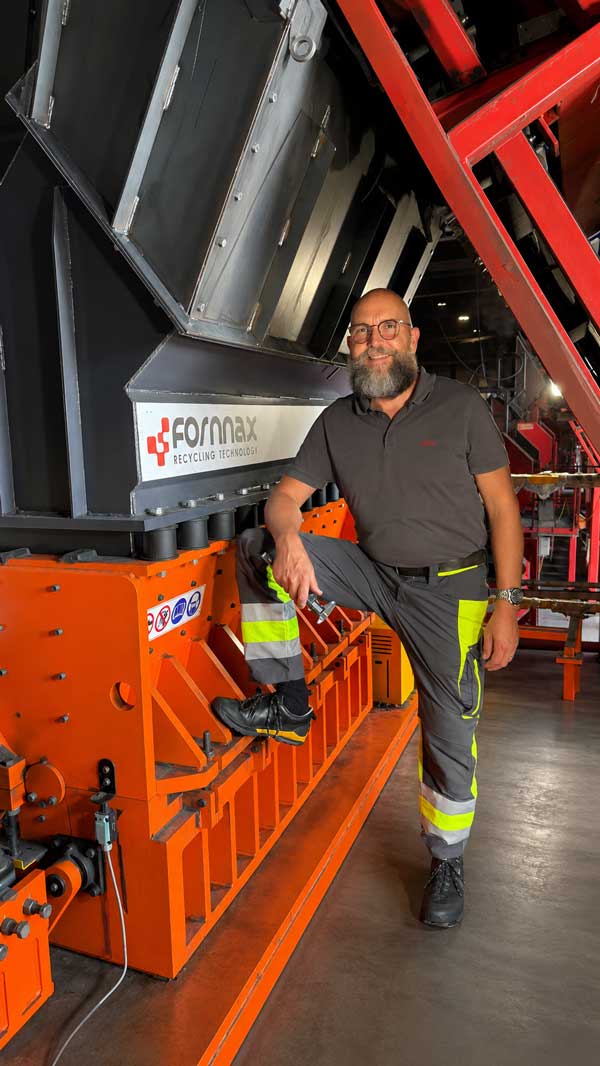
Strapline: Fornnax Technology has appointed NOBA Maschinenservice’s Lukas Baur as its authorised service partner for the European Union, strengthening its commitment to delivering fast, reliable, and localised after-sales support across the region.
Fornnax Technology, a leading manufacturer of industrial shredding solutions, has announced the appointment of Mr. Lukas Baur of NOBA Maschinenservice as its authorised service partner for the European Union. The partnership, formalised under the authorisation of Fornnax CEO Mr. Jignesh Kundaria, reinforces the company’s commitment to providing dependable, localised service support to its expanding customer base across Europe.
Strengthening Service Through Proven Expertise
With over two decades of experience in servicing, maintaining, and overhauling industrial shredders, Mr. Baur brings extensive technical expertise to the partnership. His capabilities span welding, hardfacing, shaft and knife rebuilding, complex assembly, hydraulics, and complete electrical engineering services, delivered in collaboration with a trusted partner company based in Halle/Saale.
Operating from Worbis, Germany, Mr. Baur is strategically positioned to provide emergency support across the European Union within 24 hours, covering an operational radius of approximately 1,000 kilometres.
Supporting this capability is a well-equipped service infrastructure comprising 12 Mercedes Sprinter service vans, a team of 24 skilled technicians, specialised bearing-change tools, a fully equipped hydraulic workshop, and a 1,000-square-metre facility with a five-ton crane track. Together, these resources position his team to manage the complete spectrum of Fornnax’s European service requirements efficiently and reliably.
Partnership Driven by Industry Insight
Having spent years servicing Eldan, Lindner, and Vecoplan shredders across the European recycling industry, Mr. Baur’s decision to collaborate with Fornnax is rooted in his understanding of market needs and customer expectations. His experience has provided valuable insight into what recycling plant operators require—not only from their machinery but also from the service teams supporting them.
According to Mr. Baur, Fornnax’s reputation for robust machine construction, superior wear protection, and maintenance-friendly design made the partnership a natural fit.
The collaboration comes at a time when Europe’s tyre recycling industry is facing mounting challenges, including rising cost pressures, shrinking margins, delayed investments, and a shortage of skilled labour. Mr. Baur believes these conditions reinforce the need for technically strong service partners capable of delivering rapid, dependable support.
Commenting on the partnership, he said, “Fornnax, with its exceptional price-performance ratio and superior quality, has the potential to become a market leader in Europe. We would like to be their service partner in this journey.”
Comprehensive Support Across the Equipment Lifecycle
As Fornnax’s authorised service partner, Mr. Baur will oversee the complete lifecycle support of the company’s equipment throughout the European Union. His responsibilities will include installation, commissioning, preventive maintenance, emergency repairs, and spare parts support across mechanical, hydraulic, and electrical systems.
Looking ahead, he also plans to develop a centralised spare parts distribution hub for European customers, particularly if Fornnax establishes a warehouse facility in Worbis to facilitate faster deliveries. To further strengthen service coverage, Mr. Baur intends to expand operations by adding two to three additional service teams and vehicles each year, progressively increasing capacity across the continent.
A Shared Commitment to Customer Excellence
Highlighting the strategic importance of the partnership, Mr. Jignesh Kundaria, Director and CEO of Fornnax, said:
“We strongly believe that by continuously improving our service quality and customer satisfaction index, we can build long-term relationships with our customers. Higher customer satisfaction leads to greater trust, which significantly increases repeat orders and ultimately drives sustained growth in our sales revenue.”
This customer-first philosophy underpins Fornnax’s strategy of building a dedicated European service partner network instead of relying solely on remote support. With Mr. Baur joining this network, customers across the European Union will benefit from faster response times, expert technical assistance, and dedicated on-ground support from a partner with extensive experience in high-throughput shredding operations.
Mr. Baur’s appointment also reflects Fornnax’s broader ambition to establish itself as the preferred shredding solutions provider for the European recycling industry, marking another important milestone in the company’s international growth strategy.

From LC3 and AI-driven kilns to RDF gasification, ICR explores the full breadth of technological innovation reshaping India’s cement industry. Low-carbon materials, digital manufacturing, alternative fuels and breakthrough concrete science are collectively advancing the sector’s transition from high-emission commodity producer toward a net-zero, infrastructure-ready future.
Innovation has become the defining force shaping the future of the cement industry. As the world’s second-largest cement producer, India is witnessing rising demand driven by infrastructure development, urbanisation, affordable housing, and industrial growth. At the same time, the International Energy Agency (IEA) estimates that cement production accounts for nearly 7 per cent to 8 per cent of global CO2 emissions, with clinker manufacturing contributing the largest share, making innovation an operational necessity. The industry is therefore investing heavily in low-carbon cement technologies, artificial intelligence (AI), digital manufacturing, alternative fuels, renewable energy and carbon capture, utilisation and storage (CCUS). Innovations such as limestone calcined
clay cement (LC3), supplementary cementitious materials (SCMs), AI-driven process optimisation and automated quality control are enabling manufacturers to produce more sustainable, efficient, and high-performance cement.
According to the Global Cement and Concrete Association (GCCA), achieving net-zero emissions will require a combination of material innovation, digital transformation, circular economy practices and collaborative research, making innovation central to the industry’s long-term competitiveness and India’s sustainable infrastructure growth.
Next-generation cement
The future of cement lies in reducing its dependence on clinker-the most carbon-intensive component of cement-through the adoption of low-carbon materials and advanced blended cement technologies. Products such as Portland Pozzolana Cement (PPC), Portland Slag Cement (PSC), Portland Composite Cement (PCC), and LC3 are driving this shift by replacing clinker with SCMs like fly ash, GGBS, calcined clay and limestone.
According to GCCA, SCMs can replace 30 to 50 per cent of clinker, with some applications exceeding 70 per cent, significantly reducing carbon emissions without compromising strength or durability. These blended cements also improve concrete performance by enhancing durability, reducing permeability, and increasing resistance to chloride and sulphate attacks. As the availability of traditional SCMs declines with the decarbonisation of the power and steel sectors, the industry is increasingly exploring alternative materials and next-generation cement formulations to support long-term sustainability.
Shrivats Singhania, Deputy Managing Director, JK Lakshmi Cement, says, “Innovation is enabling the cement industry to address one of its most important challenges – producing more with fewer resources and lower emissions. Across the value chain, manufacturers are deploying technologies that simultaneously improve operational efficiency and advance sustainability goals. For example, greater adoption of alternative fuels, waste heat recovery systems, renewable energy, and digital process controls is helping reduce energy consumption and optimise resource utilisation. Data-driven manufacturing allows plants to monitor operations in real time, improve equipment reliability, minimise downtime, and reduce wastage, resulting in both environmental and economic benefits.”
“Meaningful progress is also being achieved through material innovation. The growing use of blended cements and next-generation products such as LC3 reduces dependence on clinker, the most carbon-intensive component of cement production, thereby lowering embodied carbon without compromising performance,” he adds.
Among emerging technologies, LC3 has gained global recognition as one of the most promising low-carbon cement innovations. In a standard formulation, LC3 comprises approximately 50 per cent clinker, 30 per cent calcined clay, 15 per cent limestone, and 5 per cent gypsum. LC3 can reduce CO2 emissions by up to 40 per cent compared with Ordinary Portland Cement (OPC) while delivering comparable strength and enhanced durability. Its reliance on abundant, locally available raw materials, rather than industrial by-products, makes it highly scalable and well suited to countries like India.
According to the LC3 Project, nearly 75 per cent of cement plants worldwide could adopt LC3 using existing manufacturing infrastructure, potentially reducing global CO2 emissions by over 400 million tonnes annually, if adopted at scale globally. India’s introduction of BIS standard IS 18189:2023 for LC3, coupled with its adoption in projects such as the Noida International Airport, marks a step toward commercial implementation. As demand for sustainable construction grows, LC3 is poised to become a cornerstone of low-carbon infrastructure development.
Making of a smart cement plant
The modern cement plant is rapidly evolving into a digitally connected, AI-enabled manufacturing ecosystem where data drives every aspect of production – from raw material proportioning and kiln operations to quality control, maintenance and energy management.
According to IEA, digital technologies can improve energy efficiency in heavy industries by 10 per cent to 20 per cent. Advanced process control systems in cement plants have demonstrated the potential to reduce thermal energy consumption by 3 to 5 per cent, lower electricity consumption by 2 to 10 per cent, and improve kiln throughput and clinker quality. AI-powered predictive maintenance further helps reduce unplanned equipment downtime by 30 to 50 per cent and extend equipment life by continuously analysing sensor data to detect failures before
they occur.
Jignesh Kundaria, Director and CEO, Fornnax Technology, says, “AFR is no longer viewed solely as a sustainability initiative. It has become a strategic business priority for cement manufacturers. Rising fuel costs, stricter environmental regulations, and growing pressure to reduce dependence on conventional fuels are accelerating AFR adoption across the industry. However, the success of an AFR project depends heavily on how effectively waste is processed before it reaches the kiln. Poor preprocessing can negatively impact kiln performance, fuel efficiency, and emission control systems. Inconsistent fuel
quality often forces operators to make frequent adjustments, reducing throughput and increasing energy consumption.”
Dr Kapil Kukreja, General Manager, NCCBM, says, “Variations in composition, particle size, and calorific value can lead to inconsistent combustion behaviour resulting in fluctuating heat release patterns. These fluctuations can affect process stability, temperature control and clinker quality. Additionally, incomplete combustion of RDF particles can result in increased emissions, higher unburnt carbon content, and operational difficulties within the calciner system. Higher ash and inert content of RDF can dilute the clinker quality and reduce calciner efficiency.”
Meanwhile, digital twins are allowing manufacturers to simulate entire production processes, optimise kiln performance, evaluate process changes virtually, and reduce operational risks before implementation. Automated Laboratory Information Management Systems (LIMS), coupled with online and offline XRF and XRD analysers, are delivering real-time monitoring of clinker chemistry and mineralogy, ensuring tighter quality control, lower clinker variability and more consistent cement performance.
Dr Prateek Sharma, Group Project Manager, NCCBM, explains, “Chlorides and alkalis present in RDF can lead to excess buildup and blockages in the kiln and calciner increasing the downtime of cement plants. Hence, issues with direct utilisation of RDF establishes the need for fuel conditioning and alternative utilisation approaches that can maximise the energy potential of RDF while minimising adverse impacts on plant operation. RDF gasification emerges as an efficient tool for converting solid RDF into syngas which can be used as a fuel with improved characteristics.”
Digitalisation and intelligent manufacturing will be among the most critical enablers of achieving the cement industry’s net-zero ambitions by improving operational efficiency while simultaneously reducing energy consumption and greenhouse gas emissions, confirms a GCCA report.
From research to reality
While the cement industry has made remarkable progress in developing breakthrough technologies, the transition from laboratory research to large-scale commercial deployment remains one of its greatest challenges. The successful adoption of innovations such as LC3), CCUS, advanced alternative fuels, green hydrogen and novel SCMs depend not only on technical feasibility but also on economic viability, regulatory support, raw material availability, and market acceptance.
Veerendra Jamdade, CEO and Founder, Vritti Solutions, states, “The cement industry has a market that is constantly in flux, due to factors such as infrastructure investment, seasonality of demand, fuel costs, building activity by region and general economic cycles; therefore, having accurate forecasts is very important in this type of market. Traditional ERP systems are primarily data repositories with limited analytic functionality; thus, they capture transactional and operational information but generally lack advanced analytical capabilities for converting captured data into actionable information. This
affects everything from demand forecasting and inventory planning through procurement and production scheduling.”
According to IEA, technologies that are still at the demonstration or early commercial stage-including CCUS and next-generation low-carbon binders-are expected to contribute nearly 40 per cent of the emissions reductions required for the global cement sector to achieve net-zero emissions by 2050, underscoring the importance of accelerating their scale-up. This requires robust R&D ecosystems, stronger collaboration between cement manufacturers, research institutions, technology providers,
equipment suppliers, and policymakers, as well as supportive standards and financial incentives to reduce investment risks.
Ashutosh Pandita, Director – Head, Cement Business, TKIL Industries, elaborates, “The cement industry’s most transformative innovation today is the increased use of alternative fuels and raw materials (AFR), supported by advanced feeding systems and process technologies that are driving both operational efficiency and decarbonisation. Looking ahead, oxyfuel combustion and carbon capture technologies remain underappreciated but hold immense potential for enabling deep reductions in carbon emissions and accelerating the industry’s journey towards net-zero production. By 2030, cement manufacturing is expected to become significantly more sustainable, energy-efficient, and technology-driven, with widespread adoption of AFR, low-clinker cement technologies, greater digitalisation and automation, and the early commercial deployment of carbon capture solutions, all supported by stronger industry collaboration and a shared commitment to achieving long-term sustainability goals.”
In India, organisations such as the National Council for Cement and Building Materials (NCCBM), leading academic institutions, and major cement companies are working together to develop and validate emerging technologies, while the introduction of standards such as IS 18189:2023 for Limestone Calcined Clay Cement (LC3) marks a significant step towards commercial adoption. However, challenges such as high capital investment, long validation cycles, limited infrastructure for technologies like CCUS, fluctuating availability of alternative raw materials, and customer acceptance continue to slow implementation. Bridging the gap between research and commercial reality will therefore require sustained investment in innovation, knowledge-sharing, pilot projects, policy support, and industry-wide collaboration to ensure that promising technologies evolve into scalable, economically viable solutions capable of transforming the future of cement manufacturing.
Creating a green future
Clinker production will increasingly rely on low-carbon technologies such as LC3, high-volume SCMs, AFR, renewable energy, waste heat recovery, and eventually CCUS, enabling manufacturers to significantly reduce their environmental footprint.
Achieving net-zero concrete by 2050 will require a combination of clinker substitution (around 37 per cent of cumulative CO2 reductions), carbon capture technologies (approximately 36 per cent), and improvements in thermal efficiency, renewable energy, and circular economy practices.
Industry Expert SA Khadilkar comments, “Customer requirements are a key driver of innovation in the cement industry, influencing product development, process improvements, sustainability initiatives, and digital solutions. Innovation is most effective when it addresses real market needs, particularly in areas such as performance, durability, and application-specific requirements. Around a decade ago, ACC and Ambuja Cements (now Adani Cement) recognised this shift and introduced performance-oriented blended cement brands with enhanced durability, reduced water penetration, and OPC-like properties. Their success encouraged other major cement manufacturers to develop specialised cement brands with unique performance characteristics, demonstrating how product innovation has evolved to meet changing customer expectations.”
“Ultimately, customer expectations have transformed innovation from a technology-driven exercise into a market-driven strategy, ensuring that new developments create measurable value across the construction value chain,” he adds.
India is expected to add nearly 500 million square metres of urban built-up area by 2030, driving sustained demand for greener, more durable, and higher-performing construction materials, according to NITI Aayog. Meeting this demand will require cement manufacturers to evolve from commodity producers into integrated providers of sustainable building solutions, supported by data-driven manufacturing, collaborative R&D, customer-centric product innovation, and circular resource management. The cement plant of tomorrow will therefore be defined not only by its production capacity but also by its ability to manufacture smarter, cleaner, and more sustainable construction materials that support India’s ambitious infrastructure and climate goals.
Conclusion
The path ahead is clear in its direction, if not yet in its pace. India’s position as the world’s second-largest cement producer, combined with its infrastructure ambitions and its 2070 net-zero commitment, makes this transition both urgent
and consequential.
What this article has made evident is that no single technology will carry the industry to net zero. LC3 addresses clinker dependency. Digital manufacturing addresses efficiency and waste. Alternative fuels address fossil fuel dependence. CCUS addresses the residual process emissions that no other lever can reach. Each is necessary. None is sufficient alone. The industry’s task is to advance all of them simultaneously, at a pace that matches the scale of the challenge.
The plants that will build tomorrow’s highways, airports and homes will need to do so with a fraction of today’s carbon footprint.
Innovations in cement and concrete
- Carbon mineralisation in concrete: A 2026 peer-reviewed study in the Journal of the American Ceramic Society by MIT’s Masic Lab and CarbonCure Technologies used in-situ Raman microspectroscopy to show that CO2 injected during cement mixing triggers a three-stage hydration sequence, producing a more uniform microstructure with approximately 13 per cent higher early strength while permanently sequestering carbon within the concrete matrix.
Source: www.carboncure.com
- Zero-clinker geopolymer blocks: Theseus Development manufactures geopolymer blocks using upcycled aluminosilicate waste from quarries and mines through an inorganic polymerisation process, achieving up to 80 per cent lower embodied carbon compared to conventional cement blocks. An interlocking block design reduces mortar requirements, lowering construction costs while eliminating clinker entirely from the production process.
Source: www.rmi.org
- 3D-printed basalt fibre grids: Austrian startup Fiber Elements, founded in 2023, uses robotically wound continuous basalt fibres arranged into three-dimensional reinforcement grids that replace steel in concrete structures. The resulting composites are three times stronger than steel, weigh two-thirds less, resist corrosion entirely and reduce CO2 emissions by up to 70 per cent compared to conventional steel-reinforced concrete.
Source: www.eitmanufacturing.eu
- Self-healing concrete: Dutch company Basilisk leads commercial deployment of bacteria-based self-healing concrete, with licensed production now active in Japan and a highway viaduct pilot planned for 2026. Dormant Bacillus bacteria embedded in the mix activate upon crack formation, metabolising nutrients to precipitate calcium carbonate that autonomously seals fractures. The global self-healing concrete market is projected to grow significantly through 2031, driven by green building mandates and infrastructure agencies targeting lower maintenance costs and extended structural life.
Sources: www.thelegaljournalontechnology.com and www.mordorintelligence.com


Meghalaya To Engage Stakeholders Before Shree Cement Decision

The Road Ahead Begins Here

Cement Makers’ Margins To Fall Rs 50-75 Per Tonne Amid West Asia Conflict

UltraTech Board Approves Rs 50 bn Fundraise Via NCDs

Fornnax Names Lukas Baur as Authorised Service Partner to Bolster EU Operations
Meghalaya To Engage Stakeholders Before Shree Cement Decision
The Road Ahead Begins Here
Cement Makers’ Margins To Fall Rs 50-75 Per Tonne Amid West Asia Conflict
UltraTech Board Approves Rs 50 bn Fundraise Via NCDs
Fornnax Names Lukas Baur as Authorised Service Partner to Bolster EU Operations
Trending News
-
 Concrete1 month ago
Lokesh Lays Stone For Rs 31 Billion Cement Unit In Kadapa
-
 Economy & Market4 weeks ago
Fornnax Names Lukas Baur as Authorised Service Partner to Bolster EU Operations
-
 Concrete3 weeks ago
UltraTech Board Approves Rs 50 bn Fundraise Via NCDs
-
 Concrete3 weeks ago
Cement Makers’ Margins To Fall Rs 50-75 Per Tonne Amid West Asia Conflict