Connect with us

Concrete

Customisation is a cornerstone of our approach

Published

on

Shares

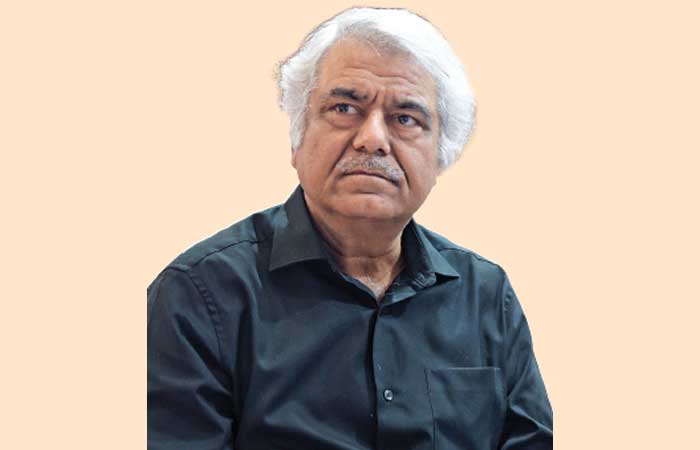
Rajeev Manchanda, Director, Christian Pfieffer, talks about pioneering sustainable solutions in cement manufacturing with Kanika Mathur.

For over 70 years, CPG Group has been at the forefront of innovation in the cement industry, delivering customised, high-quality solutions for manufacturers worldwide. With a strong focus on technology, efficiency and sustainability, the company continues to revolutionise cement production. In this interview, we explore how CPG Group’s expertise, strategic collaborations and eco-friendly initiatives are shaping the future of the industry.

How does your company collaborate with the cement industry?
Our company, CPG Group, has been a prominent name in the cement industry for the last 70 years. We are known for manufacturing complete cement plants, including clinkerisation units, cement mills, raw mills, and pyro systems, among other components. Our operations are backed by four workshops where we produce approximately 80 per cent of the required machinery in-house. This enables us to maintain high standards of quality and precision, ensuring that the equipment meets the specific demands of the cement industry. Over the decades, we have built strong relationships with cement manufacturers, delivering solutions tailored to their needs and contributing to the industry’s growth and sustainability.

Do you customise your machinery based on the cement manufacturers’ requirements?
Absolutely. All our designs and manufacturing processes are tailored to the specific requirements of our clients. We do not rely on pre-designed equipment. Instead, we analyse the client’s needs, assess their operational challenges, and then design machinery to address those requirements effectively. Customisation is a cornerstone of our approach, as every cement manufacturer operates under unique conditions. By aligning our solutions with their specific goals and constraints, we ensure that our clients achieve optimal performance, efficiency, and cost-effectiveness.

How is technology helping improve your operations, and how is it helping the cement industry enhance theirs?
Technology plays a vital role in both our operations and those of the cement industry. We have established several collaborations with leading European companies to provide cutting-edge technology and services. These partnerships allow us to offer energy-efficient and environmentally friendly solutions to our clients. For example, we work closely with Semprotect to optimise the calorific value of clinkerisation plants, which significantly reduces coal consumption. By saving coal, we not only cut costs but also contribute to environmental preservation.
All our equipment is designed with the primary objectives of saving energy, minimising coal usage, and increasing production efficiency. Our approach involves replacing outdated systems with modern, optimised ones, which have consistently delivered substantial benefits to our clients. These improvements are aligned with our commitment to reducing the industry’s carbon footprint while enhancing operational efficiency.

Can you share an example where your company upgraded a system for a client and delivered significant results?
Recently, we upgraded a part of a cooler that was originally supplied by another vendor. By making specific modifications to the system, we managed to save 15 kilocalories per kilogram of clinker. This improvement directly reduced coal consumption, resulting in significant cost savings for the client. Additionally, it contributed to a reduction in environmental impact.
There are many such instances where we have enhanced production efficiency, reduced power consumption, and minimised coal usage for our clients. These projects underscore our expertise in delivering customised solutions that address the unique challenges faced by cement manufacturers. Such interventions not only benefit our clients financially but also align with broader environmental sustainability goals.

What is your perspective on sustainability in your operations and within the cement industry?
To me, sustainability means ensuring that systems and operations can run profitably over the long term. For our company, sustainability involves designing systems that help clients reduce production costs while improving efficiency and environmental performance. When businesses adopt such practices, they naturally achieve more sustainable operations.
Sustainability creates a win-win scenario: it benefits our clients by improving their profitability, it supports the environment by reducing emissions and resource consumption, and it strengthens the industry by promoting long-term viability. Our work in optimising energy usage, reducing coal consumption, and increasing production efficiency exemplifies this balanced approach to sustainability. It’s a comprehensive effort that positively impacts all stakeholders, including the country and the global environment.

What is your view on the net-zero mission, and how is your company contributing to it?
The net-zero mission is an ambitious but essential goal for the cement industry and beyond. At CPG Group, we are doing our part by focusing on reducing coal consumption, optimising power usage, and minimising pollution in cement production. For example, in our designs, we aim to significantly reduce the emission of pollutants. While earlier systems emitted 100 milligrams of particulate matter per cubic meter, we have progressively reduced this to 50 milligrams and now maintain levels as low as 10 milligrams.
Our efforts also extend to designing equipment and processes that minimise the environmental impact of cement production. Cement manufacturing is inherently a polluting process, but by incorporating innovative technologies, we aim to mitigate its effects. Achieving net zero will require joint efforts from all stakeholders, including manufacturers, suppliers, governments, and society at large.
It is a challenging journey that requires time, resources, and collaboration. While our contribution may seem small in the grand scheme of things, we believe that every step counts. By continuously improving our systems and designs, we are moving closer to a more sustainable future for the industry.


Concrete

Ramco Cements’ Hard Worker Campaign Wins Seven Awards

Campaign earns honours for direction, editing and cinematography

Published

on

By

Shares
The Hard Worker campaign by The Ramco Cements has secured seven honours at the Good Ads Matter Awards 2026, adding to its growing list of accolades and reinforcing its standing among the year’s most recognised advertising campaigns.
The awards were presented during the Good Ads Matter Awards Night 2026 held at Mehboob Studios in Mumbai. The campaign received recognition across multiple categories, highlighting excellence in direction, editing, cinematography and storytelling.
Among the honours, the campaign won Silver in the Campaign of the Year – Direction category, while filmmaker Prakash Varma was named Director of the Year for the films Tortoise & Hare and Eco Plaster. Tortoise & Hare also received Silver awards for Best Editing and Best Colour Grading, along with a Bronze award for Best Cinematography. Eco Plaster earned Bronze awards in the Best Direction – Narrative and Best Direction – Humour categories.
Both films extended their award-winning run, with Eco Plaster being recognised for its narrative centred on water conservation through innovative construction solutions, while Tortoise & Hare was honoured for its storytelling and craft execution.
The Hard Worker campaign was built around the idea that hard work deserves recognition and respect. Through culturally rooted and emotionally engaging stories, the campaign has connected with consumers, engineers, masons and the wider construction community across the country.
Commenting on the achievement, A V Dharmakrishnan, CEO of The Ramco Cements Limited, said that the continued recognition across leading creative platforms reflects the company’s commitment to meaningful and authentic communication rooted in the values of the people it serves.
Balaji K Moorthy, Executive Director – Marketing, The Ramco Cements Limited, said the awards recognise the craftsmanship behind the storytelling, from direction and cinematography to editing and narrative execution.
Following recognition at both the Kyoorius Creative Awards and the Good Ads Matter Awards, the Hard Worker campaign continues to demonstrate the impact of purpose-driven storytelling combined with strong creative execution and consumer relevance.

Continue Reading

Concrete

Cement Makers Reaffirm Commitment to Sustainable Growth

Published

on

By

Shares

World Environment Day spotlight on innovation and circularity

On World Environment Day, the Indian cement industry reiterated its commitment to supporting India’s climate ambitions through sustainable manufacturing, resource efficiency and the adoption of cleaner technologies.

The Cement Manufacturers’ Association (CMA) said the sector remains aligned with the Government of India’s Net Zero commitments and is accelerating efforts to reduce its environmental footprint while supporting the country’s infrastructure and development agenda.

Parth Jindal, President, CMA and Managing Director, JSW Cement, said the industry is increasingly adopting cleaner technologies, improving energy efficiency and expanding the use of alternative fuels and raw materials. He also highlighted the growing importance of circular economy practices, where industrial by-products and waste streams from one sector are utilised as resources in another.

“The Indian Cement Industry is aligned to the Government’s commitments on carbon mitigation and is accelerating the adoption of cleaner technologies, resource efficiency and circular economy practices while actively exploring the potential of Carbon Capture, Utilisation and Storage (CCUS) as a critical pathway for deep decarbonisation,” said Jindal.

He added that coprocessing industrial waste and by-products helps conserve natural resources, reduce disposal requirements and lower the environmental footprint across multiple sectors.

According to Jindal, sustainability is no longer limited to manufacturing processes but is increasingly influencing investment decisions, innovation strategies and long-term growth plans within the industry.

Echoing similar views, Dr Raghavpat Singhania, Vice President, CMA and Managing Director, JK Cement, said sustainable development extends beyond emissions reduction and must also focus on responsible resource utilisation and waste minimisation.

“Sustainability in the built environment cannot be measured by emissions alone. It is equally about how efficiently we use resources, how effectively we minimise waste and how responsibly we create the infrastructure that will serve future generations,” said Singhania.

He noted that the cement industry is advancing its sustainability agenda through greater resource efficiency, increased circularity, technological innovation and continuous improvements in manufacturing practices. As a key contributor to India’s infrastructure development, the sector has a critical role to play in balancing economic growth with environmental responsibility.

On the occasion of World Environment Day, industry leaders reaffirmed their commitment to supporting India’s climate goals while delivering the materials required for resilient, durable and sustainable infrastructure.


Continue Reading

Concrete

Building a Greener Future Together

Published

on

By

Shares

Environmental sustainability requires immediate action, not just long-term commitments and discussions. Recycling, circular economy practices, and technology-driven waste management can help industries reduce environmental impact while supporting sustainable growth.

Author: Jignesh Kundaria, Director and CEO, Fornnax Technology

World Environment Day serves as an important reminder that environmental sustainability can no longer remain confined to discussions, reports, or long-term commitments. The environmental challenges facing the world today demand immediate, measurable, and collective action. Across industries and communities, waste generation continues to outpace our ability to process it responsibly, placing increasing pressure on ecosystems, natural resources, public health, and the well-being of future generations.

One of the most significant shifts required today is a change in how society perceives waste. Rather than being viewed as a material to be discarded, waste must be recognised as a valuable resource that can contribute to both economic growth and environmental protection when managed through the right technologies and systems. This mindset forms the foundation of the circular economy model that countries across the world are increasingly adopting to reduce landfill dependence, recover valuable materials, and create more sustainable industrial ecosystems.

India has made meaningful progress in strengthening awareness around sustainability, recycling, and environmental responsibility over the past decade. Significant efforts are being made to formalise the recycling sector through improved infrastructure, technology adoption, policy implementation, and broader stakeholder participation. These developments are creating a stronger foundation for responsible waste management and resource recovery across the country.

However, achieving long-term environmental impact requires collaboration from all stakeholders. Industries, policymakers, technology providers, and communities must work together with greater accountability to strengthen recycling ecosystems, encourage responsible waste management practices, and create sustainable outcomes through consistent execution rather than temporary interventions.

As someone closely associated with the recycling industry, I firmly believe that technology will play a decisive role in addressing future environmental challenges. Advanced recycling systems have the potential to recover valuable resources, reduce pollution, minimise landfill burdens, and conserve energy, creating a more sustainable future for generations to come. This belief is deeply reflected in Fornnax’s motto, “Committed to Create a Green Future,” which embodies our commitment to building long-term environmental value through innovation and responsible action.

At the same time, technology alone cannot deliver meaningful change. Real progress requires intent, awareness, participation, and a shared sense of responsibility. Sustainable development can only be achieved when innovation is supported by collective action and a genuine commitment to environmental stewardship.

On this World Environment Day, let us move beyond conversations and take meaningful steps towards creating a cleaner, greener, and more sustainable planet. By embracing innovation, strengthening recycling ecosystems, and acting responsibly today, we can create lasting environmental impact and secure a better future for generations to come.

Continue Reading

Video Thumbnail
â–

    SIGN-UP FOR OUR GENERAL NEWSLETTER


    Trending News

    SUBSCRIBE TO THE NEWSLETTER


    Don't miss out on valuable insights and opportunities to connect with like minded professionals.


      This will close in 0 seconds