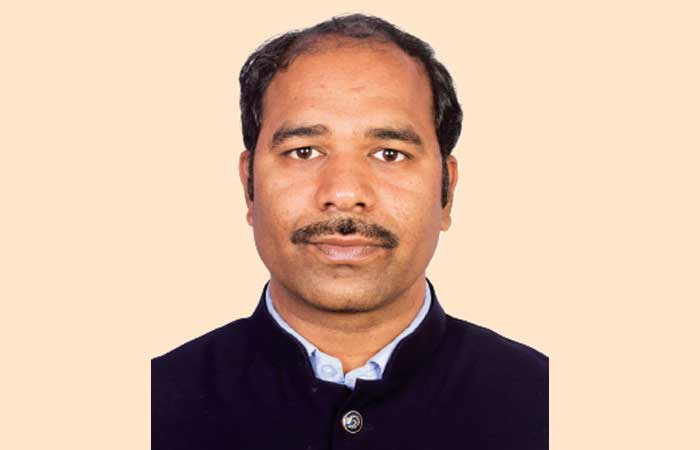
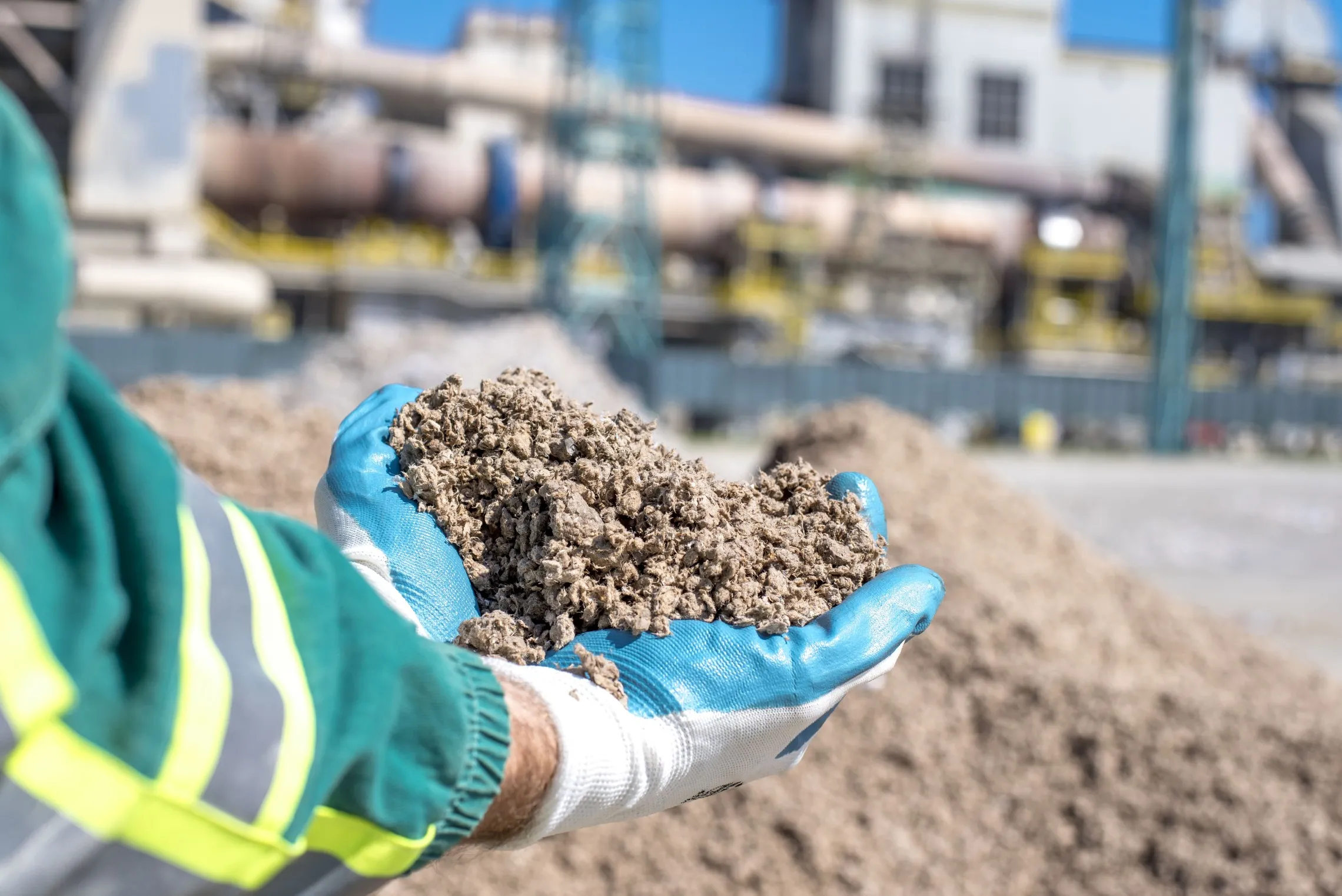
Nirmal K Jain, Safety Head, JK Lakshmi Cement, talks about the company’s Zero Harm goal, the efforts that they are putting in place to achieve this and the challenges that they need to overcome.
How do you define a ‘safe plant’?
Feeling safe is an important aspect of life. A safe plant, a safe society, a safe job, etc., are things everyone desires.
Manufacturing safety is important because it keeps people alive and unharmed. To prevent industrial accidents, injuries, illnesses, and deaths, every manufacturer needs to create a safe plant, safe workplace for employees. A plant is safe where zero harm, zero injuries and zero excuses are outcomes of safety. A plant is safe where the safety of people is non-negotiable. A plant is safe where everyone feels safe, their own responsibility and follows the same honestly without any excuse. A plant is safe where never compromise safety in order to meet productivity, quality or cost goals. A plant is safe where each and every safety rules and regulations are considered as prime measure and involves safety imbibed in the working culture and environment.
Our safety aim is Zero Harm. We believe that all injuries and occupational illnesses can be prevented. We drive safety is everyone’s responsibility. As a responsible management we are committed to provide a safe and secure environment for working. For us, the safety of our people is non-negotiable. We will never compromise safety in order to meet productivity, quality, or cost goals. Following safety rules and procedures is the responsibility of each of us, including management. There is no excuse for wilful failure to accept this obligation. Working together, we can move toward our zero incidents goal.
What are the key areas where safety in a cement plant is of paramount importance?
Safety is important in each and every part of the plant, equipment, process etc. But few key areas where safety in cement plant is of paramount importance:
- Coal and AFR storage – fire hazard
- Raw material and finished goods vehicle – driver’s training and education, health issue, odd hours driving, vehicle condition etc.
- Raw material handling – dust exposure, vehicle movement, illumination etc.
- Silo jam removal – high heat and temperature
- Confined space working – silo cleaning and refractory work
- Plant shutdown and breakdowns – where outside 1000+ contractual workmen work for the given period of time
What kind of safety personal protective equipment do personnel use at the plant?
Personal Protective Equipment (PPE) is worn to prevent injury in the workplace, when engineering and administrative controls are not feasible or are being implemented. They are no substitute for engineering or administrative controls and they do not eliminate any hazard. Safety PPE creates a barrier between the hazard and workmen contact. Safety PPE must meet BIS Standards and guidelines.
Every plant must have the Safety PPE’s matrix and display the same at the workplace. Safety PPE’s must be provided to all the plant personnel without any payable cost.
At UCWL, we categorise safety PPE in two types – Mandatory Safety PPE and Job Specific Safety PPE. Safety shoes, safety helmets and reflective strips are kept in the mandatory category and all other safety PPE are kept under the job specific category. Here we procure safety PPE as per BIS guidelines. We also insist and ensure that all our contractor’s manpower coming for shutdown jobs use standard and approved safety PPEs only.
Following types of safety PPEs mainly used in cement plant:
- Eye and Face Protection – Safety goggles, over specs, face shield etc.
- Respiratory Protection – Dust Masks – with or without valves, air purifying respirator-cartridge type, air-supplied respirator, Self-Contained Breathing Apparatus (SCBA)
- Head Protection – Safety helmet
- Foot Protection – Steel toed safety shoe, composite toed safety shoe, gumboots, chemical resistance safety shoe
- Hand Protection – Safety hand gloves coming in various categories depending on requirement like Cotton, rubber, leather, metal mesh, Kevlar etc.
- Hearing Protection – Earplugs and earmuffs
- Body Protection – Aprons, chemical/heat resistance suits,
- Fall Protection – Safety harness, fall arresters, lifelines etc.
Does technology play a role in ensuring plant safety? If yes, how?
Technology and artificial intelligence are increasingly playing a significant role in cement plants. Installing sensors in manufacturing equipment can aid in finding the source of defects that can further help in saving time. These methods are cost-effective and give a rapid boost to overall efficiency. Advanced predictive systems are also a great source of examining and inspecting the process chain. It helps in analysing and making prospective future decisions through data collection. The data thus collected can be used in an informed manner and can even provide solutions to several problems. Many software based programmes in the field of safety, which makes the things more convenient and easy to retractable information of the past. Internet of Things (IoT), it is very helpful in making smart cement plants.
It can be used in the following areas:
- Data analytics
- Suitable manufacturing process of cement
- Real-time based information
- Reduction of carbon emissions
- Saving of time and fast troubleshooting
What are the safety guidelines of your organisation? What is the penalty for not following the same?
At UCWL, we have well planned, systematically designed safety guidelines/ standards for safety in our organisation. We have Consequence Management Standards for Employees / workers who do not follow safety or break any safety rules and guidelines at the workplace and penalties are imposed. Here, we have comprehensive safety guidelines in our plant for achieving our vision ‘Zero Harm’. These guidelines keep employees safe and protects their well-being. By following the safety guidelines employees can perform their jobs more effectively and confidently without fear of being injured or suffering from an illness. We have separate safety guidelines for road safety, lifting safety, working at height, hot work, confined space working, covid-19 etc.
Tell us about the major challenges faced in terms of ensuring plant safety?
The major challenges we face in terms of ensuring plant safety are:
- High traffic movement
- Housekeeping – flying dust from various processes
- High use of mobile phones at workplace
- Untrained or unskilled work force during plant shutdowns
- Confined space working
- Plant expansion and upgradation
- New green and brown field projects
- Update safety with new technologies
- Biological threats like Covid-19
Do you conduct safety training and audits for your plant personnel? Explain in detail.
Safety training and audits are an essential part of safety management system of any plant.
At UCWL, we conduct various Safety Trainings like pre-job training, on-job training, classroom training, outbound training, workshops, seminars, etc. for education and safety awareness of our plant personnel. Here training is conducted on the basis of a training calendar which is prepared through various levels of inputs like BBSM, HOD Feedback, employee needs, job requirements, survey, employee performance, etc.
Details about various safety conducted in our plant:
- Safety Induction Training: This is a mandatory training for all newly joined employees and workmen. We also have a separate visitor’s safety induction program which is mandatory for all the visitors, contractors, service engineers etc. It is interlocked with our Gate Pass Procedures. The gate pass will be prepared only after safety induction is done. Also, we ensure refresher training of all temporary workmen at every six months which is at time of gate pass renewing.
- Jobsite training: Jobsite safety training is provided for specific jobs before starting the same. It helps to know better about a job, its details, its hazards and applicable safety precautions before the actual execution of jobs at the workplace.
- Classroom training: Here classroom training is conducted at regular intervals which covers all safety standards and other major topics like first aid, rescue operation, home safety, onsite emergency, health, and hygiene etc.
- External faculty training: We also conduct training by external faculties who are experts in their fields for better skill development.
- Skill development training: These trainings are conducted for our plant personnel like rescue operations, safety auditing, scaffolding erectors, and inspectors etc. by sending them at training centers or pursuing courses to develop their skills.
- Safety audits: These audits show the real picture of workplace safety. It helps us to determine how effective our safety management program works. It enables the management to ensure a safe and healthy work environment. This can help to identify areas where improvements are needed. Safety audits can be performed internally by supervisors and employees, or by third-party auditors when you need an independent, non-biased audit of your operations.
At our plant different types safety audits conducted as mentioned below:
- Periodic Safety Audit: Periodic Safety Audits are conducted by a cross functional team or by individuals as mentioned in the audit schedule. These audits cover every part of the plant.
- Internal Safety Audits: We regularly conduct internal safety audits for assessment of safety management systems and workplace safety. These internal audits are conducted as per
- the checklist and by our trained internal auditors’ team.
- Safety Audits as per BIS 14489: This is mandatory safety audit for confirming our safety system and workplace safety as per the requirements of BIS 14489. This is conducted by an external competent agency once in two or three years depending on different state rules.
- External Audit: Some certification audits like ISO 45001:2018 conducted by certification bodies for the confirmation of standard practices of safety as per the requirement of standard at workplace.
How do you plan to better the safety of your plant in the years to come?
The cement industry is not nearly as advanced as some other heavy manufacturing industries in the implementation of occupational health and safety management systems. In the upcoming years, we need to focus more on the design of inherently safe plants that minimise the potential risk of accidents. We should continuously keep adapting technology driven best safety practices. In addition, we need to continuously focus on skill development, training and awareness about the new changes and upgrades in technology. We should modify equipment and processes where manual involvement should be reduced and strengthen all types of energy isolation and the Lock-Out Tag-Out Try-Out (LOTOTO) system for all small and large jobs. We also should focus on behaviour based safety as we know that without a positive mind, one cannot do anything. Imbibing safety culture across the functions
and involvement of the end-to-end supply chain stakeholders will contribute to manage better safety in upcoming years.
– Kanika Mathur