Connect with us

Concrete

Gautam Adani Inspects Godda 2,300 MW Power Plant

Inspection follows MP request and points to cement plan

Published

on

Shares

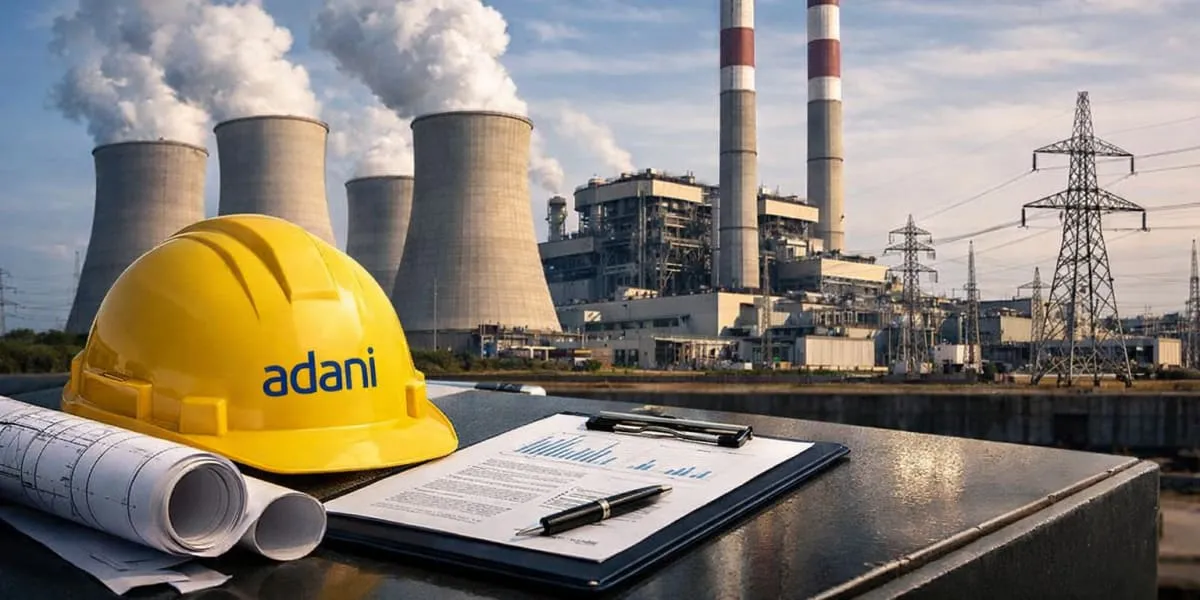
Gautam Adani visited Godda on Sunday to carry out a first inspection of the power plant in the district, where electricity generation of 2,300 megawatts (MW) is being undertaken through five units. The visit involved a walkthrough of production areas and technical installations and included meetings with senior plant executives. The inspection was described by officials as focused on operational readiness and optimisation of output.

Officials said the establishment of the plant followed a request from the local member of parliament, who provided cooperation during project development, and indicated that plans to establish a cement plant in Godda are likely to materialise soon. The electricity produced at the facility is currently being supplied to Bangladesh, and officials confirmed that the possibility of exporting power to other neighbouring countries is under consideration. Company representatives indicated that the project aims to balance regional energy demand with commercial export obligations.

During the review of all units, plant leadership set out steps to accelerate commissioning and enhance maintenance regimes to ensure sustained generation. The commissioning of the power plant has already been credited with contributing significantly to the development of Godda, and the proposed cement plant is expected to add industrial capacity and create large-scale employment in the region. Local authorities are monitoring progress with a view to aligning infrastructure improvements and workforce development.

Stakeholders expect the visit to accelerate operational momentum at the site and to clarify timelines for further investment and local supply arrangements. The inspection was followed by technical briefings and an internal review of safety and environmental practices to support reliable operations. Officials said subsequent measures will focus on connectivity, logistics and community engagement to ensure the project delivers intended economic benefits.

Concrete

Govt Exempts Tailings Recycling In Mines From Fresh Green Clearance

Move aims to streamline mining waste management

Published

on

By

Shares

The central government has exempted tailings recycling in mines from the requirement of a fresh environmental clearance, citing an effort to streamline approvals and promote resource efficiency.

The decision is intended to simplify regulatory procedures for operators seeking to process existing mine waste for recovery of minerals and other materials.

Officials indicated that the move should reduce administrative delays while maintaining compliance with existing safeguards.

Authorities said existing environmental safeguards would continue to apply to recycling operations.

Tailings recycling refers to the recovery of valuable materials from the fine waste generated by mining operations and the subsequent reprocessing of material to reduce the volume stored in tailings facilities.

Advocates argue that recycling can recover metals and minerals, lower the demand for new ore extraction and reduce the footprint of waste storage.

The policy change is expected to encourage the adoption of technologies that convert legacy waste into usable inputs for industry.

The mining industry welcomed the exemption as a way to accelerate projects and improve economics, while environmental groups urged robust conditions to prevent adverse impacts.

Conservation organisations stressed the importance of rigorous monitoring, independent audits and clear standards for waste handling and water management.

Regulators are likely to frame the exemption with specific compliance requirements to balance economic and environmental objectives.

Industry sources indicated that the move could attract investment in processing plants and associated infrastructure.

The change may prompt states and permitting authorities to update their frameworks to reflect the central clearance position and to clarify oversight roles.

Observers noted that effective implementation will depend on transparent reporting, enforcement capacity and investment in rehabilitation of legacy sites.

The long term outcome will hinge on whether recycling reduces the environmental risks associated with tailings while supporting a circular approach in the mining sector.

Stakeholders called for clear timelines for compliance.

Continue Reading

Concrete

Cement Demand Revives As Prices Decline In Q3 FY26

Nuvama reports improved volume growth after price correction

Published

on

By

Shares

A report by Nuvama Financial Services (Nuvama) said cement sector demand revived in the third quarter of fiscal year twenty twenty six as prices declined, supporting volume growth across regions. The note indicated that sequential price correction helped replenish demand that had been subdued by elevated pricing earlier in the year. Nuvama quantified the price decline as a sequential correction that varied across states and segments, facilitating restocking by merchants and traders.

The report suggested that improved affordability after the price correction encouraged housing and infrastructure activity, with developers and contractors adjusting procurement plans. It added that regional dynamics varied, with some markets showing faster recovery while others remained reliant on seasonal construction cycles. Housing demand was driven by both affordable and mid segment projects, while infrastructure segment recovery was contingent on timely execution of public works.

Analysts at Nuvama assessed that the price moderation eased inventory pressures for manufacturers and distributors and supported margin stabilisation at several producers. Demand improvement was visible in both urban and rural segments, although the pace of recovery differed by state and trade channel. Producers were seen balancing price realisations with volume targets and managing input cost volatility through operational efficiencies.

The report recommended that investors monitor volumes and realisations closely as market equilibrium emerges in the coming quarters, noting that sustainability of recovery would depend on monsoon patterns and government infrastructure outlays. Overall, the assessment pointed to a cautiously optimistic outlook for the cement industry as price correction translated into tangible volume gains. Market participants were advised to track early signs of demand broadening beyond core construction hubs to assess the depth of the rebound.

Continue Reading

Concrete

Refractory demands in our kiln have changed

Published

on

By

Shares

Radha Singh, Senior Manager (P&Q), Shree Digvijay Cement, points out why performance, predictability and life-cycle value now matter more than routine replacement in cement kilns.

As Indian cement plants push for higher throughput, increased alternative fuel usage and tighter shutdown cycles, refractory performance in kilns and pyro-processing systems is under growing pressure. In this interview, Radha Singh, Senior Manager (P&Q), Shree Digvijay Cement, shares how refractory demands have evolved on the ground and how smarter digital monitoring is improving kiln stability, uptime and clinker quality.

How have refractory demands changed in your kiln and pyro-processing line over the last five years?
Over the last five years, refractory demands in our kiln and pyro line have changed. Earlier, the focus was mostly on standard grades and routine shutdown-based replacement. But now, because of higher production loads, more alternative fuels and raw materials (AFR) usage and greater temperature variation, the expectation from refractory has increased.
In our own case, the current kiln refractory has already completed around 1.5 years, which itself shows how much more we now rely on materials that can handle thermal shock, alkali attack and coating fluctuations. We have moved towards more stable, high-performance linings so that we don’t have to enter the kiln frequently for repairs.
Overall, the shift has been from just ‘installation and run’ to selecting refractories that give longer life, better coating behaviour and more predictable performance under tougher operating conditions.

What are the biggest refractory challenges in the preheater, calciner and cooler zones?
• Preheater: Coating instability, chloride/sulphur cycles and brick erosion.
• Calciner: AFR firing, thermal shock and alkali infiltration.
• Cooler: Severe abrasion, red-river formation and mechanical stress on linings.
Overall, the biggest challenge is maintaining lining stability under highly variable operating conditions.

How do you evaluate and select refractory partners for long-term performance?
In real plant conditions, we don’t select a refractory partner just by looking at price. First, we see their past performance in similar kilns and whether their material has actually survived our operating conditions. We also check how strong their technical support is during shutdowns, because installation quality matters as much as the material itself.
Another key point is how quickly they respond during breakdowns or hot spots. A good partner should be available on short notice. We also look at their failure analysis capability, whether they can explain why a lining failed and suggest improvements.
On top of this, we review the life they delivered in the last few campaigns, their supply reliability and their willingness to offer plant-specific custom solutions instead of generic grades. Only a partner who supports us throughout the life cycle, which includes selection, installation, monitoring and post-failure analysis, fits our long-term requirement.

Can you share a recent example where better refractory selection improved uptime or clinker quality?
Recently, we upgraded to a high-abrasion basic brick at the kiln outlet. Earlier we had frequent chipping and coating loss. With the new lining, thermal stability improved and the coating became much more stable. As a result, our shutdown interval increased and clinker quality remained more consistent. It had a direct impact on our uptime.

How is increased AFR use affecting refractory behaviour?
Increased AFR use is definitely putting more stress on the refractory. The biggest issue we see daily is the rise in chlorine, alkalis and volatiles, which directly attack the lining, especially in the calciner and kiln inlet. AFR firing is also not as stable as conventional fuel, so we face frequent temperature fluctuations, which cause more thermal shock and small cracks in the lining.
Another real problem is coating instability. Some days the coating builds too fast, other days it suddenly drops, and both conditions impact refractory life. We also notice more dust circulation and buildup inside the calciner whenever the AFR mix changes, which again increases erosion.
Because of these practical issues, we have started relying more on alkali-resistant, low-porosity and better thermal shock–resistant materials to handle the additional stress coming from AFR.

What role does digital monitoring or thermal profiling play in your refractory strategy?
Digital tools like kiln shell scanners, IR imaging and thermal profiling help us detect weakening areas much earlier. This reduces unplanned shutdowns, helps identify hotspots accurately and allows us to replace only the critical sections. Overall, our maintenance has shifted from reactive to predictive, improving lining life significantly.

How do you balance cost, durability and installation speed during refractory shutdowns?
We focus on three points:
• Material quality that suits our thermal profile and chemistry.
• Installation speed, in fast turnarounds, we prefer monolithic.
• Life-cycle cost—the cheapest material is not the most economical. We look at durability, future downtime and total cost of ownership.
This balance ensures reliable performance without unnecessary expenditure.

What refractory or pyro-processing innovations could transform Indian cement operations?
Some promising developments include:
• High-performance, low-porosity and nano-bonded refractories
• Precast modular linings to drastically reduce shutdown time
• AI-driven kiln thermal analytics
• Advanced coating management solutions
• More AFR-compatible refractory mixes

These innovations can significantly improve kiln stability, efficiency and maintenance planning across the industry.

Continue Reading

Trending News

SUBSCRIBE TO THE NEWSLETTER


Don't miss out on valuable insights and opportunities to connect with like minded professionals.


    This will close in 0 seconds