Connect with us

Concrete

Centre Proposes Clearance Exemption For Cement Grinding Units

Move may aid Adani’s Rs 14 billion Kalyan cement project approval.

Published

on

Shares
The Union Ministry of Environment, Forest and Climate Change has proposed to exempt standalone cement grinding units without captive power plants from the requirement of prior environmental clearance, according to a draft notification issued on 26 September.
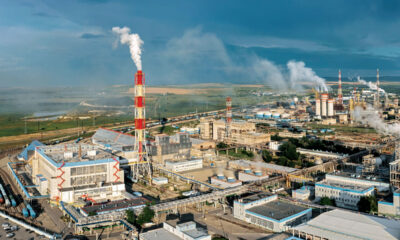
If approved, the move could benefit the Adani Group’s proposed Rs 14 billion (Rs 1,400 crore) 6-million-tonne-per-annum cement grinding plant in Kalyan, part of the Mumbai Metropolitan Region. The plant, belonging to Ambuja Cement Ltd, an Adani Group company, has faced strong opposition from residents of Mohone and ten surrounding villages.
At a Maharashtra Pollution Control Board (MPCB) public hearing last month, citizens expressed concerns over potential health hazards and environmental risks from the project, questioning how such a large-scale industrial facility could be allowed in a densely populated area.
Locals highlighted the risk of emissions including particulate matter, sulphur dioxide, nitrogen dioxide, and carbon monoxide.
However, the ministry’s draft notification proposes that standalone cement grinding units — which do not carry out high-temperature “calcination” or “clinkerisation” processes — be exempted from detailed Environmental Impact Assessment (EIA) reports and public consultation requirements. The ministry argues that such units have a lower pollution potential compared to integrated cement plants but are still subjected to equally stringent compliance measures, resulting in disproportionate regulatory burdens.
Officials explained that these standalone facilities consume less energy and generate less waste, as they do not undertake the heating and chemical breakdown processes integral to full-scale cement manufacturing.
Furthermore, the draft encourages the use of green logistics, such as the transportation of raw materials and finished products through railways and electric vehicles. The Expert Appraisal Committee (EAC), after detailed deliberation, recommended the exemption to promote “environmental governance and green logistics.”
Sources said the Ambuja Cement plant, located near Ambivli railway station, is likely to rely on rail transport for raw materials, aligning with the EAC’s sustainability criteria.
The public has 60 days from the date of notification to submit comments or objections. Once finalised, the amendment will form part of the 2006 EIA notification that governs environmental clearance norms.
Subhash Patil, president of the Gramastha Mandal Mohone Koliwada — a local group opposing the project — said residents were unaware of the new proposal. “I don’t think it’s a good move by the government. We’ll review the notification and decide our next steps,” he said.
An MPCB official confirmed the ministry’s draft, stating that feedback will be reviewed before the final decision is taken.
According to the project summary, the proposed plant will occupy 26.13 hectares, with 9.67 hectares reserved for green belt development and 5.49 hectares for the grinding unit, storage, and packing facilities.
The project, planned on the former National Rayon Company (NRC) site in Ambivli near Titwala, will house a 6-million-tonne-per-annum grinding capacity. The NRC facility, established in 1945, ceased operations in 2006 and was acquired by the Adani Group through the National Company Law Tribunal (NCLT) in 2020 after a long-standing labour dispute.

Concrete

Molecor Renews OCS Europe Certification Across Spanish Plants

Certification reinforces commitment to preventing microplastic pollution

Published

on

By

Shares

Molecor has renewed its OCS Europe certification for another year across all its production facilities in Spain under the Operation Clean Sweep (OCS) voluntary initiative, reaffirming its commitment to sustainability and environmental protection. The renewal underlines the company’s continued focus on preventing the unintentional release of plastic particles during manufacturing, with particular attention to safeguarding marine ecosystems from microplastic pollution.

All Molecor plants in Spain have been compliant with OCS Europe standards for several years, implementing best practices designed to avoid pellet loss and the release of plastic particles during the production of PVC pipes and fittings. The OCS-based management system enables the company to maintain strict operational controls while aligning with evolving regulatory expectations on microplastic prevention.

The renewed certification also positions Molecor ahead of newly published European regulations. The company’s practices are aligned with Regulation (EU) 2025/2365, recently adopted by the European Parliament, which sets out requirements to prevent pellet loss and reduce microplastic pollution across industrial operations.

Extending its sustainability commitment beyond its own operations, Molecor is actively engaging its wider value chain by informing suppliers and customers of its participation in the OCS programme and encouraging responsible microplastic management practices. Through these efforts, the company contributes directly to the United Nations Sustainable Development Goals, particularly SDG 14 ‘Life below water’, reinforcing its role as a responsible industrial manufacturer committed to environmental stewardship and long-term sustainability.

Continue Reading

Concrete

Coforge Launches AI-Led Data Cosmos Analytics Platform

New cloud-native platform targets enterprise data modernisation and GenAI adoption

Published

on

By

Shares

Coforge Limited has recently announced the launch of Coforge Data Cosmos, an AI-enabled, cloud-native data engineering and advanced analytics platform aimed at helping enterprises convert fragmented data environments into intelligent, high-performance data ecosystems. The platform strengthens Coforge’s technology stack by introducing a foundational innovation layer that supports cloud-native, domain-specific solutions built on reusable blueprints, proprietary IP, accelerators, agentic components and industry-aligned capabilities.

Data Cosmos is designed to address persistent enterprise challenges such as data fragmentation, legacy modernisation, high operational costs, limited self-service analytics, lack of unified governance and the complexity of GenAI adoption. The platform is structured around five technology portfolios—Supernova, Nebula, Hypernova, Pulsar and Quasar—covering the full data transformation lifecycle, from legacy-to-cloud migration and governance to cloud-native data platforms, autonomous DataOps and scaled GenAI orchestration.

To accelerate speed-to-value, Coforge has introduced the Data Cosmos Toolkit, comprising over 55 IPs and accelerators and 38 AI agents powered by the Data Cosmos Engine. The platform also enables Galaxy solutions, which combine industry-specific data models with the core technology stack to deliver tailored solutions across sectors including BFS, insurance, travel, transportation and hospitality, healthcare, public sector and retail.

“With Data Cosmos, we are setting a new benchmark for how enterprises convert data complexity into competitive advantage,” said Deepak Manjarekar, Global Head – Data HBU, Coforge. “Our objective is to provide clients with a fast, adaptive and AI-ready data foundation from day one.”

Supported by a strong ecosystem of cloud and technology partners, Data Cosmos operates across multi-cloud and hybrid environments and is already being deployed in large-scale transformation programmes for global clients.

Continue Reading

Concrete

India, Sweden Launch Seven Low-Carbon Steel, Cement Projects

Joint studies to cut industrial emissions under LeadIT

Published

on

By

Shares

India and Sweden have announced seven joint projects aimed at reducing carbon emissions in the steel and cement sectors, with funding support from India’s Department of Science and Technology and the Swedish Energy Agency.

The initiatives, launched under the LeadIT Industry Transition Partnership, bring together major Indian companies including Tata Steel, JK Cement, Ambuja Cements, Jindal Steel and Power, and Prism Johnson, alongside Swedish technology firms such as Cemvision, Kanthal and Swerim. Leading Indian academic institutions, including IIT Bombay, IIT-ISM Dhanbad, IIT Bhubaneswar and IIT Hyderabad, are also participating.

The projects will undertake pre-pilot feasibility studies on a range of low-carbon technologies. These include the use of hydrogen in steel rotary kilns, recycling steel slag for green cement production, and applying artificial intelligence to optimise concrete mix designs. Other studies will explore converting blast furnace carbon dioxide into carbon monoxide for reuse and assessing electric heating solutions for steelmaking.

India’s steel sector currently accounts for about 10–12 per cent of the country’s carbon emissions, while cement contributes nearly 6 per cent. Globally, heavy industry is responsible for roughly one-quarter of greenhouse gas emissions and consumes around one-third of total energy.

The collaboration aims to develop scalable, low-carbon industrial technologies that can support India’s net-zero emissions target by 2070. As part of the programme, Tata Steel and Cemvision will examine methods to convert steel slag into construction materials, creating a circular value chain for industrial byproducts.

Continue Reading

Trending News

SUBSCRIBE TO THE NEWSLETTER


Don't miss out on valuable insights and opportunities to connect with like minded professionals.


    This will close in 0 seconds