Connect with us

Concrete

Global Aggregates Production

Published

on

Shares

Jim O’Brien, President, GAIN, on strengthening the global aggregates industry through collaboration, data sharing and a commitment to sustainability.

GAIN™ is the trade-marked acronym of the Global Aggregates Information Network. Founded in 2010, it is an entirely voluntary network of the major national and regional aggregates associations of the world. The mission of GAIN is to openly share experiences and industry best practices in the interests of promoting the greater sustainability and performance of the aggregates industry globally. GAIN has no commercial interests and vigorously enforces an anti-trust policy.
Starting with just five members in 2010, GAIN now has over 20 members spread across all the six continents, its members representing 75 per cent of global aggregates production of just 39 billion metrictonnes(bnt).
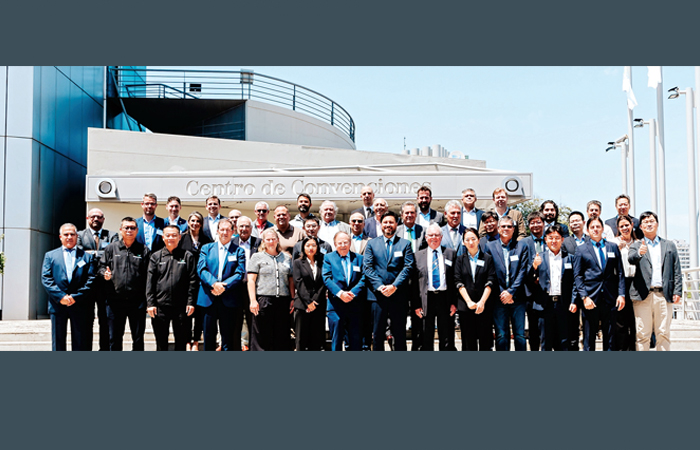
GAIN is uniquely successful in its highly-interactive global membership, thanks to the very positive cooperation of its members. The most recent physical GAIN meeting, its seventh global meeting, was held in Córdoba, Argentina, kindly hosted by the Argentine Association Federación de la Piedra, with most GAIN regions in attendance. The wide-ranging agenda focused on sharing best practice on key industry challenges, and found the industry to be in resilient recovery post-pandemic and poised to address and benefit from future sustainability challenges and opportunities.
The next physical meeting of GAIN is planned for October 19-22, 2025, to be held in Córdoba, Spain, hosted by the Spanish Aggregates Federation. The 2026 physical meeting will be hosted in Shanghai by the China Aggregates Association. In parallel, virtual GAIN meetings are held every two months and are widely attended (including India) across many time zones and these too are marked by lively open exchanges of best practice on specific topics.

Taking stock
One ambition of GAIN is to compile the best annual estimates of aggregates production from data provided by GAIN members, the situation as of April 2025. This data reflects the best estimates available to each region, and while not claiming to be perfect, is probably the best data available anywhere on global aggregates production. The GAIN total of 34.1bnt in 2019 has actually declined to 29.4bnt in 2024, the significant decline of 4.7bnt being due to a combination of the impacts of the pandemic, the economic slowing in China and the wars in Ukraine and in the Middle East. When estimates for non-GAIN countries are added (based on their national populations x their estimated tonne/capita), the global totals of 44.0bnt in 2019 has actually declined by 11.4 per cent to 39.0bnt in 2024, the trend being shown in Figure 2. The estimates given for 2025 must at this stage be regarded as preliminary and are very subject to the unpredictable geopolitics now in play, but point towards 2025 being a similar year to 2024 with 39.0bnt global total aggregates production.
The breakdown by region is illustrated in
Figure 1, still dominated by China at 39 per cent, with India coming second at 15 per cent, followed by Europe at 7 per cent and the USA at 6 per cent, these top four comprise 67 per cent of the global demand. Adding in the other GAIN member countries brings the GAIN total to 75 per cent of global production. It is hoped that many more countries will join GAIN in the coming years, bringing its representation towards 100 per cent of the global aggregates industry. The global average is 4.8t/c; for GAIN members the average is 6.5t/c and the non-GAIN average is 2.6t/c. For any country, the demand in tonnes per capita can be empirically related to GDP per capita – or more precisely, the rate of change in GDP/capita –plus upward adjustments for national terrain ruggedness and local
climatic severity.
Looking ahead towards 2030, assuming a positive global geopolitical outlook with resultant economic growth, coupled with the twin demands of population growth and urbanisation, there is a possibility for global demand to reach 40bnt by 2030. These figures demonstrate that aggregates are indeed by far the most used bulk product on the planet, with the industry having an economic value similar to that of the cement sector, both points often overlooked.
Looking specifically at India, as shown in Figure 2, production suffered a significant decline in 2020 during the pandemic, but is now back into strong growth with an estimated 5.9bnt for 2024, hopefully further rising to 6.4bnt in 2025. That will correspond to a demand of 4 tonnes/capita; while still well below that of developed regions, this can portend significant further growth in the years to come. Overall, India should be proud that it is the second largest and fastest growing aggregates market globally. The current growth is being driven principally by massive infrastructural investments in roads, railways, ports and airports; long may it continue.
The author hopes that India will soon benefit from forming a much-needed fully-fledged national aggregates association, similar to those very professionally representing the Indian cement and concrete sectors. A national aggregates association, benefitting from sharing of international best practices within GAIN, can then bring world class excellence to the aggregates industry in India.

About the author:
Jim O’Brien, President, GAIN, is a veteran of the building materials industry. He has spent 39 years at CRH plc, and has spearheaded the formation of the Global Aggregates Information Network (GAIN), a voluntary liaison network of regional and national aggregates associations around the world. More details on www.gain.ie.

Concrete

NBCC Wins Rs 550m IOB Office Project In Raipur

PMC Contract Covers Design, Execution And Handover

Published

on

By

Shares

State-owned construction major NBCC India Ltd has secured a new domestic work order worth around Rs 550.2 million from Indian Overseas Bank (IOB) in the normal course of business, according to a regulatory filing.

The project involves planning, designing, execution and handover of IOB’s new Regional Office building at Raipur. The contract has been awarded under NBCC’s project management consultancy (PMC) operations and excludes GST.

NBCC said the order further strengthens its construction and infrastructure portfolio. The company clarified that the contract is not a related party transaction and that neither its promoter nor promoter group has any interest in the awarding entity.

The development has been duly disclosed to the stock exchanges as part of NBCC’s standard compliance requirements.

Continue Reading

Concrete

Nuvoco Q3 EBITDA Jumps As Cement Sales Hit Record

Premium products and cost control lift profitability

Published

on

By

Shares

Nuvoco Vistas Corp. Ltd reported a strong financial performance for the quarter ended 31 December 2025 (Q3 FY26), driven by record cement sales, higher premium product volumes and improved operational efficiencies.

The company achieved its highest-ever third-quarter consolidated cement sales volume of 5 million tonnes, registering growth of 7 per cent year-on-year. Consolidated revenue from operations rose 12 per cent to Rs 27.01 billion during the quarter. EBITDA increased sharply by 50 per cent YoY to Rs 3.86 billion, supported by improved pricing and cost management.

Premium products continued to be a key growth driver, sustaining a historic high contribution of 44 per cent for the second consecutive quarter. The strong momentum reflects rising brand traction for the Nuvoco Concreto and Nuvoco Duraguard ranges, which are increasingly recognised as trusted choices in building materials.

In the ready-mix concrete segment, Nuvoco witnessed healthy demand traction across its Concreto product portfolio. The company launched Concreto Tri Shield, a specialised offering delivering three-layer durability and a 50 per cent increase in structural lifespan. In the modern building materials category, the firm introduced Nuvoco Zero M Unnati App, a digital loyalty platform aimed at improving influencer engagement, transparency and channel growth.

Despite heavy rainfall affecting parts of the quarter, the company maintained improved performance supported by strong premiumisation and operational discipline. Capacity expansion projects in the East, along with ongoing execution at the Vadraj Cement facilities, remain on track. The operationalisation of the clinker unit and grinding capacity, planned in phases starting Q3 FY27, is expected to lift total cement capacity to around 35 million tonnes per annum, reinforcing Nuvoco’s position as India’s fifth-largest cement group.

Commenting on the results, Managing Director Mr Jayakumar Krishnaswamy said Q3 marked strong recovery and momentum despite economic challenges. He highlighted double-digit volume growth, premium-led expansion and a 50 per cent rise in EBITDA. The company also recorded its lowest blended fuel cost in 17 quarters at Rs 1.41 per Mcal. Refurbishment and project execution at the Vadraj Cement Plant are progressing steadily, which, along with strategic capacity additions and cost efficiencies, is expected to strengthen Nuvoco’s long-term competitive advantage.

Continue Reading

Concrete

Cement Industry Backs Co-Processing to Tackle Global Waste

Industry bodies recently urged policy support for cement co-processing as waste solution

Published

on

By

Shares
Leading industry bodies, including the Global Cement and Concrete Association (GCCA), European Composites Industry Association, International Solid Waste Association – Africa, Mission Possible Partnership and the Global Waste-to-Energy Research and Technology Council, have issued a joint statement highlighting the cement industry’s potential role in addressing the growing global challenge of non-recyclable and non-reusable waste. The organisations have called for stronger policy support to unlock the full potential of cement industry co-processing as a safe, effective and sustainable waste management solution.
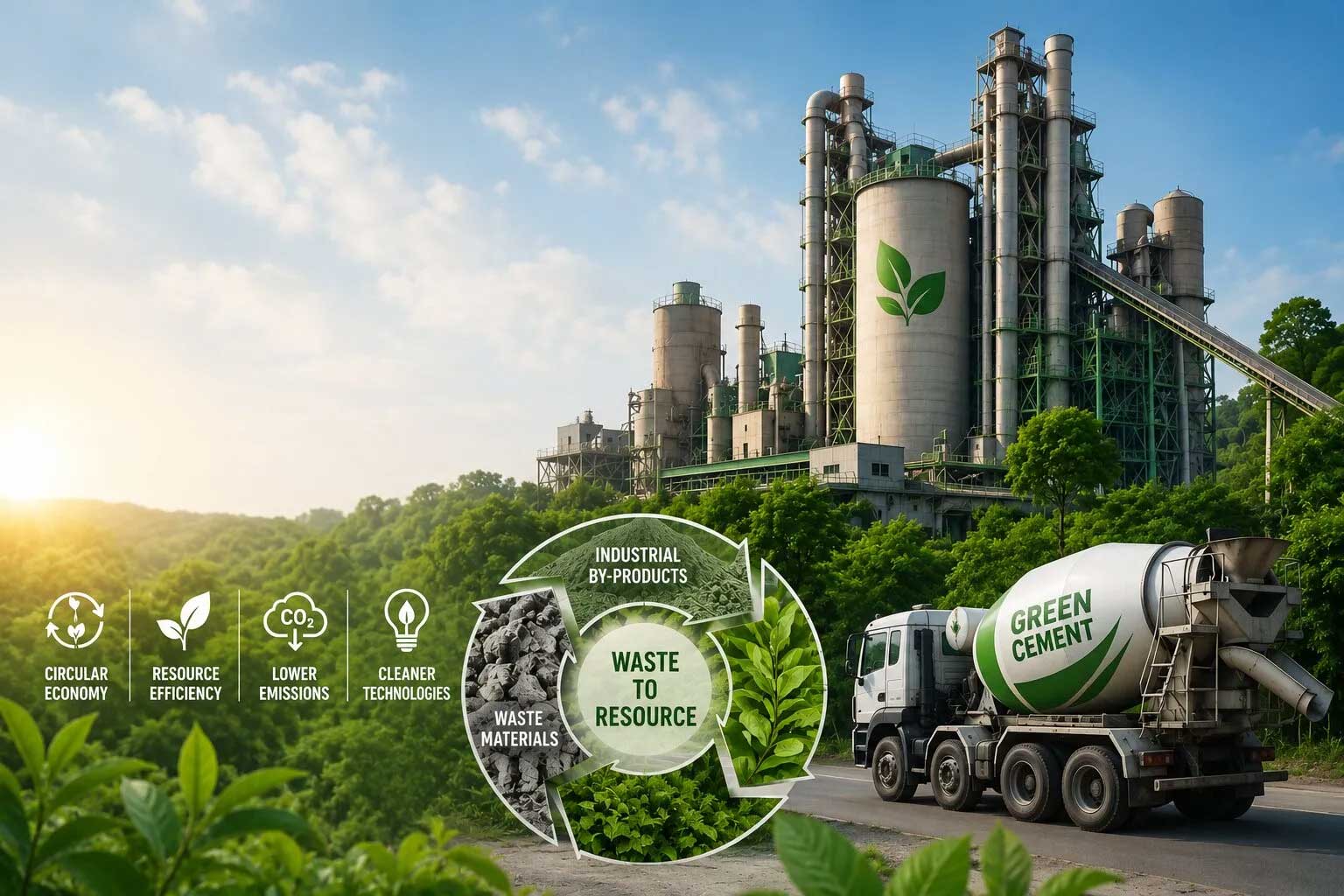
Co-processing enables both energy recovery and material recycling by using suitable waste to replace fossil fuels in cement kilns, while simultaneously recycling residual ash into the cement itself. This integrated approach delivers a zero-waste solution, reduces landfill dependence and complements conventional recycling by addressing waste streams that cannot be recycled or are contaminated.
Already recognised across regions including Europe, India, Latin America and North America, co-processing operates under strict regulatory and technical frameworks to ensure high standards of safety, emissions control and transparency.
Commenting on the initiative, Thomas Guillot, Chief Executive of the GCCA, said co-processing offers a circular, community-friendly waste solution but requires effective regulatory frameworks and supportive public policy to scale further. He noted that while some cement kilns already substitute over 90 per cent of their fuel with waste, many regions still lack established practices.
The joint statement urges governments and institutions to formally recognise co-processing within waste policy frameworks, support waste collection and pre-treatment, streamline permitting, count recycled material towards national recycling targets, and provide fiscal incentives that reflect environmental benefits. It also calls for stronger public–private partnerships and international knowledge sharing.
With global waste generation estimated at over 11 billion tonnes annually and uncontrolled municipal waste projected to rise sharply by 2050, the signatories believe co-processing represents a practical and scalable response. With appropriate policy backing, it can help divert waste from landfills, reduce fossil fuel use in cement manufacturing and transform waste into a valuable societal resource.    

Continue Reading

Trending News

SUBSCRIBE TO THE NEWSLETTER


Don't miss out on valuable insights and opportunities to connect with like minded professionals.


    This will close in 0 seconds