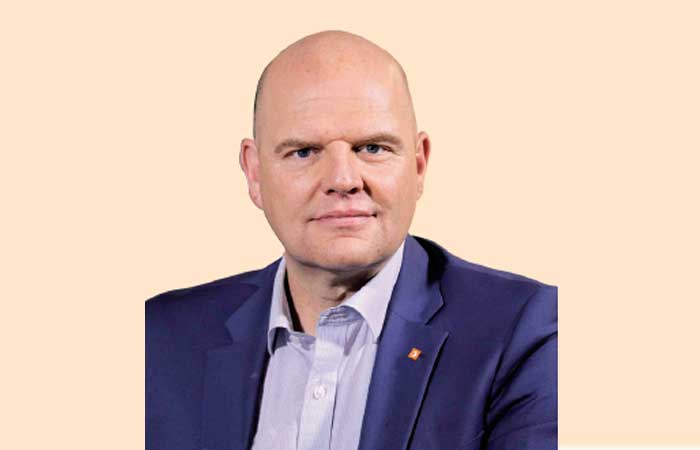
Nathan Ashcroft, Director – Low Carbon Solutions, Stantec, discusses overcoming barriers and unlocking Net Zero potential of CCUS with Kanika Mathur.
ICR has consistently reviewed the role of carbon capture in the Indian cement industry’s efforts at decarbonisation. In an exclusive interaction, we get Nathran Ashcroft, Director – Low Carbon Solutions, Stantec, to take us through the challenges and opportunities of integrating Carbon Capture, Utilisation, and Storage (CCUS) into cement manufacturing. He highlights technological advancements, regulatory considerations and financial strategies, emphasising global collaboration as the key to achieving large-scale decarbonisation.
What are the key challenges in integrating CCUS into the existing cement manufacturing facilities?
The biggest challenge we come across repeatedly is that most cement manufacturing facilities were built decades ago without any consideration for carbon capture systems. Consequently, one of the primary hurdles is the spatial constraints at these sites. Cement plants often have limited space, and retrofitting them to integrate carbon capture systems can be very challenging. Beyond spatial issues, there are additional considerations such as access and infrastructure modifications, which further complicate the integration process. Spatial constraints, however, remain at the forefront of the challenges we encounter.
How do you think carbon capture technologies can align with the net zero goals of cement manufacturers today?
Carbon capture technologies can play a pivotal role in helping cement manufacturers achieve their net zero targets. Cement manufacturing has a unique decarbonisation pathway compared to other industries. For instance, when we apply carbon capture to oil and gas facilities, we can capture greenhouse gases, but the fuel produced still results in emissions downstream when burned. In contrast, carbon capture in the cement industry directly reduces the carbon intensity of the cement itself. Cement, when used in concrete, serves as a carbon sink, further contributing to reducing overall emissions.
Installing a highly efficient carbon capture system at a cement facility enables manufacturers to produce lower-carbon products. This makes carbon capture integral to the industry’s decarbonisation efforts. While implementing these systems is complex and resource-intensive, it is a major step toward achieving net zero. Once this is accomplished, manufacturers are significantly closer to their environmental goals. Refinements can then be made to optimise processes further, but carbon capture represents the most substantial leap in the journey toward net zero for the cement industry.
What role does waste heat recovery play in improving the cost efficiency of CCS in cement plants?
Waste heat recovery plays a crucial role in enhancing the cost efficiency of carbon capture systems in cement plants. Cement production involves high-temperature processes, which present opportunities to utilise waste heat. This heat can be recovered and converted into power, which offsets some of the operational and capital costs associated with carbon capture systems.
Additionally, when treating flue gas streams for CO2 removal, it is necessary to clean the gas by removing particles and other impurities. This results in ancillary benefits beyond just reducing greenhouse gas emissions—it also leads to a cleaner flue gas stream, addressing both visible and invisible pollutants. Waste heat recovery helps balance the energy requirements of the carbon capture process by leveraging energy that has already been generated, making the entire system more efficient. However, the implementation of waste heat recovery solutions can vary from site to site, as each facility has unique characteristics and constraints. Despite the challenges, waste heat recovery remains an integral part of efficient system integration in the cement industry.
What are the most promising opportunities for utilising captured CO2 within the cement industry?
The utilisation of captured CO2 in the cement industry holds potential, but the options remain somewhat limited today. In an ideal scenario, captured CO2 could be used for higher-value applications, but large-scale cement facilities produce immense quantities of CO2, often in the range of hundreds of thousands to millions of tons annually.
Finding applications that can absorb such volumes is challenging.
One of the more established uses of captured CO2 is in enhanced oil recovery (EOR). In regions where adjacent energy producers exist, such as Western Canada and California, CO2 can be used as a solvent for injection into oil reservoirs, helping extract more oil from the ground. However, this option depends heavily on the geographical location of the cement facility and the proximity of industries that can use the CO2.
Another potential avenue lies in industrial hubs where multiple industries are located close to one another. Collaborating with adjacent industries that require CO2—such as urea production or emerging technologies—could present viable utilisation options. That said, the economic and logistical aspects of CO2 utilisation must be carefully evaluated, as these factors significantly influence the feasibility of such projects. While utilisation options are currently limited, ongoing research and development may unlock new opportunities in the future.
What strategic considerations should cement manufacturers prioritize when planning large-scale CCUS projects?
Cement manufacturers should adopt a holistic approach when planning large-scale CCUS projects, focusing on the entire lifecycle of CO2 capture and utilisation. Installing a carbon capture system is only one piece of the puzzle. Manufacturers must also consider how the captured CO2 will be transported, stored or utilised. This includes evaluating sequestration options, potential uses for the CO2, and partnerships with adjacent industries.
Phased implementation can also be a practical strategy. Many cement plants have multiple kilns or calciners producing flue gas streams. Manufacturers may choose to implement carbon capture systems incrementally, targeting specific streams or units initially before scaling up. Collaboration with nearby facilities or industrial hubs could help share the cost of infrastructure, such as pipelines or compression systems.
Lastly, early-stage assessments and strategic planning are critical to identifying the most efficient and cost-effective pathways. Given the complexity of CCUS projects, it is rare for a single entity to manage all aspects of the system—from capture to sequestration. Engaging experts and leveraging partnerships can help cement manufacturers navigate the challenges and opportunities more effectively.
How can the cement sector overcome regulatory and financial challenges in adopting this technology?
Overcoming regulatory and financial challenges is essential for the successful adoption of carbon capture technology in the cement sector. From a regulatory perspective, manufacturers can benefit from the experiences of jurisdictions that have already implemented CCUS projects. For example, Western Canada, the US Gulf Coast and Norway have established regulatory frameworks for handling CO2, including its compression, transportation, and storage. Leveraging the knowledge and procedures developed in these regions can save time and resources, avoiding the need to start from scratch.
Financially, carbon capture systems are undeniably expensive, both in terms of capital (CAPEX) and operational (OPEX) costs. Securing government incentives, grants, or tax credits is often vital for making these projects financially viable. In North America, for instance, production tax credits and grants have been instrumental in offsetting costs. Manufacturers should explore similar opportunities in their respective regions.
Additionally, there is growing interest in linking the carbon intensity of products, such as cement, to their market value. Products with lower carbon intensity could command higher prices in international markets, providing a financial incentive for adopting CCUS technologies. However, most successful projects to date have relied on some level of government support. Understanding the financial landscape and leveraging available resources will be crucial for widespread adoption.
How do you see the role of global collaborations in scaling CCUS in sectors like cement?
Global collaborations are vital for scaling CCUS technologies in the cement industry. The CCUS sector is unique in its willingness to collaborate and share knowledge. Many stakeholders understand the scale of the challenge and recognise that working together is more efficient than starting independently from scratch. For example, European governments have visited Western Canada to learn from its CCS Global Symposium and to engage with local experts. Such collaborations allow regions just starting their CCUS journey to benefit from the experiences and lessons of others.
Organizations like the Carbon Capture Knowledge Centre in Saskatchewan offer training programs and workshops, providing valuable opportunities for international delegations to learn from established projects. Cement manufacturers and industry bodies could invite experts to participate in conferences and workshops, fostering knowledge exchange and collaboration.
By engaging with jurisdictions and organisations that have already implemented CCUS projects, the cement sector can accelerate its own progress. Collaboration across borders, industries, and research institutions will play a critical role in advancing the adoption of CCUS technologies on a global scale.
Can you elaborate on the key technologies for CO2 capture in the cement industry and their potential advancements?
There are two primary branches of technology for CO2 capture in the cement industry: amine-based systems and cryogenic solutions. Amine systems are the standard and widely used globally. These systems rely on a solvent—an ammonia-based solution—to capture CO2, which is then released from the solvent during processing. While effective and established, amine systems come with certain challenges, including regulatory considerations and the introduction of chemicals into cement facilities.
Cryogenic solutions, on the other hand, represent an emerging and more elegant alternative. These systems involve cooling the flue gas stream to extremely low temperatures (around -50°C), causing the CO2 to liquefy for capture. Unlike amine systems, cryogenic solutions do not require solvents, making them cleaner and potentially more suitable for cement facilities. Additionally, cryogenic systems align well with the use of renewable electricity, offering a pathway for integration into green grids.
Both technologies have their advantages, but the cryogenic approach is particularly promising for the cement industry due to its simplicity and adaptability. As advancements continue, we are likely to see significant cost reductions and efficiency improvements in both technologies. This innovation will be essential for making CCUS more accessible and economically viable for the cement sector.