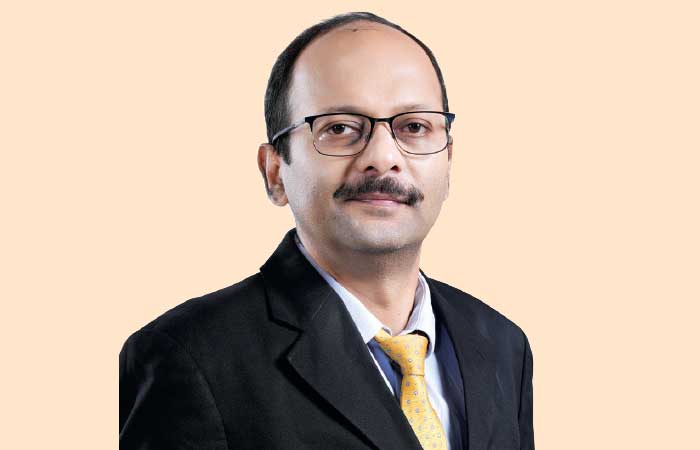
Sudhir Pathak, Head – Central Design and Engg (CDE), QA, Green Hydrogen, Hero Future Energies, talks about empowering India’s hard-to-abate industries with innovative renewable energy technology.
How is Hero Future Energies contributing to reducing emissions in hard-to-abate sectors like cement manufacturing, and what role does renewable energy play in this effort?
Today, Hero Future Energies (HFE) is no longer simply a renewable energy (RE) provider but has transformed into an end-to-end Net Zero partner especially for construction and infrastructure clients in the hard-to-abate sectors. In addition to providing Scope 2 based solutions, such as behind the meter RE (rooftop and ground mount solar) and open access-based RE including developing RE-100 roadmaps we also support Scope 1 and 3 emission decarbonisation by providing complete turnkey solutions through the use of green hydrogen and its derivatives. For hard-to-abate sectors like cement, HFE is in advanced discussions with few leading players, regarding enabling decarbonisation of their heating applications such as pre-calciners, rotary kilns etc through green fuels. This supplements our Scope 2 solutions for the cement industry.
With HFE’s focus on clean technologies like green hydrogen and energy storage, how do you envision these innovations helping the cement industry reduce its carbon footprint?
The cement industry is one of the largest consumers of grid power (Scope 2) and also a guzzler of in-process fossil CO2 (Scope 1) including process-based CO2 through limekilns. In the case of Scope 2, decarbonisation can be achieved only up to 50 per cent to 60 per cent through plain hybrid solar and wind. However, for achieving balance 40 per cent, storage is essential, be it chemical or mechanical. Today, HFE is ready to provide such bespoke storage solutions as is evident through several complex RTC tenders that we have won in the last 6-8 months floated by agencies like SECI, NTPC and SJVN. These include tenders for FDRE projects, peak power, load following, etc. Further, regarding green hydrogen and its derivatives, we are ready to apply these for decarbonising industrial heating and mobility (Scope 1 and 3).
What are some of the biggest challenges you face when working with the cement sector to integrate renewable energy solutions and reduce emissions?
Deployment of renewable energy for mitigating Scope 2 emissions is relatively easy, except for RE behind the meter, looking at the high dust levels involved in cement production particularly in the crushers. Regarding Scope 1 decarbonisation, there are several challenges. Unlike in Europe, the majority of the Indian cement industry uses coal combustion in heating applications. This being a solid fuel, is suitable for horizontal rotary kilns and needs positive pressures for combustion processes, whereas, green hydrogen, being the lightest of molecules, are good and amenable, when working in vertical combustion shafts. Therefore, existing facilities may be used only partially, and for complete conversion, new installations will be needed. This will entail a significant amount of space inside the plants, which is currently scarce.
HFE has been involved in pioneering projects like hybrid power and energy storage. How do these technologies improve energy efficiency and lower emissions in industries like cement manufacturing?
Cement industry by its nature has a 24×7 duty cycle demand for electricity. Therefore, solar power by itself can’t be a perfect solution, the sector needs round-the-clock RE. While hybrid RE (a right mix of solar and wind), can help to an extent (better than only solar), we will still have to depend on storage to provide predictable supply of electricity, or what is termed as ‘Firm Dispatchable’ RE. In such cases, storage can be provided either through batteries like Li Ion, Sodium Ion, Metal Air or Pumped Hydro and Long Duration Energy Storage (LDES) mechanisms.
How does HFE address the intermittency issues of renewable energy, ensuring a stable and reliable energy supply to cement plants while minimising emissions?
As explained above, this can be resolved through appending storage solutions. However this needs meticulous assessment of RE power every year, every month, every day, every hour and every time block (15 minutes). Further, one needs to carry out an arduous due diligence process for forecasting solar and wind patterns for 25 years. We, at HFE, have the expertise to do this to a great extent, thereby derisking ourselves and offtakers from such vagaries. Our success in winning eight complex FDRE tenders in the recent past testify to this.
Given that cement is one of the largest contributors to industrial emissions, what potential do you see for technologies like green hydrogen to decarbonise cement production in the coming decade?
We believe that emergence of green hydrogen presents a huge opportunity to decarbonise hard to abate sectors such as cement. Not only green hydrogen, but its derivatives like ammonia and methanol also hold huge potential to mitigate industrial carbon footprint. The cement industry sees huge volumes of CO2 being emitted as a result of limestone processing, which is a crucial process. These can be reused and converted to low carbon methanol. With the government promoting M15, M85, MD15 and M100, the same can be used for quick decarbonisation.
What are HFE’s long-term goals regarding environmental sustainability and emission reduction, and how does the company plan to scale these efforts to help heavy industries achieve their sustainability targets?
At HFE, we are committed to a sustainable and low-carbon future through provision of smart, affordable, clean energy and tech solutions. On the utility front, we are focused on complex, high CUF projects that aim to help overcome the intermittency barrier and pave the way for firm, dispatchable, round the clock green power. For our C&I clients, we offer a complete suite of solutions as their Net Zero partner, evolving from being just an RE provider.
If India is to achieve its Net Zero goal, then industrial decarbonisation must take centrestage and this is the space where we believe HFE can be a major player. We see ourselves as an end to end integrated Net Zero partner for businesses, particularly those in hard to abate sectors like cement, steel, chemicals and mobility, charting out a Net Zero roadmap for them and then guiding them to reach the target in a phased manner.