Economy & Market
We ensure sustainability throughout our operations
Published
2 years agoon
By
admin
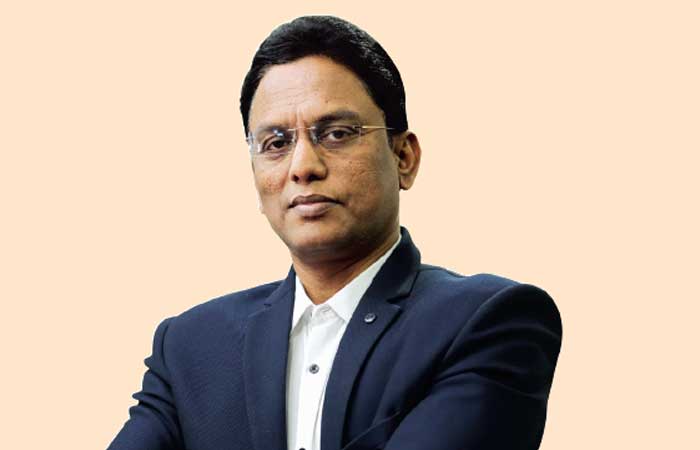
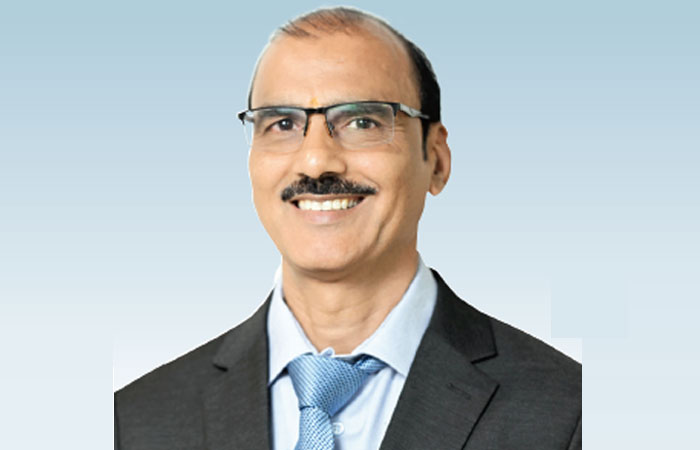
Ganesh W Jirkuntwar, Senior Executive Director and National Manufacturing Head, Dalmia Cement (Bharat), discusses the transformative shift of the cement industry towards greener practices. Going green aligns with global climate goals and presents opportunities for enhanced competitiveness and environmental stewardship.
What is the current sentiment in the cement industry about going green?
Cement, a key component of concrete, is a major contributor to CO2 emissions. Studies show that the cement industry’s worldwide yearly production of 4.2 billion tonnes contributes about 7 per cent of worldwide carbon dioxide yearly emissions. Since the pandemic, India and the world are now pushing harder than ever to meet climate goals. Moreover, for India, the need and importance to cut down on emissions is double; to target climate change and to reduce the current dangerous levels of air pollution.
The usage and demand for cement are only going to increase due to the burgeoning population and the need for housing and infrastructure. India, along with the world, needs to fast-track the journey to zero-carbon. Consumers are also becoming increasingly aware of the environmental impact of the products they use and are seeking more sustainable and eco-friendly options. By going green, cement companies can meet this demand, gaining a competitive edge in the market and establishing themselves as environmentally conscious businesses.
In the cement industry, the problems of emissions lies in the manufacturing of cement. The energy used to heat the kilns that produce the clinker and the chemical processes that convert limestone into calcium oxide are the major causes of these emissions. However, the Indian cement sector has been at the forefront in responding to climate change. Many large cement companies have done huge emission reductions by using supplementary cementitious materials, improving energy efficiency, substituting fossil fuels with alternative fuels, using waste heat to generate electricity, and scientifically trying new production techniques and process improvements.
Technologies like Waste Heat Recovery (WHR) power generation systems, reducing or ceasing the use of fossil fuels, using solar energy, as well as converting current fossil-fuel-based facilities into renewable biomass fuel-based units, are being used by various companies to reduce the emissions during cement production. As the need for energy is paramount in the cement industry, the solution to its emission issues lies in finding renewable electricity that can produce clean, safe, affordable, and infinite energy. Across the globe and in India, companies are in the process of changing their manufacturing techniques to transition to clean energy and reduce their carbon footprint.
Tell us about the key alternative raw materials used for the manufacturing of green cement?
Green cement, which boasts a lower carbon footprint compared to traditional cement, is made using supplementary cementitious materials (SCMs). Below are some of SCMs, which are typically used in green cement production.
Fly ash: It is a byproduct of coal-fired power plants and contains silica and alumina, which are great for making green cement.
Ground granulated blast furnace slag (GGBS): This is a byproduct of the steel industry. When ground into a fine powder, it can replace traditional materials in cement production and significantly reduce carbon emissions.
Calcined clay: This clay type is heated to high temperatures to enhance its reactivity. It can replace traditional raw materials in green cement production.
These materials help in reduction of clinker, with a very high carbon footprint in cement production and hence reduce the carbon footprint of cement.
How does the use of alternative fuels impact the productivity and efficiency of the manufacturing process?
The use of alternative fuels in cement manufacturing processes has several benefits. It significantly reduces dependency on fossil fuel, which is highly polluting and reduces greenhouse gas emissions, hence a great lever for lowering carbon footprint. Alternative fuels like biomass, municipal wastes and industrial byproducts are being used as a substitute to fossil fuels such as coal, petroleum coke etc. Uses of alternative fuel helps in lowering cost of production as well as help maintain cleanliness of the environment.
However, usage of alternative fuels comes with its set of challenges impacting productivity and efficiency in the manufacturing process. The lower calorific values of alternative fuels compared to fossil fuels impacts the heat balance of the cement kiln. Hence to ensure the correct temperature profile is maintained during the entire process, cement plants need to optimise fuel mix and make operational adjustments of the kiln. Also, careful considerations need to be taken during selection of alternative fuels, ensuring compatibility with the manufacturing process, else it can impact the quality of the clinker and the final product.
Quality and availability of alternative fuels are also vital. As waste and by-products are sourced from other industries, reliable supply chains and strict quality control measures are required to ensure standard quality and availability. There are also additional challenges like health and safety risks to workers handling storage of the alternative fuels and meeting regulatory compliances and standards in terms of use of alternative fuels.
To mitigate these challenges, the cement industry will need to adopt diverse strategies like research and investments in advanced technologies for optimal use of alternate fuels, partnership with other industries for reliable availability and collaboration with regulatory bodies for monitoring compliances.
Tell us about the cement blends or products from your organisation that are lower in their carbon content.
We offer cement blends that are designed to have lower carbon content. Blended cements are made by mixing two or more materials, with at least one being a cementitious material like Portland cement, fly ash, ground granulated blast furnace slag (GGBS), silica fume or limestone. In India, we manufacture several types of blended cements, including:
Portland Pozzolana Cement (PPC): This blend includes Clinker and pozzolanic materials such as fly ash. Known for its strength and durability, PPC is commonly used in construction projects like dams, bridges, and high-rise buildings.
Portland Slag Cement (PSC): PSC combines Clinker with GGBS, a by-product of the iron and steel industry. PSC offers high strength, low heat of hydration, and resistance to sulfate and chloride attacks, making it ideal for marine and coastal structures. Dalmia Bharat is the largest manufacturer of PSC in India, known for its lowest carbon footprint.
Composite Cement: This blend includes OPC/Clinker along with other cementitious materials like fly ash or GGBS, as well as additives such as limestone or silica fume. It’s commonly used when high durability and strength are needed in construction projects.
Our blended cement is available under the brand names Dalmia INFRAPRO and Dalmia INFRAGREEN, among others, covering various categories mentioned above. We also offer other brands such as Dalmia DSP and Konark Cement.
Tell us about your Net Zero Goals. How much have you achieved so far?
We were the first cement company in the world to commit to a net zero and carbon-negative roadmap in 2018 setting an ambitious precedent. By embracing a circular economy model, we focused on recycling materials, reusing resources, and adopting alternative raw materials and fuels in our production cycle. This strategy has allowed the company to avoid a substantial 8.6 million tonnes of CO2 emissions annually, with a targeted reduction to 15 million tones per year by 2027. We have established around 72 MW of waste heat-based power generation capacity, contributing 20 per cent of our total power needs. This shift to waste-fueled power not only enhances overall efficiency but also facilitates a clean energy transition away from fossil fuels. We are 14 times water-positive and were among the first to pioneer alternative fuels in cement kilns. We also commenced our transition to electrical vehicles by joining the EV100 initiative, becoming the first to join the triplet of RE100, EP100 and EV100 globally. We have also been integrating circularity into our products and processes and have become a plastic waste recycling positive company.
Currently, the company boasts one of the lowest net carbon footprints in the global cement industry at 456 CO2 emission-Kg/tonne.
How do you incorporate sustainability in your cement manufacturing process?
As a company we strongly believe in the business philosophy ‘Clean and Green is Profitable and Sustainable’. We ensure sustainability throughout our operations through several key approaches.
- Use of alternative raw materials like fly ash and slag in the manufacturing process which helps to reduce emissions and lowers carbon footprint. This has enabled us to reduce the use of natural resources.
- Implementation of sustainable mining practices to minimise environmental impact like minimising water usage, use of eco-friendly mining techniques, restoring mined lands and protection of biodiversity in that region.
- Use of water conservation techniques like recycling and reusing water to reduce water usage through optimal processes. Eg. Using rainwater harvesting to reduce dependency on freshwater resources.
- Controlling air emissions through upgraded technology, alternative fuels, and systematic monitoring of emissions with our plants and surrounding areas. To manage ‘fugitive’ emissions, we have also implemented measures like enclosed conveyors, installation of dust collection systems and regular equipment maintenance to prevent leaks. We also train our employees to identify and report any air quality issues.
- Beyond environmental concerns, we also deeply focus on health and safety, people management and community engagement, promoting sustainable measures across our operations.
Can incorporation of automation and technology further the green initiative of the cement industry?
Use of advanced technologies and automation systems can help cement manufacturers become more sustainable by reducing energy consumption, increasing efficiency and minimising waste generation.
One of the key benefits is optimisation of cement manufacturing process is decrease in energy consumption and limited greenhouse gas emissions. For example, automated kiln control systems can help maintain precise temperature and pressure conditions, allowing for efficient fuel burning and reduced emissions.
Advanced technologies like artificial intelligence and machine learning, can assist in real-time monitoring and identifying any inadequacies or areas of improvement, helping manufacturers to optimise their operations and reduce waste and emissions.
Using sensors and data analytics for predictive maintenance of equipment allows for timely repairs and replacements. This approach can help minimise unexpected breakdowns and reduce related maintenance costs.
Additionally, digital solutions can track and report sustainability metrics, allowing cement manufacturers to monitor their environmental performance.
Overall, use of automation and technology can increase efficiency, reduce downtime and boost productivity whilst minimising environmental impact.
What are the major challenges in reducing the carbon content of cement manufacturing?
There are several key challenges:
Emissions from raw material: One of the key challenges is the emissions associated with calcination of raw materials – limestone. It accounts for almost 60 per cent of the CO2 emissions in the cement sector. Unlike other industries where emissions mainly come from burning fossil fuels, this is a challenging issue for cement production, as there are no simple alternatives available yet.
High energy requirement: Cement production requires very high temperatures, typically achieved through the combustion of fossil fuels such as coal, oil, and natural gas. This reliance on fossil fuels makes it hard to switch to cleaner energy sources, complicating efforts to reduce emissions.
High technology costs: Many decarbonisation technologies, such as carbon capture and storage (CCS), are capital-intensive and require large investments. This high cost can be a significant barrier, especially for smaller cement manufacturers.
Regulatory and policy support: The cement industry needs government driven regulatory frameworks and policies that support the adoption of low-carbon technologies. However, establishing effective policies and regulations that encourage decarbonisation while ensuring competitiveness and addressing potential trade-offs is a challenge for policymakers.
Lack of financial incentives: Decarbonising cement production requires substantial investments in new technologies, equipment, and infrastructure. But limited financial incentives and regulatory frameworks for promoting low-carbon cement can inhibit the adoption of sustainable practices.
Addressing these challenges requires a multi-pronged approach, including technological innovation, supportive policies, financial incentives and collaboration among governments, industry stakeholders and research institutions. Continuous research and development are also crucial to find and scale up effective decarbonisation technologies for the cement sector.
How do you measure the impact of your green cement on the environment?
Measuring the impact of green cement on the environment and society involves a comprehensive approach considering its entire life cycle. Several steps are taken to gauge this impact:
Environmental Impact Assessment (EIA): An EIA is conducted to evaluate how Cement production affects the environment. This includes assessing material extraction, manufacturing processes, energy and water usage, and the product’s
carbon footprint.
Social Impact Assessment (SIA): SIA evaluates how Cement production influences local communities, such as job opportunities and community development. Stakeholder engagement and local knowledge play a crucial role in
this assessment.
Life Cycle Assessment (LCA): LCA measures the overall environmental impact of Cement, from extraction to disposal. Identifying areas for improvement helps minimise environmental harm.
Environmental reporting: Regular reporting on environmental performance and progress toward sustainability goals ensures transparency. This includes data on carbon emissions, water usage, and waste generation, aiding stakeholders in staying informed.
Stakeholder engagement: Engaging with stakeholders helps understand their concerns and perspectives. This collaboration identifies opportunities for improvement and ensures sustainability strategies align with stakeholder expectations.
- –Kanika Mathur
SEEPEX introduces BN pumps with Smart Joint Access (SJA) to improve efficiency, reliability, and inspection speed in demanding rock blasting operations.
Designed for abrasive and chemical media, the solution supports precise dosing, reduced downtime, and enhanced operational safety.
SEEPEX has introduced BN pumps with Smart Joint Access (SJA), engineered for the reliable and precise transfer of abrasive, corrosive, and chemical media in mining and construction. Designed for rock blasting, the pump features a large inspection opening for quick joint checks, a compact footprint for mobile or skid-mounted installations, and flexible drive and material options for consistent performance and uptime.

“Operators can inspect joints quickly and rely on precise pumping of shear-sensitive and abrasive emulsions,” said Magalie Levray, Global Business Development Manager Mining at SEEPEX. “This is particularly critical in rock blasting, where every borehole counts for productivity.” Industry Context
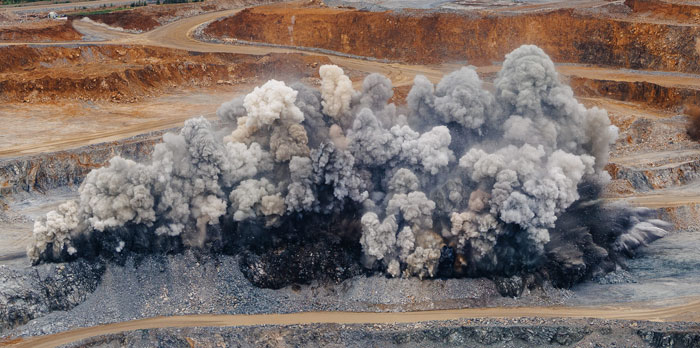
Rock blasting is essential for extracting hard rock and shaping safe excavation profiles in mining and construction. Accurate and consistent loading of explosive emulsions ensures controlled fragmentation, protects personnel, and maximizes productivity. Even minor deviations in pumping can cause delays or reduce product quality. BN pumps with SJA support routine maintenance and pre-operation checks by allowing fast verification of joint integrity, enabling more efficient operations.
Always Inspection Ready
Smart Joint Access is designed for inspection-friendly operations. The large inspection opening in the suction housing provides direct access to both joints, enabling rapid pre-operation checks while maintaining high operational reliability. Technicians can assess joint condition quickly, supporting continuous, reliable operation.
Key Features
- Compact Footprint: Fits truck-mounted mobile units, skid-mounted systems, and factory installations.
- Flexible Drive Options: Compact hydraulic drive or electric drive configurations.
- Hydraulic Efficiency: Low-displacement design reduces oil requirements and supports low total cost of ownership.
- Equal Wall Stator Design: Ensures high-pressure performance in a compact footprint.
- Material Flexibility: Stainless steel or steel housings, chrome-plated rotors, and stators in NBR, EPDM, or FKM.
Operators benefit from shorter inspection cycles, reliable dosing, seamless integration, and fast delivery through framework agreements, helping to maintain uptime in critical rock blasting processes.
Applications – Optimized for Rock Blasting
BN pumps with SJA are designed for mining, tunneling, quarrying, civil works, dam construction, and other sectors requiring precise handling of abrasive or chemical media. They provide robust performance while enabling fast, reliable inspection and maintenance.With SJA, operators can quickly access both joints without disassembly, ensuring emulsions are transferred accurately and consistently. This reduces downtime, preserves product integrity, and supports uniform dosing across multiple bore holes.
With the Smart Joint Access inspection opening, operators can quickly access and assess the condition of both joints without disassembly, enabling immediate verification of pump readiness prior to blast hole loading. This allows operators to confirm that emulsions are transferred accurately and consistently, protecting personnel, minimizing product degradation, and maintaining uniform dosing across multiple bore holes.
The combination of equal wall stator design, compact integration, flexible drives, and progressive cavity pump technology ensures continuous, reliable operation even in space-limited, high-pressure environments.
From Inspection to Operation
A leading explosives provider implemented BN pumps with SJA in open pit and underground operations. By replacing legacy pumps, inspection cycles were significantly shortened, allowing crews to complete pre-operation checks and return mobile units to productive work faster. Direct joint access through SJA enabled immediate verification, consistent emulsion dosing, and reduced downtime caused by joint-related deviations.
“The inspection opening gives immediate confidence that each joint is secure before proceeding to bore holes,” said a site technician. “It allows us to act quickly, keeping blasting schedules on track.”
Framework agreements ensured rapid pump supply and minimal downtime, supporting multi-site operations across continents
Concrete
Digital process control is transforming grinding
Published
3 weeks agoon
February 20, 2026By
admin
Satish Maheshwari, Chief Manufacturing Officer, Shree Cement, delves into how digital intelligence is transforming cement grinding into a predictive, stable, and energy-efficient operation.
Grinding sits at the heart of cement manufacturing, accounting for the largest share of electrical energy consumption. In this interview, Satish Maheshwari, Chief Manufacturing Officer, Shree Cement, explains how advanced grinding technologies, data-driven optimisation and process intelligence are transforming mill performance, reducing power consumption and supporting the industry’s decarbonisation goals.
How has the grinding process evolved in Indian cement plants to meet rising efficiency and sustainability expectations?
Over the past decade, Indian cement plants have seen a clear evolution in grinding technology, moving from conventional open-circuit ball mills to high-efficiency closed-circuit systems, Roller Press–Ball Mill combinations and Vertical Roller Mills (VRMs). This shift has been supported by advances in separator design, improved wear-resistant materials, and the growing use of digital process automation. As a result, grinding units today operate as highly controlled manufacturing systems where real-time data, process intelligence and efficient separation work together to deliver stable and predictable performance.
From a sustainability perspective, these developments directly reduce specific power consumption, improve equipment reliability and lower the carbon footprint per tonne of cement produced.
How critical is grinding optimisation in reducing specific power consumption across ball mills and VRMs?
Grinding is the largest consumer of electrical energy in a cement plant, which makes optimisation one of the most effective levers for improving energy efficiency. In ball mill systems, optimisation through correct media selection, charge design, diaphragm configuration, ventilation management and separator tuning can typically deliver power savings of 5 per cent to 8 per cent. In VRMs, fine-tuning airflow balance, grinding pressure, nozzle ring settings, and circulating load can unlock energy reductions in the range of 8 per cent to 12 per cent. Across both systems, sustained operation under stable conditions is critical. Consistency in mill loading and operating parameters improves quality control, reduces wear, and enables long-term energy efficiency, making stability a key operational KPI.
What challenges arise in maintaining consistent cement quality when using alternative raw materials and blended compositions?
The increased use of alternative raw materials and supplementary cementitious materials (SCM) introduces variability in chemistry, moisture, hardness, and loss on ignition. This variability makes it more challenging to maintain consistent fineness, particle size distribution, throughput and downstream performance parameters such as setting time, strength development and workability.
As clinker substitution levels rise, grinding precision becomes increasingly important. Even small improvements in consistency enable higher SCM utilisation without compromising cement performance.
Addressing these challenges requires stronger feed homogenisation, real-time quality monitoring and dynamic adjustment of grinding parameters so that output quality remains stable despite changing input characteristics.
How is digital process control changing the way grinding performance is optimised?
Digital process control is transforming grinding from an operator-dependent activity into a predictive, model-driven operation. Technologies such as online particle size and residue analysers, AI-based optimisation platforms, digital twins for VRMs and Roller Press systems, and advanced process control solutions are redefining how performance is managed.
At the same time, workforce roles are evolving. Operators are increasingly focused on interpreting data trends through digital dashboards and responding proactively rather than relying on manual interventions. Together, these tools improve mill stability, enable faster response to disturbances, maintain consistent fineness, and reduce specific energy consumption while minimising manual effort.
How do you see grinding technologies supporting the industry’s low-clinker and decarbonisation goals?
Modern grinding technologies are central to the industry’s decarbonisation efforts. They enable higher incorporation of SCMs such as fly ash, slag, and limestone, improve particle fineness and reactivity, and reduce overall power consumption. Efficient grinding makes it possible to maintain consistent cement quality at lower clinker factors. Every improvement in energy intensity and particle engineering directly contributes to lower CO2 emissions.
As India moves toward low-carbon construction, precision grinding will remain a foundational capability for delivering sustainable, high-performance cement aligned with national and global climate objectives.
How much potential does grinding optimisation hold for immediate energy
and cost savings?
The potential for near-term savings is substantial. Without major capital investment, most plants can achieve 5 per cent to 15 per cent power reduction through measures such as improving separator efficiency, optimising ventilation, refining media grading, and fine-tuning operating parameters.
With continued capacity expansion across India, advanced optimisation tools will help ensure that productivity gains are not matched by proportional increases in energy demand. Given current power costs, this translates into direct and measurable financial benefits, making grinding optimisation one of the fastest-payback operational initiatives available to cement manufacturers today.
Concrete
Refractory demands in our kiln have changed
Published
3 weeks agoon
February 20, 2026By
admin
Radha Singh, Senior Manager (P&Q), Shree Digvijay Cement, points out why performance, predictability and life-cycle value now matter more than routine replacement in cement kilns.
As Indian cement plants push for higher throughput, increased alternative fuel usage and tighter shutdown cycles, refractory performance in kilns and pyro-processing systems is under growing pressure. In this interview, Radha Singh, Senior Manager (P&Q), Shree Digvijay Cement, shares how refractory demands have evolved on the ground and how smarter digital monitoring is improving kiln stability, uptime and clinker quality.
How have refractory demands changed in your kiln and pyro-processing line over the last five years?
Over the last five years, refractory demands in our kiln and pyro line have changed. Earlier, the focus was mostly on standard grades and routine shutdown-based replacement. But now, because of higher production loads, more alternative fuels and raw materials (AFR) usage and greater temperature variation, the expectation from refractory has increased.
In our own case, the current kiln refractory has already completed around 1.5 years, which itself shows how much more we now rely on materials that can handle thermal shock, alkali attack and coating fluctuations. We have moved towards more stable, high-performance linings so that we don’t have to enter the kiln frequently for repairs.
Overall, the shift has been from just ‘installation and run’ to selecting refractories that give longer life, better coating behaviour and more predictable performance under tougher operating conditions.
What are the biggest refractory challenges in the preheater, calciner and cooler zones?
• Preheater: Coating instability, chloride/sulphur cycles and brick erosion.
• Calciner: AFR firing, thermal shock and alkali infiltration.
• Cooler: Severe abrasion, red-river formation and mechanical stress on linings.
Overall, the biggest challenge is maintaining lining stability under highly variable operating conditions.
How do you evaluate and select refractory partners for long-term performance?
In real plant conditions, we don’t select a refractory partner just by looking at price. First, we see their past performance in similar kilns and whether their material has actually survived our operating conditions. We also check how strong their technical support is during shutdowns, because installation quality matters as much as the material itself.
Another key point is how quickly they respond during breakdowns or hot spots. A good partner should be available on short notice. We also look at their failure analysis capability, whether they can explain why a lining failed and suggest improvements.
On top of this, we review the life they delivered in the last few campaigns, their supply reliability and their willingness to offer plant-specific custom solutions instead of generic grades. Only a partner who supports us throughout the life cycle, which includes selection, installation, monitoring and post-failure analysis, fits our long-term requirement.
Can you share a recent example where better refractory selection improved uptime or clinker quality?
Recently, we upgraded to a high-abrasion basic brick at the kiln outlet. Earlier we had frequent chipping and coating loss. With the new lining, thermal stability improved and the coating became much more stable. As a result, our shutdown interval increased and clinker quality remained more consistent. It had a direct impact on our uptime.
How is increased AFR use affecting refractory behaviour?
Increased AFR use is definitely putting more stress on the refractory. The biggest issue we see daily is the rise in chlorine, alkalis and volatiles, which directly attack the lining, especially in the calciner and kiln inlet. AFR firing is also not as stable as conventional fuel, so we face frequent temperature fluctuations, which cause more thermal shock and small cracks in the lining.
Another real problem is coating instability. Some days the coating builds too fast, other days it suddenly drops, and both conditions impact refractory life. We also notice more dust circulation and buildup inside the calciner whenever the AFR mix changes, which again increases erosion.
Because of these practical issues, we have started relying more on alkali-resistant, low-porosity and better thermal shock–resistant materials to handle the additional stress coming from AFR.
What role does digital monitoring or thermal profiling play in your refractory strategy?
Digital tools like kiln shell scanners, IR imaging and thermal profiling help us detect weakening areas much earlier. This reduces unplanned shutdowns, helps identify hotspots accurately and allows us to replace only the critical sections. Overall, our maintenance has shifted from reactive to predictive, improving lining life significantly.
How do you balance cost, durability and installation speed during refractory shutdowns?
We focus on three points:
• Material quality that suits our thermal profile and chemistry.
• Installation speed, in fast turnarounds, we prefer monolithic.
• Life-cycle cost—the cheapest material is not the most economical. We look at durability, future downtime and total cost of ownership.
This balance ensures reliable performance without unnecessary expenditure.
What refractory or pyro-processing innovations could transform Indian cement operations?
Some promising developments include:
• High-performance, low-porosity and nano-bonded refractories
• Precast modular linings to drastically reduce shutdown time
• AI-driven kiln thermal analytics
• Advanced coating management solutions
• More AFR-compatible refractory mixes
These innovations can significantly improve kiln stability, efficiency and maintenance planning across the industry.
NDMC Rolls Out Intensive Sanitation Drive Across Lutyens Delhi
UltraTech Appoints Jayant Dua As MD-Designate For 2027
Merlin Prime Spaces Acquires 13,185 Sq M Land Parcel In Pune
Adani Cement and Naredco Partner to Promote Sustainable Construction
Operational Excellence Redefined!
NDMC Rolls Out Intensive Sanitation Drive Across Lutyens Delhi
UltraTech Appoints Jayant Dua As MD-Designate For 2027
Merlin Prime Spaces Acquires 13,185 Sq M Land Parcel In Pune
Adani Cement and Naredco Partner to Promote Sustainable Construction