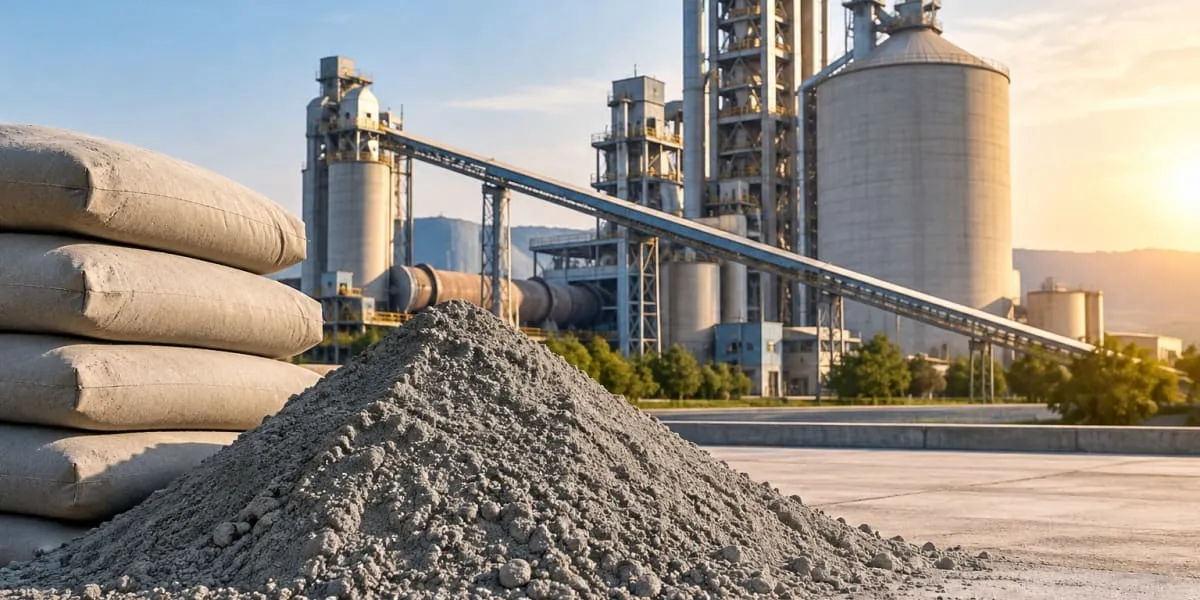
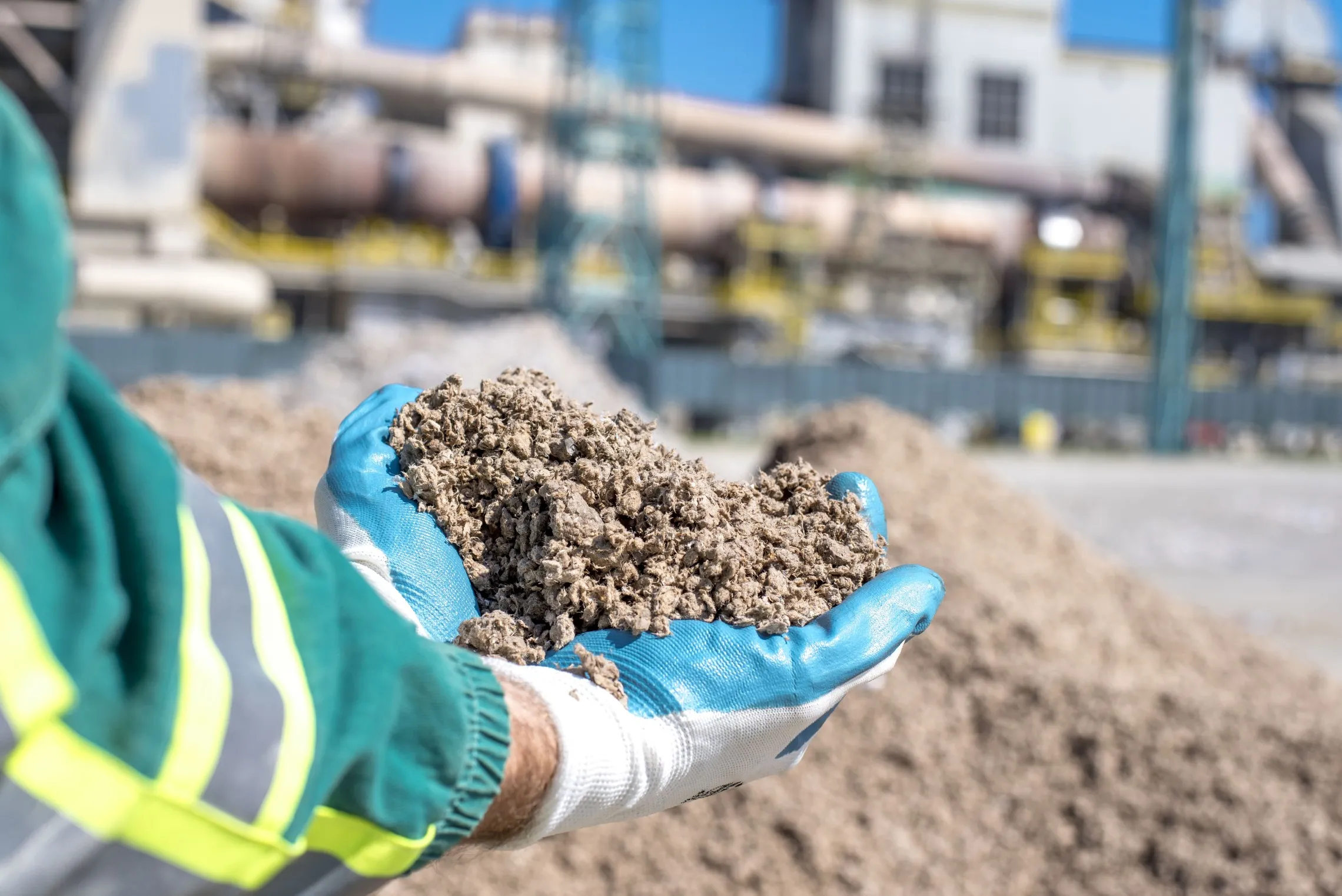
Max Tschurtschenthaler, Global Business Unit Manager, Cement, Process Industries, ABB and Joonas Rauramo, CEO, Coolbrook, explore the potential of an innovative technology venture set to be deployed in India to replace traditional fossil fuels with renewable electricity in cement production, ultimately reducing carbon emissions and satisfying customer demands.
As the second largest cement producer in the world, the demands on India from the domestic and global markets see a constant surge as cities and countries grow and population rises. Meanwhile, the opportunities for high productivity and sustainable manufacturing are also there for forward-thinking operators.
From India’s infrastructure focus to a higher allocation for affordable rural housing under the Pradhan Mantri Awas Yojana – Gramin (PMAY-G), multiple factors are pushing demand for cement in India. Rating agency Crisil has estimated this demand will lead to an incremental sales volume increase of 30-35 million tonnes (Mt) in the 2023-24, taking the total volume to roughly 425 Mt per year. Globally, the cement industry contributes to CO2 emissions of 7–8 per cent, yet its outputs are essential to modern built environments. It is well-known that reducing carbon emissions in cement production is a challenge, as the kiln’s high temperatures and chemical reactions during limestone calcination make it a complex process to decarbonise.
Between 2015 and 2021, the International Energy Agency (IEA) saw the CO2 intensity of cement production witness an annual increase of about 1.5 per cent. To achieve the net zero emissions globally by 2050 target set by IEA, this intensity needs to be reduced by 3 per cent each year until 2030.
Unfortunately, there are huge costs associated with decarbonising the cement industry. According to the Council on Energy, Environment and Water (CEEW), given that the cumulative CO2 emissions from manufacturing 337 Mt of cement were estimated to be around 218 Mt in 2018-19, India will need approximately $334 billion in capital expenses and another $3 billion in annual operating costs
to decarbonise India’s existing cement production. As a result, the IEA has called for dedicated efforts to reduce carbon emissions in the cement industry, which could include the reduction of clinker-to-cement ratio (including through greater uptake of blended cement) as well as adopting pathbreaking technologies such as electric kilns, carbon capture, utilisation and storage (CCUS) and clinkers made from alternative raw materials.
RotoDynamic Heater technology
However, there is an upside to these challenges. On the one hand, at the recent COP28, major Indian cement companies reiterated their commitment to reducing emissions in their journey to becoming net zero by relying on CCUS. The Global Cement and Concrete Association (GCCA) also suggested that CCUS is expected to contribute around 36 per cent of net emission reduction in the cement industry by 2050 under the global roadmap to net zero. Similarly, the Indian cement sector is expected to follow suit.
On the other hand, technological innovation makes decarbonisation in the cement industry possible and helps to accelerate development. Specifically, ABB and Coolbrook, a technology and engineering company, have partnered to advance technology to help decarbonise the chemicals, cement and steel industries. These industries are responsible for 70 per cent, or 6000 Mt annually, of industrial CO2 emissions. The cooperation aims to develop innovative solutions to reduce CO2 emissions in these industries, which will help combat climate change.
The said innovation involves Coolbrook’s proprietary RotoDynamic technology, which replaces the burning of fossil fuels in high-temperature industry processes with renewable electricity as the energy source, with ABB’s motors, power electronics and process automation for optimised energy efficiency and operational processes. By developing and scaling up RotoDynamic technology for use in emission-heavy industries such as cement manufacturing, Coolbrook and ABB aim to cut carbon emissions annually by up to 2400 Mt.
Reaching higher temperatures through electrification
The cement production process involves the chemical reaction of limestone with multiple components to produce clinker, which is responsible for around 60 per cent of CO2 emissions. The remaining 40 per cent of emissions are caused during the activation of the chemical process by burning fossil fuels. Heavy industry currently relies on these polluting fuels since traditional electric heaters cannot generate the high temperatures required for the process, which can reach up to 1700°C.
The RotoDynamic Heater (RDH), developed by Coolbrook, can achieve temperatures of up to 1700°C, powered by electricity and without using fossil fuels. This makes it an attractive alternative to fossil-fired furnaces and kilns for producing cement, iron, steel, and chemicals. Unlike traditional electric heating solutions, the RDH is a turbo machine that can internally increase the gas temperature, significantly increasing the temperature. The gas is accelerated to supersonic velocity and then decelerated very quickly in a diffuser, converting electric energy first into kinetic and finally into thermal energy. The acceleration/deceleration process can be performed multiple times, resulting in higher temperatures than existing electric heaters.
Unlike traditional electric heating technologies, the RDH is compact in size and can be retrofitted easily in any brownfield industrial process facility, including cement plants. The RDH can be used in multiple applications, such as pre-heating feedstocks and heat provision to the pre-calciner, where most fuel is used. The electrification unit aims to replace the burner in the main kiln, where temperatures exceed 1700°C.
Energy efficiency and emissions
Coolbrook’s RotoDynamic Heater unit has an exceptional efficiency of up to 95 per cnet in converting electricity to heat, resulting in negligible losses from excess heat generation. The absence of combustion eliminates the need to burn fuel, thereby minimising sulphur oxide, nitrogen oxide, and particle emissions produced during manufacturing.
Reducing the carbon footprint of hard-to-abate sectors like cement requires investment in specific technologies and integrating clean energy into emissions-heavy processes. Coolbrook’s RDH solution generates heat powered by renewable energy sources, reducing dependence on imported fuels and bypassing supply chain and logistics issues, thereby reducing operational expenses.
KPMG has estimated that Coolbrook’s technologies could reduce CO2 emissions by over 2000 Mt annually, equivalent to about 7 per cent of human-made CO2 emissions or approximately 30 per cent of industrial CO2 emissions. The RDH project aims to replace the burning of industrial fossil fuels globally. Testing of the technology began at Coolbrook’s pilot facility in the Netherlands in December 2022 and during 2023 completed the first test phases and demonstrated the technology’s capabilities for industrial use in high-temperature process heating. The technology is now moving forward to industrial scale projects at customer sites. The tests exceeded the level of 1,000°C, which is already several hundred degrees above the temperature range of conventional resistive heaters.
Performance management
While Coolbrook’s RotoDynamic technology offers the potential for decarbonising cement industry processes, ABB brings a range of expertise to such partner relationships; automation, electrification, digital solutions, motors, drives. As the turbine technologies generate more heat the faster they run, they require particular controls over speed. ABB can enable stable temperatures throughout the cement production process with variable speed drives and motors that can be adapted to the size and application of each RDH unit, as well as a control system that can be seamlessly integrated into the existing cement plant’s system and provide advanced data analytics.
Preventing unscheduled downtime is also critical to maximising asset life and optimising production and quality control. ABB’s motor and drive solutions are connected to monitoring equipment that continually assesses performance and alerts the operator to potential failures, facilitating predictive maintenance.
Making progress on the journey
According to a cement sector-specific report by the Delhi-based think tank Centre for Science and Environment, CCUS is being recommended as one of the pathways for reducing emissions in the Indian cement sector. This is why India is already interested in the ABB/Coolbrook RDH solution, even as we see a push to develop domestic wind, solar and hydropower capacity to reduce reliance on fossil fuels and promote energy independence.
This strategy focuses on reducing CO2 emissions in the long run instead of prioritising short-term cost savings. Customers are willing to pay more upfront for electrification solutions that meet environmental targets and the growing demand for CO2-free products. Hence, ABB and Coolbrook’s pre-engineered and pre-fabricated electrification technologies can potentially revolutionise the decarbonisation of heavy industries.
In conclusion, these technologies replace polluting fossil fuels with renewable electricity, leading to cleaner, safer, and more efficient production of essential materials like concrete. Manufacturers can use these technologies to meet emissions targets, protect their license to operate, and meet the growing demand for green cement.