Disposal of waste slag is a major concern and is perceived as an environmental hazard across the steel industry. Nagesh Veeturi, Executive Director – Civil, and Sumanta Sahu, DGM – Quality, KEC International, investigate the possibility of utilising slag as a fine aggregate and its effect on the strength and workability parameters of concrete.
Concrete is one of the major construction materials in civil construction. It is a composite material with cement, aggregate, sand, admixture and water as ingredients. River sand and Manufactured Sand are mostly used as fine aggregate in concrete. River sand is formed by the natural weathering of rocks over many years and is preferred to be used as fine aggregate. Manufactured Sand is produced by crushing hard rocks into smaller sizes using a crusher followed by washing to use in concrete. The growth of infrastructure and building projects demand the use of huge quantities of sand in concrete.
The mining of sand from riverbeds is posing a serious threat to the environment causing the erosion of riverbeds and banks, triggering landslides, inducing loss of vegetation on the riverbanks, lowering the underground water table, etc. Hence, sand mining from riverbeds and rock is being restricted or banned by the authorities nowadays. To nullify the above concerns, concrete mix trials were conducted in our quality laboratory by using LD slag and blast furnace slag as fine aggregate.
LD Slag
LD slag is a byproduct of the steel industry. It is produced from impurities during the steel-making process. LD Slag consists of calcium, magnesium, iron, silicon and aluminium oxides minerals. During the production of steel, the slag is separated from steel in the furnace, and steel slag fine aggregate is formed after quenching the molten slag with water. There are many grades of steel produced and properties of steel slag vary depending on raw materials used for steel production. LD slag is typically granulated and used as a fine aggregate. Normally it is heavier than sand and its specific gravity is observed to be 3.2 to 3.6 with water absorption around 3 per cent.
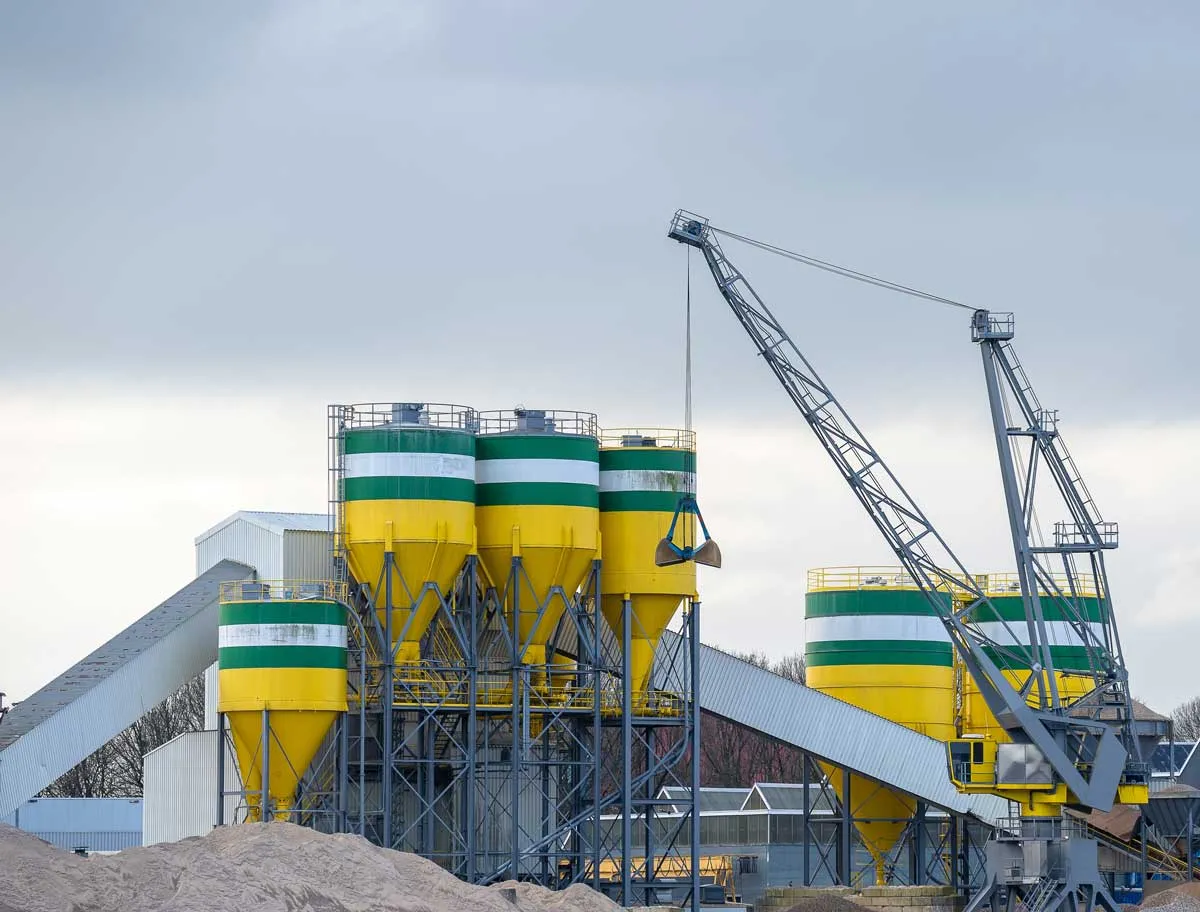
Production process of LD Slag.
Due to its high density, segregation is observed as a fine aggregate in concrete. Materials can be used as partial replacement of fine aggregate.
Blast furnace slag
Blast furnace slag is a byproduct produced during the iron making process in blast furnaces. During the smelting process, iron ores are fed into the furnace at high temperature. The process leads to the production of molten iron and waste materials. Slag, which is a waste material, is separated and quenched with water. This rapid cooling process solidifies the slag into granular particles. Blast furnace slag is observed to be lighter than sand, specific gravity of sand is found to be 2.01.
Concrete mixes with slag as fine aggregate
Concrete mix trials were conducted with LD slag, BF slag as fine aggregate. Due to the high density of LD slag, segregation was noticed on concrete mixes. The same segregation is observed in concrete mix by using BF slag due to its lightweight. Further concrete mix trials were conducted by mixing LD slag and BF slag with different proportions – this is done to study the initial properties of concrete such as cohesiveness and workability retention.
The concrete mix is observed to be cohesive
with good workability retention by using LD slag and BF slag as fine aggregate with the same
proportions. Other properties of concrete such as setting, and strength were observed complying to specification requirements.
Benefits of using LD slag and BF slag as fine aggregate
Durability: Calcium oxide and silicon oxide are prime chemicals used in the composition of LD slag and BF slag, and both possess pozzolanic properties. calcium oxide and silicon oxide react with calcium hydroxide produced during hydration of cement and increases strength and permeability properties
of concrete.
Sustainable approach: LD slag and BF slag are the by-products from the iron industry which makes it an industrial waste product. Using materials as fine aggregate helps to conserve natural resources. Storage of this material is a major concern in industry. Utilisation of LD slag and BF slag as fine aggregate minimise storage area, air pollution.
Reduction in carbon footprint and heat of hydration: The use of LD slag and BF slag as a fine aggregate leads to reduction in cement content in concrete mixes. Cement is a major source of rise in temperature in concrete mixes that leads to increase in carbon emission during its production process. Reduction in cement content minimises the heat of hydration and prevents thermal cracks in concrete.
Enhance workability in concrete mixes: Workability in concrete is increased due to the even surface of LD slag and BF slag. This makes the concrete easier to place during the construction process.
Cost optimisation: LD slag and BF slag are industrial waste products and are cheaper than manufactured sand and river sand. Also due to the pozzolanic properties of slag, cement content in concrete can be minimised. Overall concrete cost is reduced with improved performance.
Due to the vast growth of construction sectors, the demand for concrete has increased as a fine aggregate. Thus, it is essential to find suitable alternatives to sand such as slag materials.
It is observed that the combined use of LD slag and BF slag as fine aggregates leads to cohesive mix with desired workability and strength. The PC base chemical admixture was added to reduce the water content and maintain workability of the mix. Finally, it is concluded that slag can be used as an alternative of sand in concrete. As both types of slags are by-products from the steel industry, their long-term performance is vital, and further studies in this direction are still in progress.
ABOUT THE AUTHOR:
Nagesh Veeturi, Executive Director – Civil, KEC International is a seasoned professional having entrepreneurial and leadership skills with key focus on strategy and business transformation.
Sumata Sahu, DGM – Quality, KEC International has 32 years of rich experience in the construction industry mainly as QA/QC and project management professional.