Connect with us

Concrete

Water is always a priority for us

Published

on

Shares

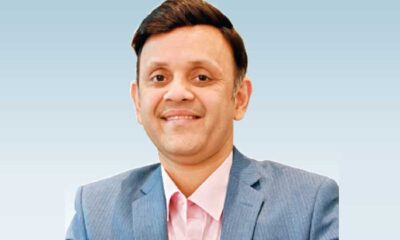
Pearl Tiwari, CEO, Ambuja Foundation, talks about the various initiatives for water conservation, availability of drinking water and promotion of appropriate technology for water use efficiency.

What is the philosophy behind the Ambuja Foundation?
Ambuja Foundation was set up because the company believed Corporate Social Responsibility (CSR) to be an integral component for a sustainable business, and not an obligatory responsibility.
With investment in water, agriculture, skills, women, health and education, the Foundation enabled ‘livelihoods’ as a pathway to unleashing that potential. Partnering with like-minded corporations, governments and other organisations, it works collaboratively with communities to solve pressing community problems – empowering local people to be the catalysts and drivers of change. Over the last three decades, it has seen a transformation in the remote geographies of over 4,200 villages of 13 states of India.  

Tell us about your water programme.
Ambuja Foundation has worked in water resource management for over 30 years, across 12 states. Based on local needs and for industries to survive, its conditioned interventions are designed considering topography, weather patterns and groundwater levels – from the deserts of Rajasthan to the mountains of Himachal Pradesh and Uttarakhand, from the interiors of Maharashtra to the coastline of Gujarat. Working in the space of water resource management has led us to create additional water storage capacity of 63.13 million cubic metres for rural and remote communities, and help villages flourish once more, thanks to abundant water.
Over this period, we have learnt first-hand how water issues in India vary greatly from region to region. The semi-arid Rajasthan, for instance, has always had to adapt to limited water supplies. In mountainous states such as Himachal Pradesh and Uttarakhand the water holding capacity of the soil is low and susceptible to excessive soil erosion. Moreover, the undulating topography and steep slopes lead to high water runoffs and landslides. The coastal regions grapple with salinity creeping inland rendering ground water unfit for agriculture and domestic use. In other regions such as Maharashtra, the water crisis is mostly due to neglect in the efficiency of water usage. India’s water challenges, therefore, require deep knowledge of local conditions and the development of hyper local solutions.
Having experienced a wide variety of water challenges first hand, the valuable insights and experience gained over time, now guide our approach to water resource management. Working hand in hand with local communities and government we’ve been able to build drought resilient villages – empowering the community as well as industries to secure their water future.
Water needs both technical and social solutions and hence our work focuses on both the demand and supply side interventions across three core areas:
Water for livelihood:
Using a watershed management approach to managing water resources for quantity and quality, we marry traditional practices followed in the region with technology to enhance the effectiveness of localised water harvesting and storage solutions. Employing a variety of water storage solutions as appropriate to the local conditions such as check dams, khadins, nadis and subsurface dykes in Rajasthan to revive old mining pits and linking them to rivers and canals, has ensured all year round water supply for agriculture and the communities.
Drinking water security: Drinking water solutions too need to be adapted to local conditions, such as rooftop rainwater harvesting structures in areas of abundant rainfall and local water scarcity, handpumps where natural springs are found, to water filtration systems where groundwater is unsuitable for drinking. We educate local communities on the benefits of investing in these solutions, provide technical support for the installation, and financial subsidies where necessary. In collaboration with the local government, we mobilise the community to work together to address the supply of drinking water.
Water use efficiency: Communities need to be educated on the management and efficient use of water. Agriculture consumes almost 80 per cent of available water due to the widely prevalent flood irrigation techniques. Our interventions focus on the promotion of micro irrigation techniques, crop selection and the creation of local water user associations. These associations, consisting entirely of local farmers, are empowered to manage their local water sources and distribution.

How does this impact water positivity? 
Industries require a significant amount of water – both during processing and also later in construction, and therefore water sustainability has always been a priority for them. Ambuja Cements Ltd (ACL) adopted a holistic approach and extended water management efforts ‘beyond the fence’ to neighbouring communities, quickly learning that water was a tipping point that could make or break a community as well as ensure sustainability for a company. Since inception, ACL believed that for a community’s development, conservation of natural resources is the topmost priority, of which water remains a critical resource.
From the beginning, the Founder of Ambuja Cements, Narotam Sekhsaria, believed that as the company prospered, communities around company plants should prosper, too. By ensuring the company gave back more water than it took, it not only saw livelihoods and therefore communities flourish, but the loyalty it built among the people was something deep and strong. This all came as a surprise to many, who thought a cement factory in the region would bring nothing but doom and gloom to agriculture and the communities that rely upon it.
Ambuja Foundation, takes care of ‘beyond the fence’ water initiatives on behalf of Ambuja Cements Ltd, and due to our tried and tested approach and impacts achieved, our work has spread beyond Ambuja territories. These tested efforts have powered Ambuja in gaining the water positive status eight times. Our Water Resource Management Programme has become so replicable that we have scaled our water work to many other corporate across the country, acting as a CSR implementing body for others.

What is the role of your parent organisation in contribution to water positivity? 
When a company is ‘net water positive’ it means they are creating more water than they are actually using in their business. Whilst it is not a legal compliance, businesses need water to operate and cannot function without it – it makes good business sense to invest in a variety of ways to become water positive. Ambuja Cements Limited is proud to be already ahead of the curve. It is the only cement producer that has been recognised for its leadership in water security by the United Nations Global Compact Network India and recognised ‘A list’ in Global Water Stewardship by the global environment non-profit CDP.
There are various strategies they harness to minimise their water footprint when it comes to being water positive:
Promoting conservation and efficiency:
Ambuja Cements efforts have been instrumental in bringing positive changes in people’s lives and biodiversity across regions of their operations, especially in water starved areas. Via Ambuja Foundation, sustainable withdrawal, water efficiency, responsible water harvesting and groundwater recharge is promoted to ensure continuous supply and reduce the number of people affected by water scarcity. All water programmes are also aligned with available government schemes and mobilise individuals to ultimately have these benefits utilised by the community.
Prioritisation of water: Water is always a priority for us. Stakeholder engagement is the key to implementation and thus community engagement plans and advisory panels were created out of which water resource management resulted in the high priority area.
Investment in infrastructure: ‘Inside of the fence,’ Ambuja Cements employs many strategies to recycle, reuse and reduce its use of water in its operations. Several water efficiency measures have been put in place, like the installation of Waste Heat Recovery, roller press, dip tube in lower stage cyclones, raw water storage tank (10000 KL), and air-cooled air compressors and dryers. Ambuja Cement plants recycle water – in Rabriyawas Rajasthan for example, the plant recycles about 70,000 cubic metres of water (14 per cent of water withdrawal) which helps the plant to reduce its overall water withdrawal. Similarly, on site in Rabriyawas there is a revival of water harvesting, which saw the connection of water-logged areas to main drainage lines. There is also a sewage treatment plant installed and all the waste water discharged from the plant and colonies are directed to this treatment plant, which in turn is used for horticulture purposes in the plant areas. 
Sustainable development plan: Although ACL uses a dry process of cement production, which uses minimal water, water conservation and its sustainability remains on a high pedestal in the company’s overall sustainable development plan with aspirational targets for 2030.
Investing in human resources: Ambuja also invests in human resources in order to utilise technical as well as social skills to support the Community Water Programme. Apart from having the technical capability, balancing community needs and requirements is also a social skill that one needs a forte in. Ambuja’s Technical Engineers play a major role in providing guidance during setup of water infrastructures in the communities and also during maintenance and audits.
Frameworks and assessments: ACL has also developed a water sustainability risk assessment framework in association with IUCN to account company risks as well as the basin risks covering various risk aspects and identifying cement units with water stress. This assessment also uses the WBCSD Global Water Tool. Two plants are in water scarce regions but overall, ACL complies with all regulatory requirements on water.

What are the major challenges in achieving water positivity? 
Water resource development remains one of the priority areas at Ambuja. The programme continues to focus on water conservation, drinking water and promotion of appropriate technology for water use efficiency. It is implemented across locations surrounding the company’s manufacturing plants to address the water-related needs, which is a primary concern of the residing communities.
However, with all these come a number of challenges:
High investment cost: Building and reviving water structures comes with a high investment cost. It is capital intensive and puts a strain on the organisation. Thus, Ambuja Foundation always seeks collaborative efforts from the community, the local panchayat or government related schemes to partner together on certain projects – pooling resources and making them go further.
Community conflicts: Time is heavily invested in convincing communities on the change they need to bring in their area. There are disagreements and fears on land being taken away and sometimes it is taken for granted that Ambuja will simply cover costs.
Climate change: Nature is unpredictable and with it comes its consequences. The team faces challenges when strategic and infrastructural plans are created, which are affected due to unpredictable weather.
Long-term impact: Change and impactful results in rural India take time, and sometimes long-term commitments from key stakeholders is a challenge to secure.
Scientific monitoring impacts: We have created great impact in our communities in the last 30 years. However, we find it a challenge to find relevant organisations to conduct monitoring and impact assessment due to a lack of technical skills and expertise available to review performance or standardise procedures.

How do you measure your impact?
Ambuja Foundation follows an evidence based practice while planning and implementing development initiatives. Ambuja Foundation has an in-house research and monitoring team that objectively and systematically oversees the implementation, progress and impact of programmes at Ambuja Foundation. We conduct project assessments including mid-course evaluation and impact evaluation. We work alongside various consultants to evaluate some of our programmes by conducting baseline studies, Social Return On Investment (SROI) studies and other external impact studies and reports. Ambuja Cements has also quantified its impacts both positive and negative by using the True Value Framework developed by the global accounting firm KPMG. This measure of the company’s interaction with the environment and society helps in making strategic business decisions.
In 2015, Ambuja Foundation commissioned an independent agency to conduct an SROI analysis to identify the long-term impacts and benefits of its investments in water resource management in both Kodinar, Gujarat, and Rabriyawas, Rajasthan. Since then we have conducted many SROI studies to measure the impact of our work. SROI tells the story of how change is created in a community by measuring social, environmental and economic outcomes – and uses monetary values to represent them. By revealing social value, it highlights the areas of significant impact, and helps in understanding the ‘real’ impact and ripple effect of changes made in the area of water. The guiding principles of an SROI analysis are to involve stakeholders, understand what changes, value things that matter, do not over-claim, be transparent and verify the results.


  • Kanika Mathur

Concrete

Akhoya Gets New 2.2 Km Road Link Under SASCI

Two cement concrete roads opened at Rs 29.1 million (mn) cost

Published

on

By

Shares


Two cement concrete pavement roads covering a total stretch of 2.2 km in Akhoya village were inaugurated on 27th June 2026 by MLA Nuklutoshi Longkumer, who attended as the special guest. The project comprises the one km L Pangersowa Road and the one point two km Longchara Junction to RC Chiten Jamir Memorial Government High School road. A formal programme followed the inauguration at the school auditorium.

A technical report was presented by Er Waloniba of the Urban Engineering Wing-III, Kohima, which stated the project was sanctioned in March 2026 under the Special Assistance to States for Capital Investment scheme for 2025-26 at a sanctioned cost of Rs 29.1 million (mn). The work order was issued to M/s Ensign Construction on thirtieth April 2026 with a stipulated completion period of 12 months. Work commenced on fourth May 2026 and was completed on sixth June 2026, with the contractor and team finishing the tasks in around two months. The project included a single-lane cement concrete pavement with side drains, two slab culverts and breast walls at required locations.

Longkumer acknowledged the Chief Minister, the advisor for urban development, contractors and other stakeholders for the allocation and support, and he commended the contractor for early completion. He noted that cooperation from landowners and the community had been important in resolving land related issues that can otherwise delay developmental works. He emphasised that planned developmental activities carried out with collective effort would enable more projects to be implemented successfully.

The headmaster of RC Chiten Jamir Memorial Government High School, I Chubasenba Longkumer, outlined the school background, noting it was established in 1962, was earlier known as Government High School Changtongya and was renamed in 2014. Local representatives said the improved approach roads would ease access for students, staff, patients and the general public and fulfil a long standing aspiration of residents. A dedicatory prayer was offered by the pastor and the programme concluded with a ribbon cutting attended by village council and town council representatives.

Continue Reading

Concrete

Green Construction Through Cement Innovation

Published

on

By

Shares

Indian Cement Review (ICR) and Fuller Technologies brought industry, policy and technology leaders together to discuss how cement innovation can drive green construction at scale, writes Rakesh Rao.

India is building at a pace few countries can match. Highways, airports, housing, logistics parks, industrial corridors and urban infrastructure are reshaping the country’s economic geography. But beneath this growth story lies a difficult question: can India continue to build at scale without locking itself into a high-carbon future?

That question formed the core of an online panel discussion titled “Driving Green Construction Through Cement Innovation”, organised by Indian Cement Review (ICR) in association with Fuller Technologies as the Presenting Partner on June 25, 2026. The webinar brought together experts from cement technology, R&D, global industry platforms, building performance policy and international development cooperation to examine how low-carbon cement and material innovation can accelerate India’s green construction transition.

The discussion came at a crucial time. India has committed to achieving net-zero emissions by 2070 and reducing the carbon intensity of its economy by 45 per cent by 2030. At the same time, the country’s construction sector is expanding rapidly, driven by urbanisation, infrastructure development, housing demand and industrial growth. Cement, as one of the most widely used construction materials, sits at the heart of this transition. It is indispensable to development, but also central to the challenge of reducing embodied carbon in buildings and infrastructure.

Moderated by Nitika Krishan, Senior Urban Infrastructure and Sustainable Policy Consultant, the panel featured:

  • Kiranmai Sanagavarapu, Director, Low Carbon Solutions, Fuller Technologies;
  • Dr Hemantkumar Aiyer, VP and Head R&D, Nuvoco Vistas Corp Ltd;
  • Devika Wattal, Innovation Lead, Global Cement and Concrete Association (GCCA);
  • Dr Sunita Purushottam, MD, GBPN India (Global Buildings Performance Network); and
  • Vaibhav Rathi, Senior Technical Advisor, GIZ (the German Agency for International Cooperation)

Setting the tone for the discussion, Nitika Krishan underlined the scale of the challenge before the sector. “The question before us is no longer whether we build, but how we build sustainably,” she said. She pointed out that construction accounts for nearly 40 per cent of global energy-related carbon emissions when both operational and embodied carbon are considered. Cement production, she added, remains one of the hardest industrial processes to decarbonise.

For India, this is not merely an environmental issue. It is a development issue, a competitiveness issue and increasingly, a market issue. As one of the world’s largest cement producers and among the fastest-growing construction markets, India’s material choices will influence the carbon trajectory of its built environment for decades. As Krishan observed, sustainability solutions in economies such as India must not remain limited to laboratory success. They must be scalable, commercially viable and practical at national level.

The innovation gap: From technology to market

Experts believe that there is a need to bridge the innovation gaps for making decarbonisation in cement and concrete scalable. Devika Wattal of GCCA, explained, “The starting point must be the core cement manufacturing process itself. The first and foremost is the heart of our process, the heart of cement manufacturing. How do we reduce clinker? That is always a topic where industry is working very intrinsically.”

Clinker reduction remains one of the most important pathways for lowering emissions in cement. Since clinker production is energy-intensive and chemically emits carbon dioxide, reducing the clinker factor through supplementary cementitious materials (SCMs), blended cements and new chemistries can have a significant impact. Wattal also noted that carbon capture, utilisation and storage (CCUS) will have a role, though it may not be the first lever for all markets.

However, she stressed that innovation cannot stop at technology development. A solution that works in the lab must also be adaptable to industry, scalable in production and acceptable in construction practice. “It is important for that innovation to be adaptable, to be scalable, and so that it can be executed in real time,” she said.

Wattal also called for stronger enabling systems around innovation. These include performance-based standards, product-level embodied carbon databases and clearer frameworks for evaluating green materials. Without these, low-carbon cement products may struggle to compete with conventional materials in procurement and design.

R&D must balance carbon, cost and performance

Bringing in the R&D perspective into the discussion, Dr Hemantkumar Aiyer of Nuvoco Vistas emphasised that low-carbon cement development cannot be treated as a single-variable exercise. Cement must perform in real construction conditions. It must deliver strength, durability, consistency and cost competitiveness, while also reducing carbon.

“The root of understanding and balancing all these aspects lies in materials, and knowing the materials,” he said.

According to Dr Aiyer, R&D teams must understand the variability of raw materials such as fly ash, slag and clinker. Different sources produce different material behaviours. This makes mix optimisation, material characterisation and processing-property relationships critical. When performance is affected, cement manufacturers must understand how strength enhancers, admixtures and other performance chemicals interact with the material system.

He also linked material science with process efficiency. Clinkerisation takes place at extremely high temperatures, around 1,400 to 1,450 degrees Celsius. Any improvement in raw mix design, process control or energy optimisation can, therefore, help reduce emissions and cost. Dr Aiyer pointed to artificial intelligence-based optimisation, Cement 4.0 tools and advanced software as important enablers for real-time process and material control.

“The more you understand the materials, the more you can control it,” he said.

LC3: The promise is proven, the sequencing is not

Limestone calcined clay cement, commonly referred to as LC3, has attracted global attention because it can reduce clinker content significantly by using calcined clay and limestone while maintaining performance in many applications. Kiranmai Sanagavarapu of Fuller Technologies said the technology itself has already moved beyond proof of concept. Fuller Technologies has worked with calcined clay technology for nearly two decades and has seen plants running in France and Ghana. These plants, she said, are meeting local and national specifications, while the economics are beginning to make sense.

“The calciner is performing, the economics is stacking up, it is making business sense to produce,” she said.

But if the technology is viable, why has adoption not scaled faster? For Sanagavarapu, the answer lies in project sequencing. Too often, clay characterisation happens after equipment is specified. This, she warned, is a backward approach because calciner design depends on clay mineralogy, kaolinite content, iron levels, reactivity, moisture and other variables.

“If you don’t know what your deposit looks like before you commit for the equipment, you are, in a way, going blind into designing,” she said.

She also identified permitting and plant integration as major bottlenecks. Environmental clearances, mining permissions and local regulatory approvals must begin early. Similarly, calcined clay must be integrated into existing grinding, blending and logistics systems from the design stage, not treated as an afterthought during commissioning.

India already has IS 18189:2023 standard for LC3, but Sanagavarapu pointed out that the standard is not yet visible enough in procurement documents. “The gap between what is technically being permitted and what the procurement is asking is the single biggest bottleneck,” she said.

In her view, successful scale-up depends on getting the sequence right: clay characterisation first, permitting in parallel, standards aligned with construction, and integration built into plant design.

India’s LC3 journey: Progress, but demand remains thin

Providing details of India’s LC3 commercialisation experience, Vaibhav Rathi of GIZ noted that JK Cement carried out the first commercial production of LC3 at its Rajasthan plant, followed by JK Lakshmi Cement three months later. These initiatives were supported by the International Climate Initiative of the Government of Germany, with IIT Delhi contributing deep institutional knowledge on LC3 research and BIS certification.

Rathi said India’s early experience has produced clear lessons. One of the biggest was the need to build capacity among regulators. While BIS certification existed, State Pollution Control Boards were unfamiliar with the technology and unsure about the approval pathway.

“The capacity building is not just needed amongst the producer and the users of the cement, but also the regulators who are working with this technology for the first time,” he said.

He also highlighted the need for better information on China clay deposits. Since China clay is currently classified as a minor mineral, centralised data on availability, quality and location is limited. If cement manufacturers are to adopt LC3 at scale, stronger mineral intelligence will be important.

The third issue is demand. LC3 has already been used in projects such as Palava City in Mumbai and Noida International Airport, but these remain limited examples. “It is in a chicken and egg situation,” Rathi said. “Cement companies are saying we need more demand, and users are saying there is not enough cement available.”

Public procurement, he suggested, could help break this cycle. If agencies such as CPWD and other public bodies begin testing, accepting and specifying LC3, it could create the market confidence needed for cement companies to invest in production and storage.

Building codes must catch up with innovation

Dr Sunita Purushottam of GBPN India argued that material choices will determine built environment emissions over the long term, but India’s current policy signals remain fragmented. Although LC3 has received BIS recognition, she pointed out that building codes, municipal bylaws, schedules of rates and sustainability codes do not yet provide uniform guidance on low-carbon cement.

“The current cement regulations are largely prescriptive and favouring traditional materials,” she said. This limits the ability of alternative materials to compete on performance, durability and emissions.

Dr Purushottam also raised the issue of taxation. Cement, including LC3, currently falls under the same GST bracket as conventional cement. A differentiated tax structure, she argued, could help accelerate market adoption. “In order for the market to demand LC3, that differentiation in the GST could go a long way,” she said.

She noted that green building certifications such as IGBC and GRIHA are already creating demand for low-carbon materials by assigning points for embodied carbon and sustainable material use. However, she said large-scale adoption will require regulatory mandates, particularly through building codes and state-level notifications.

She also cautioned that low-carbon cement alone does not solve the entire building performance problem. A material may reduce embodied carbon, but the operational carbon of a building depends on thermal performance, design, insulation and energy use. “The energy part has two elements,” she said. “One is the embodied carbon of the material itself, and the other is the operational carbon.”

Collaboration is the bridge between invention and impact

Wattal said GCCA sees innovation as a strategic priority and works through platforms that connect industry with academia and start-ups. “There is no way we will decarbonise our sector without innovation,” she said.

However, she stressed that research must be connected to actual industry challenges. Innovations developed in isolation may fail when they encounter real-world barriers such as raw material variability, plant integration, cost, standards and finance. Start-ups, too, need industry mentorship and scale-up pathways.

Wattal also flagged the importance of finance. Even strong technologies may struggle to attract investment if there is no common understanding of bankability. “We have always put projects into, is this a bankable project? But the definition of a bankable project has never been defined,” she said.

For India, she saw strong potential in its academic and start-up ecosystem, but said the challenge lies in alignment and prioritisation. The country has the research base, industrial capacity and market size. What it now needs is a coordinated route from innovation to deployment.

There is a practical concern for cement manufacturers: how can existing plants be adapted for lower emissions without compromising reliability or commercial viability?

Kiranmai Sanagavarapu addressed, “The reliability risk in calcined clay retrofit is definitely real, but it is almost always self-inflicted. The risk arises when a new process is added to an existing circuit without properly redesigning grinding and blending configurations.”

Existing cement plants, she explained, can take two broad routes. The first is external sourcing of calcined clay combined with mill optimisation. This requires lower capital investment and can potentially move in 12 to 18 months if other conditions are in place. It may reduce emissions by around 20 to 30 per cent. The second route is integrated calcination on site, which requires higher capital expenditure and longer lead times, but provides greater control over quality, supply and emissions reduction potential.

For Sanagavarapu, the principle is simple: low-carbon retrofits must be designed with intent. “Design it with an intent properly from the start. Start in the market conditions where the economics are already working,” she said.

Circularity: The overlooked advantage

According to Vaibhav Rathi, fly ash and slag are already well established in cement and construction (C&D), but construction and demolition waste remains underutilised. “C&D waste is a growing business opportunity which not many have taken up,” he said. India’s continuous construction and demolition activity creates huge volumes of waste, much of which contributes to air pollution, land degradation and material inefficiency. With the right processing and standards, this waste can be converted into useful construction products.

Rathi also pointed out that LC3 has a circular economy dimension that is often overlooked. It can use low-grade kaolin-rich clay left behind after high-grade clay is extracted for other applications. “LC3 is not only a low-carbon solution, but also a circular economy solution,” he said.

At the same time, he cautioned that LC3 in India is not yet cheap because it has not reached scale. Site-specific techno-commercial feasibility studies, supported jointly by development agencies and industry, could help companies assess whether LC3 production makes technical and financial sense at a given location.

Dr Purushottam added that India must address both low-carbon cement and construction waste together. “Both low-carbon cement and C&D waste go hand in hand. India does not have an option but to work on both,” she said.

Dr Aiyer called for policy shifts from both government and industry, including preferential purchasing of sustainable materials, minimum supplementary cementitious material requirements in public and public-private projects, and faster regulatory implementation. “If we can fast-track the regulatory standards and their implementation on the ground, that is the way to go,” he said.

From green ambition to green construction

Cement innovation is no longer only about chemistry. It is about systems. Low-carbon cement will scale only when technology, standards, procurement, finance, regulation, education and construction practice move together.

LC3 and other low-carbon technologies have shown promise. India has early commercial examples, strong research capability and growing market interest. But mainstream adoption will depend on whether demand can be created, regulators can be capacitated, standards can be embedded in procurement, and manufacturers can see a clear business case.

For a country building at India’s scale, the opportunity is enormous. Cement will continue to be central to infrastructure and urban development. The challenge now is to ensure that the cement used in India’s growth story carries a lower carbon burden.

  • Rakesh Rao

Participate in Cement Expo 2026 and discover how next-gen infrastructure can be built with innovations in cement.

Continue Reading

Concrete

JK Cement Declared Preferred Bidder For Gilund Limestone Block

Shares Edge Higher As Company Wins Rajasthan Block

Published

on

By

Shares


JK Cement gained after being declared preferred bidder for the Gilund Limestone Block in Chittorgarh, Rajasthan, a lease area of 370.96 hectares. The firm saw its shares trade at Rs. 5550.05, up by 28.45 points or 0.52 per cent from the previous close of Rs. 5521.60 on the BSE. The scrip opened at Rs. 5569.15 and touched a high of Rs. 5625.00 and a low of Rs. 5531.00.

The stock recorded turnover of 1742 shares on the counter and the BSE group A stock with face value Rs. 10 has a 52 week high of Rs. 7565.00 on 20-Aug-2025 and a 52 week low of Rs. 4670.05 on 12-Jun-2026. Last one week high and low stood at Rs. 5625.00 and Rs. 5329.00 respectively. The promoters holding in the company stood at 45.66 per cent, while institutions and non-institutions held 40.61 per cent and 13.73 per cent respectively.

The e-auction conducted by the Government of Rajasthan resulted in the company being declared preferred bidder for the mining lease, and the allocation will enable the company to plan phased development of the deposit, subject to regulatory approvals. The Gilund block spans 370.96 hectares and its allocation is intended to support raw material security for the company’s cement operations in the region. The designation follows the government auction process and will allow the company to plan development and integration of the deposit into its supply chain.

The current market capitalisation stands at Rs. 430.38 billion (bn), reflecting market response to the mining news and prevailing valuation levels for the sector. Investors and analysts will watch for formal allotment and related disclosures that can clarify timelines, capital expenditure and expected production profiles. The report is intended for informational purposes and does not constitute investment advice, and market participants are advised to consult advisers before making decisions.

Continue Reading

Video Thumbnail

    SIGN-UP FOR OUR GENERAL NEWSLETTER


    Trending News

    SUBSCRIBE TO THE NEWSLETTER


    Don't miss out on valuable insights and opportunities to connect with like minded professionals.


      This will close in 0 seconds