Connect with us

Concrete

Increasing Use of Supplementary Cementitious Materials to Achieve Carbon Reduction Targets

Published

on

Shares

Jens Mose and John Terembula, Product Line Management, FLSmidth A/S, discuss why Vertical Roller Mills (VRM) are the best grinding solution for SCMs, in this second part of a three-part series looking at how Supplementary Cementitious Materials (SCM) can help cement manufacturers reduce carbon emissions.

Current examples of SCM adoption
India is a successful adopter of SCMs, with an average clinker factor of 0.71 in 2017. This is largely thanks to the introduction of standards for composite cements in 2015, as well as the widespread availability of fly ash from thermal power plants. Portland Pozzolanic Cement (PPC) had approximately 65 per cent market share in 2017, and the clinker factor of PPC was also improved from 0.68 in 2010 to 0.65 in 2017. Portland Slag Cement (PSC) makes up about 10 per cent of the market and also reduced clinker content in that time from 0.55 to 0.40. Meanwhile, ACC has achieved a clinker factor as low as 44 per cent through the use of fly ash from power plants and slag from steel production.
In the sub-continental India region, FLSmidth has supplied grinding systems with all types of mills. The most common grinding systems installed over the last 10 years are VRM or HRP with ball mill in semi-finish arrangement. One example is the Guinness World Record holder, the largest VRM for cement grinding at Shah Cement in Bangladesh. That mill regularly produces both PPC and PSC Cements.
Throughout Asia, a wide range of blended cements are made encompassing many different additive materials including trass, which is very hard-to-grind overburden from the quarry. Stable/reliable operation has been proven in the OK Mill even with this difficult material.
In other parts of the world, the uptake of SCMs varies. For example, in Brazil the nationwide average clinker-to-cement ratio is below 70 per cent , with blast furnace slag from steel mills the most widely used SCM . The country is targeting reductions in clinker content to 59 per cent in 2030 and 52 per cent in 2050 and will need to increase the use of limestone filler and calcined clays to meet these targets.
In Brazil, the VRM has been the standard for new cement grinding for the last 10+ years, with OK Mills accounting for 28 per cent of the country’s total cement production in 2015.
Meanwhile, in the US, the use of SCMs by cement manufacturers is on the rise , as more cement plants adopt ASTM C595 Standard (American Society for Testing and Materials), which allows up to 15 per cent limestone within Type 1L or Portland Limestone Cement (PLC). PLC is currently seeing a dramatic upward trend, thanks to widespread acceptance by end users like the Department of Transportation and the Federal Aviation Administration.

Which mills are best for SCMs?
The grinding operation is critical to the success of SCMs, to achieve the necessary particle size distribution. Some materials can be ground together with the rest of your cement mix (so-called ‘intergrinding’), while others may benefit from a separate grinding operation. Likewise, water demand (to increase workability) can present another sustainability concern.
In terms of the best mill type, the answer is almost always VRM. Over the last few decades, the industry has been gradually moving towards the use of VRM for both raw and cement grinding, due largely to the reduced energy consumption compared to ball mills: a saving of between 30 and 50 per cent. This transition will prove crucial as the adoption of SCMs increases, from a practical as well as economic and environmental perspective. VRM provides much greater flexibility to grind several different materials, to switch between different cement mixes, and to adjust to changing material characteristics – all while protecting quality.
For example, FLSmidth has a customer using the OK Mill to grind 100 per cent slag with raw feed containing more than 20 per cent moisture to produce moisture levels less than 1 per cent. This is only possible thanks to the drying capacity of the VRM. This level of flexibility is imperative to SCM adoption.
Ultimately, product quality is defined by cement strength development and setting times. To achieve the best result, you need optimal particle size distribution and dehydration of the gypsum within the cement. And for that, the precise operational controls of the VRM are a clear advantage over other mill types, enabling you to optimise the system’s temperature profile, mill airflow, separator speed and grinding pressure for optimum efficiency and productivity.

1- https://docs.wbcsd.org/2018/11/WBCSD_CSI_India_Review.pdf
2- Weston, J. ‘Brazil gives OK to VRM’, International Cement Review, 20 June 2016
3-https://www.mckinsey.com/~/media/mckinsey/dotcom/client_service/infrastructure/pdfs/pathways_low_carbon_economy_brazil.ashx
4- http://snic.org.br/assets/pdf/roadmap/roadmap-tecnologico-do-cimento-brasil.pdf
5- https://pubs.usgs.gov/of/2005/1152/2005-1152.pdf p.10

You can find part one in the August issue of Indian Cement Review and part 3 in the upcoming October issue.

(Communication by the management of the company)

Concrete

Ultra Concrete Age

Prof. A. S. Khanna (Retd., IIT Bombay) on how Ultra-high performance concrete (UHPC) improves strength, durability and lifecycle performance.

Published

on

By

Shares


The need of present time is stronger buildings, industrial or common utility buildings, such as Malls, Railway stations, hospitals, offices, bridges etc. For this, there is need of long durable, tough and stable concrete, which could stand under normal and seismic conditions. Tough railway bridges are required for bullet trains to pass without any damage. Railway tunnels, sea-links, coastal roads, bridges and multistorey buildings, are the need of the hour. The question comes, is the normal cement called OPC is sufficient to take care of such requirements or better combination of cements and sand mixtures is required?
Introduction
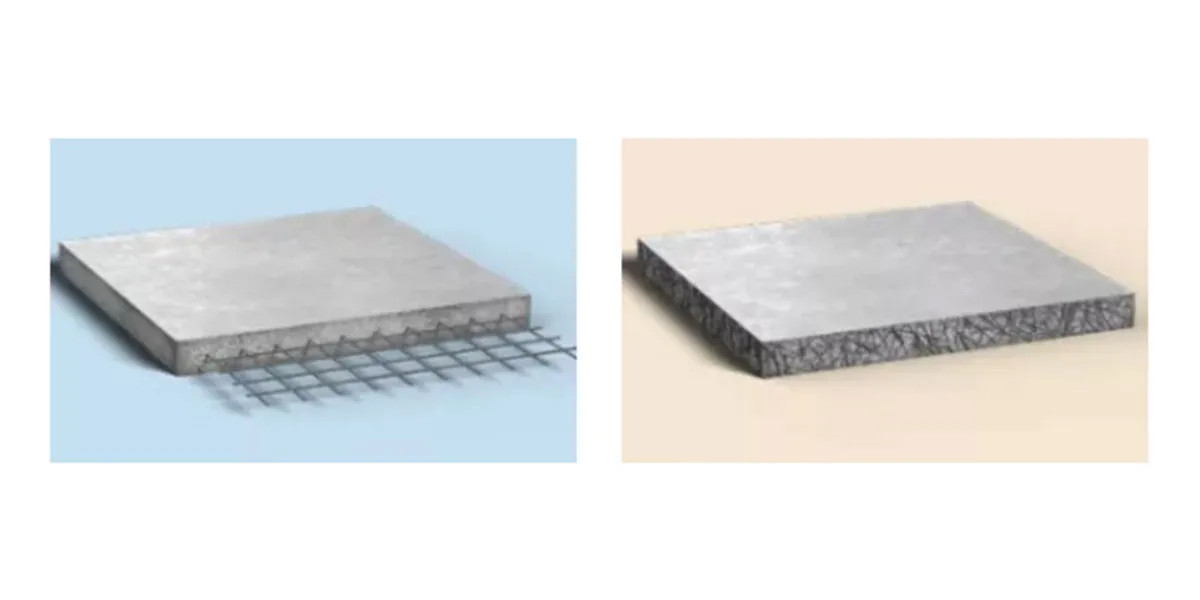
A good stable building structure can be made with a good quality of cement+sand+water system. Its quality can be enhanced by keeping the density of admixture higher (varies from 30 in normal buildings to bridges etc to 80). Further enhancement in the properties of various cements admixtures is made by adding several additives which give additional strength, waterproofing, flexibility etc. These are called construction chemicals…

Continue Reading

Concrete

NCB Signs MoU With Cement Manufacturer To Boost Construction Skills

Partnership to deliver nationwide training and certification

Published

on

By

Shares


The National Council for Cement and Building Materials (NCB) has signed a memorandum of understanding with a leading cement manufacturer to strengthen skill development and capacity building in the construction sector. The agreement was formalised at NCB premises in Ballabgarh and was signed by the Director General of NCB, Dr L. P. Singh, and the head of technical services at UltraTech Cement Limited, Er Rahul Goel. The collaboration seeks to bring institutional resources and industry expertise into a structured national training effort.

The partnership will deliver structured training and certification programmes across the country aimed at enhancing the capabilities of civil engineers, ready?mix concrete (RMC) professionals, contractors, construction workers and masons. Programme curricula will cover material quality testing, concrete mix proportioning, durability assessment and sustainable construction practices to support improved construction outcomes. Emphasis is to be placed on standardised assessment and certification to raise practice levels across diverse construction roles.

Practical learning elements will include workshops, site demonstrations, technical seminars and exposure visits to plants and RMC facilities to strengthen applied skills and on?site decision making. The Director General indicated confidence that a large number of professionals and workers would be trained over the next three to five years under the initiative. The partnership is designed to complement flagship government schemes such as the Skill India Mission and to align training outputs with national infrastructure priorities.

By combining the council’s technical mandate with industry experience, the initiative aims to develop a more skilled and quality?conscious workforce capable of meeting rising demand in infrastructure and housing. NCB will continue to coordinate programme delivery and quality assurance while industry partners provide practical exposure and technical inputs. The collaboration is expected to support long?term capacity building and more sustainable construction practices nationwide.

Continue Reading

Concrete

JSW Cement Commissions Nagaur Plant, Enters North India

New Rajasthan unit boosts capacity to 24.1 MTPA and expands reach

Published

on

By

Shares


JSW Cement has strengthened its national presence by commencing production at its greenfield integrated cement plant in Nagaur, Rajasthan, marking its entry into the north Indian market.
With this commissioning, the company’s installed grinding capacity has increased to 24.1 MTPA, while total clinker capacity, including its joint venture operations, stands at 9.74 MTPA.
The Nagaur facility comprises a 3.30 MTPA clinkerisation unit and a 2.50 MTPA cement grinding unit, with an additional 1.00 MTPA grinding capacity currently under development. Strategically located, the plant is positioned to serve high-growth markets across Rajasthan, Haryana, Punjab and the NCR.
The project has been funded through a mix of equity and long-term debt, with Rs 800 crore allocated from IPO proceeds towards part-financing the unit.
Parth Jindal, Managing Director, JSW Cement, stated that the commissioning marks a key milestone in the company’s ambition to become a pan-India player. He added that the project was completed within 21 months and positions the company to achieve its targeted capacity of 41.85 MTPA by FY29.
Nilesh Narwekar, CEO, JSW Cement, highlighted that the expansion aligns with the company’s strategy to tap into rapidly growing northern markets driven by infrastructure development. He noted that the company remains focused on delivering high-quality, eco-friendly cement solutions while progressing towards its long-term capacity goal of 60 MTPA.
The Nagaur plant has been designed with sustainability features, including co-processing of alternative fuels and a 7 km overland belt conveyor for limestone transport to reduce road emissions. The facility will also incorporate a 16 MW Waste Heat Recovery System to improve energy efficiency and lower its carbon footprint.
JSW Cement, part of the JSW Group, operates across the building materials value chain and currently has eight plants across India, along with a clinker unit in the UAE through its joint venture.

Continue Reading

Video Thumbnail
â–

    SIGN-UP FOR OUR GENERAL NEWSLETTER


    Trending News

    SUBSCRIBE TO THE NEWSLETTER


    Don't miss out on valuable insights and opportunities to connect with like minded professionals.


      This will close in 0 seconds