Connect with us

Concrete

I foresee a good future for the cement market

Published

on

Shares

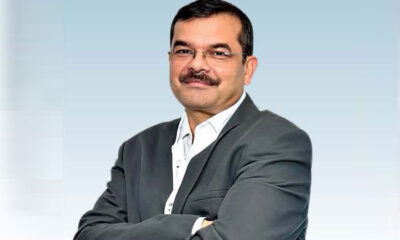
Rajesh Pathak, Managing Director, Schenck Process Solutions India, talks about how kiln performance can be improved with the use of advanced technology.

Tell us about the MULTICOR® processing system by Schenck Process.
MULTICOR® is a weighing and feeding equipment. The highlight of this system is its high accuracy and consistency. This system helps to improve and better the kiln performance in cement industries. It is a German technology, which is being used for various cement plants, and fits best with the demand of accuracy that is a prerequisite for the cement manufacturers. Our system helps better the
kiln process.

How does MULTICOR® help cement plants to achieve high accuracy in feeding?
In the past, obtaining precise results using mechanical equipment was a challenge. Today MULTICOR® uses a unique measuring system based upon Coriolis Principle, wherein a constant speed motor is used to drive the MULTICOR®. Any variation in feed rate results in change in motor torque, which is measured by loadcell fitted with specially designed mechanism. This input is given to the controller DISOCONT TERSUS, which controls the pre-feeder to nullify the variation in MULTICOR® output thereby resulting in constant feed rate. Whenever it comes to continuous metering, controlling and feeding of significant material amounts, we offer MULTICOR® mass flow meters and feeders to our customers. For example: The heating of the raw meal to make cement clinker takes place in rotary kilns at a temperature of around 1450° C. The raw meal is fed into the kiln by MULTICOR® mass flow feed devices, which exploit the Coriolis effect, works as per the pull principle. Further the MULTICOR® mass flow meters are also used for coal dosing into the kiln and calciners.

Are your systems tailor made to customer requirements?
Since our core value is to meet customer expectations, we meet and understand customer requirements and make alterations in the system for it to fit suitably in their process. There are two different types of MULTICOR® systems for Pyro; (a) For Coal-Schenck offers combination of MULTICELL® (pre-feeder) + MULTICOR® K (Measuring Unit) (b) For Raw Meal- Schenck offers combination of Dosing Valve (pre-feeder) + MULTICOR® S (Measuring Unit).

What impact does your system create on the cost efficiency for cement manufacturers?
• Assists in meeting CO2 reduction targets.
• Better ROI.
• Retrofitting of solutions into existing plants.
• Co-operation with a global solution provider, who understands the market and production
needs.
• Enabling cement producers to reduce their investment levels in capital equipment and operating costs, utilising the MULTICOR® systems.
It is simple to install due to its in-line implementation and compact construction. Maintenance and repair costs are both very low.

How does your equipment incorporate eco-friendly measures?
Our equipment operates in a manner that uses power optimally. Believing in the principle that power saved is power generated, we contribute towards a greener future for cement.

How do you envision your future with the Indian cement industry?
I hope that in the coming years, the market will keep looking for advanced technology roadmap. With improvement in the infrastructure development, our equipment and system/solutions will be an integral part of the growth journey of cement industry. I foresee a good future for the cement market.
Schenck Process has more than 200 installations of MULTICOR® systems in India and the numbers are growing with high degree of customer satisfaction. The repeat orders from the major cement OEMs are a vote of confidence for Schenck Process for high quality, performance and best services.

-Kanika Mathur

Concrete

PROMECON introduces infrared-based tertiary air measurement system for cement kilns

Published

on

By

Shares

The new solution promisescontinuous, real-time tertiary air flow measurement in cement plant operations.

PROMECON GmbH has launched the McON IR Compact, an infrared-based measuring system designed to deliver continuous, real-time tertiary air flow measurement in cement plant operations. The system addresses the longstanding process control challenge of accurate tertiary air monitoring under extreme kiln conditions. It uses patented infrared time-of-flight measurement technology that operates without calibration or maintenance intervention.

Precise tertiary air measurement is a critical requirement for stable rotary kiln operation. The McON IR Compact is engineered to function reliably at temperatures up to 1,200°C and in the presence of abrasive clinker dust. Its vector-based digital measurement architecture ensures that readings remain unaffected by swirl, dust deposits or drift. Due to these conditions conventional measurement systems in pyroprocess environments are often compromised.

The system is fully non-intrusive and requires no K-factors, recalibration or periodic readjustment, enabling years of uninterrupted operation. This design directly supports plant availability and reduces the maintenance overhead typically associated with process instrumentation in high-temperature zones.

PROMECON has deployed the McON IR Compact at multiple cement facilities, including Warta Cement in Poland. Plant operators report that the system has aided in identifying blockages, optimising purging cycles for gas burners, and supplying accurate flow data for AI-based process optimisation programmes. The practical outcomes include more stable kiln operation, improved process control, and earlier detection of process disturbances.

On the energy side, real-time tertiary air data enables reduction in induced draft fan load and helps flatten process oscillations across the pyroprocess. This translates to lower fuel and energy consumption, fewer unplanned shutdowns, and a measurable reduction in NOx peaks. This directly reflects on the downstream cost implications for plants operating SCR or SNCR systems for emissions compliance.

Continue Reading

Concrete

Adani Group To Set Up Cement Factory In Madhya Pradesh

Chief Minister Mohan Yadav inaugurates plant in Guna

Published

on

By

Shares


Adani Group (Adani) will set up a cement factory in Madhya Pradesh, the chief minister of the state announced after an inauguration ceremony in Guna. The chief minister, Mohan Yadav, described the occasion as a historic day for the state and said the project will strengthen industrial capacity. The event was presented as a milestone in efforts to broaden manufacturing and attract large-scale investment. Officials said the facility will add to regional production capability and support related industries.

State officials outlined that the plant will enhance supply chains for construction and infrastructure projects across the region. The company will bring technical expertise and logistical resources to the site, with government agencies coordinating approvals and land allocation. Local suppliers and service providers will benefit from increased demand, and training initiatives will be developed to build workforce readiness. Officials indicated that the project complements broader plans to modernise industrial clusters in the state.

The state administration said it has facilitated clearances and infrastructure support to accelerate implementation. Local officials have coordinated with the company to ensure connectivity and utilities are in place ahead of commissioning. The chief minister emphasised that collaboration between private investors and the government aims to create sustainable economic growth. Community outreach programmes will address local concerns and establish grievance mechanisms as construction proceeds.

Officials said the inauguration in Guna marks a new phase in the state industrial story and will serve as a reference for future investments. Administrators noted that close monitoring and periodic reviews will guide timely execution and adherence to environmental and safety norms. The government affirmed its commitment to facilitating responsible industrial expansion while ensuring benefits reach local communities. Stakeholders will continue discussions on supply chain integration and long term maintenance arrangements.

Continue Reading

Concrete

Railways Boost Cement Movement by 170 Per Cent and Eye Fly Ash

New container wagons cut costs and speed turnaround

Published

on

By

Shares


Indian Railways has recorded a 170 per cent rise in cement movement in the last four months after reforms launched in November to promote rail based bulk cement logistics. The Union Railway Minister, Ashwini Vaishnaw, reviewed the container sector reforms and their implementation and described the shift as improving plant to market efficiency. The reforms introduced customised bulk cement tank containers and a bulk cement terminal policy to support multimodal handling and door to door solutions.

The new system has simplified loading and unloading by enabling mechanised operations and by reducing package losses compared with bagged cement transport. Since cement can move directly from manufacturing centres to consumption centres in standardised tank containers compatible with Ready Mix Concrete machines, two stages of handling have been eliminated and material loss has been reduced. The standard shape of the containers facilitates faster turnaround and lowers logistics costs for suppliers and builders.

The improved freight turnaround is helping to lower the delivered cost of cement, which can ease pressure on housing costs for the poor and middle class and support affordable construction. The reform is said to be environment friendly as dust generation during material transfer has fallen and fuel consumption and emissions have reduced due to modal shift from road to rail. The Make in India tank containers are designed for seamless movement between train and trailer and to enable efficient door to door movement while cutting congestion on roads.

Building on the cement reforms, officials were urged to tap the fly ash transportation market to convert industrial waste into national wealth. The minister noted that nearly 300 million metric tonnes (mn t) of fly ash is produced in the country while only about 13 million t is transported by rail and asked officials to substantially increase Railways share to serve brick kilns, cement industries and construction sites. Wider utilisation of fly ash should reduce pollution, promote recycling and lower construction material costs while strengthening sustainable freight movement across infrastructure sectors.

Continue Reading

Video Thumbnail

    SIGN-UP FOR OUR GENERAL NEWSLETTER


    Trending News

    SUBSCRIBE TO THE NEWSLETTER


    Don't miss out on valuable insights and opportunities to connect with like minded professionals.


      This will close in 0 seconds