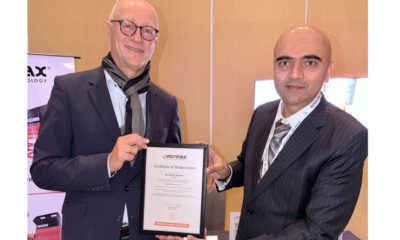
Sudhahar P, Executive Director (Lubes), Bharat Petroleum Corporation, speaks about the role of lubricants in maintaining the efficient operation of various machinery and equipment, and the innovations in this segment.
Different lubricants have different specific functions in a cement plan.
Explain this with reference to the lubricants that you manufacture.
Cement manufacturing is an equipment-intensive industry. Lubrication of equipment in the cement industry poses some unique challenges with the kind of environment the machinery operates and the plant location. The integrated cement plants had a complete off-highway fleet to cater their limestone mining operation as well as the heavy-duty plant machinery required for cement manufacturing. The working conditions and the machineries at mining and plant operations are unique and require a very high quality of lubricant to achieve 24×7 operation. MAK lubricants portfolio includes tailor-made lubricants for cement industry such as industrial gear oils, hydraulic oils, compressor oils, engine oils and greases.
What role do lubricants by your organisation play in the functionality of the cement industry?
Lubricants are essential for maintaining efficient operation of various machinery and equipment involved in the cement production process. It plays a crucial role in reducing friction, heat and wear in machinery and equipment, thereby enhancing their efficiency, reliability and lifespan.
By using high-quality MAK Lubricants for the cement industry and implementing proper lubrication practices, cement plants can not only optimise their operational performance but also increase equipment reliability, improve energy efficiency, and reduce total cost of ownership.
How do you ensure high quality of lubricants that are made specifically for the cement sector?
MAK lubricants always strive to ensure the highest quality of lubricants supplied to our customers by investing R&D, implementing quality control measures, and complying with quality management system standards.
- R&D: We invest in extensive Research and Development to formulate high quality lubricants specifically designed for the cement industry
- after analysing the operating conditions, equipment requirements and challenges faced in cement plants.
- Quality control: Rigorous quality control measures are implemented throughout the production process including receipt of raw materials, blending, filling, etc. Quality control process includes using advanced laboratory testing equipment and techniques to analyse the raw materials, monitor the manufacturing process, and verify the finished product quality. We have dedicated quality control teams to ensure adherence to strict quality standards of lubricants.
- Compliance with standards: We as a major lubricant manufacturer in the industry, adhere to recognised industry standards and certifications. These standards (ISO 9001/ 14001/45001/50001) ensure that the lubricants meet specific performance criteria and rigorous testing procedures.
Tell us about the key areas where your products can improve the performance and efficiency of cement industry equipment.
Critical equipment like kiln, vertical rolling oil, ball mill, crushers and roller press operate continuously under challenging conditions. Gear boxes in these equipment are subjected to extreme loading conditions and may cause micro pitting, premature wear problems and consumes a lot of energy. MAK Lubricants offer energy-efficient gear oils with anti-micro pitting resistance, reducing energy consumption and extending the equipment life respectively.
Heavy loads, high pressures, and temperatures in the hydraulic system of the grinding mill causes increased stress on hydraulic oil and thereby reduces its service life. Our energy efficient long life hydraulic oil not only has a potential to save energy but also provide longer oil life along with improved reliability of equipment.
In the limestone quarry section, continuous and reliable operation of Heavy Earth Moving Machinery (HEMM) is very much required to meet the demands of the production plant. MAK Lubricants offer total lubrication solutions for these machinery, which includes long life engine oil, energy efficient hydraulic oil, axle and transmission oil with proven field performance credentials.
What environmental factors influence the performance of lubricants? How do you address concerns arising from it?
Mining and mineral processing equipment in the cement industry are often subjected to extreme working conditions. High operating temperatures, extreme heavy/shock loads, continuous operation, cement dust, and seasonal variations in temperatures pose tough operating conditions in cement production.
First of all, seasonal variation (high heat >45oC/ extreme cold <0oC) and high humidity levels primarily affect the lubricant storage stability. Higher operating temperatures increase the rate of oil oxidation, which can lead to deposit formation and faster degradation of oil. Similarly, higher humidity levels cause moisture ingression into the product, accelerating the oxidation process, reducing the anti-wear performance and depleting overall additive performance.
Our MAK Lubricants are formulated using best in class Group II+ base oils produced at LOBS plant, Mumbai Refinery. With higher saturate content and negligible aromatic and sulphur content in our base oils, these provide exceptionally high oxidation and thermal stability. The selected advance additive technology in combination with the Group ll+ base oil ensures that our lubricants provide optimum performance under adverse operating conditions present in cement industry.
How does your organisation work with cement clients to customise lubrication solutions?
MAK Lubricants team carries out lubrication surveys at various cements to understand the specific lubrication requirements of all process equipment, current lubrication practices, condition monitoring, storage handling, etc. Technical team interacts with the user section to understand their challenges / requirements associated with lubricants. Based on the inputs received from the cement plants, our team provides a comprehensive lubrication survey report with right lubricant grade recommendation, grade rationalisation, improve current lubrication practices, identify critical equipment for regular condition monitoring and offer tailor-made lubricants to suit customer requirements and improve reliability.
How do you ensure compliance with environmental regulations?
Environmental compliance encompasses a wide range of regulations, and standards enacted by governments and other regulatory bodies to safeguard the environment even while businesses continue to manufacture and sell products to several markets.
All our MAK Lubricants are produced at our blending plants compliant with ISO 9001 / 14001 / 45001 /50001 standards along with necessary statutory pollution control board requirements.
As we understand, many cement plants today are bound by sustainability targets set by the government. Significant progress has been made in this direction by many cement plants, by implementing usage of our energy efficient lubricants, long life lubricants, environment friendly biodegradable lubricants, etc.
How do you prioritise customer service and support for your cement clients?
We believe that ‘satisfied customers become the best referral sources’. Customer service to us is providing timely, responsive, highest level of technical support to meet the customer expectations. We have a strong network of technical services teams who prioritise prompt response to customer enquiries, concerns and service requests. We provide customised lubrication solutions, trouble shootings, guidance, and recommendations to reduce unscheduled downtime and costly additional maintenance.
We also provide training programmes, workshops, seminars, knowledge sharing sessions to enhance the understanding of the importance of proper lubrication, right lubrication techniques and best usage practices.
With our condition monitoring solutions, we offer detailed analysis reports of in-service oil which not only provides condition of oil but also keeps track of equipment health. It offers early detection of equipment failure and better planning of preventive maintenance.
We offer unique and reliable testing solutions through ‘Mobile Lab,’ first-of-its-kind in the industry with onsite testing of lubricants at customer premises and release of test reports on the same day itself. This initiative is very well received by many customers, as it reduces the overall lubricant sample testing time and enables them to take faster decisions preventing catastrophic equipment failures.
Tell us about any recent developments or innovations in lubricants specifically designed for the cement industry.
We work closely with many cement plants and equipment OEMs to develop innovative specialty lubricants for crushers, ball mills, rotary kilns, vertical mills, and roller presses. These highly application-specific solutions help to effectively protect the equipment components from wear, reduce maintenance cost and prolong equipment life.
MAK Lubricants has developed energy efficient hydraulic oils / industrial gear oils, biodegradable hydraulic oils, long drain engine oils specifically for the cement industry.
Synthetic lubricants have gained popularity in the cement industry due to their ability to withstand extreme operating conditions. We have developed high-performance synthetic gear oils and compressor oils, which offer improved thermal stability, oxidation resistance, and reduced sludge formation. These lubricants can enhance equipment performance, extend oil change intervals and reduce maintenance costs. Improved equipment efficiency, a by-product of energy efficient lubricants, results in increased machine output, lowering operating temperatures and reduced energy usage. Our energy efficient hydraulic oil lubricants reduce the negative impact of energy consumption on the environment, improving the fuel economy, productivity, while at the same time reducing the energy costs thus contributing towards sustainable development.
With growing environmental concerns, there is an increasing focus on environmentally friendly lubricants for the cement industry. We offer lubricants formulated with biodegradable base oils and additives, reducing their impact on the environment in case of accidental leakage or spillage. They comply with environmental regulations while still offering effective lubrication performance.