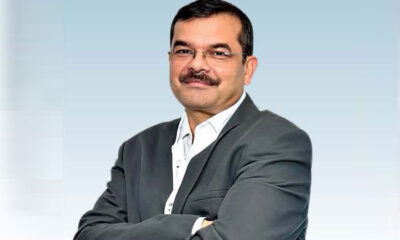
Umashankar Choudhary, Plant Unit Head, Muddapur, JK Cement, sheds light on the various aspects of using alternative fuels and raw materials at a cement plant, from sourcing the right materials to maintaining safety parameters.
What types of alternative fuels and raw materials (AFR) does your company use in cement production, and in what proportion?
Our company uses almost all kinds of plastic wastes, non-hazardous and hazardous waste and some amount of biomass. The process of using AFR in the kiln started full-fledged at JK Cement in April 2018 after commissioning of a dedicated AFR feeding system. We initially focused on using plastic waste, shredded RDF. Slowly and gradually we increased our capacity, manpower, machinery and then started using hazardous solid AFR. For the processing of hazardous waste, we needed impregnation material like biomass viz rice husk, saw dust, wood chips etc. So, we started utilising them in smaller proportions. And with the experience so far, now we are consuming around 20 per cent to 25 per cent of hazardous solid waste, 40 per cent 50 per cent MSW/RDF waste, and 20 per cent to 25 per cent non-hazardous
solid wastes.
What factors do you consider when selecting alternative fuels and raw materials for use in cement production?
We started our journey way back in 2015-16 with a starter kit system where the AFR was just begun to be used in our group. Generally we considered using biomass with less moisture like rice husk, saw dust, ground nut husk etc. These biomasses are easy to handle and feed. They need less infrastructure for feeding. But with the growing aspirations and increase in the fuel costs we established a full-fledged AFR feeding system. Hence, the volume and type of the AFR’s used varied from numbers of 3-4 to more than 20 different types of wastes (industrial, MSW/RDF/ MLP’s etc.).
There are many factors to consider before selecting the AFR for use in cement production. But the major ones are calorific value, moisture, ash, chloride and sulphur, additionally compatibility test a flash point analysis for the liquid waste streams from the quality point of view.
How do you ensure the quality and safety of alternative fuels and raw materials used in cement production?
Safety and quality form the basis of AFR usage across the cement plants. Same is the case in our plant, too. First and foremost, we use only the alternative fuels that are authorised by CPCB/SPCB, the basis for the authorisation are the coprocessing trials taken across different cement kilns in India. The purpose of the trials was to ensure that the waste co-processed safely in terms of safety, quality, environmental norms etc. Even for this waste we do have our process trials and we have got a full-fledged AFR lab at our plant, which confirms the detailed analysis of waste used. The analysis is done prior to taking the waste first time and also regular monitoring of the quality of the AFR is done on every consignment basis. Dedicated laboratory and skilled manpower are engaged for testing the quality of AFR fed, and received and the one that is stored.
The safety at AFR is the most important factor to be considered while handling AFR. There is a big risk of fire with the small amount of AFR that we handle. Hence, we have got a full-fledged automatic fire detection and suppression system for the AFR storage area, AFR feeding areas and the AFR shredding systems. There is round the clock monitoring of the storage yard through CCTV cameras. Special kinds of PPEs such as canister masks, goggles, nitrile hand gloves and full body suits are given to the workers engaged in AFR handling.
What is your company’s current policy regarding the use of alternative fuels and raw materials in cement production?
JK Cement is working towards a very ambitious journey in co-processing of AFR. We have invested in the AFR journey to a much greater extent compared to most of the cement companies in India. We are targeting for higher TSR up to 60 per cent in the years to come. We have already commissioned a chlorine bypass system (CBS) for enhancing the AFR utilisation capacity. Our CBS system is having two ducts for collecting the inlet gases. This is first-of-its-kind in the world. And we have already reached our mile stone of achieving more than 30 per cent TSR. Now we want to further optimise this and take this journey aggressively forward.
What steps have you taken to minimise the environmental impact of your cement production process, particularly in relation to the use of alternative fuels and raw materials?
When we are talking about co-processing of alternative fuels and raw materials, the first thing that comes to mind is that we are helping to minimise greenhouse gases and also to conserve natural resources with utilisation of all kinds of AFRs in the cement kiln. As I mentioned earlier, the wastes that are co-processed are in line with the permissions granted by the Government regulatory bodies (CPCB/SPCB).
Apart from this the plant has installed adequate infrastructure with huge capacity sheds with impervious floorings, leachate collection pits and necessary firefighting arrangements to minimise the impacts on the environment. Our systems are operated from CCR and there are least manual interventions at every location. There is continuous monitoring and systematic storage of all the wastes that are to be co-processed in the cement kiln. Further the utilisation of AFR has helped us in reducing the NOx emission to much greater levels. This ensures the emissions are always within the limits which are monitored from CEMS online.
Have you faced any challenges or barriers when using alternative fuels and raw materials in cement production, and if so, how have you overcome them?
Definitely, while utilising the alternative fuels and raw materials there are bound to be challenges. Since the material is of not uniform quality we need to have special infrastructure, systems to handle the challenges while dealing with AFR. The major challenges that we face while utilising AFR can be summaries in the following heads as below:
- Build up and blockages, refractory issues: Some of the plants having high percentage TSR are facing coating issues on the refractory lining inside the kiln system due to RDF usage. The presence of high content of chlorine and alkalis in RDF, which combined with petcoke sulfur resulting in coating formation. Circulation of volatile salts increases and clogging arises in lower preheater cyclones and riser pipes.
- Compatibility of waste with cement quality: Having high content of major oxides in the Waste actually helps sometimes in the cement quality to use them as Lime replacing alternative raw material or corrective alternative raw materials if it is rich in Iron and alumina. Sometimes the material is rich in more than one constituent of cement, in such cases it becomes difficult to design the raw mix and hence detailed study must be done and evaluated based on the raw mix design before utilisation.
- Wear and tear of equipment used for waste processing: AFR has different foreign materials like silt, glass, metal pieces so it makes heavy wear and tear of pre-processing equipment like shredder, trommel, belt conveyor etc.
- Availability of odour control system at storage sites: Presence of high moisture and organic contaminants result in the nuisance due to odour during handling of AFR material. Presently very few technologies are available to combat this issue of odor control. Few of them are: use of zeolite mesh at the storage sheds, use of odour control liquids that mask the odour molecules, use of odour reducing materials for spraying on stored heaps of waste to eat away organic contents by bacteria etc.
Do you collaborate with other companies or organisations to identify and implement best practices in the use of alternative fuels and raw materials in cement production?
We do collaborate with the esteemed organisations like CII and other reputed universities, consultants continuously to get in touch with the best practices followed across the world. And there is active participation of ours at various seminars and conferences to have the most learning to be implemented in our organisation.
How do you see the use of alternative fuels and raw materials in cement production evolving in the future, and what role do you think your company will play in this process?
Looking at the present scenario, AFR is the new fuel and fuel of this era. Just like pet coke seemed to be impossible to be used in the cement industry because of its drastic difference in the properties as compared to traditional coal. We can say that, AFR is the new pet coke. There were no pre-processing facilities specially in India. Now after the lead taken by some of the government bodies like at Indore viz Indore model, many startups have come up with the facilities only for pre-processing of the plastic waste. There is deep research and consultation with the cement industries with many catalyst bodies like CII, CMA bringing up the utilisation of plastics waste/ RDF into the cement industries, co-processing has become the most preferred choice to reduce the production cost and conserve the resources at the larger level.
JK Cement has been coprocessing the AFR at almost all the integrated cement plants. JK Cement is and will be the pioneer in adapting the new technologies available across the globe to increase the use of alternative fuels and raw materials. This has been demonstrated at all our plants and the path that we are treading is one that very few ambitious leaders like JK Cement choose.
















 Concrete3 weeks ago
 Concrete3 weeks ago
 Concrete4 weeks ago
 Concrete3 weeks ago