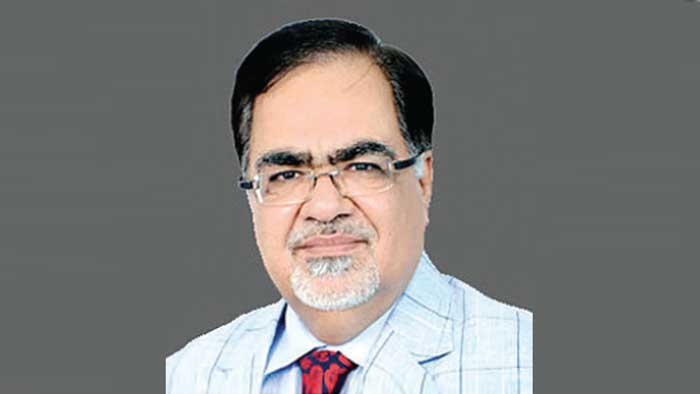
AK Dembla, President & Managing Director, Humboldt Wedag India Pvt Ltd, sheds light on the positive effect of pyroprocessing and technology in cement production, and its ultimate impact on efficiency and profitability.
Tell us about the key areas where pyroprocessing has evolved since the 1950s?
In the 1950s, pyroprocessing was at a very nascent stage. There used to be wet process plants and heat consumption used to be around 1400 to 1600 kCal/kg clinker. In 1956, the first 4-stage preheater technology was developed and KHD was a pioneer in it. This reduced the heat consumption to 800 kCal/kg clinker and subsequently there was a development of the calciner technology which further optimised the heat consumption and increased the kiln productivity. The technology since then has been developing and we have now been able to bring down the heat consumption to 680 to 685 kCal/kg clinker. This has been a major step that has been achieved by the industry.
Our next target is to further reduce heat consumption either through substitution with alternative fuels or through some low temperature cements. We are trying to make this possible with the current methodologies in place. However, if there is a technological disruption, then the case may differ.
How is your technology helping reduce the carbon footprint?
As mentioned, in the area of heat consumption, we have been able to bring it down to almost half of what it was right at the beginning (early 1950) and that has been a major step in the reduction of carbon footprint. Another major step is the use of alternative fuel which is used on an average at
6 per cent in the Indian cement industry, some plants even use it up to 20 per cent. So, whatever alternative fuel we use, equivalent heat we calculate because it comes through a circular economy. And that much heat is saved, thus, reducing the carbon footprint
as well.
The industry is also working on reducing
the clinker factor in cement. Initially there was a demand for OPC, but when PPC started being popularised in early 2000 (July 2000) when the government had allowed up to 35 per cent flyash as additive in blended cement, the clinker factor substantially reduced, thus, majorly reducing the carbon footprint of the industry. Similarly, more blended cements started getting introduced by the cement makers to reduce the carbon footprint and with advancement of technology and research, the industry is gearing up to achieve net zero in concrete (final product from cement) by 2050.
How has your equipment adapted to the changing raw mix and fuels?
The good thing about using alternative fuels is that if its use is planned initially, then the process can be designed/ adapted for it. The limitation of using alternative fuel in an existing plant is to use extra equipment like shredders, preparation units for plastic waste or municipal waste or agriculture waste or hazardous waste etc. Another limitation is that the amount of alternative fuel that can be fed in the existing system can go up to 20 per cent, beyond that there is a need to modify the calciner system or add equipment for proper combustion of waste apart from the problem of bypassing minor constituents like chloride etc. For new plants that plan to use alternative fuels, we provide them with additional equipment like combustion chamber, pyro-rotor etc. that helps cement makers accommodate a higher percentage (more than 80 per cent of calciner fuel) of alternative fuels in their manufacturing process. We also investigate environmental aspects like emission of NOx and handling of minor constituents in initial design.
How has your equipment impacting the profitability for cement manufacturers?
It is our endeavour to design our equipment on parameters that are industry standard with
state-of-the-art technology. We ensure that the power consumption and use of thermal energy should be at a minimum and the productivity of the pyro-system and the grinding systems should be at its best.
Apart from design of the system and abiding by the industry standards, we do a cost comparative analysis for coal versus alternative fuels for the manufacturer, we research on layouts to bring low civil and mechanical consumption weight-wise. There are multiple efforts taken by suppliers like us to optimise the system on all fronts as it is a competitive market. Our target is to help cement makers have a lesser capital investment to ease their financial repayments and plant operations are better in productivity and output.
What is the role of automation and technology in your workings for the pyroprocessing system?
The pandemic era nudged us to explore the use of lesser manpower and include automations in our systems. There were mainly two issues: dependency on manpower and misconception that automation means a higher cost. However, that is not true. If automation is included in systems, moving towards artificial intelligence, digitisation and Industry 4.0 Standards, experts have concluded that data can be retrieved on the go and optimise processes in real time which saves costs.
In recent years, automation and technology has become a big part of the industry with equipment and sensors being installed to get data that goes through the cloud to experts and is available globally for analysis and feedback in real time. This is helping the industry increase its productivity and reducing downtime by understanding and anticipating the attention required in a particular process at a particular time. This trend is expected to mature further with time throughout the cement industry.
How do you envision the future of the cement industry with your technology
and equipment?
At present, we are putting in a lot of effort on research and development in the area of reducing carbon footprint. The main equipment and system that we are currently installing in cement plants support alternative fuels, wastes as raw material, cogeneration and blended cements. The future holds the use of solar energy and wind energy as the source of substantial power for the cement plants. The industry must also look towards having the process of calcination without fossil fuels and with the use of electrical energy produced from green hydrogen, and use of technology like oxyfuel etc. A lot of research is on-going, which may take about 5 to 15 years to be implemented, but the alternative energy sources like green hydrogen and use of oxyfuel etc., shall have been made possible to bring down the carbon footprint to zero in concrete is a big ambition for the industry. Researchers are also working on the technology where carbon can be captured, stored, and re-used.
With our processes and systems also adapting to continuous research and evolving technology, together with the cement industry we shall build solutions that ensure sustainability and reduce carbon footprint. This is what I envision for the future.

















 Concrete3 weeks ago
 Concrete3 weeks ago
 Concrete4 weeks ago
 Concrete3 weeks ago