Vinod Agrawal, Executive Vice President – Logistics, Wonder Cement, discusses the varied factors affecting the material handling equipment and their maintenance, as well as the role of automation and technology in the material handling process.
Tell us about the key material handling equipment used in a cement plant. At what stage of manufacturing are these equipment most functional?
Cement manufacturing is a process driven industry where various types of ore, raw materials, semifinished and finished products are handled in various forms at various stages. Efficiency and productivity of the material handling equipment is vital to produce the best quality of cement at the most economic cost. Modern cement plants use following material handling equipment:
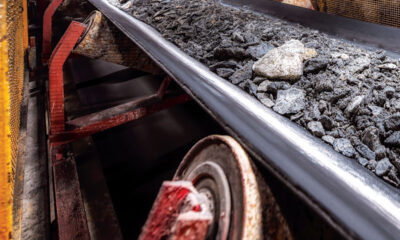
From limestone mines to crusher: Hydraulic high-capacity dumpers/tippers, poclains, belt conveyors/pipe conveyors. Some of these belt conveyors are even spread cross-country panning at a length of 17 km, carrying limestone from mines in India for cement plants located in Bangladesh. The longest conveyor belt in the world measures to 98 km and is operational to transport at the ore in Western Sahara, Africa. Since belt conveyors are a very efficient mode of transportation, there are various projects ongoing for manufacturing even longer belt conveyors not only in cement industries but also in other manufacturing sectors.
From crusher to raw mill: Belt conveyors, stacker and reclaimers are used to maintain uniformity of quality. In the mines from pit to pit based on the horizontal and vertical location there is some variation in quality. Stacker and reclaimer are a two-step material handling, storage as well as homogenisation process equipment to maintain uniformity of the raw material of limestone, ores like gypsum, raw materials and fuels like coal, petcoke etc. Here, the wagon tipplers and truck tipplers are used to receive and unload raw materials “Right design of the transportation system is critical.”Vinod Agrawal, Executive Vice President – Logistics, Wonder Cement faster throughout the chain of operation.
From raw mill output to clinkerisation: Heat resistant belt conveyors, bucket elevators (belt and chain type), air lifters/air slides, pneumatic conveying system, screw conveyors and overhead cranes are used to carry materials in this stage of cement manufacturing.
From post clinkerisation to grinding: Belt conveyors, bucket elevators, air slides, screw conveyors are used to carry clinker to grinding units.
From cement packaging to dispatch: Automatic ROTO packers, wagon loading machines for covered wagons for 50kg cement bags, truck loading machines, bulk cement conveying and loading system for bulkers/tank Container wagons, clinker loading system for open wagons.
Finished goods (cement) – end transportation to customers: Various type of railway wagons like covered wagons (BCN/BCNA), Open Type Wagons (BOXN), bulk cement transportation wagons like (BCCW, BTAP), various types of trucks with a capacity of 10 MT to 45 MT, bulkers for transportation of bulk cement by road, container wagons by road as well as rail.For material handling, storage and onwards, the transportation at the depot is done by using conveyors, cranes or manually
What is the maintenance procedure of the material handling equipment at your organisation?
In our organisation, we maintain the highest level of reliability of all equipment by adhering to Preventive Maintenance (PM) Frequency as given by the suppliers (Original Equipment Manufacturers) recommendation. The preventive maintenance is a very structured and well-designed maintenance system, where each part of the equipment has a defined frequency of inspection, repairing and replacement of the parts. Since cement manufacturing is a continuous process industry, reliability on each and every equipment is equally important as negligence or deviation in any material handling equipment even if it may be of smallest value. Negligence can cause a complete stoppage of the entire production cycle. We are following a 100 per cent adherence on the preventive measure schedule given by OEM. Apart from this we are continuously innovating better systems for superior operation in each stage of material handling.
Tell us about the role of automation and technology in the material handling process?
Today’s digitisation and technological upgradation has changed the shape of material handling equipment.
There are inbuilt quality checks installed in the equipment that conduct an hourly check at each stage of material handling where the equipment functions. Every equipment in our units are equipped with automatic sensors, safety interlock switches for material high level, low level, cross belt analyser, belt conveyors material conveying rate Ton Per Hour (TPH) on real time basis, speed variable drives to increase or decrease the speed on automatic basis to cite some examples. Our quality testing laboratory, we use world class robotic technology to handle the samples of raw materials, semi-finished and finished products for quality assurance.
Every equipment at our packaging plants is equipped to monitor the exact weight of each bag of cement. An automatic bag counter is installed at various stages of the packing and loading operation unit, which helps reduce manual work load and ensure higher rate of accuracy in the system
What are the key differences in handling raw material versus handling end products at the cement plant?
Raw materials are normally handled in bulk form in larger structures like stone shapes, granules, fine powder and mainly handled by equipment like belt conveyors, belt bucket elevators, air slides, air lifters, pneumatic conveying system. For the finished goods, till the packing operation, almost similar equipment is used to carry the load through different units.
However, after the packaging is done, there are customised material handling equipment like wagon loading machine, truck loading machine etc. The belt conveyor is most commonly used equipment and is functional throughout the process till loading is done inside the wagons and trucks. The design, capacity and size of the belt conveyors changes as per each stage of operation.
Tell us about the various conveyors used in the manufacturing unit?
There are various types of conveyors like, belt conveyor, which is most commonly used. There are other types of conveyors used for transportation of material like pipe type conveyors, heat resistant belt conveyors, bucket elevators, screw conveyors etc., through different processes of the cement manufacturing process.
What role do gates play in the transportation of material in and out of the plant?
Gates or valves are an integral part of the material handling equipment. These ensure controlled flow of materials and avoid any overflow, jamming or bottlenecks in the process of transfer of materials. They also are of help during maintenance work as they can stop material from flowing while the maintenance job is being completed.
How does the manufacturing unit ensure efficiency in the material transportation process?
Efficiency of the material transportation process can be ensured by adhering to the best operation practices and maintenance standards enlisted according to individual system guidelines. This not only ensures efficiency; it increases the machinery reliability and impacts productivity of the unit as a whole.
How can material handling or transportation impact the profitability of the organisation?
Selection of the right design of transportation system is critical for long term sustainability and profitability of any organisation. For example, if we do not install belt conveyors for ore transportation from mines to crushers and instead use road transportation, then the operating cost of the function will be almost five times higher than the use of conveyors.
Similarly, installation of rail handling systems or rail siding is key for long term viability and ease of operation compared to road transportation. Also, as a responsible corporate each organisation has the responsibility of conserving and protecting the environment, which is only possible with right designing, installation as well as operation of the material handling equipment.
What are the technological advancements required to enhance the productivity of material handling equipment?
There is a continuous cycle of innovation in the technology provided by prominent suppliers of material handling equipment. They are offering advancement in terms of automation and digitisation of the equipment, they are making them more environment friendly, safer for operation, providing a higher output while consuming less operating cost and giving higher number of runs before a scheduled maintenance is needed as per industry standards.
All this has been achieved with technological advancements and the same can be further improved and enhanced for higher productivity levels.
How do you foresee the future of material transportation at your manufacturing unit?
Earlier, most of the key material handling equipment for cement plants were imported. However, with the industrial development in India, we are gradually seeing a reduction of imported equipment and a lot of industries being set up locally for this sector that can provide the same technology of equipment at a much lower price while maintaining international standards. We foresee many more such industries being set up in India, where equipment delivery time will be reduced significantly and the cost will be competitive in the market. The lead time will be significantly reduced with this move as suppliers will be available across the country.