Concrete
Impact of Low Carbon Cements on Carbon Footprint


Dr Bibekananda Mohapatra, Director General, National Council for Cement and Building Materials (NCB), charts the journey of the Indian cement industry towards decarbonisation, with respect to substitution of clinker, alternative fuel and raw materials, energy efficiency, waste heat recovery and newer technologies.
Hon’ble Prime Minister Shri Narendra Modi has set an ambitious target for India to become net zero by 2070 in the COP26 Summit at Glasgow in November 2021. The new climate action targets ‘Panchamrit’ by India included:
- A net zero target for India by the year 2070
- Installing non-fossil fuel electricity capacity of 500 GW by 2030
- Sourcing 50 per cent of energy requirement from renewables by 2030
- Reducing 1 billion tonnes of projected emissions from now till 2030
- Achieving carbon intensity reduction of 45 per cent over 2005 levels by 2030
In November 2021, India has already reached an emission reduction of 28 per cent and has met the 40 per cent target of non-fossil fuel-based installed power capacity as per the commitment in COP 21. Further, India has committed to reduce 1 billion tonnes of CO2 emissions by 2030.
Globally, the cement sector generates about 7 per cent of the total anthropogenic emissions. Accordingly, decarbonisation of the Indian cement industry has assumed importance as it is considered a hard-to-abate sector, as about 50 per cent to 60 per cent of GHG emissions result from calcination of limestone, which is an integral part of cement manufacture.
Impact of Low Carbon Cements
The journey towards decarbonisation of the Indian cement industry started in 2012 with preparation of a Low Carbon Technology Roadmap specifically for the Indian cement industry, when International Energy Agency (IEA) and Cement Sustainability Initiative (CSI), in collaboration with the Confederation of Indian Industry (CII) and the National Council for Cement and Building Materials (NCB), prepared this document.
The identified levers in the Low Carbon Technology Roadmap of the Indian cement industry are:
- Substitution of clinker
- Alternative fuel and raw materials
- Improving energy efficiency
- Installation of waste heat recovery
- Newer technologies like renewable energy, novel cements, carbon capture and storage/utilisation.
The low carbon roadmap identified clinker substitution, carbon capture and storage as having the highest potential for reduction in the carbon footprint of the Indian cement sector as shown in Fig. 1. India is blessed to have supplementary cementitious materials like fly ash and blast furnace slag. In 2021-22, 270.8 million tonnes of fly ash and about 12 million tonnes of blast furnace slag were generated in our country. Apart from annual generation, 1,700 million tonnes of legacy fly ash lie at various thermal power plants in our country.

The Indian cement industry is quite proactive and has taken several steps to mitigate greenhouse gas emissions systematically following the low carbon technology roadmap. The review of the road map carried out by WBCSD in 2017 indicated a reduction in specific CO2 emissions from 1.12 tonnes CO2/tonne of cement in 1996 to 0.67 tonnes CO2/tonne of cement (0.588 tonnes of direct CO2 emissions). This reduction in carbon footprint of cement industry could have been achieved due to production of low carbon blended cements like Portland Pozzolana Cement (PPC) and Portland Slag Cement (PSC).

The production of blended cements like PPC and PSC has seen constant increase since the year 1995 when only 30 per cent blended cements were produced in India as compared to 2017 when the production of blended cements has increased to 73 per cent as shown in Fig. 2. This could have been achieved due to acceptance of blended cements in Indian markets by the awareness efforts of cement companies and research organisations like NCB.
Keeping in line with the current global scenario, NCB in its endeavour to help cement industry realise the target of net zero carbon by 2070 has been
working on various levers of CO2 reduction especially clinker substitution.
Accordingly, NCB has undertaken extensive research for development of low carbon
cements like:
- Portland Composite Cement (PCC) based on fly ash and limestone
- Portland Limestone Cement (PLC)
- Composite Cement based on fly ash and slag
- Geopolymer Cement
- Multi component blended cement
- Portland Dolomite Cement
The impact of low carbon cements like Portland Composite Cement based on fly ash and limestone and Portland Limestone Cement on carbon footprint of Indian cement industry is discussed below:
Portland Composite Cement Based on Fly Ash and Limestone (PCC): The blended cements, which are produced using more than one mineral addition, are known as composite cements. Fly ash conforming to IS 3812 (Part 1): 2003 and granulated blast furnace slag conforming to IS 12089: 1987 are used in the manufacture of composite cements (16415-2015) with 15 per cent to 35 per cent and 20 per cent to 50 per cent, respectively. Presently, there is almost complete utilisation of granulated blast furnace slag in India. However, utilisation of fly ash in manufacture of PPC is still only 25 per cent out of around 270 million tonnes generated annually. Additionally, India has large reserves of low grade, dolomitic and siliceous limestones, manufacture of limestone and fly ash based composite cements will reduce the impact of CO2 on environment, utilisation of industrial wastes and enable production of cements with lower clinker factor leading to resource conservation, enhanced waste utilisation and greater sustainability in cement manufacture. In this study, Portland composite cement blends were prepared (140 nos.) with four types of clinker from different regions of India along with the regional available fly ash (15 per cent to 35 per cent) and limestone (5 per cent, 7 per cent and 10 per cent). The results depicted that the clinker quality plays an important role on performance of limestone and fly ash based composite cements. NCB studies indicated Portland composite cements based on limestone and fly ash with 35 per cent replacement of clinker by fly ash and limestone (keeping limestone content up to 7 per cent in it).
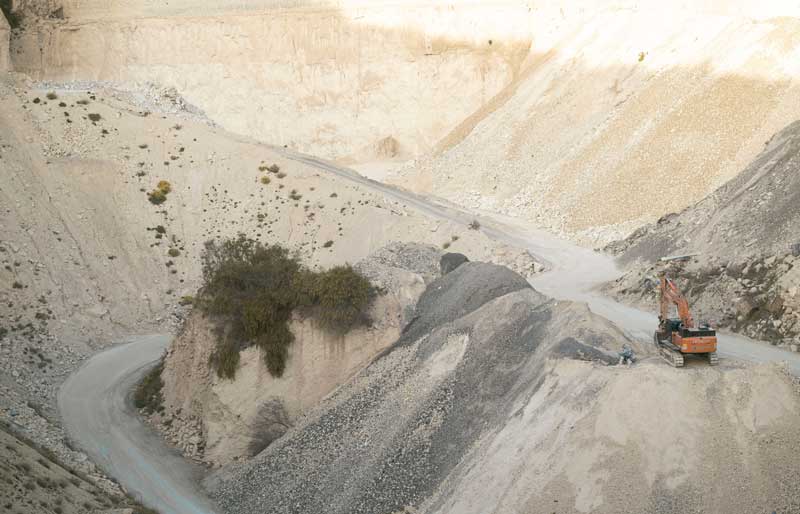
The Portland Composite Cements based on fly ash and limestone has the potential to reduce the additional specific CO2 emissions by 43kg CO2 per tonne of cement, if it replaces 15 per cent out of 27 per cent OPC produced in India. This has a potential in reducing the carbon footprint from 588kg CO2 per tonne of cement to 545kg CO2 per tonne of cement, i.e., a 7 per cent reduction based on the assumption that it may replace OPC. Further, the PCC will also replace the blended cements already produced in India.
Development of Portland Limestone Cement (PLC): European standard EN-197-1 permits the use of 35 per cent, max limestone (CaCO3≥75 per cent) in the manufacture of PLC. This type of cements is not being standardised in India. NCB has taken up the studies to investigate the feasibility of using different grades of limestone in development of PLC and for its standardisation by the Bureau of Indian Standards. In the study, five different OPC clinkers and eight samples of limestone (covering cement, dolomitic and low grade) samples were procured from five different cement plants located in different geographical locations of the country. Blends of OPC and PLC were prepared in the NCB laboratory by inter grinding clinker, limestone, and gypsum. Comprehensive study on these blends was carried using physical, chemical, and mineralogical characterisation. It has been found that characteristics of PLCs are related to clinker and limestone quality. The study concluded that limestone addition mainly influences the compressive strength of mortar and concrete, however, limestone addition of appropriate quality and fineness up to 15 per cent could be possible.
Portland Limestone Cement has the potential to reduce specific CO2 emissions by 15kg CO2 per tonne of cement if it replaces 12 per cent out of 27 per cent OPC produced in India. This has a potential in reducing the carbon footprint further from 545kg CO2 per tonne of cement to 530kg CO2 per tonne of cement, i.e., a 2.7 per cent reduction.
The production of both the PCC and PLC have the potential to reduce further up to 10 per cent of carbon intensity of cement, if these cements replace the OPC production. However, if the production of these low carbon cements replaces the existing blended cements like PPC and PSC, there shall be no reduction in the carbon footprint of the Indian cement industry. Concerted efforts are required to create awareness regarding the advantages of blended cements vis-à-vis OPC.
Comparison of CO2 emissions from different types of cement
The specific CO2 emissions associated with various types of cements like OPC, PPC, PSC, Composite Cement based on fly ash and slag, PCC and PLC are calculated considering the typical composition of cements as given in Table 1. The composition of PCC is taken as 60 per cent clinker, 28 per cent fly ash, 7 per cent limestone and 5 per cent gypsum whereas composition of PLC is taken as 80 per cent clinker, 15 per cent limestone and 5 per cent gypsum as shown in Table 1.


PLC 80 per cent – – 5 per cent 15 per cent Not approved yet and under consideration by BIS
For calculating the specific CO2 emissions of each type of cement, the contribution of CO2 from calcination, fuel combustion and electricity have been taken into consideration. The comparison of the specific CO2 emission for various cements is shown in Fig. 3. The CO2 intensity of OPC is 842kg CO2 per tonne whereas it is 536kg CO2 per tonne for PCC and 703kg CO2 per tonne for PLC. The major contributors for CO2 intensity reduction of low carbon cements as compared to OPC are the varying clinker content and the different grinding energy requirement for the cements. The grinding energy required for PCC and PLC is considered lower as compared to PPC as limestone acts as a grinding agent.
As shown in Fig. 3, the specific CO2 emissions from PCC production are equivalent to PPC. The availability of fly ash will gradually reduce due to the focus of the Government of India on renewable energy generation and utilisation of alternative fuels in thermal power plants. In this scenario, PCC will emerge as a viable alternate option to PPC, with utilisation of lower grade of limestone replacing portions of fly ash.
Out of all the low carbon blended cements, the lowest carbon footprint is of PSC, however the availability of slag is a major hindrance in production of PSC. As compared to specific CO2 emissions of 842kg per tonne of OPC, the specific CO2 emissions associated with PLC are 703kg CO2 per tonne i.e., about 17 per cent lower and the specific CO2 emissions associated with PCC are 536kg CO2 per tonne i.e., about 36 per cent lower. Thus, the replacement of OPC by low carbon cements like PCC or PLC will result in a lower carbon footprint of the Indian cement industry.
About The Author:
Dr BN Mohapatra is the Director General of National Council for Cement and Building Materials (NCCBM). He is a PhD in Cement Mineral Chemistry, enriched with over 36 years of R&D and industry experience. He is member of Expert Appraisal Committee (EAC) for Industrial Projects-1 of MoEF & CC and also the chairman of the Cement Sectoral Committee of the Bureau of Energy Efficiency (BEE).







Concrete
Ultra Concrete Age
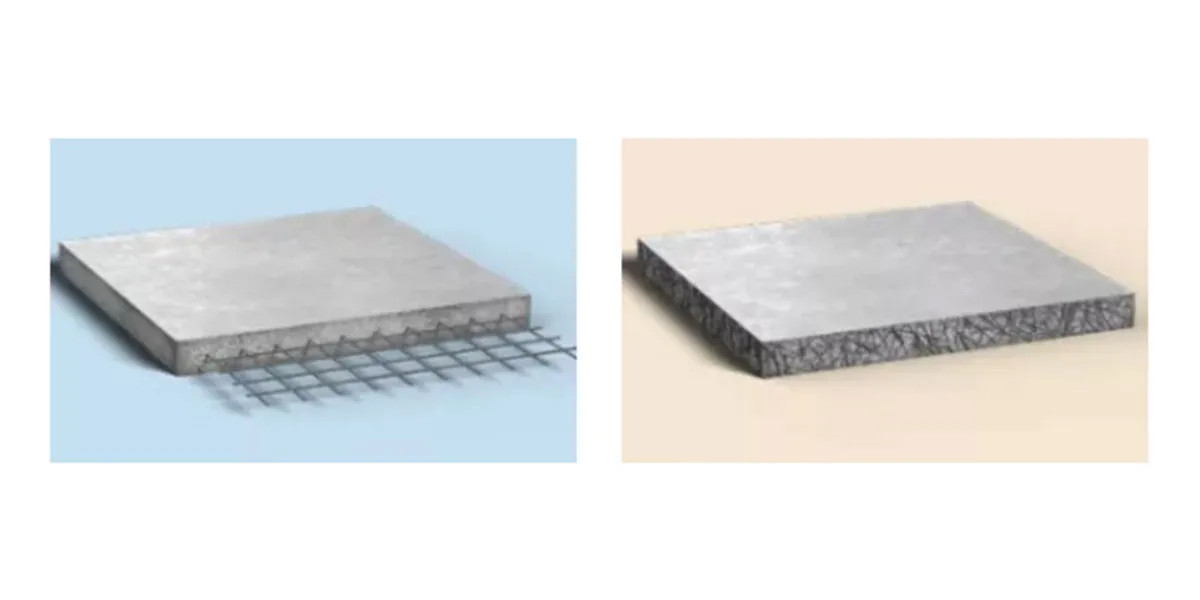
Prof. A. S. Khanna (Retd., IIT Bombay) on how Ultra-high performance concrete (UHPC) improves strength, durability and lifecycle performance.
Concrete
NCB Signs MoU With Cement Manufacturer To Boost Construction Skills
Partnership to deliver nationwide training and certification

Concrete
JSW Cement Commissions Nagaur Plant, Enters North India
New Rajasthan unit boosts capacity to 24.1 MTPA and expands reach


Ultra Concrete Age

NCB Signs MoU With Cement Manufacturer To Boost Construction Skills

JSW Cement Commissions Nagaur Plant, Enters North India

Cement Prices Likely To Rise As Petcoke Costs Increase

IIT Guwahati Develops Radiation-Resistant Cement Mortar
Ultra Concrete Age
NCB Signs MoU With Cement Manufacturer To Boost Construction Skills
JSW Cement Commissions Nagaur Plant, Enters North India
Cement Prices Likely To Rise As Petcoke Costs Increase