Connect with us

Concrete

Keeping all gears in action

Published

on

Shares

High performing lubricants, oils and greases are instrumental to the smooth working of a cement plant. Indian Cement Review takes a closer look at their contribution in enhancing productivity and helping companies achieve sustainability goals as well as the development of cost-effective bio-lubricants.

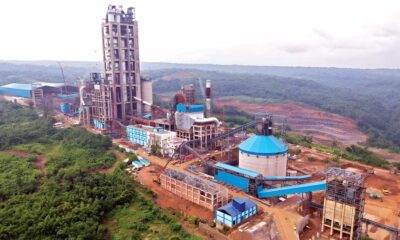
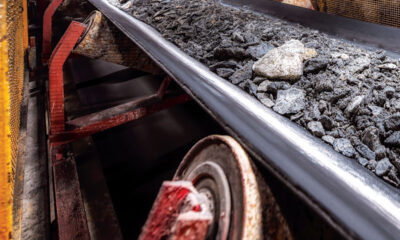
The cement manufacturing process is heavy duty. Activities such as carrying mined limestone on quarry belts to the pyroprocessor where clinker is produced at high heat levels cause immense load and severe operating conditions for equipment such as kilns, ball mills, conveyors and quarry-side mobile plants. The cement making machinery works around the clock, subjecting its components like gearboxes and bearings to overheating and premature wear and tear.

It is essential that care be taken and regular maintenance work be done for each of these equipment as the plant shall endure heavy financial and production losses if there is machinery failure, shutdown or loss of heat and energy in the mining area or manufacturing plants. To avoid such a situation and any unscheduled downtime, maintenance operators and managers invest in high performing lubricants, oils and greases that reduce the harm on machinery components.

Lubricants at work

Specially formulated lubricants are required at all stages of the cement making process, namely, extraction, crushing, conveying, grinding, clinker production, grinding and some general lubricants are needed for processes that happen in between.

Selecting the right lubricant for every machinery can be challenging. It isn’t about the equipment but the environment in which the machinery is operating that can vary from season to season depending on the plant’s location. This factor must be carefully considered while deciding which lubricants, oils or greases would work best for the machinery and the plant’s systems.

Productivity enhancement

Challenging operating conditions, continuous operations especially for the processing equipment such as the kilns, ball mills, conveyors and quarry-side mobile plants can lead to premature wear and tear or be subjected to overheating. Plant operators must maintain and choose the right lubricants to prevent any unscheduled downtime and costly additional maintenance, as well as safeguard their bottom line performance. Lubricants may cost upto 1 to 2 per cent of any cement company’s overall expense but play a key role in preventing major costs that may occur due to a faulty operation or shutdown.

Productivity of a cement plant is dependent on smooth operations, which in turn is dependent on the flawless functioning of plant machinery right from the point of extraction to packaging and exit of materials. Sustainability Goals
Specialty lubricants with innovative formulae have been created with research that help obtain operational excellence and support the balance of carbon emission in the industry. A systematic approach can lead the way of using these specialty lubricants in the cement plants if necessary to achieve the objectives.

Innovative lubricant manufacturers have developed cost-effective bio-lubricants. These eco-friendly lubricants can also be a great replacement for the lubricants that have graphite. It makes their handling and disposal safe for the work men and the environment.

Multiple organisations are putting in an effort to create lubricants with special formulations that support the intense conditions the machinery of a cement plant endures. From dust, water, pressure, vibrations or weight, the right lubricant applied in the correct manner can make productivity efficient, can avoid untimely shut downs and support the cement industry to make their processes run in a smooth and timely manner. It is essential that close attention is paid in selection of these lubricants as well as their maintenance, drainage and disposal.

Click here to read more

Concrete

UltraTech Cement FY26 PAT Crosses Rs 80 bn

Company reports record sales, profit and 200 MTPA capacity milestone

Published

on

By

Shares


UltraTech Cement reported record financial performance for Q4 and FY26, supported by strong volumes, higher profitability and improved cost efficiency. Consolidated net sales for Q4 FY26 rose 12 per cent year-on-year to Rs 254.67 billion, while PBIDT increased 20 per cent to Rs 56.88 billion. PAT, excluding exceptional items, grew 21 per cent to Rs 30.11 billion.

For FY26, consolidated net sales stood at Rs 873.84 billion, up 17 per cent from Rs 749.36 billion in FY25. PBIDT rose 32 per cent to Rs 175.98 billion, while PAT increased 36 per cent to Rs 83.05 billion, crossing the Rs 80 billion mark for the first time.

India grey cement volumes reached 42.41 million tonnes in Q4 FY26, up 9.3 per cent year-on-year, with capacity utilisation at 89 per cent. Full-year India grey cement volumes stood at 145 million tonnes. Energy costs declined 3 per cent, aided by a higher green power mix of 43 per cent in Q4.

The company’s domestic grey cement capacity has crossed 200 MTPA, reaching 200.1 MTPA, while global capacity stands at 205.5 MTPA. UltraTech also recommended a special dividend of Rs 2.40 billion per share value basis equivalent to Rs 240.

Continue Reading

Concrete

Towards Mega Batching

Optimised batching can drive overall efficiencies in large projects.

Published

on

By

Shares


India’s pace of infrastructure development is pushing the construction sector to work at a significantly higher scale than previously. Tight deadlines necessitate eliminating concreting delays, especially in large and mega projects, which, in turn, imply installing the right batching plant and ensuring batching is efficient. CW explores these steps as well as the gaps in India’s batching plant market.

Choose well

Large-scale infrastructure and building projects typically involve concrete consumption exceeding 30,000-50,000 cum per annum or demand continuous, high-volume pours within compressed timelines, according to Rahul R Wadhai, DGM – Quality, Tata Projects.

Considering the daily need for concrete, “large-scale concreting involves pouring more than 1,000–2,000 cum per day while mega projects involve more than 3,000 cum per day,” says Satish R Vachhani, Advanced Concrete & Construction Consultant…

To read the full article Click Here

Continue Reading

Concrete

Andhra Offers Discom Licences To Private Firms Outside Power Sector

Policy allows firms over 300 MW to seek distribution licences

Published

on

By

Shares


The Andhra Pradesh government will allow private firms that require more than 300 megawatt (MW) of power to apply for distribution licences, making the state the first to extend such licences beyond the power sector. The policy targets information technology, pharmaceuticals, steel and data centres and aims to reduce reliance on state utilities as demand rises for artificial intelligence infrastructure.

Approved applicants will be able to procure electricity directly from generators through power purchase agreements, a change officials said will create more competitive tariffs and reduce supply risk. Licence holders will use the Andhra Pradesh Transmission Company (APTRANSCO) network on payment of charges and will not need a separate distribution network initially.

Licences will be granted under the Electricity Act, 2003 framework, with the Central and State electricity regulators retaining authority over terms and approvals. The recent Electricity (Amendment) Bill, 2025 sought to lower entry barriers, enable network sharing and encourage competition, while the state commission will set floor and ceiling tariffs where multiple discoms operate.

Industry players and original equipment manufacturers welcomed the policy, saying competitive supply is vital for large data centre investments. Major projects and partnerships such as those involving Adani and Google, Brookfield and Reliance, and Meta and Sify Technologies are expected to benefit as capacity expands in the state.

Analysts noted India’s data centre capacity is forecast to reach 10 gigawatts (GW) by 2030 and cited International Energy Agency estimates that global data centre electricity consumption could approach 945 terawatt hours by the same year. A one GW data centre needs an equivalent power allocation and one point five times the water, which authorities equated to 150 billion litres (150 bn litres).

Advisers warned that distribution licences will require close regulation and monitoring to prevent misuse and to ensure tariffs and supply obligations are met. Officials said the policy aims to balance investor requirements with regulatory oversight and could serve as a model for other states.

Continue Reading

Video Thumbnail

    SIGN-UP FOR OUR GENERAL NEWSLETTER


    Trending News