Concrete
Impactful Distribution


Technology is emerging as the new hero in logistics management for cement distribution as companies attempt to optimise transport costs and have effective and sustainable distribution channels
A distribution channel is a chain of businesses or a path through which goods pass to eventually reach their buyers. Distribution channels include wholesalers, retailers, distributors and the internet. The cement industry has a variety of distribution channels, including both traditional and technology-intensive ones even as industry stakeholders are continuously innovating on newer methods of reaching out to the end consumers.
Distribution channels can be short or long depending on the intermediaries that play a role in getting the product to the consumers. Usually a combination of institutions specialising in manufacturing, wholesaling, retailing and many other areas join forces for the smooth running of the distribution channels. It is a set of interdependent organisations involved in the process of making a product and service available. An effective distribution channel plays a crucial role in the overall market presence and its success that a company commands, and thus, it is of strategic importance to the sales process.

Infrastructure demands
The government has launched multiple infrastructural projects, converting cities to smart cities, with technologically sound roadways, railways, etc. This has led to an increase in demand for cement and its consumption over the years. Meeting such a huge demand can be challenging for the cement industry and requires planned logistics as it plays a vital role in striking a balance between the demand and supply.
Logistics for cement begins from the source where limestone, the raw material, is procured from mining sites and brought to the plant. Logistics ends with the finished product leaving the manufacturing facility and ultimately reaching the consumer. For this, it travels across the length and breadth of the country. The demand for cement by every organisation must be met on time, or they lose the opportunity to their market competitors. The mode of transport for cement decides its cost and generally holds up to 20 per cent of its retail price. The cement industry today uses multiple modes of transportation to fulfil its logistical needs.
According to Cement Manufacturers Association of India (CMAI), the Indian cement industry is the second largest revenue source of the Indian railways with a contribution of US$1.2 billion per annum in freight revenue. To make it a more economical and accessible, the government of India has launched schemes like long term tariff contract scheme, freight incentive scheme, incentive scheme for auto traditional empty flow directions and general-purpose wagon investment scheme. These schemes have encouraged cement companies to sign contracts with the railways. Roadways is also largely used for transporting cement in fleets of trucks from the manufacturing plants to the distributors, dealers, and franchises.
Largely there are three contenders in the distribution channels – wholesalers, retailers and end consumers. Cement organisations sell their end product to the consumers through wholesalers or retailers. With changing times and demands, companies may create a system to sell to their end consumers directly using the internet.

Factors affecting cement distribution
There is stiff competition in the Indian marketplace as it has several strong international and domestic players. To reach the largest number of end consumers, cement manufacturers use a combination of distribution methods, which include bulk and bags via road, rail, inland transport and by sea. Of all these methods of moving cement, the most inexpensive method is in bulk by water.
Logistics cost is one of the key differentiators amongst the prices that any cement manufacturing company quotes. Intense competition drives them to find innovative methods to lower these costs and maintain their position as market leaders.
The process of bagging and de-bagging cement for movement between the manufacturing unit to distributors is one of the major contributors to the logistics cost. This can be reduced by carrying cement in bulk, rather than in bags. However, sometimes when adequate storage facilities are not arranged for, this bagging and de-bagging process becomes necessary, which results in increased logistics cost. Other factors that influence cement distribution would be market demand, seasonal surges, government policies, political lobbies, connectivity, infrastructure, technology, country geography, history and culture.
According to a study done on distribution channels for Ultratech Cement under International Journal of Engineering Technology Science and Research, 2018, amongst all the dealers for the company, more than 50 per cent had over three years of relationship with the organisation and its products. The study also concluded that Ultratech Cement maintained good stock quantities with its distributors that led to maintenance of good relationships with the dealers and an edge over its competitive brands.
“Cement distribution has been evolving over the last few decades. We are graduating from being commodity (cement) sales to product marketing in the cement space. Further, due to various new applications (RMC, cement sheets, cement particle boards, AAC blocks, prefabricated structures,3D printing, white top highway roads etc.) cement is moving into bulk sales” says Syaam Prakash V, Vice President, Marketing, NCL Industries Limited.
“There are a lot of green initiatives in cement production and applications. New products are being developed and promoted for the benefit of individual as well as industrial customers,” he adds.

Distribution solutions
Cement from factory gates leaves in packages of 50 kg in polywoven bags, 25 kg in paper valve sacks, in jumbo bags or in bulk. There is no smaller packaging or larger packs created to transport cement. While supplying cement to a home site is greatly different from supplying it to construction of larger infrastructures, a singular goal for every organisation is to achieve the lowest cost in each case.
Mathematical calculations and approaches are used to find the best solutions to transport these cement packages to their respective destinations. Logistic experts make a process flow defined by mathematical calculations, which include all the parameters of production and delivery to derive optimum combination of movement methods with the lowest cost. Each bag is labelled and transportation is tracked via GPS to understand the movement and time taken to reach desired locations. This helps the operations and logistics team understand and collect real-time data to further refine this operation.
With increasing technology, the logistics management team is also using information technology (IT) to optimise costs of cement distribution. They integrate solutions with actual demand and supply, and include all movements of cement packages and their storage locations. For this setup, they work with personnel at each stage of the supply chain from the drivers of road bulkers and trucks, the captains of the barges and ships and to the customer engineers who will finally receive the cement for use in their plants.
Many cement manufacturers have created applications that can be downloaded to place orders for cement or get to know the availability of their preferred brand at the nearest distributor or retailer. A new concept of cement marketplace has also been in the making for some years now. It is online shopping of cement where small and large quantities of cement can be purchased online. These eCommerce platforms are gaining popularity by the day.
“We leverage technology to provide an enhanced procurement experience throughout the construction ecosystem and largely focus on our private label brands. On the customer side, we aim to address concerns around pricing transparency, unreliable quality, fragmented vendor base, and inefficient logistics. While on the manufacturer’s side, it is ensuring higher capacity utilisation, steady demand, and better customer reach,” says Pankaj Phadnis, National Head – Retail, Infra.Market.
Another industry working towards making cement distribution most optimised and cost effective is the cement distribution consultants that work on project basics to set up an organisation’s distribution and logistics systems. Their experts stay on site to gather information and data about the manufacturing as well as demand to find the best solutions.
Selection of distribution channels
Any cement business must look at benchmarking against the best practices adopted by their competitors and adopt a similar model to achieve larger markets and cost efficient channels. Cost efficiency can be determined by analysing production and delivery cost of cement at all stages. The best cost-benefit ratio helps come to this decision.
While selecting a distribution channel, an organisation must look into the demand, its projection and lead time to fulfil that demand. Along with this also comes the market potential which may differ through geographies and depend on the reputation of the brand in the marketplace.
The decision of selecting a distribution channel also depends on the logistics of cement and the location of the plants. All factors combined lead to the best model for any organisation. It is essential to pick the best channel and keep upgrading and updating the modules to achieve the fastest and most cost effective results for the business as well as the consumers.
– Kanika Mathur










Concrete
Ultra Concrete Age
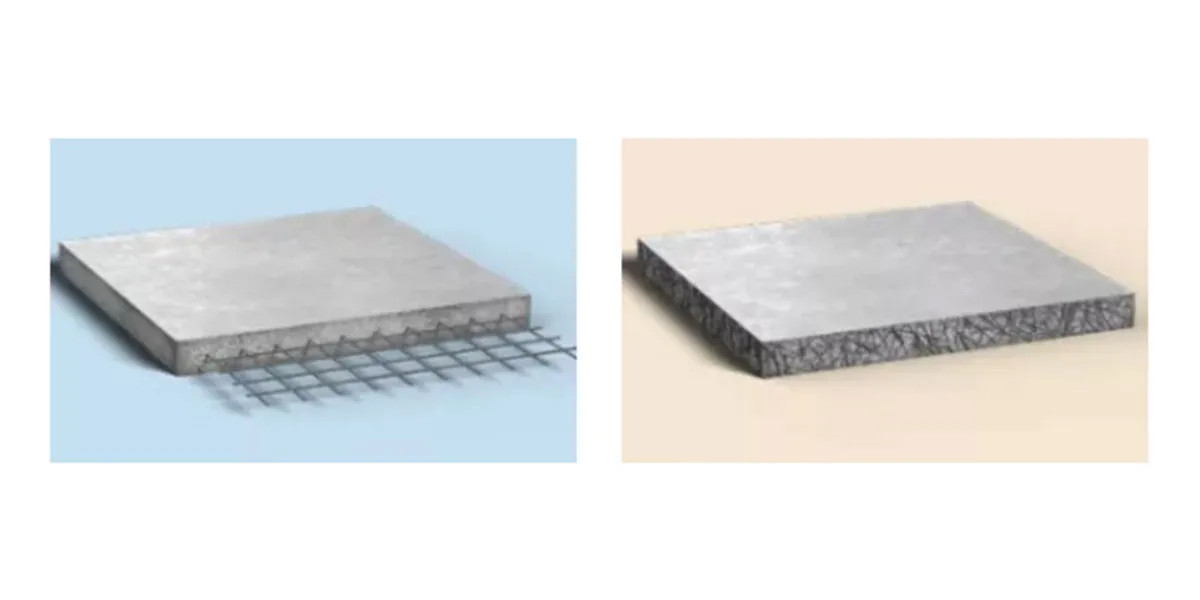
Prof. A. S. Khanna (Retd., IIT Bombay) on how Ultra-high performance concrete (UHPC) improves strength, durability and lifecycle performance.
Concrete
NCB Signs MoU With Cement Manufacturer To Boost Construction Skills
Partnership to deliver nationwide training and certification

Concrete
JSW Cement Commissions Nagaur Plant, Enters North India
New Rajasthan unit boosts capacity to 24.1 MTPA and expands reach


Ultra Concrete Age

NCB Signs MoU With Cement Manufacturer To Boost Construction Skills

JSW Cement Commissions Nagaur Plant, Enters North India

Cement Prices Likely To Rise As Petcoke Costs Increase

IIT Guwahati Develops Radiation-Resistant Cement Mortar
Ultra Concrete Age
NCB Signs MoU With Cement Manufacturer To Boost Construction Skills
JSW Cement Commissions Nagaur Plant, Enters North India
Cement Prices Likely To Rise As Petcoke Costs Increase