

Concrete
Technology can definitely make cement plants safer


ICR engages ChunChun Kumar, Head (VP)-OHS, Corporate, JK Cement, in a conversation about safety norms at cement plants, and he sheds light on some important aspects such as use of technology and automation to make the environment at cement processing plants safer for all the employees.
How do you define a safe plant?
A plant that works with and implements all procedures of safety and creates a zero harm situation can be called a safe cement plant. In such a plant, no officer, operator or labour is harmed with any kind of injury.
What are the areas of concern when it comes to safety at a cement plant?
People working at heights, performing hot work and working in confined spaces of the machinery or working inside them make for the major areas of concern in a cement plant. Even the education and awareness of contract workmen also makes for an area of safety concern.
What are the challenges you face in ensuring that the cement plant is safe?
Keeping people motivated to follow all safety precautions is a key challenge. Also, building the capability of any personnel working in the plant for identifying a potential hazard there and mitigating it. Apart from these, cement plants have major manual work like loading and unloading of cement bags and that needs to be taken care of. These are the areas where safety becomes a concern. Taking feedback from the labour who works in the area at the plant can help us better its safety standards and prevent hazards.
In case of a safety hazard, what is your first response?
In case there is a hazard, the first step is to report it, followed by closing it with a proper solution. The solution is to identify the people who closed it. When the hazard is still pending, it needs to be closed with a required solution and horizontal application of hazard compliance.
These hazard solutions come from our workmen, safety committee and the management. The management is interested in implementing compliance at the workplace in order to avoid such hazards. And so are the workers involved in getting a solution to close the hazard.
Tell us more about the personal safety equipment used in the plant by working professionals.
In a cement plant there are a number of personal protective equipment (PPE) given to the working personnel with the principle of head to toe protection.
For the protection of the head, a safety helmet is used. Special types of safety helmets are available. Most commonly used are the normal safety helmets. Another type of special helmet is used when working near electricity. These helmets have an in-built power mechanism. When people are working wearing this helmet, irrespective of their being power or not, the worker can be identified. Even when working in confined spaces, these helmets can be used. During welding, glass cutting etc., special eye protection glasses are being provided. For protection from noise, earplugs are given to the workers. Specific types of nose masks are given to protect workers from dust and other chemicals.
Special suits are made to work in specific areas that prevent harm from chemical reactions. Double layered harnesses are protective equipment when work is done on heights. Safety shoes are also given to workers for their protection.
Tell us about the key precautions one must take while working in cement plants to avoid occupational hazards.
In the cement manufacturing process, the processing of powdered limestone with certain additives has harmed people in the past. Now those processes are mechanised and automated. Because of these, there is very little exposure to the material, thus, reducing the chances of a health hazard to a large extent.
Apart from that, the personal protective equipment is extensively used, which makes for a second layer of protection for the workers’ health.
Have you come across a safety issue in your current organisation and how did you manage it?
There are no major issues or concerns at our plant. Employees at the plant follow all standards and safety norms. Most of our systems are automated and operated by machines, making human intervention rare, thereby reducing the chances of hazard.
What kind of safety training is provided to your employees? Could you take us through the process?
We conduct extensive safety training for all the labour. There is a safety induction training for new recruits, which runs for over half a day. Following this, they are educated about the standard operating procedures on the job.
Before starting any job, we provide training to the people concerned who work close to the safety hazards to follow safety practises. This type of education and awareness is called Tool Box Training (TBT). Apart from this, a safety programme is conducted for all the employees of the plant. Safety training is also given to truck drivers and visitors who visit the plant.
Each of these things is managed by kiosks, which have been recently installed. It handles the safety training modules and also feeds data of the people for whom training is required. Post the training, feedback can also be managed with the help of kiosks to understand who requires training and when.
What is the role of technology and automation in safeguarding the cement making process? Is there any other technology specifically for safety?
Technology does help the cement process be safer to work. Because of automation and online monitoring systems, exposure of workmen or employees to the operating machines, raw material or heat is rare. These are key technologies to make the cement plant and manufacturing process safer.
We have also installed robots in our laboratories. They work in the quality control labs. It largely reduces the intervention of people and their exposure to raw materials or harmful chemicals. Technology can definitely make cement plants safer.
The future holds artificial intelligence and machine learning systems that will make cement making processes more efficient and safer.
How frequently does your plant have safety audits and who does them?
We conduct two types of audits in the organisation. The first one is the internal audit, which is a daily inspection of the plant and we have also made a team of engineers and officers to conduct a one day safety audit at the plants. On the corporate level, we conduct a safety audit once a month. The external audit is done once in two years with the help of the National Safety Council of India (NSC).








Concrete
Nuvoco Marks 10 Years, Targets 35 MMTPA Capacity by FY28
Nuvoco celebrates a decade of growth, targeting 35 MMTPA cement capacity by FY28.

Concrete
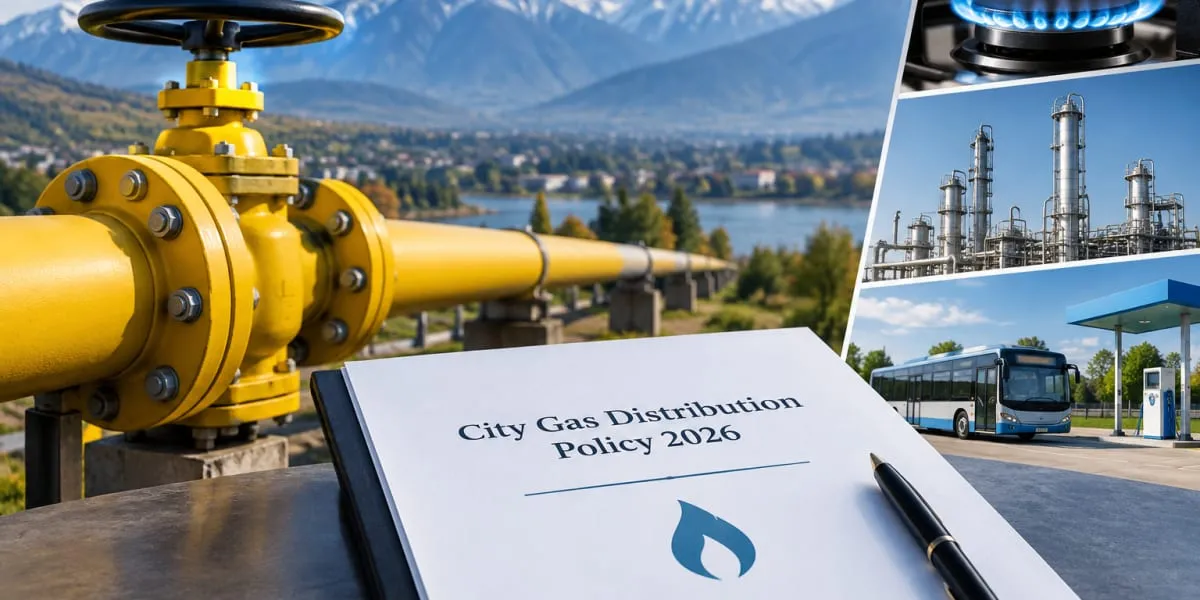
J&K Government Notifies City Gas Distribution Policy
Policy targets PNG and CNG expansion across all 20 districts
Concrete
JSW Cement Commissions 1 MTPA Grinding Unit at Nagaur
Nagaur unit lifts JSW Cement’s grinding capacity to 25.10 MTPA


Nuvoco Marks 10 Years, Targets 35 MMTPA Capacity by FY28

J&K Government Notifies City Gas Distribution Policy

JSW Cement Commissions 1 MTPA Grinding Unit at Nagaur

JSW Cement Commissions 1 MTPA Unit in Rajasthan

Wonder Cement appoints Mahesh Singh as VP Corporate Brand Communication
Nuvoco Marks 10 Years, Targets 35 MMTPA Capacity by FY28
J&K Government Notifies City Gas Distribution Policy
JSW Cement Commissions 1 MTPA Grinding Unit at Nagaur
JSW Cement Commissions 1 MTPA Unit in Rajasthan
Wonder Cement appoints Mahesh Singh as VP Corporate Brand Communication
-

 Concrete4 weeks ago
Telangana to Supply Subsidised Cement for Indiramma Houses
-

 Concrete2 weeks ago
Andhra Pradesh Clears Rs. 30 bn My Home Cement Plant
-

 Concrete2 weeks ago
JSW Cement Receives Rs. 2.3 bn GST Demand Notice
-
 Concrete4 weeks ago
Centre Defers Clearance for Limestone Mine Near Bustard Habitat