The enormous consumption of sand poses major environmental problems for many countries around the world. ZaaK has developed a technology that can upcycle wastes (fly ash, pond ash, and stabilised ash from hard and brown coal, WTE ash, and bauxite residue) into value-added eco-friendly lightweight sand called Lypors®.
The enormous consumption of sand poses major environmental problems for many countries around the world. ZaaK has developed a technology that can upcycle wastes (fly ash, pond ash, and stabilised ash from hard and brown coal, WTE ash, and bauxite residue) into value-added eco-friendly lightweight sand called Lypors®.
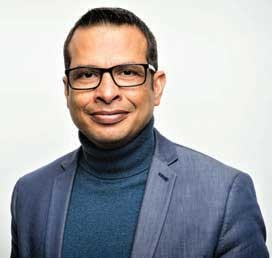
Lypors™ is more than just the answer to the scarcity of construction sand and the persistent demand of the construction industry, says Dr Abbas Khan, Founder and Managing Director of ZaaK Technologies GmbH.
Sand mining or dredging is a big problem. How do you look at this problem?
After water, sand is the most demanded resource in the world. Around 50 billion tons of sand is mined globally every year, causing huge environmental issues. Sand is not essential only in concrete and mortar production, but also in glass, cell phones, computers, wine, and even toothpaste. The consequences of the high consumption have not yet been felt in Europe, but in countries like India, sand is scarce. As a result, natural sand is often illegally skimmed off and sold on the black market.
On the other hand, excessive removal of natural sand results in lowering of groundwater, coastal erosions and even the disappearance of islands. The short term solution such as m-sand or crushed stone has a greater negative environmental impact as it is a non-reproducible natural resource.
Unfortunately, these problems are only going to increase in the future as the rate of consumption of sand is twice the rate at which nature produces it.
Therefore, to solve this problem, ZaaK has developed a technology that can upcycle different types of mineral wastes and by-products such as fly ash, pond ash, bauxite residue and ash from waste incineration plants into a lightweight sand called Lypors™. Thereby, through upcycling, ZaaK takes care of the problem of mineral waste disposal while simultaneously mitigating the pressure on the dwindling natural sand resources.
Lypors™, as a secondary raw material is more than just the answer to the issues outlined above.. We at ZaaK enhance the trend of supporting a sustainable industrial society using the earth’s finite resources efficiently and carefully. As a Greentech company and a pioneer in upcycling, we oppose the throw-away mentality and contribute to a circular economy.
Lypors™ is an alternative to natural sand. What technology goes into the making of Lypors™ and how is it better than natural sand?
Lypors™ is a product which is made by upcycling mineral wastes and by-products which normally would have been disposed off, endangering the local environment and habitat. ZaaK’s vision is not only to establish a new standard for a secondary raw material but also a sustainable solution for society and industry.
The technology that goes in the making of Lypors™ involves a combination of mechanical, chemical, and sintering processes. Due to the simplicity and high scalability of our production process, Lypors™ plant can easily be integrated into an existing infrastructure enabling efficient collection of material streams at the waste producer’s site. Lypors’™ properties such as size, shape, porosity and density can be tailored to cater to different market segments.
Lypors™ comes with superior and consistent quality with zero organic impurities, as opposed to natural sand. The latter often contains impurities such as bones, shells, mica, clay and silt, which make it inferior for use in mortar and concrete.
Lypors™ is ready to use, which means no further screening, washing and drying are required. Furthermore, being up to 55 percent lighter than natural sand it is easier to transport, load/unload and has a lower risk of injury. A mason can place up to 20 percent more wall area and lift approximately 25 percent less weight per year using Lypors™ mortar compared to normal sand mortar. To cut a long story short, Lypors™ is a premium construction material for ecological and sustainable construction.
Please tell us about the advantages of Lypors™ based concrete over sand concrete.
Lypors™ optimises structural efficiency by improving strength to weight ratio allowing architects to design expressive roofs and taller buildings, add additional floors to existing structures and build on sites with poor soil condition and design wider bridge decks with minimum modifications to existing structural supports. Our study has found that the concrete made from Lypors™ can reduce size of load bearing elements, including columns and footings resulting in savings of up to 32 percent in reinforcement and up to 31 percent in concrete in a building.
Once Lypors™ has been used in a building the building owners will benefit from higher efficiency. Lypors™ concrete has two times better thermal resistance than normal concrete. Countries like India, where the temperature most of the year around is beyond 30 Deg C, can benefit from the energy efficiency of the building, saving electricity cost of cooling the building.
How has been the demand for Lypors™? Could you name some of your clients or projects where it was used extensively?
With the establishment of our Technology Innovation Centre in Germany, we have formed strong partnerships with various construction material manufacturers to design and develop our products for different construction material applications. ZaaK is currently in the process to set up manufacturing plants in cooperation with waste and by product producers in Europe, North America and Asia. Lypors™ has been already tested by various leading construction material companies and they are ready to buy Lypors™ when commercial production begins.
We see that the need and awareness for alternative ecological construction materials, such as Lypors™, is steadily rising and in future the demand for sustainable construction materials will increase: This is pushed, on the one hand, by the ever increasing scarcity of natural construction materials and on the other hand by a heightened ecological consciousness.
Logistics is a huge problem in India, especially in the cement business. How do you look at this problem?
Yes, logistics is a huge problem in India due to various factors like vast distances, underdeveloped infrastructure and transport systems, inadequate material handling systems, manual loading / unloading etc. The burden is felt acutely in industries where heavy materials are transported, e.g., in the cement and construction industries. This issue can be partially alleviated by moving away from traditional materials to new-age ones, e.g., by substituting natural sand with Lypors™ resulting in reducing weight, and hence handling cost, including that of downstream products like ready-mix concrete, dry-mix-mortars, plasters etc. ZaaK’s technology enables manufacture of such products, making their transport more efficient.
You claim saving up to 25 percent fuel in transporting for the same volume of material compared to natural sand. How?
Construction requires transportation! And there is a direct correlation between fuel consumption, weight and environmental impact. According to a study, due to being up to 55 percent lighter in weight, transporting Lypors™ in 14 tyre trucks will save up to 25 percent fuel compared to transporting the same volume (40 m3) of natural sand.
The infrastructure sector in India is receiving huge attention from our government. Do you think it’s a good opportunity to scale up your operations? What are your future plans?
Our process and products address three important and burning issues of the day: conversion of millions of tons of waste product into inert material, prevention of sand dredging & erosion, and provision of high-quality building material with low life cycle costs. These reasons are compelling enough to lead to accelerated adoption of our technology. Government attention to the building industry will certainly add to these tailwinds. We believe that the industry is increasingly ready to adopt environment-friendly technologies. We are in discussion with multiple entities across the globe, including India, for the early adoption of our product and technology. We will establish our presence in India this year across the value chain.









 Concrete3 weeks ago
 Concrete3 weeks ago
 Concrete4 weeks ago
 Concrete3 weeks ago