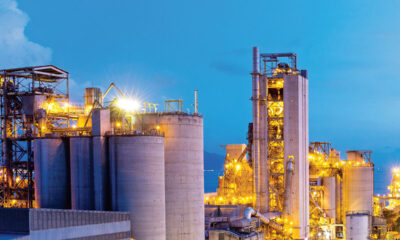
As India commits to net zero target for Year 2070, decarbonisation of the Indian cement industry is mandatory.
As India commits to net zero target for Year 2070, decarbonisation of the Indian cement industry is mandatory. With decreasing CO2 emissions in 2021, the goal of reduction in carbon intensity looks promising, provided proactive steps are taken and implemented, shares Dr. BN Mohapatra, Director General of National Council for Cement and Building Materials (NCCBM).
Honourable Prime Minister of India Shri Narendra Modi has made a pledge to cut the CO2 emissions in the recently concluded COP26 summit at Glasgow in November 2021and for the first time, he has set a Net Zero target for India by the year 2070. The US and EU have aimed to hit net zero by 2050, while China has announced plans for carbon neutrality by 2060. Earlier, India under the Intended Nationally Determined Contribution (INDC) submitted to the UN Framework Convention on Climate Change (UNFCCC) Conference of the Parties (COP21) in Paris in December 2015, committed to reduce the emissions intensity of its GDP by 33 to 35 per cent by 2030 from 2005 level and to achieve 40 per cent of installed power capacity from non-fossil fuels by 2030. In November 2021, India has already reached an emission reduction of 28 per cent and has met the 40 per cent target of non-fossil fuel-based installed power capacity as per the commitment in COP21.
Globally, the cement sector generates about 7 per cent of the total anthropogenic emissions. In hard-to-abate sectors like cement, steel, chemicals, etc, it is technologically very difficult to reduce the process related to Greenhouse Gases (GHG). The Indian cement industry has been working on the issue of its GHG emissions and has brought down the CO2 emission factor from 1.12 t of CO2/t of cement in 1996 to 0.670 t of CO2/t of cement in 2017. The proactive steps taken by Indian cement industry has contributed to achieve the goal of reduction in carbon intensity. Further, to achieve the target of net zero, decarbonisation of the Indian cement industry is required.
Recently, in October 2021, the Global Cement and Concrete Association (GCCA) has published a Cement and Concrete Roadmap 2050 for the net zero concrete. In the roadmap, it is envisaged to produce carbon neutral concrete by 2050 and a sectoral commitment to cut CO2 emissions by a further 25 per cent by 2030. The world’s leading cement and concrete companies including major cement companies in India like UltraTech Cement Ltd., Holcim Group, Shree Cement Ltd., Dalmia Cement (B) Ltd., JK Cement Ltd, JSW Cement, Orient Cement Ltd. have accepted the goal to achieve net zero concrete by 2050 and committed to fully contribute to building the sustainable world of tomorrow. Dalmia Cement (Bharat) Ltd, the fourth largest cement company in India has committed to become carbon negative by 2040 and working on its roadmap to use 100 per cent biomass and capturing the biogenic CO2 emissions.
Energy efficiency
Decarbonisation of the energy requirement of the entire cement industry is not possible only through renewable electricity since the cement industry requires high-grade heat for manufacturing. Hydrogen, which is a clean and green energy carrier, can play a crucial role for this energy transition. Green hydrogen can be used to replace fossil fuel in cement manufacturing processes as a source of thermal heat. Currently, 96 per cent of hydrogen used for industrial applications as fuel is obtained from fossils (natural gas, oil, coal), and the remaining 4 per cent is through electrolysis. Electrolysis through renewable sources like solar and wind routes can increase this share significantly and renewable hydrogen obtained will be a more sustainable option for the future. One of the cement plants in the UK has recently done a feasibility study for 50 per cent hydrogen along with 50 per cent biomass as fuel in cement rotary kilns.
One of the important challenges for decarbonisation of the cement industry worldwide is to reduce the process emissions arising out of calcination of limestone. Carbon Capture and Utilisation, by capturing/separating the CO2 emissions arising from the calcination process and utilisation of the captured CO2, is the only solution. Several studies and start-ups worldwide are working to find cost effective energy efficient ways to capture CO2 from flue gases. Utilisation of hydrogen as fuel will also help in capturing/separation of process CO2. Thus, green hydrogen can act as an alternative fuel for cement plants and will play a major role in the decarbonisation of the cement sector.
The journey towards decarbonisation of Indian cement industry started in 2012 with preparation of a Low Carbon Technology Roadmap specifically for the industry, when International Energy Agency (IEA) and Cement Sustainability Initiative (CSI), in collaboration with the Confederation of Indian Industry (CII) and the National Council for Cement and Building Materials (NCB) prepared this document. Direct CO2 emissions are targeted to be further reduced to 0.35 t CO2/t of cement by 2050. The identified levers in the low carbon technology roadmap of Indian cement industry are (i) Substitution of Clinker, (ii) Alternate Fuel and Raw Materials, (iii) Improving Energy Efficiency, (iv) Installation of Waste Heat Recovery and (v) Newer technologies like Renewable Energy, Novel Cements, Carbon Capture and Storage/Utilisation.
To mitigate the problem, enormous endeavour so far have been made by responsible industries, research bodies and academia, to reduce CO2 emission from cement production process by developing new technological solutions, thus, continually stepping towards reducing the environmental footprint of cement production and making it more and more sustainable. Blended cements so far have stood the test of time and are found to offer significant performance advantages along with environmental mitigation in terms of reduced emission, natural resource conservation and waste utilisation. NCB, being a premier R&D organisation, is devoted to environmental sustainability and is carrying out several studies for development of low lime and low energy cements to mitigate carbon footprint during cement production and conservation of natural resources by exploring alternate raw materials and unconventional SCMs in development of blended cements. Some of the important projects currently undertaken at NCB for blended cement are discussed here:
a) Development of belite calcium sulpho-aluminate cement using low grade limestone and industrial waste
The Portland cement clinker manufactured by the Indian cement industry is almost a century old clinker, the production of which is quite energy intensive, emission releasing and majorly dependent on our natural resources. Belite sulfoaluminate clinkers (BCSA) are an alternative for sustainability of limestone reserves and CO2 emissions compared to the Portland Clinker. In addition, these materials require lower operating temperature of the kilns, ~1250ºC and they are easily ground due to their higher porosity. Presently, NCB has successfully conducted laboratory scale trials on preparation of the new clinker with the conventional raw materials being used for Portland clinker. The production process of BSAC requires sulphate sources such as gypsum or anhydrite as major raw materials. Additionally, the BCSA clinker is formed at a temperature of 1250°C resulting in thermal saving of 200°C, thereby, reducing CO2 emissions up to 30 per cent. The prepared new clinker has predominance of belite phase, and a new calcium sulpho-aluminate phase called as yeliminite phase in it. Besides trials on preparation of new clinker with conventional and natural raw materials, NCB has also succeeded in the utilisation of industrial by-products like Jarosite as a substitute for sulphate source with the use of low-grade limestone as the source of lime and silica.
b) Investigations on development of Portland composite cements based on fly ash and limestone
The blended cements, which are produced using more than one mineral addition, are known as composite cements. Fly ash conforming to IS 3812 (Part 1): 2003 and granulated blast furnace slag conforming to IS 12089: 1987 are used in the manufacture of composite cements (16415-2015) with 15-35 per cent and 20-50 per cent. respectively. Presently there is almost complete utilisation of granulated blast furnace slag in India. However, utilisation of fly ash in manufacture of PPC is still only 25 per cent out of around 232 million tonnes generated annually. Additionally, India has large reserves of low grade, dolomitic and siliceous limestones, manufacture of limestone and fly ash based composite cements will reduce the impact of CO2 on environment, utilisation of industrial wastes and enable production of cements with lower clinker factor leading to resource conservation, enhanced waste utilisation and greater sustainability in cement manufacture. In this study, Portland composite cement blends were prepared (140 nos) with four types of clinker from different regions of India along with the regional available fly ash (15-35 per cent) and limestone (5, 7 and 10 per cent). The results depicted that the clinker quality plays an important role on performance of limestone and fly ash based composite cements. The mortar studies indicated Portland composite cements based on limestone and fly ash with 35 per cent replacement of clinker by fly ash and limestone (keeping limestone content upto 7 per cent in it). Hydration studies showed Monocarboaluminate (Ca4Al2O6 2 CO3 2 11H2O) was found in the samples containing FA and LS, and the intensity of these peaks tend to be stronger when the amount of limestone is increased.
c) Portland Limestone Cement (PLC)
European standard EN-197-1 permits the use of 35 per cent, max limestone (CaCO3≥75 per cent) in the manufacture of PLC. This type of cements is not being standardised in India. NCB has taken up the studies to investigate the feasibility of using different grades of limestone in development of PLC and for its standardisation by Bureau of Indian Standards. In the study, five different OPC clinkers and eight samples of limestone (covering cement, dolomitic and low grade) samples were procured from five different cement plants located in different geographical locations of the country. Blends of OPC and PLC were prepared in the NCB laboratory by inter grinding clinker, limestone and gypsum. Comprehensive study on these blends was carried using physical, chemical and mineralogical characterisation. It has been found that characteristics of PLCs are related to clinker and limestone quality. The study concluded that limestone addition mainly influences the compressive strength of mortar and concrete, however, limestone addition of appropriate quality and fineness up to 15 per cent could be possible.
d) Utilisation of high magnesia limestone for making high magnesia clinker for blended cement
The total blended cement production in India is about 73 per cent and the clinker used for its manufacture has to confirm to the clinker specification IS 16353- 2015 where maximum permissible limit of MgO is 6 per cent. The limit of MgO content in PPC and PSC as per Indian standard are 6 per cent and 10 per cent respectively and the clinker factor in these blended cements are comparatively low in respect to the OPC. Therefore, there is a possibility to increase the MgO content in the clinker sample beyond the specified limits for the manufacturing of such blended cement. This will help in further enhancement in blended cement production and thus CO2 abatement. The results of investigation revealed that addition of fly ash and granulated blast furnace slag (GBFS) in the blended cements prepared from high MgO clinker samples were found to have potential effect on arresting the expansion caused by periclase (MgO). The minimum fly ash content was optimised to be 25 per cent by weight in case of PPC and the minimum slag content was optimised to be 35 per cent in case PSC while utilising high MgO clinker for the manufacture of blended cement.
Substitution of clinker will remain the important lever for decarbonisation of the Indian cement industry. The outcome of NCB studies will help in providing more options for production of blended cements.
About the author:
Dr. BN Mohapatra is the Director General of National Council for Cement and Building Materials (NCCBM). He is a Phd in Cement Mineral Chemistry, enriched with 13 years of research and development and over 22 years of industry experience with a strong academic relations with premier institutes. He is the chairman of the Cement Sectoral Committee of the Bureau of Energy Efficiency (BEE).