Technology
While most conveyor belt manufacturers provide products, we provide solutions
Published
4 years agoon
By
admin
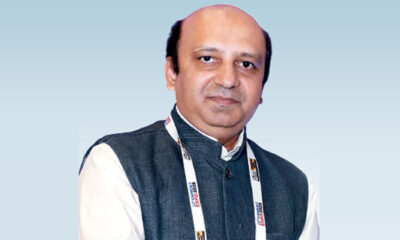
Rohit Arora, Vice President – Marketing, Continental Belting Group.
Continental Belting Group (CBG) believes in building strategic long-term client relationships. 85.55 per cent of the company’s revenue comes from existing customers. Continental Belting received nominations for the ET NOW – Leaders of Tomorrow Awards in 2012 and 2013 – the only belt company nominated in the broader field of engineering companies. Rohit Arora, Vice President – Marketing, Continental Belting Group, elaborates on the winning strategy, their outlook on the sector and the market and where do they see themselves in the future. Excerpts from the interview.
As one of the leading suppliers of conveyor belt to the Indian cement industry, what is your outlook about this sector?
The Indian cement industry has shown excellent results even from the global context having achieved remarkable benchmarks such as highly efficient 60kwhr/tonne energy consumption – the lowest in the world and the highest volume production per annum next only to China. Despite these achievements the industry is going through a rough patch saddled with over-capacity mainly due to demand slack prohibitive costs and an infrastructure policy mismatch.
Cement manufacturing efficiencies depend largely on cost effective conveying mostly by means of conveyor belts beginning from the transportation of limestone at the mine to the end of the circuit where the cement bags are loaded by telescopic conveyor belts onto trucks. The Indian belting industry has a fair reliance on cement companies for utilisation of at-least 12-15 per cent of their produce. Cement is a serious business for us and from the long term perspective our fraternity is bullish on this sector.
Tell us about Continental Belting and its presence in the market?
CBG started in 1964 is today a well establish global player with a reputation of supplying next-gen conveyor belting solutions. The annual revenue of CBG is close to Rs120 core (US$ 20 million). We deliver conveyor belts to over 95 per cent of the ET500 conveyor belt user companies having global footprints in all the continents. We have a wide range of solutions in the industry with belt widths up to 3200mm conventional fabric reinforced belts, steel cord belts, kevlar belts, pipe belts, sidewall belt,s heat resistant belts suited up to 250¦C and many more products. We take pride in having India’s largest inventory of ready stock conveyor belts waiting to be shipped. Our emergency response teams including our logistics partners strive hard to ensure even same day shipments.
How much is the scope for efficiency improvement using well designed solutions?
Our designs have yielded up to 39.9 per cent energy saving working at lower stresses to yield higher performances. We have converted bad-case-scenario in some giant cement plant to 200-800 per cent performance enhancement (from 3 moths initially to 24 months in ROM limestone conveyors).
Could you throw some light on sales and distribution network of your company?
We have a proficient marketing and sales team in nearly all Indian states and beyond the national borders in practically every continent. With most companies seeking efficiency by just-in-time inventory we understand that the dynamics of the business is not just providing good quality but in the ability to deliver in the shortest possible time. We have setup adequately stocked gigantic and strategically located regional depots to ensure that our customers get deliveries within 24 hrs from the closest depot.
Have you launched any new products lately?
Performance is beyond just quality. Today power saving has become an important parameter. We have recently launched our ‘Power Saver’ range of conveyor belts which have low rolling resistance and excellent rigidity reducing energy losses. This product has shown promising results with power saving in the range of 28 per cent to 39 per cent.
How aware is the industry about the latest developments happening in the bulk material handling equipment?
Very very well. The cement Industry is very open to experimentation and finding newer or different ways of doing things. The industry has a huge appetite for change. Cement industry professionals form a fair audience in most of the material handling exhibitions and conferences. Consultants have played a very important role in shaping technology in cement plants. In-fact, many of the developments done by us are thanks to encouragement received from the cement fraternity.
What are the challenges in front of the industry?
Specifically referring to the rubber conveyor belting Industry the fluctuation in the rubber prices as well as the rising cost of other inputs such as synthetic fabric carbon black etc due to strengthening dollar poses a challenge. Unfortunately such enhancements are not our privilege when it comes to the price of finished product.
On the demand side the market is ever expanding since many of the European and American manufacturers have disbanded there plants and are now enjoying strategic tie-ups for technology as well as buy-back with Indian belt manufacturers. This has opened new vistas and has helped upgrade the technology capital.
Where do you see the industry headed in future? And what are your plans?
Chasing efficiency, the size of plants in the steel, cement, power and other sectors is getting larger and consequently the requirement for conveyor belting too is increasing. The local as well as global requirements are projected to be strong. The Indian belting industry is set to make the best of this opportunity.
Every industry has it’s unique requirements and while the trend is to have a standard product for all industries, we are working towards tailoring products as per specific industry requirements. Our new plant which is on the anvil is specifically focused on niche products such as sidewall belts, pipe conveyor belts, filter press belts etc. These high technology items would not only generate additional revenue for our organisation, but would also help the country save a lot of forex.
Why should a customer come to you?
Healthy competition leads to innovation and is necessary to bring about a positive change. Our role begins where the role or our competitors or as I would rather call our challengers ends. While most conveyor belt manufacturers provide products, we provide solutions. Interestingly, in over 90 per cent instances customers do not really know what they need and neither are most of our challengers confident of determining the customer’s genuine requirements. The user may not always know what is best for him but he definitely knows one thing and that is that he is looking at an enhancement in performance efficiency and reduction in cost/ton handled. We look at problems as opportunities and can assure our customers enhancement in performances ranging from a minimum of 20 per cent-300 per cent. We do it by having a very keen eye for fine details to determine the precise requirements based on the application data backed by a world-class manufacturing plant.
Just to cite an example we had worked on the conveyor of cement major where the life of the mine to plant conveyor carrying limestone was enhanced from 3-4 months to over 3 years. We see a huge potential in this blue ocean. As one of the market leaders, our challengers look upon us for innovative and improved ways of doing things. We have earned our respect for fair play.
You may like
-
India, Sweden Discuss Green Steel Collaboration
-
Shyam Metalics Unveils Rs 100 billion Capex Plan Under Vision 2031
-
India Sets Up First Carbon Capture Testbeds for Cement Industry
-
Indian Steel Ministry Seeks $1.7 Bn for Low-Carbon Steel Production
-
India Drives Global Steel Demand
-
Steelmakers Urge Government to Impose Temporary Tax to Curb Cheap Imports
Economy & Market
SEW-EURODRIVE India Opens Drive Technology Centre in Chennai
Published
2 weeks agoon
March 25, 2026By
admin
The new facility strengthens SEW-EURODRIVE India’s manufacturing, assembly and service capabilities
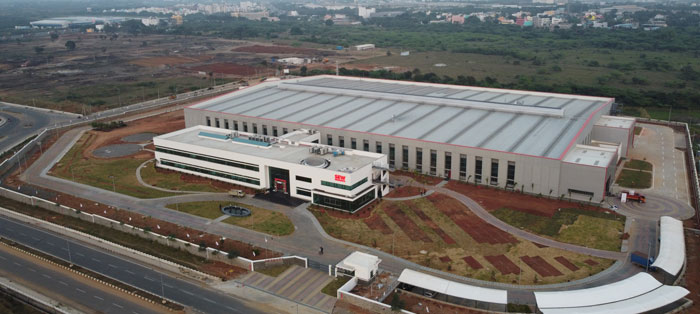
SEW-EURODRIVE India has inaugurated a new Drive Technology Centre (DTC) in Chennai, marking a significant expansion of its manufacturing and service infrastructure in South India. The facility is positioned to enhance the company’s responsiveness and long-term support capabilities for customers across southern and eastern regions of the country.
Built across 12.27 acres, the facility includes a 21,350-square-metre assembly and service setup designed to support future industrial growth, evolving application requirements and capacity expansion. The centre reflects the company’s long-term strategy in India, combining global engineering practices with local manufacturing and service capabilities.
The new facility has been developed in line with green building standards and incorporates sustainable features such as natural daylight utilisation, solar power generation and rainwater harvesting systems. The company has also implemented energy-efficient construction and advanced climate control systems that help reduce shopfloor temperatures by up to 3°C, improving production stability, product quality and working conditions.
A key highlight of the centre is the 15,000-square-metre assembly shop, which features digitisation-ready assembly cells based on a single-piece flow manufacturing concept. The facility also houses SEW-EURODRIVE India’s first semi-automated painting booth, aimed at ensuring uniform surface finish and improving production throughput.
With the commissioning of the Chennai Drive Technology Centre, SEW-EURODRIVE India continues to strengthen its manufacturing footprint and reinforces its long-term commitment to supporting industrial growth and automation development in India.
Economy & Market
RAHSTA Roundtable Sets Agenda for Smarter, Safer Highways
Published
4 weeks agoon
March 16, 2026By
admin
Roundtable discussions focus on innovation for safer highways.
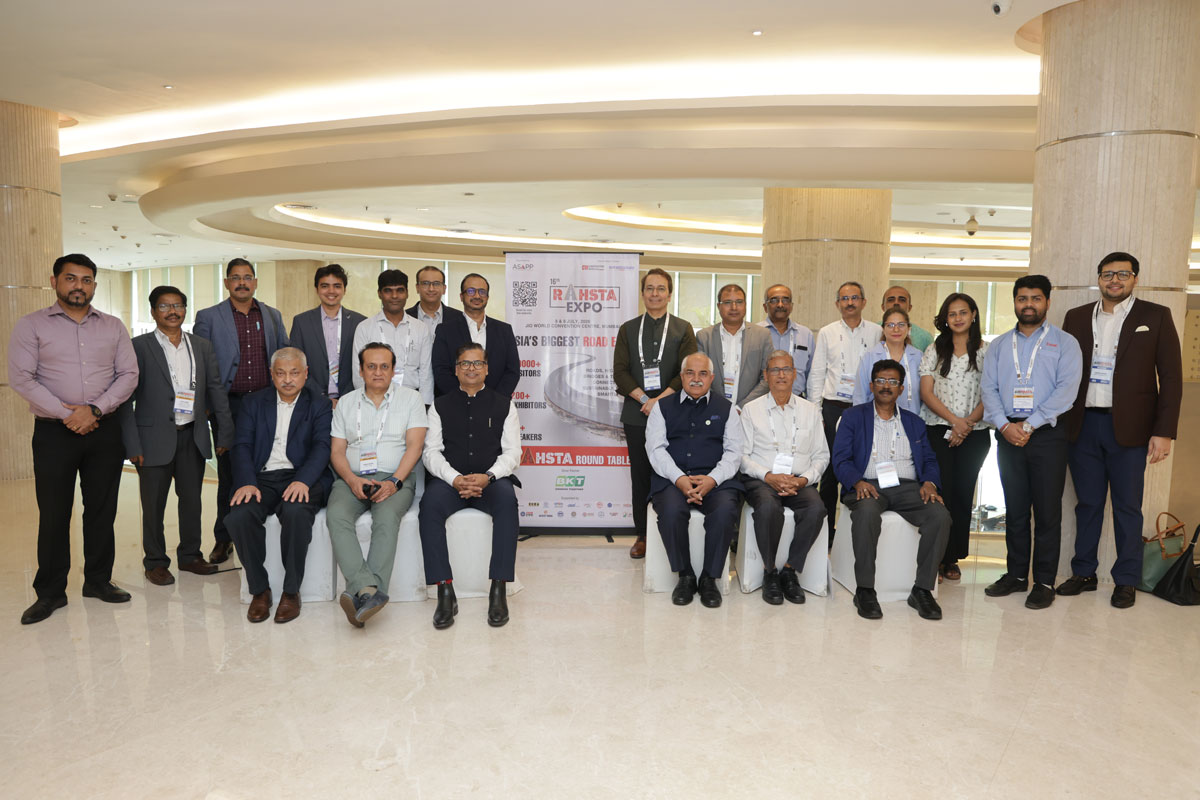
Held on 12 March 2026 at Courtyard by Marriott, Mumbai, alongside the Infrastructure Today Airport Conclave, the RAHSTA Roundtable brought together stakeholders from across the highways and infrastructure ecosystem to shape the agenda for the 16th RAHSTA 2026, scheduled for 8–9 July 2026 at the Jio Convention Centre, Mumbai. The session focused on key industry themes including road construction, technology, safety and long-term sustainability.
Opening the discussion, Pratap Padode, Founder, FIRST Construction Council, said the roundtable marked the beginning of a broader consultative process leading up to the July event. The aim, he noted, is to bring together industry stakeholders to refine the agenda for discussions on the future of roads, bridges, tunnels and allied infrastructure.
Padode noted that while central road project awards have slowed in recent years, states are increasingly driving the next phase of infrastructure growth. Maharashtra, with its long-term road development plans and agencies such as MSRDC and MSIDC, is expected to play a significant role in this expansion.
RAHSTA Expo 2026 as a specialised platform dedicated to road infrastructure, covering highways, tunnels, bridges and flyovers along with construction technologies, safety systems and maintenance solutions. He also highlighted the growing importance of rural connectivity and said the organisers are engaging with government bodies to highlight rural road development initiatives.
Tanveer Padode, CIO, ASAPP Info Group, presented insights from IMPACCT, the group’s infrastructure intelligence platform. He pointed to a strong project pipeline despite slower highway awards earlier in the year, noting that states such as Maharashtra, Odisha and Arunachal Pradesh are emerging as key drivers of new projects. The data also revealed that only a small group of contractors participates in large-value infrastructure bids.
Lt Gen Rajeev Chaudhary, former Director General, Border Roads Organisation and Chairman of the RAHSTA Expo Committee, emphasised the need for stronger collaboration across the ecosystem, including policymakers, contractors, technology providers and financiers. He also called for addressing systemic issues within the sector and encouraged greater participation of women in infrastructure leadership.
The discussion also explored the evolving economics of road development. Phani Prasad Mandalaparthy, Associate Director, CRISIL Intelligence, noted that the slowdown in project awards reflects a shift towards higher-value logistics corridors rather than simple road widening projects. However, private participation through BOT and TOT models remains limited.
From the contractors’ perspective, Sudhir Hoshing, Whole-Time Director, Ceigall, said companies are becoming more selective in bidding, favouring projects with clearer payment mechanisms and efficient processes. While NHAI continues to offer greater operational clarity, states such as Uttar Pradesh and Bihar were cited as relatively supportive environments for project execution.
Durability and sustainability also emerged as key themes. Himanshu Agarwal, COO – Road & Infrastructure, Zydex Group India, highlighted the need to prioritise lifecycle performance and resilient pavements, while participants discussed the potential of alternative materials such as plastic waste, steel slag and industrial by-products in road construction.
Dr LR Manjunatha, Vice President, JSW Cement, emphasised that India has abundant fly ash, slag and other industrial materials that can improve durability and sustainability if integrated into specifications and policy frameworks.
Technology and equipment challenges were also discussed. Dr Lakshmana Rao Mantri, Dy General Manager, Afcons Infrastructure, highlighted the shortage of tunnel boring machines (TBMs), which is delaying several underground infrastructure projects. Participants agreed that developing domestic TBM manufacturing capabilities will be critical for future infrastructure expansion.
The future of concrete pavements was another area of discussion. Dr V Ramachandra, President, Indian Concrete Institute, stressed that the debate should focus on lifecycle performance rather than material choice alone, noting that evolving design standards are improving the feasibility of concrete roads.
Prof Dharamveer Singh of IIT Bombay added that while India has made significant progress in infrastructure development, stronger capacity building and better execution practices are essential to ensure consistent road quality.
The discussion also touched upon technology adoption in the sector. Rushabh Mamania, Partner & CBO, Roadvision, highlighted the growing role of AI in road infrastructure, noting that AI-driven monitoring systems are already being deployed across large stretches of national highways.
Overall, the roundtable underscored that the future of highway infrastructure will depend not only on the pace of construction but also on durability, safety, technology integration and sustainable materials. The discussions offered valuable insights that will help shape the agenda for RAHSTA 2026 and guide future collaboration within the industry.
Economy & Market
CTS Roundtable Charts Tech-Led Roadmap for Construction
Published
4 weeks agoon
March 16, 2026By
admin
CTS Roundtable Maps Technology Roadmap for Construction
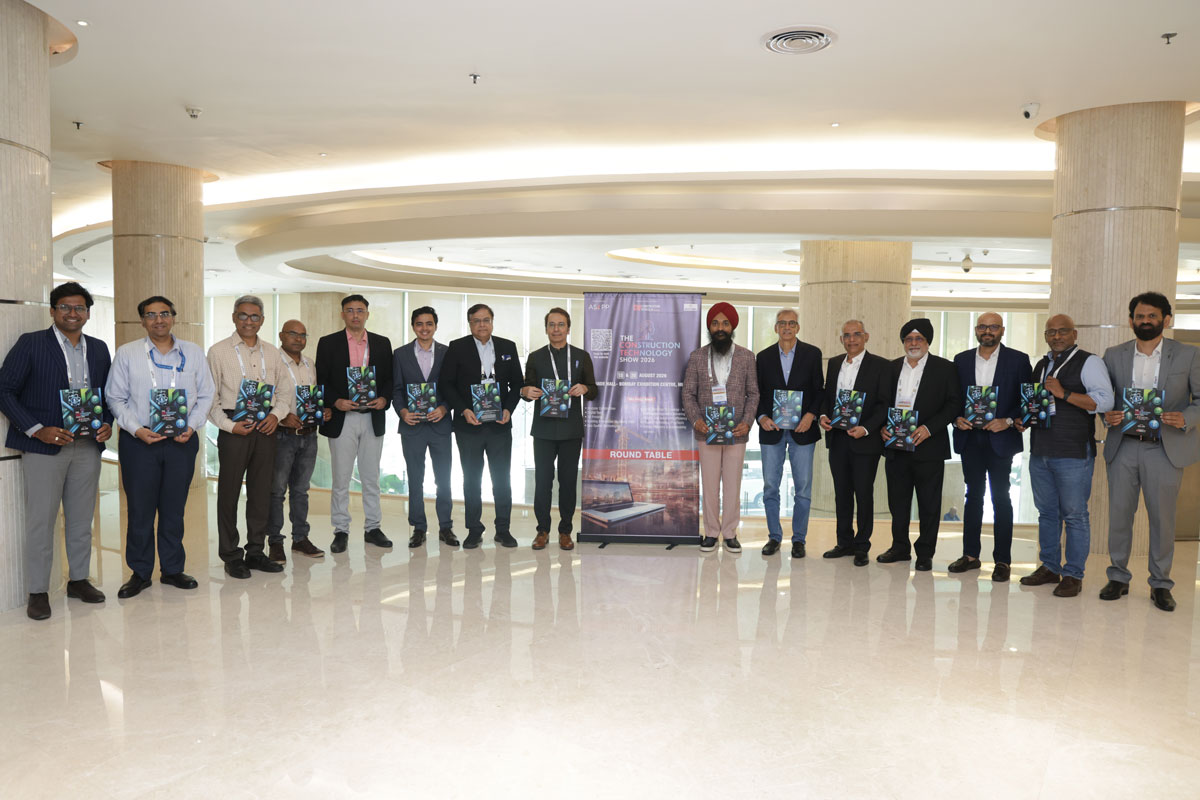
Ahead of the Construction Technology Show (Con Tech Show) 2026, industry leaders, technology innovators and academia came together in Mumbai to deliberate on how digitalisation, automation and industrialised construction can reshape the sector. The discussion made one thing clear: construction can no longer afford to treat technology as optional.
Held on 12 March 2026 at Courtyard by Marriott, Mumbai, alongside the Infrastructure Today Airport Conclave, the CTS Roundtable served as a precursor to the Construction Technology Show 2026, scheduled for 19–20 August 2026 at NESCO, Mumbai.
A platform to move from discussion to deployment
Opening the session, Pratap Padode, Founder and Editor-in-Chief, ASAPP Info Global Group, said construction technology has long remained close to his heart, especially given the sector’s traditionally slow pace of technology adoption. He noted that over the years, the Construction Technology Summit had steadily built interest, and the next step was now to expand it into a larger, more meaningful platform that could bring together technology providers, users, startups and innovators under one roof.
Padode said the vision for CTS is not limited to software alone. The platform aims to embrace all forms of technology that can improve construction efficiency, quality and execution—from digital tools and project management systems to lean construction, off-site fabrication and startup-led innovation. He also highlighted plans to deepen startup participation and create space for young companies to showcase emerging construction solutions.
Industry at a turning point
Moderating the roundtable, Naushad Panjwani, Chairman, Mandarus Partners, set the context by pointing out that the global construction industry, despite being a multi-trillion-dollar sector, continues to lag in productivity. He noted that while manufacturing has consistently improved efficiency, construction has remained slow to modernise.
Referring to both global and Indian trends, Panjwani underlined that the industry is now at a decisive moment. India, he said, is entering a major build cycle, and delivering the next phase of infrastructure and real estate growth through traditional methods alone is no longer viable. The goal of the roundtable, therefore, was not to debate technology in isolation, but to identify the most critical conversations that would bridge the gap between innovation and implementation.
His central message was clear: CTS 2026 must be shaped around themes that make CEOs, CIOs and CTOs feel they cannot afford to miss the event.
From BIM to AI, data to governance
A major theme that emerged through the discussion was the need for better data, better visibility and better decision-making. Dr Venkata Santosh Kumar of IIT Bombay echoed this, saying that the underlying data infrastructure itself needs attention. Construction projects, particularly remote ones, often face issues around connectivity, data collection and data use. Without this foundation, more advanced technologies cannot deliver their full value.
Chandra Vasireddy, CEO & Co-founder, Inncircles, expanded the discussion to governance, arguing that technology must help connect the many moving parts of a construction business. For him, the real value of digital transformation lies in creating better governance, clearer visibility and stronger business outcomes.
Tejas Vara of Inncircles stressed the importance of timely site data for leadership teams, especially in large and remote projects where decisions on materials, machinery and manpower often get delayed because information does not reach headquarters in time.
The role of AI also featured prominently. Rushabh Mamania, Partner and CBO, Roadvision said that while AI and machine learning are now common terms, vision intelligence and language intelligence have still not deeply penetrated the construction sector. He emphasised that startups in India are building relevant AI-led solutions and are already attracting international interest, showing that innovation need not be imported—it can be built locally and scaled globally.
Industrialised construction gains ground
The roundtable also placed strong emphasis on industrialised construction methods. Kalyan Vaidyanathan, CTO – Construction & R&D, Tvasta, called for greater focus on off-site fabrication and the broader industrialisation of construction. Bhargav Jog, General Manager, Dextra, highlighted precast technology and alternative sustainable materials as areas with immediate relevance.
Several participants agreed that modular, precast and pre-engineered approaches are no longer niche ideas. They are increasingly becoming practical responses to the sector’s challenges around labour shortage, timelines, quality control and predictability.
Anup Mathew, Sr VP & Business Head, Godrej, argued that the industry needs a fully integrated approach—from design and procurement to execution and asset management. Unless these are connected, technology adoption will remain fragmented and sub-optimal. He pointed to pre-engineered and modular systems as examples of how industrial thinking can compress timelines, improve quality and reduce dependence on difficult on-site conditions.
Adoption remains the biggest hurdle
While there was broad agreement on the promise of technology, the discussion repeatedly returned to one fundamental challenge: adoption.
Abhishek Kumar, COO, LivSYT, observed that the market is crowded with solutions, but many buyers still struggle to evaluate which technology suits which use case. According to him, the industry needs clearer frameworks to help users select, compare and adopt solutions, rather than expecting a single platform to solve every problem.
Dr Tenepalli JaiSai, Associate Professor, School of Construction(SoC), NICMAR University, noted that isolated technologies will not solve the productivity problem by themselves. What is required is an integrated Construction 4.0 approach, where digital, physical and cyber-physical systems work together rather than in silos.
That concern around silos was reinforced by Subodh Dixit, former Director, Shapoorji Pallonji, who said the issue is not just that technologies are disconnected, but that stakeholders are as well. Clients, consultants, contractors and partners often operate with different priorities. Unless these silos are broken, technology will struggle to percolate across the full project value chain.
Harleen Oberoi, Project Management, Tata Realty shared a practical perspective from the client side, saying that successful BIM implementation requires investment across the ecosystem, not just within one organisation. Trade partners, vendors and other stakeholders must also be trained and aligned if the technology is to deliver its intended results.
Beyond buzzwords
A notable takeaway from the session was that the industry is moving past the phase of treating technology as a buzzword. Participants repeatedly stressed that the real question is not whether technology should be used, but where it creates measurable value and how that value can be scaled.
The conversation also expanded beyond mainstream themes to include repairs and rehabilitation, construction and demolition waste, sustainability, circular economy, green sourcing, carbon measurement, design interoperability, generative design, robotics, and the role of horticulture and greener built environments.
Setting the agenda for CTS 2026
By the close of the session, the roundtable had surfaced a strong set of themes for the upcoming show: BIM and digital twins, AI and data platforms, industrialised construction, startup innovation, governance-led technology adoption, robotics, sustainable materials, and integrated project delivery.
More importantly, the session established CTS 2026 as more than an exhibition. It is shaping up to be a serious industry platform where users, technology providers, researchers and policymakers can collectively define the future of construction.
As Padode noted in his closing remarks, the conversation will continue through further consultations and possibly webinars in the run-up to the show. If the roundtable is any indication, CTS 2026 will aim not merely to showcase technology, but to push the industry towards meaningful adoption at scale.
Ultra Concrete Age
NCB Signs MoU With Cement Manufacturer To Boost Construction Skills
JSW Cement Commissions Nagaur Plant, Enters North India
Cement Prices Likely To Rise As Petcoke Costs Increase
IIT Guwahati Develops Radiation-Resistant Cement Mortar
Ultra Concrete Age
NCB Signs MoU With Cement Manufacturer To Boost Construction Skills
JSW Cement Commissions Nagaur Plant, Enters North India
Cement Prices Likely To Rise As Petcoke Costs Increase